WWII flying aces

The WWII German Army was 80% Horse Drawn; Business Lessons from History
The bulk of the German Army—the dough feet of the normal infantry divisions—moved on shank's mare. The rifle companies' transport consisted of three-horse wagons, on which the troops loaded their packs, as did this outfit on campaign in Russia in the summer of 1941.


By Oliver Marks for Collaboration 2.0 | December 6, 2008 -- 23:42 GMT (15:42 PST) | Topic: CXO


  • 19
  • Lone Sentry.com

    Not many people know that the greatest use of horses in any military conflict in history was by the Germans in WWII: 80% of their entire transport was equestrian. Despite all the propaganda about Blitzkreig, formidable German R&D, industrial design and production, the day to day mechanics of that fighting force involved an average of 1.1 million horses throughout the war. Of the 322 German divisions in the middle of the war - 1943 - only 52 were armored or motorized.


    The great bulk of the German combat strength—the old-type infantry divisions—marched into battle on foot, with their weapons and supply trains propelled almost entirely by four-legged horsepower. The light and mountain divisions had an even greater proportion of animals, and the cavalry divisions were naturally mainly dependent on the horse.
The WWII German Army was 80% Horse Drawn; Business Lessons from History | ZDNet
 
Walter Krupinski definitely looked more Polish, than German.

09466e92a28a0bb25622982211dfec9e.jpg
Don´t polify everything.
 
One British pilot was killed for every 4.9 enemy planes downed. The Poles managed to notch up 10.5 enemy planes per pilot death.

Read more: Why did we humiliate the Polish aces after their Battle of Britain heroics? | Daily Mail Online
Follow us: @MailOnline on Twitter | DailyMail on Facebook

Francis Stanley "Gabby" Gabreski (born Franciszek Stanisław Gabryszewski; January 28, 1919 – January 31, 2002) was a Polish-American career pilot in the United States Air Force, retiring as a colonel with 26 years of military service. He was the top American and United States Army Air Forces fighter aceover Europe in World War II and a jet fighter ace with the Air Force in the Korean War.

Although best known for his credited destruction of 34½ aircraft in aerial combat and being one of only seven U.S. combat pilots to become an ace in two wars, Gabreski was also one of the Air Force's most accomplished leaders. In addition to commanding two fighter squadrons, he had six command tours at group or wing level, including one in combat in Korea, totaling over 11 years of command and 15 overall in operational fighter assignments.

After his Air Force career, Gabreski headed the Long Island Rail Road, a commuter railroad owned by the State of New York, and struggled in his attempts to improve its service and financial condition. After two and a half years, he resigned under pressure and went into full retirement.

Gabby Gabreski - Wikipedia
That would mean the Poles in the RAF downed 25000 German planes. Typical pomposity...

"Some 8,400 Polish airmen were evacuated to the United Kingdom, which they now called Wyspa Ostatniej Nadziei or “The Island of Last Hope.” In November 1948, a memorial dedicated to the 2,408 Polish airmen killed during the war was unveiled at RAF Northolt."

The Polish Air Force in WWII. - WW2 Gravestone

Talking about only the highest scoring Squadron in the Battle of Britain, the Polish 303 Kosciuszko Squadron.
3034kjxl.jpg
 
One British pilot was killed for every 4.9 enemy planes downed. The Poles managed to notch up 10.5 enemy planes per pilot death.

Read more: Why did we humiliate the Polish aces after their Battle of Britain heroics? | Daily Mail Online
Follow us: @MailOnline on Twitter | DailyMail on Facebook

Francis Stanley "Gabby" Gabreski (born Franciszek Stanisław Gabryszewski; January 28, 1919 – January 31, 2002) was a Polish-American career pilot in the United States Air Force, retiring as a colonel with 26 years of military service. He was the top American and United States Army Air Forces fighter aceover Europe in World War II and a jet fighter ace with the Air Force in the Korean War.

Although best known for his credited destruction of 34½ aircraft in aerial combat and being one of only seven U.S. combat pilots to become an ace in two wars, Gabreski was also one of the Air Force's most accomplished leaders. In addition to commanding two fighter squadrons, he had six command tours at group or wing level, including one in combat in Korea, totaling over 11 years of command and 15 overall in operational fighter assignments.

After his Air Force career, Gabreski headed the Long Island Rail Road, a commuter railroad owned by the State of New York, and struggled in his attempts to improve its service and financial condition. After two and a half years, he resigned under pressure and went into full retirement.

Gabby Gabreski - Wikipedia
That would mean the Poles in the RAF downed 25000 German planes. Typical pomposity...

"Some 8,400 Polish airmen were evacuated to the United Kingdom, which they now called Wyspa Ostatniej Nadziei or “The Island of Last Hope.” In November 1948, a memorial dedicated to the 2,408 Polish airmen killed during the war was unveiled at RAF Northolt."

The Polish Air Force in WWII. - WW2 Gravestone

Talking about only the highest scoring Squadron in the Battle of Britain, the Polish 303 Kosciuszko Squadron.
3034kjxl.jpg

Nazi Germany had more planes, but still lost the Battle of Britain.
 
One British pilot was killed for every 4.9 enemy planes downed. The Poles managed to notch up 10.5 enemy planes per pilot death.

Read more: Why did we humiliate the Polish aces after their Battle of Britain heroics? | Daily Mail Online
Follow us: @MailOnline on Twitter | DailyMail on Facebook

Francis Stanley "Gabby" Gabreski (born Franciszek Stanisław Gabryszewski; January 28, 1919 – January 31, 2002) was a Polish-American career pilot in the United States Air Force, retiring as a colonel with 26 years of military service. He was the top American and United States Army Air Forces fighter aceover Europe in World War II and a jet fighter ace with the Air Force in the Korean War.

Although best known for his credited destruction of 34½ aircraft in aerial combat and being one of only seven U.S. combat pilots to become an ace in two wars, Gabreski was also one of the Air Force's most accomplished leaders. In addition to commanding two fighter squadrons, he had six command tours at group or wing level, including one in combat in Korea, totaling over 11 years of command and 15 overall in operational fighter assignments.

After his Air Force career, Gabreski headed the Long Island Rail Road, a commuter railroad owned by the State of New York, and struggled in his attempts to improve its service and financial condition. After two and a half years, he resigned under pressure and went into full retirement.

Gabby Gabreski - Wikipedia
That would mean the Poles in the RAF downed 25000 German planes. Typical pomposity...

"Some 8,400 Polish airmen were evacuated to the United Kingdom, which they now called Wyspa Ostatniej Nadziei or “The Island of Last Hope.” In November 1948, a memorial dedicated to the 2,408 Polish airmen killed during the war was unveiled at RAF Northolt."

The Polish Air Force in WWII. - WW2 Gravestone

Talking about only the highest scoring Squadron in the Battle of Britain, the Polish 303 Kosciuszko Squadron.
3034kjxl.jpg

Nazi Germany had more planes, but still lost the Battle of Britain.
The Brits were full of coke and used to the fog. They also had coastal radar and always knew from where the Germans were coming. But they would have lost nevertheless, hadn´t Hitler been that foolish. It is a known fact that Hitler was a great admirer of the Empire and he banned bombing London. The first raid on Berlin took place in August 1940, allegedly in response to an accidental raid on London. But London is way too large for an accidental raid and only fools will believe the fairy tail.
When almost all English airfields in the south were out of service and the Royal Airforce was close to a collapse, Churchill decided to bomb Berlin to make Hitler take revenge. A 6 week long campaign against London was the desired result. During that time the Brits recovered the airfields.

"On 13 August, the German Luftwaffe began a series of concentrated aerial attacks (designated Unternehmen Adlerangriff or Operation Eagle Attack) on targets throughout the United Kingdom in an attempt to destroy the RAF and establish air superiority over Great Britain. The change in emphasis of the bombing from RAF bases to bombing London, however, turned Adlerangriff into a strategic bombing operation.

The effect of the switch in strategy is disputed. Some historians argue the change in strategy lost the Luftwaffe the opportunity of winning the air battle, or air superiority.[33] Others argue the Luftwaffe achieved little in the air battle and the RAF was not on the verge of collapse, as often claimed.[34] Another perspective has also been put forward, which suggests the Germans could not have gained air superiority before the weather window closed."
Operation Sea Lion - Wikipedia


Later on, the air war over Great Britain lost priority, when the plan to invade Britain was canceled.
 
What is a plane worth without the pilot who flies it? However, a good pilot needs a good aircraft.
Top ace of all time is Erich Hartmann with 352 victories.

List of World War II flying aces - Wikipedia

Hartman was not just a GOOD Pilot. He was one of the best that ever lived. I conversed with a person that talked with him. Hartman had no social graces, and his eyes were pure evil. He was a killer, plain and simple. He even had air to air kills in a Stuka and that is really hard to do. Using him as a measuring stick to make the 109 look like the best WWII Fighter is stupid. BTW, most of his kills were against ground attack fighters that flew straight and level. He had only 7 kills (not an easy thing to do either) when he moved from the eastern front to the western front. UP until 1944 (late) the Russians didn't even have gun sites on their fighters unless it was US made. The Russian Pilots of 1943 and back were easy, easy kills. But when he moved to the Western Front, he had competition big time. Getting 7 kills is still pretty hard to do with the experienced pilots that the US had by then.

Like many, I rate the FW190 as a better fighter than the 109.
Nice fairy tails. Of course, the Russian fighters had Russian guns.

Yakovlev Yak-1 - Wikipedia

However, the list aces does not only include Hartmann but is almost exclusively German.

I never said they didn't have guns. Isn't it a little silly to think that any WWII fighter was produced without guns. I said Gun Sites, idiot.
 
In the jet age ... the Ace of All Aces is Giora Epstein of the IAF ... 17 confirmed kills.
According to the list above, Kurt Walter had at least 20 victories in a jet fighter.

Kurt Welter was the Mr. Obvious of over claiming victories. His 20 victories were more than likely 3.
 
What is a plane worth without the pilot who flies it? However, a good pilot needs a good aircraft.
Top ace of all time is Erich Hartmann with 352 victories.

List of World War II flying aces - Wikipedia

Hartman was not just a GOOD Pilot. He was one of the best that ever lived. I conversed with a person that talked with him. Hartman had no social graces, and his eyes were pure evil. He was a killer, plain and simple. He even had air to air kills in a Stuka and that is really hard to do. Using him as a measuring stick to make the 109 look like the best WWII Fighter is stupid. BTW, most of his kills were against ground attack fighters that flew straight and level. He had only 7 kills (not an easy thing to do either) when he moved from the eastern front to the western front. UP until 1944 (late) the Russians didn't even have gun sites on their fighters unless it was US made. The Russian Pilots of 1943 and back were easy, easy kills. But when he moved to the Western Front, he had competition big time. Getting 7 kills is still pretty hard to do with the experienced pilots that the US had by then.

Like many, I rate the FW190 as a better fighter than the 109.


Hartmann never shot down an aircraft while flying a Stuka. You are confusing him with Rudel, who did. Soviet aircraft most assuredly DID have gunsites. Where do you come up with this nonsense? In some cases they were fairly rudimentary, but some were every bit as good as their western counterparts which they no doubt copied. Below is the projector part of the IL-2M gunsite. The reflector is missing.

z.gif
z.gif
Ilyushin Il-2 PBP-1 Gun Sight
 
I used to hang out with Gunther Rall when he would come for a visit with Zemke. He was an incredibly nice guy. Funny as hell too!

If you had spent time with Hartmann I am sure you would wanted to shoot him. Rall was a patriot and that was the driving factor. Hartmann was a cold blooded killer.


I did spend some time with Hartmann. He was very mild mannered, and generally reserved, but he wasn't the wild eyed killer you portray him as either. Once again you are confusing him with Rudel who was indeed a nazi up to the second he died.
 
I used to hang out with Gunther Rall when he would come for a visit with Zemke. He was an incredibly nice guy. Funny as hell too!
Those guys were completely different from what we think today. Those veterans from all the countries gathered often and were friends.


Not always. Fighter pilots in general were forgive and forget. The bomber crews though, for the most part still despise the German fighter pilots.
 
What is a plane worth without the pilot who flies it? However, a good pilot needs a good aircraft.
Top ace of all time is Erich Hartmann with 352 victories.

Couple things about German "Aces".

1) Half their "victories" were usually either slow transport planes or planes on the ground.

2) Unlike Allied Aces, when they got shot down, they got shot down over friendly territory and were just given a new plane.


And you too don't know shit from shinola. Only American fighter pilots were given credit for kills on the ground. Hartmann, as a for instance was shot down 14 times, and one time his escape from the Soviets was nothing short of miraculous. Read a book before you make an ass of yourself yet again.
 
One British pilot was killed for every 4.9 enemy planes downed. The Poles managed to notch up 10.5 enemy planes per pilot death.

Read more: Why did we humiliate the Polish aces after their Battle of Britain heroics? | Daily Mail Online
Follow us: @MailOnline on Twitter | DailyMail on Facebook

Francis Stanley "Gabby" Gabreski (born Franciszek Stanisław Gabryszewski; January 28, 1919 – January 31, 2002) was a Polish-American career pilot in the United States Air Force, retiring as a colonel with 26 years of military service. He was the top American and United States Army Air Forces fighter aceover Europe in World War II and a jet fighter ace with the Air Force in the Korean War.

Although best known for his credited destruction of 34½ aircraft in aerial combat and being one of only seven U.S. combat pilots to become an ace in two wars, Gabreski was also one of the Air Force's most accomplished leaders. In addition to commanding two fighter squadrons, he had six command tours at group or wing level, including one in combat in Korea, totaling over 11 years of command and 15 overall in operational fighter assignments.

After his Air Force career, Gabreski headed the Long Island Rail Road, a commuter railroad owned by the State of New York, and struggled in his attempts to improve its service and financial condition. After two and a half years, he resigned under pressure and went into full retirement.

Gabby Gabreski - Wikipedia
That would mean the Poles in the RAF downed 25000 German planes. Typical pomposity...

"Some 8,400 Polish airmen were evacuated to the United Kingdom, which they now called Wyspa Ostatniej Nadziei or “The Island of Last Hope.” In November 1948, a memorial dedicated to the 2,408 Polish airmen killed during the war was unveiled at RAF Northolt."

The Polish Air Force in WWII. - WW2 Gravestone

Talking about only the highest scoring Squadron in the Battle of Britain, the Polish 303 Kosciuszko Squadron.


Who, with modern battlefield archaeology, and dedicated historical research, has been shown to have overclaimed like no ones business. They were still very good pilots, but they were a tad excitable.


"303 Polish squadron did indeed make very high claims in September 1940 however recent research indicates they were enthusiastic rather than accurate. The Polish pilots tended to engage the enemy from very close ranger and therefore often quite a few pilots were credited with kills when in fact they were all shooting at the same aircraft. Post war archaeology tends towards 603 Squadron being the most accurate. 74 squadron seems one of least accurate with many claims unconfirmed by LW records. 92 Squadron seemed to be a victim of it's own hype."

http://ww2f.com/threads/top-scoring-raf-squadrons-on-the-battle-of-britain.55873/
 
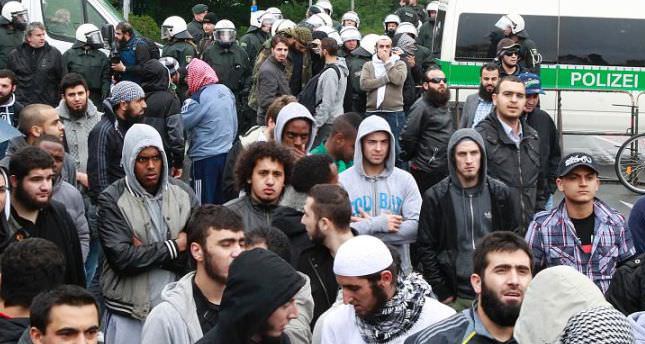
These are Germans today...

1411165159445.jpg


Not much into flying ...
Can’t goosestep to save their lives...
And less likely to invade Poland (from the outside)...
 
What is a plane worth without the pilot who flies it? However, a good pilot needs a good aircraft.
Top ace of all time is Erich Hartmann with 352 victories.

List of World War II flying aces - Wikipedia

Hartman was not just a GOOD Pilot. He was one of the best that ever lived. I conversed with a person that talked with him. Hartman had no social graces, and his eyes were pure evil. He was a killer, plain and simple. He even had air to air kills in a Stuka and that is really hard to do. Using him as a measuring stick to make the 109 look like the best WWII Fighter is stupid. BTW, most of his kills were against ground attack fighters that flew straight and level. He had only 7 kills (not an easy thing to do either) when he moved from the eastern front to the western front. UP until 1944 (late) the Russians didn't even have gun sites on their fighters unless it was US made. The Russian Pilots of 1943 and back were easy, easy kills. But when he moved to the Western Front, he had competition big time. Getting 7 kills is still pretty hard to do with the experienced pilots that the US had by then.

Like many, I rate the FW190 as a better fighter than the 109.


Hartmann never shot down an aircraft while flying a Stuka. You are confusing him with Rudel, who did. Soviet aircraft most assuredly DID have gunsites. Where do you come up with this nonsense? In some cases they were fairly rudimentary, but some were every bit as good as their western counterparts which they no doubt copied. Below is the projector part of the IL-2M gunsite. The reflector is missing.

z.gif
z.gif
Ilyushin Il-2 PBP-1 Gun Sight

I could be wrong about the Stuka but not about the gun sights on early Soviet Fighters. The IL-2 was not an early fighter.

In his first year of operational service, Hartmann felt a distinct lack of respect towards Soviet pilots. Most Soviet fighters did not even have proper gunsights, their pilots having to draw them on the windscreen by hand. "In the early days, incredible as it may seem, there was no reason for you to feel fear if the Russian fighter was behind you," he later recalled. "With their hand-painted "gunsights" they couldn't pull the lead properly or hit you." Hartmann also considered the P-39, the P-40, and the Hurricane to be inferior to the Fw 190 and Bf 109, although they did provide the Soviets with valuable gunsight technology.
 
15th post
What is a plane worth without the pilot who flies it? However, a good pilot needs a good aircraft.
Top ace of all time is Erich Hartmann with 352 victories.

List of World War II flying aces - Wikipedia

Hartman was not just a GOOD Pilot. He was one of the best that ever lived. I conversed with a person that talked with him. Hartman had no social graces, and his eyes were pure evil. He was a killer, plain and simple. He even had air to air kills in a Stuka and that is really hard to do. Using him as a measuring stick to make the 109 look like the best WWII Fighter is stupid. BTW, most of his kills were against ground attack fighters that flew straight and level. He had only 7 kills (not an easy thing to do either) when he moved from the eastern front to the western front. UP until 1944 (late) the Russians didn't even have gun sites on their fighters unless it was US made. The Russian Pilots of 1943 and back were easy, easy kills. But when he moved to the Western Front, he had competition big time. Getting 7 kills is still pretty hard to do with the experienced pilots that the US had by then.

Like many, I rate the FW190 as a better fighter than the 109.


Hartmann never shot down an aircraft while flying a Stuka. You are confusing him with Rudel, who did. Soviet aircraft most assuredly DID have gunsites. Where do you come up with this nonsense? In some cases they were fairly rudimentary, but some were every bit as good as their western counterparts which they no doubt copied. Below is the projector part of the IL-2M gunsite. The reflector is missing.

z.gif
z.gif
Ilyushin Il-2 PBP-1 Gun Sight

I could be wrong about the Stuka but not about the gun sights on early Soviet Fighters. The IL-2 was not an early fighter.

In his first year of operational service, Hartmann felt a distinct lack of respect towards Soviet pilots. Most Soviet fighters did not even have proper gunsights, their pilots having to draw them on the windscreen by hand. "In the early days, incredible as it may seem, there was no reason for you to feel fear if the Russian fighter was behind you," he later recalled. "With their hand-painted "gunsights" they couldn't pull the lead properly or hit you." Hartmann also considered the P-39, the P-40, and the Hurricane to be inferior to the Fw 190 and Bf 109, although they did provide the Soviets with valuable gunsight technology.


ALL Soviet fighters had gun sites. All of them. See that long tube in front of the pilot? Yes, that is a gunsite. The painted gunsites were for the 82mm rockets they fired. Amazingly enough, our pilots in Vietnam did the same thing for the FFAR they used as well. For an unguided rocket they worked just fine.

15665854105_99ac842139_b.jpg
 
I used to hang out with Gunther Rall when he would come for a visit with Zemke. He was an incredibly nice guy. Funny as hell too!

If you had spent time with Hartmann I am sure you would wanted to shoot him. Rall was a patriot and that was the driving factor. Hartmann was a cold blooded killer.


I did spend some time with Hartmann. He was very mild mannered, and generally reserved, but he wasn't the wild eyed killer you portray him as either. Once again you are confusing him with Rudel who was indeed a nazi up to the second he died.

that's the problem with second hand info. The original could have been wrong and I could remember incorrectly.

One thing that Hartmann did was he was reckless. He wan't mucch of a lead shooter so he would get in real close. From 50 feet to 60 yds until he would open fire. Most of his targets never even knew he was there. The problem with getting that close is you may have to fly through the debrie. Hence the 14 times he crash landed.
 
I used to hang out with Gunther Rall when he would come for a visit with Zemke. He was an incredibly nice guy. Funny as hell too!
Those guys were completely different from what we think today. Those veterans from all the countries gathered often and were friends.


Not always. Fighter pilots in general were forgive and forget. The bomber crews though, for the most part still despise the German fighter pilots.
I read Len Deighton´s Bombers and the bomber crews´ life expectation was a few flights. They have nothing to complain, however. Among their bombs were light bombs that illuminated the bombs´ impacts for better pictures. These pictures then were used for contests and ranking. Who bombs the most women and children at night?
 
Last edited:
I used to hang out with Gunther Rall when he would come for a visit with Zemke. He was an incredibly nice guy. Funny as hell too!
Those guys were completely different from what we think today. Those veterans from all the countries gathered often and were friends.


Not always. Fighter pilots in general were forgive and forget. The bomber crews though, for the most part still despise the German fighter pilots.
I read Len Deighton´s Bombers and the bomber crews´ life expectation was a few flights. They have nothing to complain, however. Among their bombs were light bombs that illuminated the bombs´ impacts for better pictures. These pictures then were used for contests and ranking. Who bombs the most women and children at night?

You are posting in the wrong area. There is already a section on Conspiracy Theories.

For the British Bombers, light bombs were the 250 lders and the heavy bombs were the bigger stuff. They all lit up the area when they went off. It's called Explosions.

You are quoting a Fiction Novel He juiced it for sales.
 
Back
Top Bottom