Will robotics and Artificial Intelligence make an Unconditional but Taxable Basic Minimum Income Supplement necessary?

Will A. I. and robotics make Basic Minimum Income Supplements necessary?

  • No

    Votes: 10 62.5%
  • Yes

    Votes: 4 25.0%
  • I do hope that B. M. I. style income supplements are put in place.

    Votes: 0 0.0%
  • I hope that B. M. I. style income supplements are NOT put in place.

    Votes: 0 0.0%
  • Other answer, please be specific in a reply

    Votes: 2 12.5%

  • Total voters
    16
Jobs which AI won't eliminate any time soon.

Landscapers. There is not one blade of grass, not one shrub or bush, not one tree, not one living plant of any kind in my neighborhood which was not put there by human hands.

Plumbers. When the shit hits the fan, you'll pay any price to make it stop.

Electricians. A lot of electricians and plumbers will actually go away since houses will become prefabricated in robot factories. But we will always need a few around to rewire or repair our houses.

Engineers. I don't know though. I supposed the day will come when AIs will be designing their own updates and newer, better robots. Scary.

Nurses. The sick and the dying need human contact. And there are some tasks performed by nurses, CNAs, etc. that cannot and should never be done by machines.

Preachers. We need a spiritual life, and we need spiritual leaders. But one of the scariest things I have heard about is there are already AI's Jesus's out there and people are flocking to them. Jesus H. Christ!

Hookers. I think hookers will actually thrive in the AI future. People will need human contact more than ever. But AI tailor-made companions will also be a booming industry. A large percentage of senior in nursing homes live and die alone. They could use a friend, robot or not.


Just as an aside, I think the written word will become obsolete within the next century. All will be done by the spoken word.
 
Interesting idea to axe social service programs and just do some form of basic income in replace of them. If it actually decreases the national debt then I might be able to be talked into this idea.
Here in Canada we had a brilliant Bank of Policy that we used from 1938 to 1974. In essence a high percentage of the building of roads, schools, hospitals, government buildings were done in such a way that it costed Canadian taxpayers essentially zero interest on the loans. On the surface it looked as if each province was borrowing at two percent interest from the Bank of Canada but all the jobs that were created as infrastructure was built gave the provinces a boost in revenue from income tax so they simply paid off the loans from the Bank of Canada with the increase in income tax.

Prime Minister Pierre E. Trudeau abandoned that policy in 1974 and his decision could be argued as being one of the most incompetent or silly acts by a sitting Canadian Prime Minister in the past sixty years.

Forty five million Canadians receiving a Unconditional but Taxable Basic Minimum Income Supplement of a paltry five hundred dollars per month should all end up back in the treasury after it turns over about four times in the economy. This will become a Taxation Cash Cow for all three levels of government here in Canada and should decrease the Canadian federal deficit by about twenty billion dollars monthly, [once the Canadian economy adapts to the new situation that we are in].

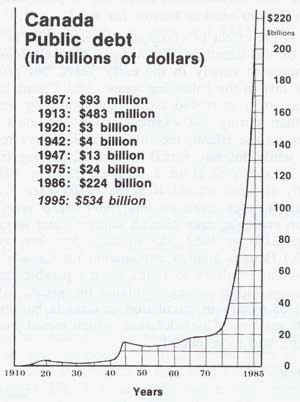
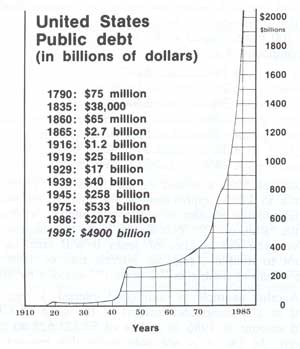
My guess as to why Prime Minister Pierre E. Trudeau made such a colossal error was so that a false impression could be given to Americans. I believe that the true target of what was done by Prime Minister Pierre E. Trudeau was American citizens, not Canadians, but in order to deceive Americans a situation had to be put into place where the Canadian national debt was spiraling out of control just like the USA national debt was.


[Ms. Betty Krawczyk] :
HOW PIERRE TRUDEAU TURNED US INTO DEBT SLAVES
Click on the link above to watch Part 3 of my video series on the Canadian Banking System. Please also read accompanying text below.
Trudeaumania was just gearing up when I immigrated to Canada in late 1966. I, too, was impressed with Trudeau. He was intelligent, articulate, with liberal ideas. And as Prime Minister, Trudeau repatriated the Canadian Constitution and told the morals’ police to stay out of people’s bedrooms. But then…but then. As Anthony’s famous speech in Shakespeare’s play Julius Caesar reminds us… “the evil that men do live after them while the good is often interred with their bones. So let it be with Caesar.”

But somehow this worked backward for Trudeau. Many Canadians still think highly of Pierre Trudeau, but in 1974 he did one terrible thing that changed the lives, for present and future, of all Canadians, for the worse. Trudeau gave the leading operations of the Bank of Canada over to the private banks operating in Canada.

The Bank of Canada was first established by Prime Minister Richard Bennet in 1935 as a private central bank, but was then nationalized by William Lyon Mackenzie King in 1938. By nationalizing the bank, Mackenzie King meant for it to belong to the people so the Canadian government could borrow funds with little or no interest for capital expenditures. The mandate of the newly nationalized Bank of Canada was to act as the banker to the government and to manage the public debt. As Mackenzie King famously said: “Once a nation parts with the control of their currency and credit, it matters not who makes that nation’s laws. Usury, once in control, will wreck any nation. Until the control of the issue of currency and credit is restored to government and recognized as its most sacred responsibility, all talk of sovereignty of parliament and of democracy is idle and futile.”


So the Bank of Canada was nationalized in 1938 and the government could now borrow money with little or no interest. And it worked. The Canadian government built freeways, public transportation systems, subway line, airports, the St. Lawrence Seaway and funded a national health care system and the Canada Pension Plan. But then Trudeau, under the influence of the international financial group called Basel’s
Committee’s Recommendations (The Basel Committee on Banking Supervision) made the decision to halt the borrowing of money from the Bank of Canada, and instead, chose to borrow from the private banks who instead of lending to the government at no interest, or low interest, introduced higher interest rates along with compound interest.

All banks know very well the magic of compound interest. And Pierre Trudeau must have known that the mounting compounded national debt would lead to Canadians eventually owing a dollar fifty for every dollar of their disposable incomes. After all, he studied economics at the London School of Economics. Surely the professors there knew about compound interest.

So Pierre Trudeau, instead of feeling blessed that Canada, unlike the US, had a nationalized central bank, signed our bank away to the private banks. Couldn’t Trudeau, such an educated man, surmise that citizens in a few years would be struggling to make car payments and meet rent and mortgages and student loans and to buy healthy food while last year’s profits for the big five (that’s Royal Bank, TD Bank, Scotiabank, Bank of Montreal and CIBC amounted to $31.7 billion?) If he did, he didn’t care. But it doesn’t have to be this way. It really doesn’t. Our Bank of
Canada is still there. Next time." (Ms. Betty Krawczyk)


Here are a couple of graphs that show how Prime Minister Pierre E. Trudeau's error set up the increases in the national debt of Canada to look just as awful as the spiraling of the USA national debt. If the rather brilliant 1938 to 1974 Bank of Canada policy had continued, the differences between the increases in our national debts would quickly have been noticeable.


canada-public-debt.jpg


us-public-debt-graphic.jpg


"
If an Unconditional but Taxable Basic Minimum Income Supplement of five hundred dollars per month were proposed for all Canadians whether they are rich or poor, Very little Bureaucracy would be needed to set that proposal in motion and surely there may be at least one party willing to begin discussion of this option under the set of circumstances that we are all in now?
 
The one guaranteed way to make sure it’s a disaster is having more government involved.
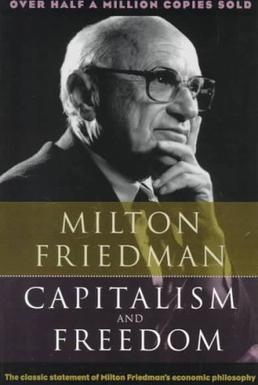
Exactly, which is why I feel that the Milton Friedman Ph. D. idea is the way to go because Dr. Friedman wanted to reduce and reduce and reduce bureaucracy.
 
I have wondered this same thing for some time now.

But taxing BMI makes no sense.

.


Yes, Milton Friedman, of the Chicago school of economics, was an advocate for what he called the negative income tax.

His plan was that the negative income tax would replace all existing welfare programs, and would therefore be easier to administer.

.
Experiments with UBI have proven to be very successful. Recipients of UBI become more productive, just like recipients of the EITC, the only tax expenditure I believe we should have, with all others banned.


Do you know who else was an advocate for a Universal Basic Income?

Founding Father Thomas Paine.

He also advocated for a social security system.

The man was WAY ahead of his time.

.


Taxing an Unconditional but Taxable Basic Minimum Income Supplement means that when a high income earner gets their B. M. I, supplement check they pay a higher percentage of it as income tax. When a minimum wage earning Canadian or American gets their B. M. I. Income Supplement check they may well pay zero income tax on it. Making the supplement UNCONDITIONAL on last years income was the only way to reduce the Bureaucracy needed to set this in motion.

This was Dr. Friedman's idea... not mine!


x. The Distribution of IncomeFriedman examines the progressive income tax, introduced in order to redistribute income to make things more fair, and finds that, in fact, the rich take advantage of numerous loopholes, nullifying the redistributive effects. It would be far more fair just to have a uniform flat tax with no deductions, which could meet the 1962 tax revenues with a rate only slightly greater than the lowest tax bracket at that time.


xi. Social Welfare MeasuresThough well-intentioned, many social welfare measures don't help the poor as much as some think. Friedman focuses on Social Security as a particularly large and unfair system.

xii. Alleviation of PovertyFriedman regarded welfare programs as misguided and inefficient. To replace them, he advocates a negative income tax, giving everyone a guaranteed minimum income.

 
Here in Canada we had a brilliant Bank of Policy that we used from 1938 to 1974. In essence a high percentage of the building of roads, schools, hospitals, government buildings were done in such a way that it costed Canadian taxpayers essentially zero interest on the loans. On the surface it looked as if each province was borrowing at two percent interest from the Bank of Canada but all the jobs that were created as infrastructure was built gave the provinces a boost in revenue from income tax so they simply paid off the loans from the Bank of Canada with the increase in income tax.

Prime Minister Pierre E. Trudeau abandoned that policy in 1974 and his decision could be argued as being one of the most incompetent or silly acts by a sitting Canadian Prime Minister in the past sixty years.

Forty five million Canadians receiving a Unconditional but Taxable Basic Minimum Income Supplement of a paltry five hundred dollars per month should all end up back in the treasury after it turns over about four times in the economy. This will become a Taxation Cash Cow for all three levels of government here in Canada and should decrease the Canadian federal deficit by about twenty billion dollars monthly, [once the Canadian economy adapts to the new situation that we are in].

My guess as to why Prime Minister Pierre E. Trudeau made such a colossal error was so that a false impression could be given to Americans. I believe that the true target of what was done by Prime Minister Pierre E. Trudeau was American citizens, not Canadians, but in order to deceive Americans a situation had to be put into place where the Canadian national debt was spiraling out of control just like the USA national debt was.


If an Unconditional but Taxable Basic Minimum Income Supplement of five hundred dollars per month were proposed for all Canadians whether they are rich or poor, Very little Bureaucracy would be needed to set that proposal in motion and surely there may be at least one party willing to begin discussion of this option under the set of circumstances that we are all in now?
Why didn't you come right out and say that in the beginning? That way we can put you on ignore when you start spouting crazy Canuck dreams that will never work in the US.

I leave a few Canadians off my ignore list because you people are so damned clueless it is funny.

I'll have to decide about you, but so far, I haven't seen anything particularly humorous!
 
Taxing an Unconditional but Taxable Basic Minimum Income Supplement means that when a high income earner gets their B. M. I, supplement check they pay a higher percentage of it as income tax. When a minimum wage earning Canadian or American gets their B. M. I. Income Supplement check they may well pay zero income tax on it. Making the supplement UNCONDITIONAL on last years income was the only way to reduce the Bureaucracy needed to set this in motion.

This was Dr. Friedman's idea... not mine!
So, you tax people to pay BMI and then tax them again to take it back? That is so inefficient it is amusing!
 
Why didn't you come right out and say that in the beginning? That way we can put you on ignore when you start spouting crazy Canuck dreams that will never work in the US.

I leave a few Canadians off my ignore list because you people are so damned clueless it is funny.

I'll have to decide about you, but so far, I haven't seen anything particularly humorous!
For the record it seems that we Canadians stole the idea from President Abraham Lincoln. The British North America Act that formed Canada was in 1867 and President Lincoln's Greenback Monetary Policy Experiment ended when he was assassinated, [1865]. Many Canadian historian have asserted that we likely got the idea for the 1938 to 1974 Bank of Canada policy from President Lincoln.

[Alain Pilote]

Abraham Lincoln was elected President of the United States in 1860, under the promise of abolishing the slavery of the blacks. Eleven southern States, favourable to the human slavery of the black race, then decided to secede from the Union, to withdraw from the United States of America: that was the beginning of the Civil War (1861–1865). Lincoln, being short of money to finance the North's war effort, went to the bankers of New York, who agreed to lend him money at interest rates varying from 24 to 36 percent. Lincoln refused, knowing perfectly well that this was usury and that it would lead the United States to ruin. But his money problem was still not settled!

His friend in Chicago, Colonel Dick Taylor, came to his rescue and put the solution to him:

“Just get Congress to pass a bill authorizing the printing of full legal tender treasury notes, and pay your soldiers with them, and go ahead and win your war with them also.”

This is what Lincoln did, and he won the war: between 1862 and 1863, in full conformity with the provisions of the U.S. Constitution, Lincoln caused $450 million of debt-free Greenbacks to be issued, to conduct the Civil War. (These Treasury notes were called “Greenbacks” by the people because they were printed with green ink on the back.)

Lincoln called these Greenbacks “the greatest blessing the American people have ever had.” A blessing for all, except for the bankers, since it was putting an end to their racket, to the stealing of the nation's credit and issuing interest-bearing money. So they did everything possible to destroy these Greenbacks and sabotage Lincoln's work. Lord Goschen, spokesman of the Financiers, wrote in the London Times (Quote taken from Who Rules America by C. K. Howe, and reproduced in Lincoln Money Martyred by Dr. R. E. Search):

“If this mischievous financial policy, which has its origin in North America, shall become indurated down to a fixture, then that Government will furnish its own money without cost. It will pay off debts and be without a debt. It will have all the money necessary to carry on its commerce. It will become prosperous without precedent in the history of the world. That Government must be destroyed, or it will destroy every monarchy on the globe.” (The monarchy of the money lenders.)

First, in order to cast discredit on the Greenbacks, the bankers persuaded Congress to vote, in February of 1862, the “Exception Clause”, which said that the Greenbacks could not be used to pay the interest on the national debt, nor to pay taxes, excises, or import duties. Then, in 1863, having financed the election of enough Senators and Representatives, the bankers got the Congress to revoke the Greenback Law in 1863, and enact in its place the National Banking Act. (Money was then to be issued interest-bearing by privately-owned banks.)

This Act also provided that the Greenbacks should be retired from circulation as soon as they came back to the Treasury in payment of taxes. Lincoln heatedly protested, but his most urgent objective was to win the war and save the Union, which obliged him to put off till after the war the veto he was planning against this Act and the action he was to take against the bankers. Lincoln nevertheless declared:

“I have two great enemies, the Southern army in front of me and the bankers in the rear. And of the two, the bankers are my greatest foe.”

Lincoln was re-elected President in 1864, and he made it quite clear that he would attack the power of the bankers, once the war was over. The war ended on April 9, 1865, but Lincoln was assassinated five days later, on April 14. A tremendous restriction of credit followed, organized by the banks: the currency in circulation in the country, which was, in 1866, $1,907 million, representing $50.46 for each American citizen, had been reduced to $605 million in 1876, representing $14.60 per capita. The result: in ten years, 56,446 business failures, representing a loss of $2 billion. And as if this was not enough, the bankers reduced the per capita currency in circulation to $6.67 in 1887!​

" [Alain Pilote, The History of Banking Control in the United States].

 
For the record it seems that we Canadians stole the idea from President Abraham Lincoln. The British North America Act that formed Canada was in 1867 and President Lincoln's Greenback Monetary Policy Experiment ended when he was assassinated, [1865]. Many Canadian historian have asserted that we likely got the idea for the 1938 to 1974 Bank of Canada policy from President Lincoln.
Wow! That was the most boring thing I have ever seen come from a Canuck. Do better!
 
Exactly!

But a pretty impressive case can be presented that the national debt of the USA is significantly a practical joke being played on three hundred and fifty million Americans by elected officials who tend to be susceptible to the offers that they get as soon as they choose a home in Washington, D. C?

At least that is how I personally understand what was being attempted by President John F. Kennedy as he tried to replicate the President Lincoln Greenback Monetary Policy Experiment, [ well, some important aspects of Lincoln's Greenback Monetary Experiment anyway]!?

Whether the USA national debt is ten percent a joke....
or thirty percent a joke.....
has implications into the trillions of dollars.....

so I shall get a discussion and poll going on that topic shortly.

At least that is how I personally understand what was being attempted by President John F. Kennedy as he tried to replicate the President Lincoln Greenback Monetary Policy Experiment, [ well, some important aspects of Lincoln's Greenback Monetary Experiment anyway]!?

How did he attempt this?

Lincoln called these Greenbacks “the greatest blessing the American people have ever had.” A blessing for all, except for the bankers, since it was putting an end to their racket, to the stealing of the nation's credit and issuing interest-bearing money.

The people harmed by the massive inflation didn't think it was a blessing.

Lincoln was re-elected President in 1864, and he made it quite clear that he would attack the power of the bankers, once the war was over.

No, he didn't.

A tremendous restriction of credit followed, organized by the banks: the currency in circulation in the country, which was, in 1866, $1,907 million, representing $50.46 for each American citizen, had been reduced to $605 million in 1876, representing $14.60 per capita.

After the massive war time inflation, there was a deflationary period. It wasn't a secret plot by the banks.
 
At least that is how I personally understand what was being attempted by President John F. Kennedy as he tried to replicate the President Lincoln Greenback Monetary Policy Experiment, [ well, some important aspects of Lincoln's Greenback Monetary Experiment anyway]!?

How did he attempt this?

Lincoln called these Greenbacks “the greatest blessing the American people have ever had.” A blessing for all, except for the bankers, since it was putting an end to their racket, to the stealing of the nation's credit and issuing interest-bearing money.

The people harmed by the massive inflation didn't think it was a blessing.

Lincoln was re-elected President in 1864, and he made it quite clear that he would attack the power of the bankers, once the war was over.

No, he didn't.

A tremendous restriction of credit followed, organized by the banks: the currency in circulation in the country, which was, in 1866, $1,907 million, representing $50.46 for each American citizen, had been reduced to $605 million in 1876, representing $14.60 per capita.

After the massive war time inflation, there was a deflationary period. It wasn't a secret plot by the banks.
A lot was learned from the Lincoln Greenback Monetary Policy inflation.

If you take your most productive workers out of the production of consumer goods and pay them to shoot cannons and muzzle loaders at each other, then you have put lots of money into the economy but products have decreased, so of course there is inflation.

Savings on the other hand are not inflationary so in WWII "Victory Bonds" were sold not exactly because the money was needed to financing building tanks and ships but because if citizens saved, rather than spending, then inflation would NOT be set in motion.
 
It seems to me that the world has more manufacturing capability than demand already, and manufacturing capabilities with robotics continues to expand. Sooner or later automation and AI will be able to do most of the work humans currently do. At some point, we should discuss reducing the work week to ensure full employment. Maybe in 20 years people will only have to work 10 hours a week.
 
It seems to me that the world has more manufacturing capability than demand already, and manufacturing capabilities with robotics continues to expand. Sooner or later automation and AI will be able to do most of the work humans currently do. At some point, we should discuss reducing the work week to ensure full employment. Maybe in 20 years people will only have to work 10 hours a week.
One thing that is going to happen in the future is that the value that we place on children will greatly increase.

[Near death experiencer Howard Storm] "

"
The future that they showed me was almost no technology at all. What everybody, absolutely everybody, in this euphoric future spent most of their time doing was raising children. The chief concern of people was children, and everybody considered children to be the most precious commodity in the world.

And when a person became an adult, there was no sense of anxiety, nor hatred, nor competition.

There was this enormous sense of trust and mutual respect. If a person, in this view of the future, became disturbed, then the community of people all cared about the disturbed person falling away from the harmony of the group. Spiritually, through prayer and love, the others would elevate the afflicted person.

What people did with the rest of their time was that they gardened, with almost no physical effort. They showed me that plants, with prayer, would produce huge fruits and vegetables.

People, in unison, could control the climate of the planet through prayer. Everybody would work with mutual trust and the people would call the rain, when needed, and the sun to shine.

Animals lived with people, in harmony.

[Howard Storm]

 
A lot was learned from the Lincoln Greenback Monetary Policy inflation.

If you take your most productive workers out of the production of consumer goods and pay them to shoot cannons and muzzle loaders at each other, then you have put lots of money into the economy but products have decreased, so of course there is inflation.

Savings on the other hand are not inflationary so in WWII "Victory Bonds" were sold not exactly because the money was needed to financing building tanks and ships but because if citizens saved, rather than spending, then inflation would NOT be set in motion.

There were wage and price controls and there was rationing.

Now tell me more about Lincoln's promised attack on the bankers.
And about the banks plotting to limit credit.

And about JFK's greenback plans.

Or is this more of that silly author's fictional claims you keep posting?
 
Here in Canada we had a brilliant Bank of Policy that we used from 1938 to 1974. In essence a high percentage of the building of roads, schools, hospitals, government buildings were done in such a way that it costed Canadian taxpayers essentially zero interest on the loans. On the surface it looked as if each province was borrowing at two percent interest from the Bank of Canada but all the jobs that were created as infrastructure was built gave the provinces a boost in revenue from income tax so they simply paid off the loans from the Bank of Canada with the increase in income tax.

Prime Minister Pierre E. Trudeau abandoned that policy in 1974 and his decision could be argued as being one of the most incompetent or silly acts by a sitting Canadian Prime Minister in the past sixty years.

Forty five million Canadians receiving a Unconditional but Taxable Basic Minimum Income Supplement of a paltry five hundred dollars per month should all end up back in the treasury after it turns over about four times in the economy. This will become a Taxation Cash Cow for all three levels of government here in Canada and should decrease the Canadian federal deficit by about twenty billion dollars monthly, [once the Canadian economy adapts to the new situation that we are in].

My guess as to why Prime Minister Pierre E. Trudeau made such a colossal error was so that a false impression could be given to Americans. I believe that the true target of what was done by Prime Minister Pierre E. Trudeau was American citizens, not Canadians, but in order to deceive Americans a situation had to be put into place where the Canadian national debt was spiraling out of control just like the USA national debt was.


If an Unconditional but Taxable Basic Minimum Income Supplement of five hundred dollars per month were proposed for all Canadians whether they are rich or poor, Very little Bureaucracy would be needed to set that proposal in motion and surely there may be at least one party willing to begin discussion of this option under the set of circumstances that we are all in now?

So Pierre Trudeau, instead of feeling blessed that Canada, unlike the US, had a nationalized central bank, signed our bank away to the private banks.

The US central bank isn't "nationalized"? Why not?
How did Trudeau sign your central bank away? Link?
 
There will be a population crash in the next ten years due to the forced sterilization in the disguise of the COVID vaccines. Fertility is already crashing and stillbirths skyrocketing but most people are stupid enough to believe the cause is global warming and other such nonsense, even though it started right when the shots were rolled out in 2021. Those people are no big loss since they and their kids are stupid AF.
 
There will be a population crash in the next ten years due to the forced sterilization in the disguise of the COVID vaccines. Fertility is already crashing and stillbirths skyrocketing but most people are stupid enough to believe the cause is global warming and other such nonsense, even though it started right when the shots were rolled out in 2021. Those people are no big loss since they and their kids are stupid AF.
You are correct, but this will not be the cases in third world nations where people could not afford the supposedly "safe and effective" C o v i d 1 9 vaccine.
 
15th post
So Pierre Trudeau, instead of feeling blessed that Canada, unlike the US, had a nationalized central bank, signed our bank away to the private banks.

The US central bank isn't "nationalized"? Why not?
How did Trudeau sign your central bank away? Link?

One of the best explanations for the process was explained by three Canadian economists. The pooled their ideas and reputations because they knew that their explanation would anger some powerful people in Ottawa. If any one of these three had acted alone Ottawa would have used their CBC to do a Wrap Up Smear on them. But because they acted in unity Ottawa could not so easily destroy them, [so instead they were ignored].

1. Economist Harold Chorney
2. Economist John Hotson
3. Economist Mario Seccarrecia

If you do a search for these three names at the same time their collaborative efforts will pop right up.


[Harold Chorney, John Hotson, Mario Seccarrecia] :

...

The creation of money​

“One of the most pervasive myths about the government deficit is that governments which spend more than they receive in revenue must borrow the difference, thus increasing the public debt.

“In fact, a government can choose to create the needed additional money instead of borrowing it from the banks, the public, or foreigners.

“Business and the conservatives in politics and the media are horrified by the suggestion that the government exercise its right to create more money. They claim it would precipitate another ruinous bout of inflation.

“But money creation is money creation — whether by a private bank or the Bank of Canada. And a government in debt only to the government's own bank is not really in debt at all. If it wants to go through the rigamarole of having the Treasury «borrow» from the central bank and later pay interest, that is a minor matter of bookkeeping. As long as the central bank's profits are returned to the Treasury, the results are much the same as if the Treasury had created the money itself.

“There is no reason why the growth of Canada's money supply (averaging about $22 billion annually in recent years) could not be more substantially created by the Bank of Canada. If that policy had been followed, the federal government would not have been obliged to add to its debts to pay interest on old debts. Instead, the Bank of Canada has produced barely 2% of the money added in recent years, while the chartered banks added the rest as they made loans to households, businesses, and all levels of government. At the very least, the Bank of Canada and the chartered banks should share the privilege of creating money on a 50-50 basis.

“Those who dismiss such a proposal as «inflationary» should be required to explain why it would be more inflationary for the government's bank to create $11 billion and the private banks $11 billion, rather than the present practice of having the government's bank create $0.7 billion and the private banks $21.3 billion!

“Clearly the current problem of the Canadian government's deficit is not its absolute size, or its size relative to the GDP, but the insane way it is being financed. A return to the policies of the World War II era, when the Bank of Canada produced almost one-half of the new money at near-zero interest, would do wonders for the economy, while greatly shrinking the deficit... The first order of business for a post-Mulroney-era government must be to regain effective control of the Bank of Canada and make it the primary source of money creation.

“It is ludicrous for the government to put billions of dollars into circulation by borrowing from the private banks, when it can create the extra money it needs, virtually free.

Banks create money​

“We have to keep in mind that our monetary economy only grows when the money supply grows. Under the present debt-driven system, the only way we can increase the money supply is by borrowing it into existence from the private banks, thereby increasing our indebtedness to them.

“It can't be stressed too much that the private banks, unlike non-bank lenders, create the money they lend. They do not — as is so widely imagined, even by the bankers themselves — lend their depositors' money. The amount of new money created by a bank loan, however, is only sufficient to pay back the principal. No money is created to pay the interest, except that which is paid to the holders of bank deposits. That's why debts must continually grow faster and faster in order for each layer of additional debt and interest to be paid.

“If that strikes you as a very dumb and dangerous way to operate a monetary system, you're right. Clearly it would be much safer and more sensible to have at least a large amount of the needed new money spent into circulation debt free by the federal government — or lent by it interest free to the junior levels of government which lack the power to create money. Reform of the monetary system is therefore the key to controlling the deficit and lowering the public debt.”
(End of the three economists' pamphlet.)

[Harold Chorney, John Hotson, Mario Seccarrecia]
 
One of the best explanations for the process was explained by three Canadian economists. The pooled their ideas and reputations because they knew that their explanation would anger some powerful people in Ottawa. If any one of these three had acted alone Ottawa would have used their CBC to do a Wrap Up Smear on them. But because they acted in unity Ottawa could not so easily destroy them, [so instead they were ignored].

1. Economist Harold Chorney
2. Economist John Hotson
3. Economist Mario Seccarrecia

If you do a search for these three names at the same time their collaborative efforts will pop right up.

The pooled their ideas and reputations

And the best they came up with was print to cover deficit spending, instead of borrowing?

LOL!

It can't be stressed too much that the private banks, unlike non-bank lenders, create the money they lend. They do not — as is so widely imagined, even by the bankers themselves — lend their depositors' money.

Of course they lend their depositors' money.
Try lending money without deposits, see how far you get.
 
The pooled their ideas and reputations

And the best they came up with was print to cover deficit spending, instead of borrowing?

LOL!

It can't be stressed too much that the private banks, unlike non-bank lenders, create the money they lend. They do not — as is so widely imagined, even by the bankers themselves — lend their depositors' money.

Of course they lend their depositors' money.
Try lending money without deposits, see how far you get.
EXACTLY!

But we must combine their idea with the ideas on an "Unconditional but Taxable Basic Minimum Income Supplement" put forward by Economist Milton Friedman, in order to understand the sheer brilliance of their proposal.

Do you think that it is a small or light thing for three professional economists to agree on an article that could easily have led to them having been ostracized by Ottawa?


x. The Distribution of IncomeFriedman examines the progressive income tax, introduced in order to redistribute income to make things more fair, and finds that, in fact, the rich take advantage of numerous loopholes, nullifying the redistributive effects. It would be far more fair just to have a uniform flat tax with no deductions, which could meet the 1962 tax revenues with a rate only slightly greater than the lowest tax bracket at that time.

xi. Social Welfare MeasuresThough well-intentioned, many social welfare measures don't help the poor as much as some think. Friedman focuses on Social Security as a particularly large and unfair system.

xii. Alleviation of PovertyFriedman regarded welfare programs as misguided and inefficient. To replace them, he advocates a negative income tax, giving everyone a guaranteed minimum income.


EXACTLY!

But we must combine their idea with the ideas on an "Unconditional but Taxable Basic Minimum Income Supplement" put forward by Economist Milton Friedman, in order to understand the sheer brilliance of their proposal.

Do you think that it is a small or light thing for three professional economists to agree on an article that could easily have led to them having been ostracized by Ottawa?

I don't think we need to combine their bad ideas with anything.

Their proposal is stupid. Don't compare them to Friedman.

Can you explain how banks don't lend their depositors' money?
 
Back
Top Bottom