The purpose of taxation is to create and maintain a source of revenue for essential functions of government.
Whomever convinced you that it is the job of government to confiscate the assets of one then turn it over to people such as yourself sold you a bill of goods.
The founders, despite decades of rancorous disagreements about almost every other aspect of their grand experiment, agreed that America would survive and thrive only if there was widespread ownership of land and businesses.
George Washington, nine months before his inauguration as the first president, predicted that America "will be the most favorable country of any kind in the world for persons of industry and frugality, possessed of moderate capital, to inhabit." And, he continued,
"it will not be less advantageous to the happiness of the lowest class of people, because of the equal distribution of property."
The second president,
John Adams, feared "monopolies of land" would destroy the nation and that a business aristocracy born of inequality would manipulate voters, creating "a system of subordination to all... The capricious will of one or a very few" dominating the rest. Unless constrained,
Adams wrote, "the rich and the proud" would wield economic and political power that "will destroy all the equality and liberty, with the consent and acclamations of the people themselves."
James Madison, the Constitution's main author, described inequality as an evil, saying government should prevent "an immoderate, and especially unmerited, accumulation of riches." H
e favored "the silent operation of laws which, without violating the rights of property, reduce extreme wealth towards a state of mediocrity, and raise extreme indigents towards a state of comfort."
Alexander Hamilton, who championed manufacturing and banking as the first Treasury secretary, also argued for widespread ownership of assets, warning in 1782 that, "whenever a discretionary power is lodged in any set of men over the property of their neighbors, they will abuse it."
Late in life, Adams, pessimistic about whether the republic would endure, wrote that
the goal of the democratic government was not to help the wealthy and powerful but to achieve "the greatest happiness for the greatest number."
http://www.newsweek.com/2014/02/07/why-thomas-jefferson-favored-profit-sharing-245454.html
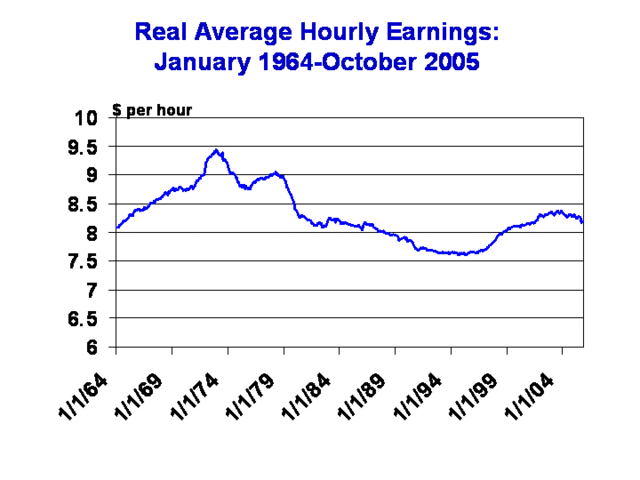
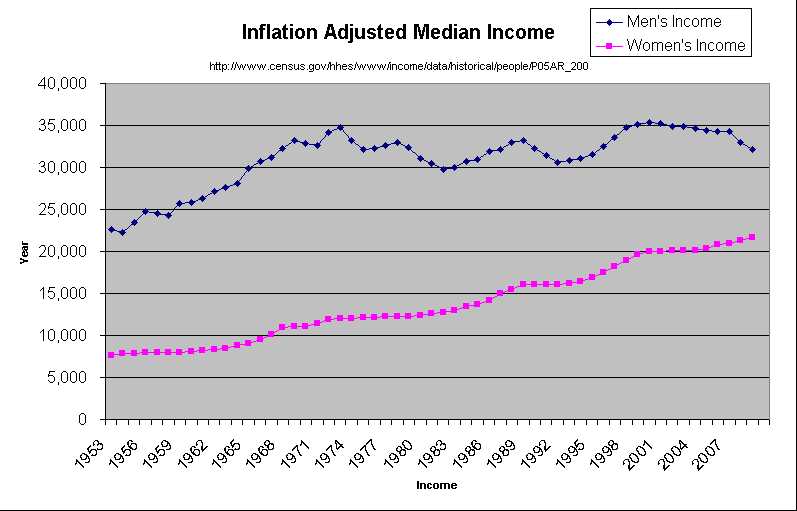
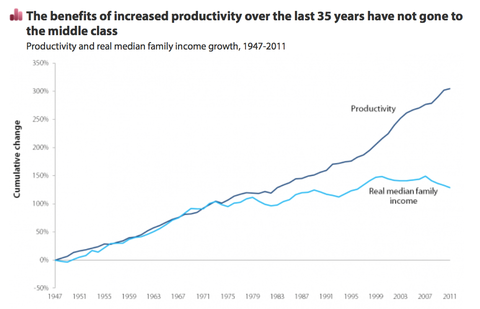
If I 'make' a million dollars, I accumulated money from other people. I'm not actually producing cash, I'm acquiring theirs. Therefore, others have collectively lost a million dollars of purchasing power to me.
These people can't go demand new money just because I have all of their money.
They go broke, I get rich, and income inequality is a thing.