Zone1 Was the Weimar Republic Hyper-inflation planned?

Was the Weimar Republic Hyper-inflation PLANNED?

  • No

    Votes: 0 0.0%
  • Yes

    Votes: 1 50.0%
  • Maybe... but only a sociopath would plan something like that?!

    Votes: 1 50.0%
  • Other answer, please be specific in a reply.

    Votes: 0 0.0%

  • Total voters
    2

DennisPTate

Gold Member
Joined
Nov 6, 2025
Messages
3,944
Reaction score
1,544
Points
178
My apologies but back in 1980 or '81, after I wrote the SAT in order to apply to
Ambassador College in the USA, I was told that my IQ was a mere 118.

I am continually looking at situations that indicate that perhaps we are dealing with people
with an IQ in the Einstein range or even above.

A few weeks ago I began to wonder if the Hyper-Inflation of the Weimar Republic of Germany
could have been PLANNED by off the scale intelligent and wealthy people who were working for the wealthiest of the
wealthy at a level that leaves us ordinary mortals in a state of severe Cognitive Dissonance?

I have read a pretty powerful case that the Hyper-inflation of the Weimar Republic of Germany,
as well as the Hyper-inflation of Argentina....
as well as the Hyper-inflation of Zimbabwe....
as well as the near Hyper -inflation of the Joe Biden era.....
was probably planned by off the scale brilliant people who knew that they knew that they knew that they needed
examples of a nation printing money.....
and experiencing Hyper-inflation seemingly as a result of their printing money......
but in actuality it was the fact that that nation was Printing Money AT THE SAME TIME THAT THERE WAS A MASSIVE DECREASE IN THE ECONOMIC PRODUCTIVITY OF THAT NATION!

The USA Dollar is backed up by the astonishing productivity of the USA Worker, but there is much more to this topic.

I submit to you that the number one economic problem confronting the USA is perhaps the usage of "Compound Interest Over Time." In order for this factor to continue to be one of the most important guiding principles for elected officials as well as for people with a piece of paper saying that they have a Degree or Doctorate in Economics.....
BigMedia needed several important examples of Hyper-inflation in order to brainwash elected officials and Economists so that they would virtually ignore Economists such as:
1. Economist Milton Friedman
2. Economist Harold Chorney
3. Economist John Hotson
4. Economist Mario Seccarrecia
5. Economic Historian Mr. Alain Pilote
6. Economic Historian Mr. Melvin Sickler


Almost any bright high school student could elaborate on the implications of this web page:
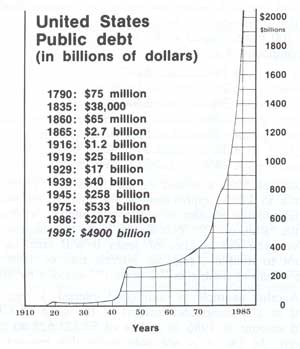

us-public-debt-graphic.jpg


I plead guilty.....
I am daring to comment on topics that ordinarily should be tackled by somebody with a whole lot more brain power than I am working with!

But I feel that I have to do this.....
I believe that some sort of Spiritual Power is leading me into this necessary Intellectual Conflict that must be dealt with from 2026 to 2036?!
 
Last edited:
My apologies but back in 1980 or '81, after I wrote the SAT in order to apply to
Ambassador College in the USA, I was told that my IQ was a mere 118.

I am continually looking at situations that indicate that perhaps we are dealing with people
with an IQ in the Einstein range or even above.

A few weeks ago I began to wonder if the Hyper-Inflation of the Weimar Republic of Germany
could have been PLANNED by off the scale intelligent and wealthy people who were working for the wealthiest of the
wealthy at a level that leaves us ordinary mortals in a state of severe Cognitive Dissonance?

I have read a pretty powerful case that the Hyper-inflation of the Weimar Republic of Germany,
as well as the Hyper-inflation of Argentina....
as well as the Hyper-inflation of Zimbabwe....
as well as the near Hyper -inflation of the Joe Biden era.....
was probably planned by off the scale brilliant people who knew that they knew that they knew that they needed
examples of a nation printing money.....
and experiencing Hyper-inflation seemingly as a result of their printing money......
but in actuality it was the fact that that nation was Printing Money AT THE SAME TIME THAT THERE WAS A MASSIVE DECREASE IN THE ECONOMIC PRODUCTIVITY OF THAT NATION!

The USA Dollar is backed up by the astonishing productivity of the USA Worker, but there is much more to this topic.

I submit to you that the number one economic problem confronting the USA is perhaps the usage of "Compound Interest Over Time." In order for this factor to continue to be one of the most important guiding principles for elected officials as well as for people with a piece of paper saying that they have a Degree or Doctorate in Economics.....
BigMedia needed several important examples of Hyper-inflation in order to brainwash elected officials and Economists so that they would virtually ignore Economists such as:
1. Economist Milton Friedman
2. Economist Harold Chorney
3. Economist John Hotson
4. Economist Mario Seccarrecia
5. Economic Historian Mr. Alain Pilote
6. Economic Historian Mr. Melvin Sickler


Almost any bright high school student could elaborate on the implications of this web page:


us-public-debt-graphic.jpg


I plead guilty.....
I am daring to comment on topics that ordinarily should be tackled by somebody with a whole lot more brain power than I am working with!

But I feel that I have to do this.....
I believe that some sort of Spiritual Power is leading me into this necessary Intellectual Conflict that must be dealt with from 2026 to 2036?!
Oxford's Bizz Skule Gradchewits

Just the opposite. The mentally inferior but entitled British business heiristocracy was incapable of competing with German economic growth, which is also why it started World War I to level the Germans down to the British inability to grow.
 
Yeah, hyper-inflation is great to pay all your debts.

Yes, the officials in France and England who may perhaps have wanted to make the German officials of the Weimar Republic Era to look bad, the whole public drama, would tend to cause a several century old plan by the wealthiest of the wealthy to continue to work brilliantly.

Thus, yes, Compound Interest Over Time would continue to keep the Royal Families and the Aristocratic families of Europe in a position of influence and real power over most nations on this third rock.


I saw a Netflix series several years ago that does give some background information to all of this.


The most prominent series on Netflix focusing on a European banking family is Medici (also known as Medici: Masters of Florence), which documents the rise of the influential Florentine banking dynasty during the 15th century.
Netflix +1
Here are the details on Medici and other related shows:

1. Medici (Masters of Florence / The Magnificent)
This Italian-British historical drama series is available on Netflix in several regions, including the UK, Canada, and India, and previously in the US.


MEDICI: MASTERS OF FLORENCE (Starring Richard Madden) - Official Trailer​

 
Oxford's Bizz Skule Gradchewits

Just the opposite. The mentally inferior but entitled British business heiristocracy was incapable of competing with German economic growth, which is also why it started World War I to level the Germans down to the British inability to grow.

Now this is indeed a fascinating reply to this topic!

Could it be though that the BigBanking families of London and Paris admitted that their people tended to be less productive than German managers, engineers, archeticts and workers.....
so their extremely intelligent economists and accountants and lawyers and elected officials, come up with a scheme to humble Germany and wreck the economy of Germany for a decade or two......?

This was a risky plan though because it set the Stage for Adolf Hitler.
 
Yes, the officials in France and England who may perhaps have wanted to make the German officials of the Weimar Republic Era to look bad, the whole public drama, would tend to cause a several century old plan by the wealthiest of the wealthy to continue to work brilliantly.

Thus, yes, Compound Interest Over Time would continue to keep the Royal Families and the Aristocratic families of Europe in a position of influence and real power over most nations on this third rock.


I saw a Netflix series several years ago that does give some background information to all of this.


MEDICI: MASTERS OF FLORENCE (Starring Richard Madden) - Official Trailer​


If they wanted to weaken Germany via hyper-inflation they did not succeed as the economic numbers of 1925 show that Germany was the biggest European economy:

In general we can say that the wealthy elite that owns the most money is not interested in inflation. They lose all and the debtors win.
 
If they wanted to weaken Germany via hyper-inflation they did not succeed as the economic numbers of 1925 show that Germany was the biggest European economy:

In general we can say that the wealthy elite that owns the most money is not interested in inflation. They lose all and the debtors win.

Here in Canada since 1974 roughly ninety eight percent of the total Money Supply of "Northern Pesos" was created by privately owned banks.

When you can create the fiat currency of a nation you end up with astonishing power over the elected officials.

On the plus side.....
I could argue that the Prime Minister Pierre E. Trudeau economic gambit of 1974 DID slow down the economy of Canada.....
as well as the economy of the USA.....
and it is possible that Prime Minister Pierre E. Trudeau may well deserve credit for playing a significant role in saving the environment of Canada and the USA from the astonishingly productive workers, engineers, scientists and managers of Canada and the USA?


[Ms. Betty Krawcayk] :
The Bank of Canada was first established by Prime Minister Richard Bennet in 1935 as a private central bank, but was then nationalized by William Lyon Mackenzie King in 1938. By nationalizing the bank, Mackenzie King meant for it to belong to the people so the Canadian government could borrow funds with little or no interest for capital expenditures. The mandate of the newly nationalized Bank of Canada was to act as the banker to the government and to manage the public debt. As Mackenzie King famously said: “Once a nation parts with the control of their currency and credit, it matters not who makes that nation’s laws. Usury, once in control, will wreck any nation. Until the control of the issue of currency and credit is restored to government and recognized as its most sacred responsibility, all talk of sovereignty of parliament and of democracy is idle and futile.”

So the Bank of Canada was nationalized in 1938 and the government could now borrow money with little or no interest. And it worked. The Canadian government built freeways, public transportation systems, subway line, airports, the St. Lawrence Seaway and funded a national health care system and the Canada Pension Plan. But then Trudeau, under the influence of the international financial group called Basel’s
Committee’s Recommendations (The Basel Committee on Banking Supervision) made the decision to halt the borrowing of money from the Bank of Canada, and instead, chose to borrow from the private banks who instead of lending to the government at no interest, or low interest, introduced higher interest rates along with compound interest.


All banks know very well the magic of compound interest. And Pierre Trudeau must have known that the mounting compounded national debt would lead to Canadians eventually owing a dollar fifty for every dollar of their disposable incomes. After all, he studied economics at the London School of Economics. Surely the professors there knew about compound interest.

So Pierre Trudeau, instead of feeling blessed that Canada, unlike the US, had a nationalized central bank, signed our bank away to the private banks. Couldn’t Trudeau, such an educated man, surmise that citizens in a few years would be struggling to make car payments and meet rent and mortgages and student loans and to buy healthy food while last year’s profits for the big five (that’s Royal Bank, TD Bank, Scotiabank, Bank of Montreal and CIBC amounted to $31.7 billion?) If he did, he didn’t care. But it doesn’t have to be this way. It really doesn’t. Our Bank of
Canada is still there. Next time." (Ms. Betty Krawczyk)


Here in Canada since 1974 roughly ninety eight percent of the total Money Supply of "Northern Pesos" was created by privately owned banks.

When you can create the fiat currency of a nation you end up with astonishing power over the elected officials.

On the plus side.....
I could argue that the Prime Minister Pierre E. Trudeau economic gambit of 1974 DID slow down the economy of Canada.....
as well as the economy of the USA.....
and it is possible that Prime Minister Pierre E. Trudeau may well deserve credit for playing a significant role in saving the environment of Canada and the USA from the astonishingly productive workers, engineers, scientists and managers of Canada and the USA?


I just did a little research and it appears that the Bank of Canada actually cannot give loans to the government. It only can buy government bonds and sell them.


So, as it looks to me, the government buys its own bonds, thus creating debts, where actually are none. Could be the reason why the Supreme Court completely rejected the Comer case.
 
I just did a little research and it appears that the Bank of Canada actually cannot give loans to the government. It only can buy government bonds and sell them.


So, as it looks to me, the government buys its own bonds, thus creating debts, where actually are none. Could be the reason why the Supreme Court completely rejected the Comer case.

The way that it worked out for decades is that the Bank of Canada was used to give loans to the provinces to build road, schools, hospital, railways and other infrastructure projects. This created jobs in the provinces so as the provinces collected provincial income tax and sales taxes, they simply repaid the loans to the Bank of Canada and the net interest payments was essentially zero.

The people who analyze what was accomplished through the Bank of Canada during those decades do not want to calculate the Claw Back Effect of Compound Interest Over Time that went into effect when Prime Minister Pierre E. Trudeau made what could be argued was one of the most colossal errors that was made by a Sitting Canadian Prime Minister in these last sixty years.

At least that is certainly the impression that I got from three courageous Canadian economists:

By Harold Chorney, John Hotson and Mario Seccareccia:


“Governments these days find it easy to defend cuts in services and programs. All they have to do is point to their annual deficits and their total accumulated debts. (As of March, 1994, Canada's public debt was about $546 billion.) This public debt provides the politicians with a convenient excuse for cutting spending or raising taxes. Or both. “We're broke”, they tell us plaintively. “We can't afford to increase public services, or even keep them at their present level.”


A lesson from the War


“As the deep recession dragged into 1992, Finance Minister Don Mazankowski said he couldn't do anything about it. His hands were tied, he said. The federal government was broke. The cupboard was bare. The deficit and accumulated national debt were so enormous that his first priority had to be to reduce them — even if that meant prolonging the recession and making it even worse.

“So his budget contained almost nothing to revive the sick economy. With interest payments on the debt gobbling up one-third of tax revenue, his response was to keep taxes high and axe more public services and agencies. Like Martin Luther before him, Mazankowski in effect proclaimed: «Here stand I. I cannot do otherwise.

“But it doesn't take an economist to see that in fact he could. All you have to do is imagine what the government would do if it got involved in another Gulf War — or if that war were still raging. Would the Finance Minister have brought down the same kind of budget? Would he have said, «We'd like to keep on fighting, but we're broke, so we're calling our troops back»? Not on your life!

“Did Canada surrender half way through World War II because the national debt had grown even larger than the Gross Domestic Product (GDP)? Of course not! Somehow the extra money was found. If it wasn't by raising taxes or borrowing from the private banks, why, the Bank of Canada simply created all the money the government needed — and at near-zero interest rates, too!

“When World War II ended, the national debt relative to the national income was more than twice as large as it is now. But was the country ruined? Did we have to declare national bankruptcy? Far from it! Instead, Canada's economy boomed and the country prospered for most of the post-war period.”


The Bank of Canada has failed in its duty


“Why isn't the same thing happening today? Why was a much larger national debt shrugged off in 1945, while today's much smaller debt (as a percentage of GDP) is being used as an excuse to let the economy stagnate?

“The answer can be found at the Bank of Canada. During the war, and for 30 years afterward, the government could borrow what it needed at low rates of interest, because the government's own bank produced up to half of all the new money. That forced the private banks to keep their interest rates low, too.

“Since the mid-1970s, however, the Bank of Canada, with government consent, has been creating less and less of the new money, while letting the private banks create more and more. Today «our» bank creates a mere 2% of each year's new money supply, while allowing the private banks to gouge the government — and of course you and me, as well — with outrageously high interest rates. And it is these extortionate interest charges that are the principal cause of the rapid escalation of the national debt. If the federal government were paying interest at the average levels that prevailed from the 1930s to the mid-1970s, it would now be running an operating surplus of about $13 billion!”

The updated version (January, 1996) of the pamphlet expresses the same ideas:

“The Bank of Canada was established in 1935 by an Act of Parliament. In its legislative mandate, it is directed to promote economic growth and employment, as well as preserving the value of the Canadian dollar.

“Shortly after the Bank opened its doors, it was faced with the bankruptcy of provincial governments due to the Depression. Interpreting its mandate widely, as it is supposed to do, it made precedent-setting loans to restore the finances of Manitoba. Generous loans to other provinces followed.

“World War II found Canada ready and determined to act in the Allied cause. The war effort of the federal government was financed through enormous deficits and very low interest rates brought about by the Bank of Canada. At war's end, the national debt stood at about 120% of Gross Domestic Product (GDP), nearly double the level of today. Yet Canada went on to enjoy the greatest period of economic growth in its history...

“(Now) the Bank of Canada has decided that any government spending not financed by taxation is inflationary, so it no longer extends credit to the government by holding bonds and Treasury bills. Its small holdings of government debt are confined to the banknotes needed by the economy for currency in circulation...” (End of 1996 updated version's excerpts.)


Interest rates and inflation


“Thousands of years of sad experience with the concentration of wealth and debt slavery caused all the ancient books of wisdom — including the Bible and the Koran — to condemn the charging of immoderate rates of interest.(...) The conventional wisdom, however, is that inflation is the greatest threat to the economy and must be restrained by raising interest rates. This flies in the face of the common-sense observation that rising prices (inflation) are caused by rising costs, and that interest rates are costs. So raising them will raise prices, not lower them.

“Also raised by this policy, of course, is the income of the money-lenders, which explains why they subscribe so fervently to the perverse doctrine that high interest rates are somehow anti-inflationary. Certainly the world's bankers and other money-lenders have gained much from the nonsensical notion that, while giving workers a big raise is inflationary, giving money-lenders a big raise is not.

“Many economists rail against «wage push», and it's true that wages have risen by 2,700% over the past 50 years. But in the same period government tax revenue went up by 3,400%, and net interest by 26,000%! Yet, most of the economic textbooks that deplore rising wages don't even mention the tax and interest pushes. And it is not because they are complex ideas — rather, they are simple and obvious — but because it would be so embarrassing for economists to admit they've made a boner of such magnitude: that their theory of monetary policy violates basic principles of scientific logic."


The creation of money


“One of the most pervasive myths about the government deficit is that governments which spend more than they receive in revenue must borrow the difference, thus increasing the public debt.

“In fact, a government can choose to create the needed additional money instead of borrowing it from the banks, the public, or foreigners.

“Business and the conservatives in politics and the media are horrified by the suggestion that the government exercise its right to create more money. They claim it would precipitate another ruinous bout of inflation.

“But money creation is money creation — whether by a private bank or the Bank of Canada. And a government in debt only to the government's own bank is not really in debt at all. If it wants to go through the rigamarole of having the Treasury «borrow» from the central bank and later pay interest, that is a minor matter of bookkeeping. As long as the central bank's profits are returned to the Treasury, the results are much the same as if the Treasury had created the money itself.

“There is no reason why the growth of Canada's money supply (averaging about $22 billion annually in recent years) could not be more substantially created by the Bank of Canada. If that policy had been followed, the federal government would not have been obliged to add to its debts to pay interest on old debts. Instead, the Bank of Canada has produced barely 2% of the money added in recent years, while the chartered banks added the rest as they made loans to households, businesses, and all levels of government. At the very least, the Bank of Canada and the chartered banks should share the privilege of creating money on a 50-50 basis.

“Those who dismiss such a proposal as “inflationary” should be required to explain why it would be more inflationary for the government's bank to create $11 billion and the private banks $11 billion, rather than the present practice of having the government's bank create $0.7 billion and the private banks $21.3 billion!

“Clearly the current problem of the Canadian government's deficit is not its absolute size, or its size relative to the GDP, but the insane way it is being financed. A return to the policies of the World War II era, when the Bank of Canada produced almost one-half of the new money at near-zero interest, would do wonders for the economy, while greatly shrinking the deficit... The first order of business for a post-Mulroney-era government must be to regain effective control of the Bank of Canada and make it the primary source of money creation.

“It is ludicrous for the government to put billions of dollars into circulation by borrowing from the private banks, when it can create the extra money it needs, virtually free.”

 
Yes it was planned. The German central bank and the govt. hoped to pay off the reparations in paper Reichsmarks instead of gold reichmarks, and began floating their currency on the Dutch stock exchange. It was a plan that failed, but didn't affect the aristocrats much and many just partied out of the country while the population suffered.

Contrary to myth, the reparations weren't any more onerous on the German economy than the reparations forced on France in the 1870's; they just didn't want to pay them. The U.S. stepped in and paid a lot of it for them, on extended terms and low interest, but Hitler repudiated even those when he took office. The French and Brits then seized the mines and Rhineland and extracted the reparations in kind.

Not the only good book on the Weimar Republic, but a good one to have:


His book, Inside Nazi Germany is also worth a read as well, with lots of data.
 
The way that it worked out for decades is that the Bank of Canada was used to give loans to the provinces to build road, schools, hospital, railways and other infrastructure projects. This created jobs in the provinces so as the provinces collected provincial income tax and sales taxes, they simply repaid the loans to the Bank of Canada and the net interest payments was essentially zero.

The people who analyze what was accomplished through the Bank of Canada during those decades do not want to calculate the Claw Back Effect of Compound Interest Over Time that went into effect when Prime Minister Pierre E. Trudeau made what could be argued was one of the most colossal errors that was made by a Sitting Canadian Prime Minister in these last sixty years.

At least that is certainly the impression that I got from three courageous Canadian economists:
Again, the Bank of Canada cannot lend money. They buy bonds from the government (and provinces), then the government buys them back without paying for that, though. This cannot go on forever, that is for sure.
 
Yes it was planned. The German central bank and the govt. hoped to pay off the reparations in paper Reichsmarks instead of gold reichmarks, and began floating their currency on the Dutch stock exchange. It was a plan that failed, but didn't affect the aristocrats much and many just partied out of the country while the population suffered.

Contrary to myth, the reparations weren't any more onerous on the German economy than the reparations forced on France in the 1870's; they just didn't want to pay them. The U.S. stepped in and paid a lot of it for them, on extended terms and low interest, but Hitler repudiated even those when he took office. The French and Brits then seized the mines and Rhineland and extracted the reparations in kind.

Not the only good book on the Weimar Republic, but a good one to have:


His book, Inside Nazi Germany is also worth a read as well, with lots of data.


I have read that the serious decrease in the productive capability of Germany under the Weimar Republic played a huge role in the hyper-inflation as well. If the productivity of Germany had remained high then the products being produced would have backed up the value of the Weimar currency.

Yes, the productive capability of the Weimar Republic was greatly decreased and crippled by the combined effects of the Treaty of Versailles, the loss of industrial territories, the hyperinflation crisis, and the Great Depression. The economic output was severely impaired for several years following World War I, with industrial production only reaching pre-war levels again around 1927.
Loyola University New Orleans +2
Key factors driving the decline included:
  • Territorial Loss (Treaty of Versailles): Germany lost 13% of its European territory, including crucial areas representing approximately 16% of its coal and 48% of its iron ore production. The surrender of the Alsace-Lorraine region to France and the separation of the Saar Basin caused a severe reduction in German steel and coal production.
  • Occupation of the Ruhr (1923): The seizure of Germany's main industrial heartland by French and Belgian troops led to a policy of "passive resistance," which essentially halted production in the most crucial manufacturing and mining areas.
  • Destruction of Capital and Infrastructure: The war and subsequent treaty terms necessitated the surrender of significant assets, including a large portion of the railway system and 90% of the merchant fleet.
  • The Great Depression (1929–1933): The economy, already fragile, collapsed after American loans were recalled. Industrial production more than halved between 1929 and 1932. By 1932, German industrial production was roughly 30% below its pre-war levels, and the country was suffering from massive unemployment.
    Loyola University New Orleans +7
While the "Golden Twenties" (1924–1929) brought temporary stabilization through foreign loans and financial reforms, the structural base for producing goods was significantly weaker than that of Imperial Germany.
 
I have read that the serious decrease in the productive capability of Germany under the Weimar Republic played a huge role in the hyper-inflation as well. If the productivity of Germany had remained high then the products being produced would have backed up the value of the Weimar currency.

For one, they sabotaged a lot of mines they had captured in French and other territories in their invasions, as well as destroying property, yet, while France and Italy and the US all suffered inflation as well, it was nothing like the Weimar's, which was as was said earlier the Reichbank deliberately devalued the paper currency in a ploy to pay the reparations in much cheaper currency. Germany's productivity fell drastically during the war, not after, which was why htey couldn't maintain their armies in the field and much of the land lost was later.

Summary


  • After World War I, the Treaty of Versailles placed the territories of the Saar basin, formerly part of Germany, under the administration of the League of Nations for a period of 15 years. As compensation for the destruction by Germany of coal mines in the north of France and part of the reparations Germany was to pay for the war, France was given control of the coal mines of the Saar for this period. The administration of the territory was entrusted to a Governing Commission consisting of five members chosen by the Council of the League of Nations: one representative of France, one native German inhabitant of the Saar, and three representatives of countries other than France and Germany. At the end of 15 years, a plebiscite was to be held to determine the final status of the Saar. This vote took place on January 13, 1935. More than 90 percent of the voters favored the immediate reintegration of the Saar into Germany, which duly took effect on March 1, 1935. An international police force, composed of soldiers from Britain, the Netherlands, Italy, and Sweden, was deployed to maintain order on the day of the plebiscite.

David Stevenson's excellent book covers the internal economic collapse extensively and in detail:


I can post can excerpts later, when I get time. The last attempt at an offensive exhausted Germany.

Aristocrats like Goering partied overseas while they enacted policies that bankrupted the 'little people'.
 
Last edited:
Depressions can be Inflationary or Deflationary depending on how the government wants to do it.
 
I have read that the serious decrease in the productive capability of Germany under the Weimar Republic played a huge role in the hyper-inflation as well. If the productivity of Germany had remained high then the products being produced would have backed up the value of the Weimar currency.

One aspect of the Versailles Treaty that did contribute directly to the rise of the Freikorps and Hitler was due to the failure of the Allies to occupy Germany. The Franch and Brits feared the domination of the US in the aftermath and called an armistice too early, and then the Treaty limited the German govt.'s number of troops to 100,000, not nearly adequate enough to maintain law and order in the chaos that follows defeat in any war. The occupation would have been the wiser course, and the failure to do that while at the same time tying the 'reformed' govt's hands behind its back led to disaster.

As for the 'economy', the Germans managed to find enough money to finance the 'black armies' for decades. That strategy started long before Hitler. IT was in fact overseen by the same Wehrmacht General Streicher that was assassinated by Hitler as his main rival.


The Black Reichswehr (German: Schwarze Reichswehr) was the unofficial name for the extra-legal paramilitary formation that was secretly a part of the German military (Reichswehr) during the early years of the Weimar Republic. It was formed in 1921 after the German government, under pressure from the Entente, banned the Freikorps. General Hans von Seeckt thought that the Reichswehr no longer had enough men available to guard the country's borders, but the army could not be expanded because of the manpower restrictions imposed on it by the Treaty of Versailles.

... and so on.
 
Last edited:
15th post
Now this is indeed a fascinating reply to this topic!

Could it be though that the BigBanking families of London and Paris admitted that their people tended to be less productive than German managers, engineers, archeticts and workers.....
so their extremely intelligent economists and accountants and lawyers and elected officials, come up with a scheme to humble Germany and wreck the economy of Germany for a decade or two......?

This was a risky plan though because it set the Stage for Adolf Hitler.
The 1% with 99% Control and 100% of the Ability to Absolve Themselves

It wasn't the Commoners who brought the British economy down. Instead of the Oxford drones, think of the self-educated Michael Faraday, who invented the practical use of electricity.
 
The 1% with 99% Control and 100% of the Ability to Absolve Themselves

It wasn't the Commoners who brought the British economy down. Instead of the Oxford drones, think of the self-educated Michael Faraday, who invented the practical use of electricity.


Shalom The Sage of Main Street....
I have to admit that my last name "Tate" has caused me quite a bit of guilt for these past four decades, because it is pretty obvious that somebody who could collect all the bucks to build a museum, was likely part of the upper class of London, England?

My mom's people are from southern Ireland....
my dad's ancestors were from Northern Ireland.....
and I know how my relatives managed to pretty much enslave the world, [including the United States].

I actually believe that we Canadian descendants of United Empire Loyalists, who feel thankful that Americans allowed our ancestors to freely move to Canada, might just be able to put together a plan to come up with an apology with teeth based on how badly my London based distant relatives behaved from 1740 to 1775?


[Alain Pilote, The History of Banking Control in the United States] :

The happiest population

franklin.jpg
Benjamin Franklin

We are in 1750. The United States of America does not yet exist; it is the 13 Colonies of the American continent, forming “New England”, a possession of the motherland, England. Benjamin Franklin wrote about the population of that time: “Impossible to find a happier and more prosperous population on all the surface of the globe.” Going over to England to represent the interests of the Colonies, Franklin was asked how he accounted for the prosperous conditions prevailing in the Colonies, while poverty was rife in the motherland:
“That is simple,” Franklin replied. “In the Colonies we issue our own money. It is called Colonial Scrip. We issue it in proper proportion to make the products pass easily from the producers to the consumers. In this manner, creating ourselves our own paper money, we control its purchasing power, and we have no interest to pay to no one.”
The English bankers, being informed of that, had a law passed by the British Parliament prohibiting the Colonies from issuing their own money, and ordering them to use only the gold or silver debt-money that was provided in insufficient quantity by the English bankers. The circulating medium of exchange was thus reduced by half.
“In one year,” Franklin stated, “the conditions were so reversed that the era of prosperity ended, and a depression set in, to such an extent that the streets of the Colonies were filled with unemployed.”
Then the Revolutionary War was launched against England, and was followed by the Declaration of Independence in 1776. History textbooks erroneously teach that it was the tax on tea that triggered the American Revolution. But Franklin clearly stated:
“The Colonies would gladly have borne the little tax on tea and other matters, had it not been the poverty caused by the bad influence of the English bankers on the Parliament: which has caused in the Colonies hatred of England, and the Revolutionary War.”
The Founding Fathers of the United States, bearing all these facts in mind, and to protect themselves against the exploitation of the International Bankers, took good care to expressly declare, in the American Constitution, signed at Philadelphia, in 1787, Article 1, Section 8, paragraph 5:
“Congress shall have the power to coin money and to regulate the value thereof.”

The bank of the bankers


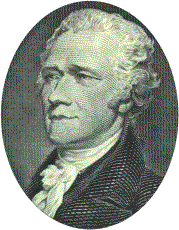
hamilton.gif
Alexander Hamilton


But the bankers did not give up. Their agent, Alexander Hamilton, was named Secretary of Treasury in George Washington's cabinet, and advocated the establishment of a federal bank to be owned by private interests, and the creation of debt-money with false arguments like: “A national debt, if it is not excessive, will be to us a national blessing... The wisdom of the Government will be shown in never trusting itself with the use of so seducing and dangerous an expedient as issuing its own money.” Hamilton also made them believe that only the debt-money issued by private banks would be accepted in dealing abroad.
Thomas Jefferson, the Secretary of State, was strongly opposed to that project, but President Washington was finally won over by Hamilton's arguments. A federal bank was thus created in 1791, the “Bank of the United States”, with a 20 years' charter. Although it was termed “Bank of the United States”, it was actually the “bank of the bankers”, since it was not owned by the nation, but by individuals holding the bank's stocks, the private bankers. This name of “Bank of the United States” was purposely chosen to deceive the American population and to make them believe that they were the owners of the bank, which was not the case. The charter for the Bank of the United States ran out in 1811, and Congress voted against its renewal, thanks to the influence of Thomas Jefferson and Andrew Jackson:


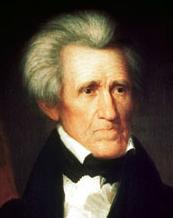
jackson-andrew.jpg
Andrew Jackson​


“If Congress,” Jackson said, “has a right under the Constitution to issue paper money, it was given them to use by themselves, not to be delegated to individuals or corporations.”
Thus ended the history of the first Bank of the United States. But the bankers did not play their last card.

The bankers launch the war


[Alain Pilote]

For the record I am sixty six but it took me a couple of decades to clue that the last name "Tate," is an English name!
 
Last edited:
Back
Top Bottom