Right before the Ceasefire, Iran struck the major petrochemical facility in Saudi Arabia. Major blow to SA and the world loses I think the largest supplier of petrochemicals. Are Trump and Bibi trying to push the world into recession/depression?
I asked Grok about it.
The best available estimate of damage to Saudi Arabia's Al Jubail (Jubail Industrial City) petrochemical facilities, as of April 8, 2026 (one day after the April 7 Iranian missile/drone attack), is preliminary and incomplete. Official Saudi damage assessments are ongoing, with no public quantitative figures released on the physical extent of destruction, repair costs, or exact production losses.
Incident Context
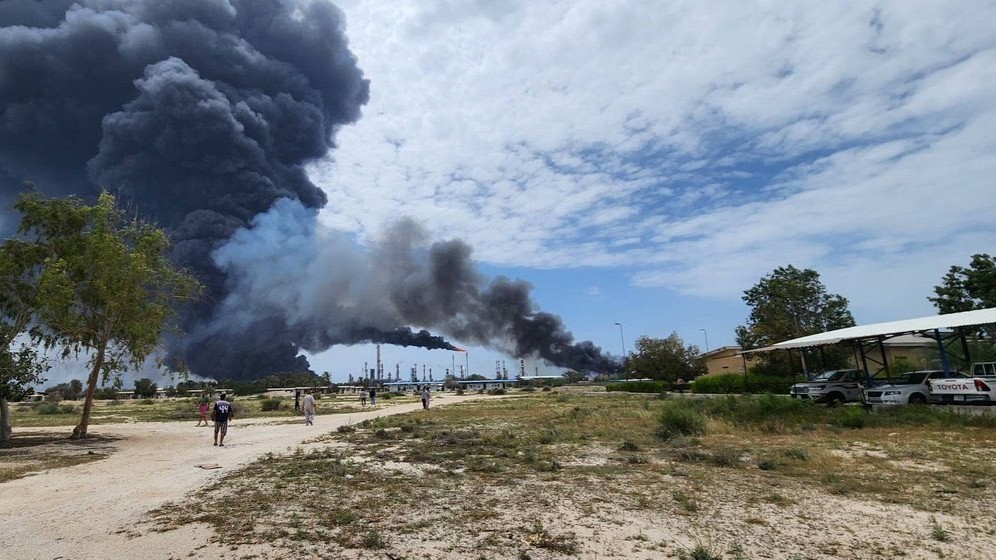
On April 7, 2026 (early hours), Iran launched ballistic missiles and suicide drones targeting Jubail Industrial City, Saudi Arabia’s largest petrochemical hub and a cornerstone of its downstream energy sector. Saudi air defenses intercepted most incoming projectiles (reports cite 7–11 ballistic missiles and additional drones), but debris triggered fires at key sites. Ground sources and verified footage confirmed explosions and thick smoke at SABIC-operated plants. Iran’s IRGC claimed direct hits on the Sadara complex (a $20 billion Aramco-Dow JV, already shut down the prior week due to earlier war-related disruptions) and other facilities, including one linked to ExxonMobil.
Jubail spans over 1,000 sq km and is the world’s largest integrated petrochemical complex, with annual output of ~60 million tonnes (roughly 6–8% of global petrochemical supply). It hosts major operations by SABIC (Saudi Basic Industries Corp.), Aramco joint ventures, Dow, TotalEnergies (SATORP refinery), and others. The city contributes an estimated 7–12% of Saudi Arabia’s GDP and ~11% of non-oil GDP.
Damage to Facilities
Confirmed impacts: Fires at SABIC plants in Jubail, with reports of loud explosions and partial evacuations. Debris fell near energy and petrochemical infrastructure.
Specific sites: SABIC facilities (primary target per ground reports); Sadara (already offline); possible additional sites claimed by Iran.
No confirmed casualties or full structural details yet. Pre-attack, SABIC had already declared force majeure on several export lines (e.g., methyl methacrylate, monoethylene glycol, diethylene glycol, styrene, methanol) due to Strait of Hormuz shipping disruptions.
Physical damage estimate: Not yet quantified publicly. Analysts note it is a "supply destruction event" rather than mere disruption, with repairs potentially constrained by global equipment backlogs (2–4 years in some cases). Broader Gulf energy infrastructure damage from the ongoing conflict is estimated at a minimum of $25 billion (Saudi share unspecified).
SABIC’s April 8 regulatory filing to the Tadawul stock exchange explicitly states it cannot estimate when Jubail plants will resume production (contingent on "domestic and international factors" such as war dynamics, repairs, and security). It warns of a "material impact to 2026 financial results."
Potential Economic Impact
Short-Term (Weeks to Months)
Production and revenue losses: Affected plants are halted, removing significant volumes from global markets. A weeks-long shutdown could erase much or all of SABIC’s annual adjusted net income (2025 adjusted profit was ~SAR 2.1 billion / ~$560 million). Jubail’s role in global supply means immediate shortages in key chemicals (plastics, fertilizers, glycols, etc.).
Market price shocks: Polypropylene (PP) prices have roughly doubled since the broader conflict intensified (e.g., PP raffia CFR West Africa +39%, specific spot markets +76–100%). Related feedstocks like naphtha have seen crack spreads surge (+179% in recent weeks). Brent crude has also risen sharply amid regional tensions (from ~$63/bbl in Jan 2026 to over $110–127/bbl).
Downstream effects: Supply allocation (not price-driven) is now in effect; buyers in packaging, agriculture, construction, and logistics face stoppages or higher costs. Global supply chains are tightening, with ripple effects on consumer goods and industrial inputs.
Saudi-specific: Temporary GDP drag from the non-oil sector; emergency response and suspended operations in parts of Jubail.
Long-Term (Months to Years)
Repair and restart costs: Likely hundreds of millions to low billions for Jubail-specific damage (exact figure pending assessment), plus insurance complications (war-risk exclusions typically apply). Gulf-wide repair estimates already exceed $25 billion.
Saudi economy: Material hit to SABIC (70% Aramco-owned, which is 82% government-owned), reducing dividends to the Public Investment Fund (PIF) and straining the budget (projected 2026 deficit risks rising). Delays to Vision 2030 diversification goals; potential employment impacts in the Eastern Province. Jubail represents nearly 50% of Saudi FDI in some estimates.
Global implications: Sustained higher petrochemical prices and supply tightness could contribute to inflation in dependent industries worldwide. If the conflict prolongs, broader energy market volatility and supply-chain fragility persist. Analysts describe this as economic warfare targeting the hydrocarbon value chain.
Bottom line: The physical damage appears contained relative to the scale of Jubail (thanks to intercepts), but the production halt and market reaction are significant. Detailed cost estimates will emerge in coming days/weeks as assessments conclude and SABIC/Aramco provide further updates. All figures above are based on the latest public reporting and company disclosures; the situation remains fluid amid ongoing regional tensions.

 southfront.press