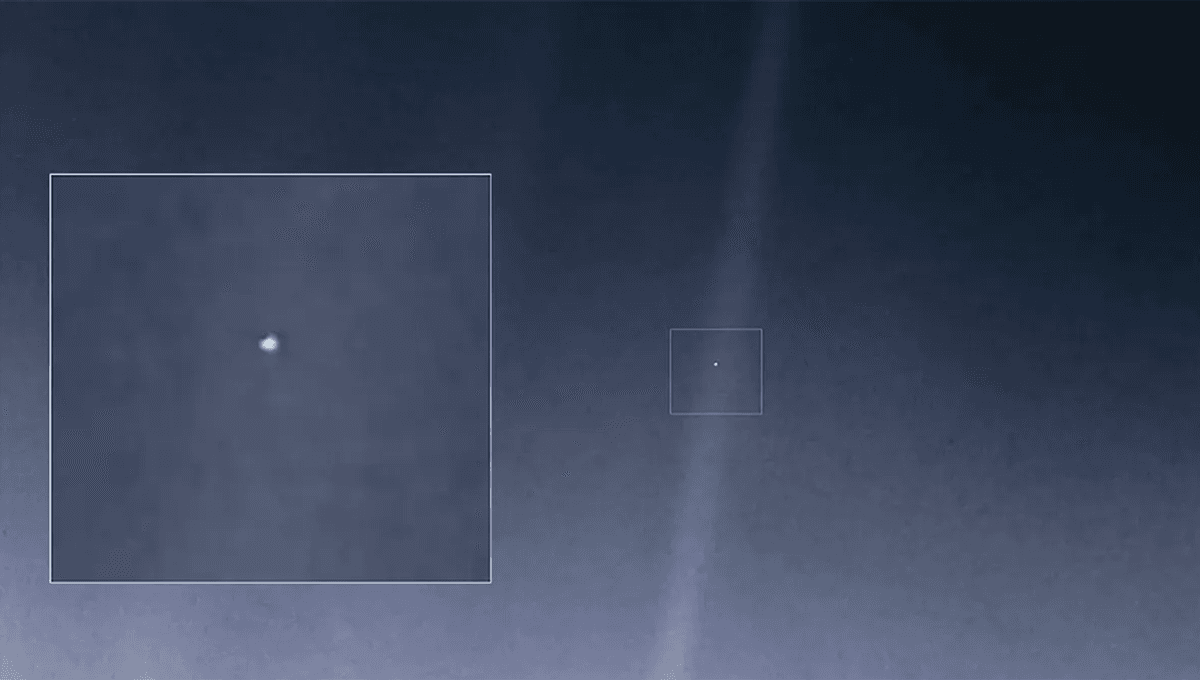
Voyager 1 officialy exits the Solar System

Here is an interesting puzzle about the Voyagers. They are slowing. Nobody understands the physics of why they are slowing.

Everyone understands it... interactions with dust, and small particles in space, while infrequent, happen. Each of these robs the Voyagers, which are coasting, of forward momentum.
They are also still doing work to escape the gravity of the solar system. Doing work takes energy, which is robbed from their kinetic energy .
 
Here is an interesting puzzle about the Voyagers. They are slowing. Nobody understands the physics of why they are slowing.

Everyone understands it... interactions with dust, and small particles in space, while infrequent, happen. Each of these robs the Voyagers, which are coasting, of forward momentum.
They are also still doing work to escape the gravity of the solar system. Doing work takes energy, which is robbed from their kinetic energy .

True as well, the gravity well of our sun extends out past the Oort Cloud. The voyagers still have a long way to go before they're truly free.
 
Here is an interesting puzzle about the Voyagers. They are slowing. Nobody understands the physics of why they are slowing.

Everyone understands it... interactions with dust, and small particles in space, while infrequent, happen. Each of these robs the Voyagers, which are coasting, of forward momentum.
They are also still doing work to escape the gravity of the solar system. Doing work takes energy, which is robbed from their kinetic energy .

True as well, the gravity well of our sun extends out past the Oort Cloud. The voyagers still have a long way to go before they're truly free.

Well, in that case, what can we call free? The gravity law is an inverse square function (I think) in its canonical form, which never goes all the way to zero. So, are you saying that the NASA people were able to calculate in the 1970s a propulsion, which at some distance coasting from the Sun will still leave a kinetic energy which is greater than the Sun's gravitational every at that distance?
 
But we do not even know that it is truly in intersteller space .
Initially NASA told us it was, but it had ony travelled in to the Heliosphere.And that was 2013.

This has slowed the craft because of gas , dust etc and it is claimed by some that something like Voyager One can never get through this effective barrier at the edge of the solar system .It ceased communicating sensibly several months ago.

Is NASA telling the truth ?Is it unable to move further out and its equipment is slowly being degraded by radiation ?

If Voyager One is stranded against an impenetrable wall , is this the equivalent of the Firmament that is referred to in ancient script ?
No escape ?
 
Out there: NASA says its Voyager 1 probe has become first spacecraft to leave the solar system
By Associated Press, Updated: Thursday, September 12, 2:40 PM
LOS ANGELES Voyager 1 has crossed a new frontier, becoming the first spacecraft ever to leave the solar system, NASA said Thursday.​
Thirty-six years after it was launched from Earth on a tour of the outer planets, the plutonium-powered probe is more than 11 1/2 billion miles from the sun, cruising through interstellar space the vast, cold emptiness between the stars, the space agency said.​
Voyager 1 actually made its exit more than a year ago, according to NASA. But its not as if theres a dotted boundary line or a signpost out there, and it was not until recently that scientists with the space agency had enough evidence to say that the probe had finally plowed through the hot plasma bubble surrounding the planets and escaped the suns influence.​

Here's an interesting update

On November 13, 2026, Voyager Will Reach One Full Light-Day Away From Earth​


12 years later.

And I don't think Voyager 1 actually left the solar system in 2013. We soon realized that the solar system is a lot bigger than we thought

first spacecraft to go beyond the heliosphere, cross the heliopause, and enter interstellar space. At its current position, it takes 23 hours, 29 minutes, and 27 seconds for signals from Earth to reach the spacecraft. At its current speed of about 61,198 kilometers per hour (38,027 miles per hour), it will still take over a year to widen that light-distance to a full 24 hours.

 
Out there: NASA says its Voyager 1 probe has become first spacecraft to leave the solar system
By Associated Press, Updated: Thursday, September 12, 2:40 PM
LOS ANGELES Voyager 1 has crossed a new frontier, becoming the first spacecraft ever to leave the solar system, NASA said Thursday.​
Thirty-six years after it was launched from Earth on a tour of the outer planets, the plutonium-powered probe is more than 11 1/2 billion miles from the sun, cruising through interstellar space the vast, cold emptiness between the stars, the space agency said.​
Voyager 1 actually made its exit more than a year ago, according to NASA. But its not as if theres a dotted boundary line or a signpost out there, and it was not until recently that scientists with the space agency had enough evidence to say that the probe had finally plowed through the hot plasma bubble surrounding the planets and escaped the suns influence.​
It's still in the Oort cloud and will be for many years to come, so it depends on how you define our solar system.
 
It's still in the Oort cloud and will be for many years to come, so it depends on how you define our solar system.

"The boundary between solar wind and interstellar wind is the heliopause, where the pressure of the two winds are in balance. This balance in pressure causes the solar wind to turn back and flow down the tail of the heliosphere

On August 25, 2012, Voyager 1 became the first spacecraft to go beyond the heliosphere and cross the heliopause, followed by Voyager 2 in 2018.

The Voyager spacecraft continue to send us data from beyond this "wall", the only two probes that have crossed it so far, nearly 50 years after they were launched.
 
It's still in the Oort cloud and will be for many years to come, so it depends on how you define our solar system.

To be sure, the Oort Cloud is just a hypothetical object which has never been observed. Actually, the definition NASA is using for the outer solar boundary is that point where one passes the bow shock of the Sun--- the point where the outer pressure from the solar wind becomes indistinguishable from the various random passing intergalactic objects and forces which apply.
 
To be sure, the Oort Cloud is just a hypothetical object which has never been observed. Actually, the definition NASA is using for the outer solar boundary is that point where one passes the bow shock of the Sun--- the point where the outer pressure from the solar wind becomes indistinguishable from the various random passing intergalactic objects and forces which apply.
The Oort cloud defines the boundaries of the sun's gravitational pull's ability to keep objects in orbit whether it's observable or not. That could be a definition of our solar system.
 
15th post
The Oort cloud defines the boundaries of the sun's gravitational pull's ability to keep objects in orbit whether it's observable or not. That could be a definition of our solar system.

In theory, but then, wouldn't that effect be contingent on size/mass? Therefore, if there is any Oort Cloud, it would fade out from large objects to rubble to finally dust.

But to reiterate, there is no known Oort Cloud, it is just a theory, but Voyager 1 HAS detected and measured the bow shock front where the solar wind fizzles off into the intergalactic background.
 
In theory, but then, wouldn't that effect be contingent on size/mass? Therefore, if there is any Oort Cloud, it would fade out from large objects to rubble to finally dust.

But to reiterate, there is no known Oort Cloud, it is just a theory, but Voyager 1 HAS detected and measured the bow shock front where the solar wind fizzles off into the intergalactic background.
It's like arguing how many angels can dance on the head of a pin.
 
It's like arguing how many angels can dance on the head of a pin.

No, it is like arguing what NASA can and cannot measure, test for and scientifically confirm. The bow shock boundary was measured by the Voyager instruments; there is no measurement for entering or leaving the Oort Cloud.

The Oort Cloud, if it exists, is so tenuous that it may never actually be confirmed.
 
No, it is like arguing what NASA can and cannot measure, test for and scientifically confirm. The bow shock boundary was measured by the Voyager instruments; there is no measurement for entering or leaving the Oort Cloud.

The Oort Cloud, if it exists, is so tenuous that it may never actually be confirmed.
And any "boundary" assigned to it would be completely arbitrary.
 
Back
Top Bottom