A distinction without a difference. All income and social security taxes are paid into the general fund. All social security payments are made out of the general fund. There is no different source of money. Today's taxpayers are funding all social security payments, just like any other welfare program.
As for employer and employee sides of social security, it's all actually paid by the employer. It's just which line of a form it's on. We pay both sides at the same time, the employee never sees the money. When we look at it in our accounting systems, it's all lumped together as well as the technical distinction is irrelevant.
On the other hand, it's all part of an employee's pay. We subract it all from your salary. We look at the total cost of employment, we don't just count their direct salary. Politicians want to get Americans to overthink it so you have distinctions in your mind that don't exist in reality. Just different lines on forms, that's all they are
I agree Social Security is all part of the employees pay because, as you said, from the employers point of view, it is the total cost of the employee.
However there is a stark distinction between a welfare program like food stamps and Social Security. All employees pay the social security tax, they don't all contribute to the food stamp program.
What does "contribute" mean?
Do you understand that 100% of your social security check is or will be paid by taxpayers? You didn't contribute anything to it, none of the check is the money you paid in. That was spent as you paid it.
Food Stamps: Money is taken from taxpayers and paid to the recipients
Social Security: Money is taken from taxpayers and paid to the recipients
Explain the difference
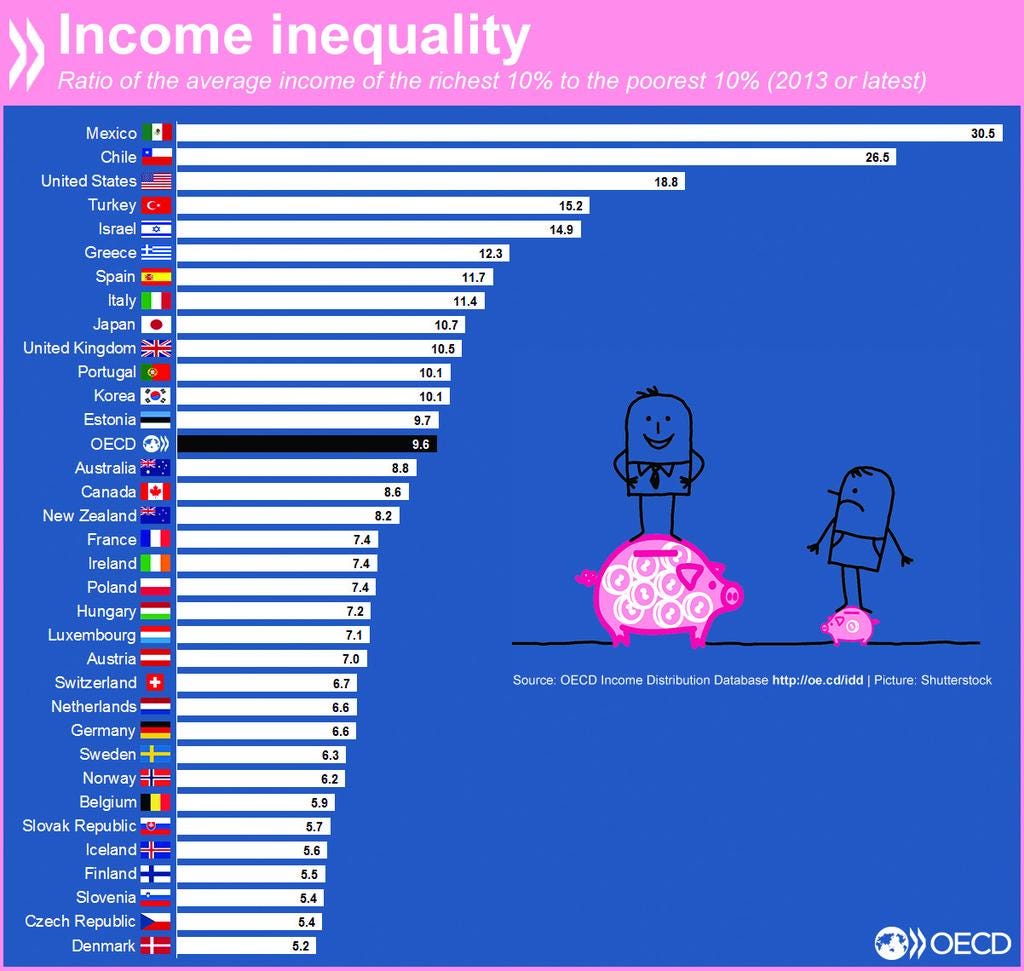
I have no idea where you're going or what your point is other than saying you don't like anything about Trumps budget. I think I'd rather spend my time discussing this with someone who is not so partisan, and can exhibit a bit of objective thinking. So I'll just concede all your points and say whatever you think the tax rates should be is right, and I'll look for someone interested in discussing the income gap, like I have been trying to do all along. Bye.
Ridiculous, taking fiscally responsible positions is not partisan.
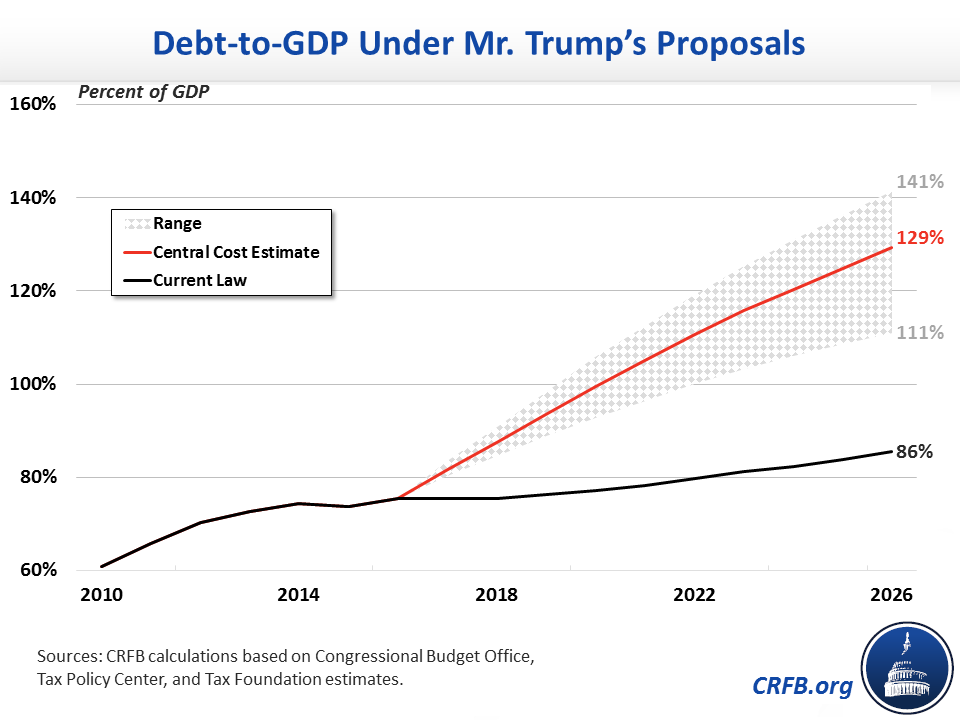
My point is not very complex to understand - Trump's tax-cutting plan is fiscally irresponsible. That is not a partisan opinion, that is a fact. You just refuse to consider that because that probably means agreeing with me !GASP!
We've seen various points he made running to be President, but he hasn't presented a plan. Before that, you're just making it up based on your vitriol towards him
He has in fact presented plan...otherwise there would be nothing to estimate obviously.
Who Benefits From Donald Trump's Tax Plan?
Seems that the war on poverty for the past 50 years has been a failure like the war on drugs. Maybe it is time to change the failed policies that keep the poor in poverty and allow supply side economics to raise all boats.
How about we come up with a definition of poverty that truly represents a persons standard of living?
The current definition-
Following the Office of Management and Budget's (OMB) Statistical Policy Directive 14, the Census Bureau uses a set of money income thresholds that vary by family size and composition to determine who is in poverty. If a family's total income is less than the family's threshold, then that family and every individual in it is considered in poverty. The official poverty thresholds do not vary geographically, but they are updated for inflation using the Consumer Price Index (CPI-U). The official poverty definition uses money income before taxes and does not include capital gains or noncash benefits (such as public housing, Medicaid, and food stamps).
There is no measure on the standard of living. In other words, a family of four who inherited a house worth $1 million which they live in, and has $2 million in a bank account paying 1% interest ($20,000 annually) would be listed as living in poverty. If they moved the money from the bank into a trust they would no longer be listed as poverty stricken.
I think it would be more useful to define poverty by ones standard of living as opposed to their income. Would anybody argue that people in poverty today have a higher standard of living than a middle income individual 100 years ago?
https://object.cato.org/pubs/pas/pa364.pdf
During the course of this century, the afford- ability and availability of consumer goods have greatly increased. Even most poor Americans have a cornucopia of choices that a century ago the Rockefellers and the Vanderbilts could not have purchased. Today more than 98 percent of American homes have a telephone, electricity, and a flush toilet. More than 70 percent of Americans own a car, a VCR, a microwave, air conditioning, cable TV, and a washer and dryer. At the turn of the century, almost no homes had those modern conveniences. And although Americans feel that they are more squeezed for time than ever, most adults have twice as much leisure time as their counterparts did 100 years ago.