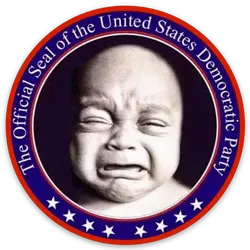
The left is going to disagree with you, but if you read between the lines with the left, they are scared to death that he might go down as the best POTUS of this century. Ask yourself this, if he was so unpopular, why does the left and the MSM have to dedicate SO MUCH time and effort to telling everyone how unpopular Trump is and trying, unsuccessfully, to chop him down? If he was unpopular they would be ignoring Trump and extolling just how great their dumocrap politicians are. We have the opposite, Trump is getting stuff done that Obama and Biden weren't capable of, and the dumocrap politicians are floundering and making fools of themselves everywhere they go.
Exactly!
The Democrats are so terrified of Trump that they will resort to any type of trick or lie or Wrap Up Smear in the book to attempt to knock him out.
This reminds me of a movie:
Phar Lap (1983) ORIGINAL TRAILER
Phar Lap (4 October 1926 – 5 April 1932) was a New Zealand-born champion Australian
Thoroughbred racehorse. Achieving great success during his distinguished career, his initial underdog status gave people hope during the early years of the
Great Depression.<a href="
Phar Lap - Wikipedia"><span>[</span>3<span>]</span></a> He won the
Melbourne Cup, two
Cox Plates, the
Australian Derby, and 19 other
weight-for-age races. He is considered one of the greatest race horses of all time.<a href="
Phar Lap - Wikipedia"><span>[</span>4<span>]</span></a><a href="
Phar Lap - Wikipedia"><span>[</span>5<span>]</span></a>
One of his greatest performances was winning the
Agua Caliente Handicap in
Mexico in track-record time in his final race.<a href="
Phar Lap - Wikipedia"><span>[</span>6<span>]</span></a> He won in a different country, after a bad start many lengths behind the leaders, with no training before the race, and he split his hoof during the race.
After a sudden and mysterious illness, Phar Lap died in 1932 in
Menlo Park, California.<a href="
Phar Lap - Wikipedia"><span>[</span>7<span>]</span></a> At the time, he was the third-highest stakes-winner in the world. His
mounted hide is displayed at the
Melbourne Museum, his skeleton at the
Museum of New Zealand, and his heart at the
National Museum of Australia.<a href="
Phar Lap - Wikipedia"><span>[</span>1<span>]</span></a><a href="
Phar Lap - Wikipedia"><span>[</span>8<span>]</span></a>
The name Phar Lap derives from the common
Zhuang and
Thai word for lightning: ฟ้าแลบ
[fáː lɛ̂p], literally 'sky flash'.<a href="
Phar Lap - Wikipedia"><span>[</span>9<span>]</span></a>
Phar Lap was called "The Wonder Horse," "The Red Terror," and "Big Red" (the latter nickname was also given to two of the greatest United States racehorses,
Man o' War and
Secretariat). He was affectionately known as "Bobby" to his
strapper Tommy Woodcock.<a href="
Phar Lap - Wikipedia"><span>[</span>10<span>]</span></a><a href="
Phar Lap - Wikipedia"><span>[</span>11<span>]</span></a> He was also sometimes referred to as "Australia's Wonder Horse."<a href="
Phar Lap - Wikipedia"><span>[</span>12<span>]</span></a>
According to the
Museum of Victoria, Aubrey Ping, a medical student at the
University of Sydney, suggested "Farlap" as the horse's name. Ping knew the word from his father, a Zhuang-speaking Chinese immigrant. Phar Lap's trainer
Harry Telford liked the name, but changed the F to PH to create a seven letter word, which was split in two in keeping with the dominant naming pattern of Melbourne Cup winners.<a href="
Phar Lap - Wikipedia"><span>[</span>13<span>]</span></a>
Sydney trainer Harry Telford persuaded American businessman David J. Davis to buy the colt at auction, based on his pedigree. Telford's brother Hugh, who lived in New Zealand, was asked to bid up to 190
guineas at the 1928
Trentham Yearling Sales. When the horse was obtained for a mere 160 guineas, he thought it was a great bargain until the colt arrived in Australia. The horse was gangly, his face was covered with warts, and he had an awkward gait. Davis was furious when he saw the colt as well, and refused to pay to train the horse. Telford had not been particularly successful as a trainer, and Davis was one of his few remaining owners. To placate Davis, he agreed to train the horse for nothing, in exchange for a two-thirds share of any winnings.<a href="
Phar Lap - Wikipedia"><span>[</span>16<span>]</span></a> Telford leased the horse for three years and was eventually sold joint ownership by Davis.<a href="
Phar Lap - Wikipedia"><span>[</span>16<span>]</span></a>
As his achievements grew, there were some who tried to halt his progress. Criminals tried to shoot Phar Lap<a href="
Phar Lap - Wikipedia"><span>[</span>10<span>]</span></a><a href="
Phar Lap - Wikipedia"><span>[</span>18<span>]</span></a> on the morning of Saturday 1 November 1930 after he had finished track work. They missed, and later that day he won the Melbourne Stakes, and three days later the Melbourne Cup as odds-on favourite at 8 to 11.<a href="
Phar Lap - Wikipedia"><span>[</span>19<span>]</span></a>

Phar Lap Jim Pike and Chide W.Cook Randwick Racecourse 1931

Phar Lap winning the
Melbourne Cup Race from Second Wind and Shadow King on 4 November 1930
In the four years of his racing career, Phar Lap won 37 of 51 races he entered, including the
Melbourne Cup, being ridden by
Jim Pike, in 1930 with 9 st 12 lb (138 pounds (63 kg)).<a href="
Phar Lap - Wikipedia"><span>[</span>20<span>]</span></a> In that year and 1931, he won 14 races in a row. From his win as a three-year-old in the
VRC St. Leger Stakes until his final race in Mexico, Phar Lap won 32 of 35 races. In the three races that he did not win, he ran second on two occasions, beaten by a short head and a neck, and in the 1931 Melbourne Cup he finished eighth when carrying 10 st 10 lb (150 pounds (68 kg))

en.wikipedia.org