The warming of Greenland progressing more rapidly than predicted

Is Greenland's ice sheet going to grow another layer of ice this year?

duh - de dumb dumb

YEAH, as it has for at least the past million years.

How is it "melting" when it has added a new layer of ice every year for the past million years???
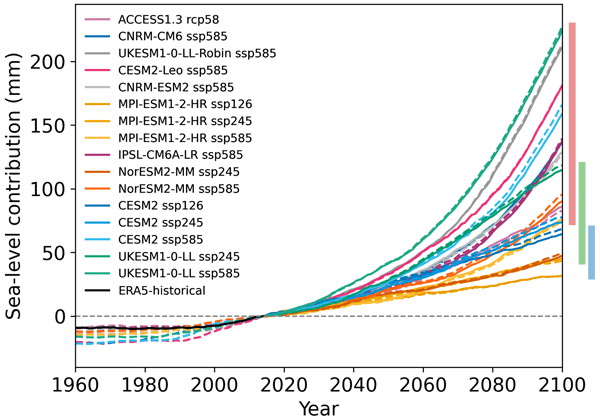
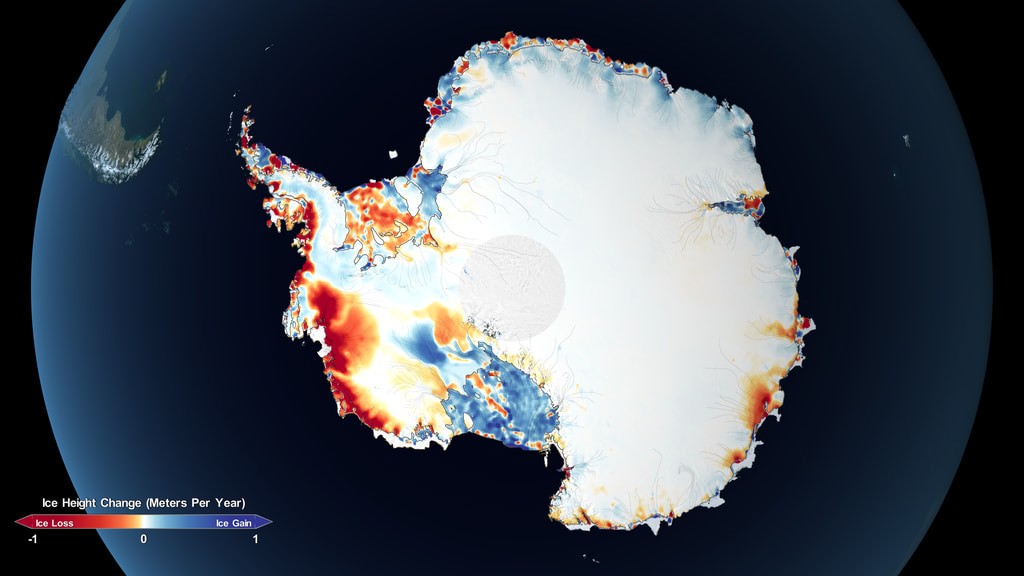
Adding a new layer of ice each year doesn’t mean the ice sheet is gaining mass overall. What matters is the net balance between accumulation (snowfall) and loss (melting and calving into the ocean). Even if Greenland gets new snow every winter, if it loses more ice through melting and iceberg calving than it gains, the ice sheet is shrinking.

Satellite measurements show that Greenland has been losing hundreds of gigatons of ice per year on average in recent decades. So annual snowfall continues, but the net trend is still mass loss, which contributes to sea level rise. The presence of a new layer doesn’t contradict that. It’s just one part of a complex system.
 
Old Rocks besides being 2C cooler than previous interglacial periods with 120 ppm more atmospheric CO2 how is this interglacial period different from previous interglacial periods?

Aren't you supposed to know something about the geologic record?
This interglacial is similar to past interglacials in that natural cycles of ice sheets, ocean currents, and solar insolation drive climate patterns. What makes it different is the rapid rise in atmospheric CO2, which is unprecedented in speed and scale compared with natural changes over the last several hundred thousand years.

Even though temperatures today are still below some previous interglacials, the combination of elevated CO2, global industrial activity, and ongoing emissions is pushing the system in a direction that natural cycles alone wouldn’t produce. The pace of change matters. It’s not just absolute temperature or CO2 concentration.
 
The warming and melting of Greenland, in fact, of the whole Arctic, is progressing much more rapidly than the scientists predicted. Evidence from the ice cores and ground underneath the ice show that in the past there was major ice loss at lower GHG levels than we have today. And as the warming Arctic makes the jet stream Rossby waves more extreme, southern areas are seeing colder winter storms, while the Arctic sees brief periods of above freezing temperatures in the dead of winter.

"A rapidly warming Arctic that feels unfamiliar even to experts​

The changes in Greenland are part of a broader pattern across the Arctic, where warming is proceeding at roughly four times the global average. Long term assessments like the annual Arctic Report Card have documented how sea ice, snow cover, and permafrost are all shifting in ways that would have been hard to imagine a generation ago. One recent installment described how the region now looks dramatically different than it did 20 years ago, noting that it is the continuation of a long term pattern and that the Arctic has shifted into a new state of being. That new state includes more rain on snow, more open water in autumn, and more frequent episodes of extreme warmth.


Some of those extremes have stunned even veteran researchers. Earlier this month, temperatures near the North Pole spiked more than 36°F above average, briefly pushing conditions above the melting point in the heart of winter. Scientists who work in Svalbard, Norway, in the high Arctic have described how the signs of rapid climate change are unmistakable, as documented in a detailed Transcript of their observations. When I hear glaciologists and sea ice experts say that the Arctic they study today barely resembles the one they first encountered in their careers, it becomes clear why the word “terrifying” is no longer considered hyperbole."

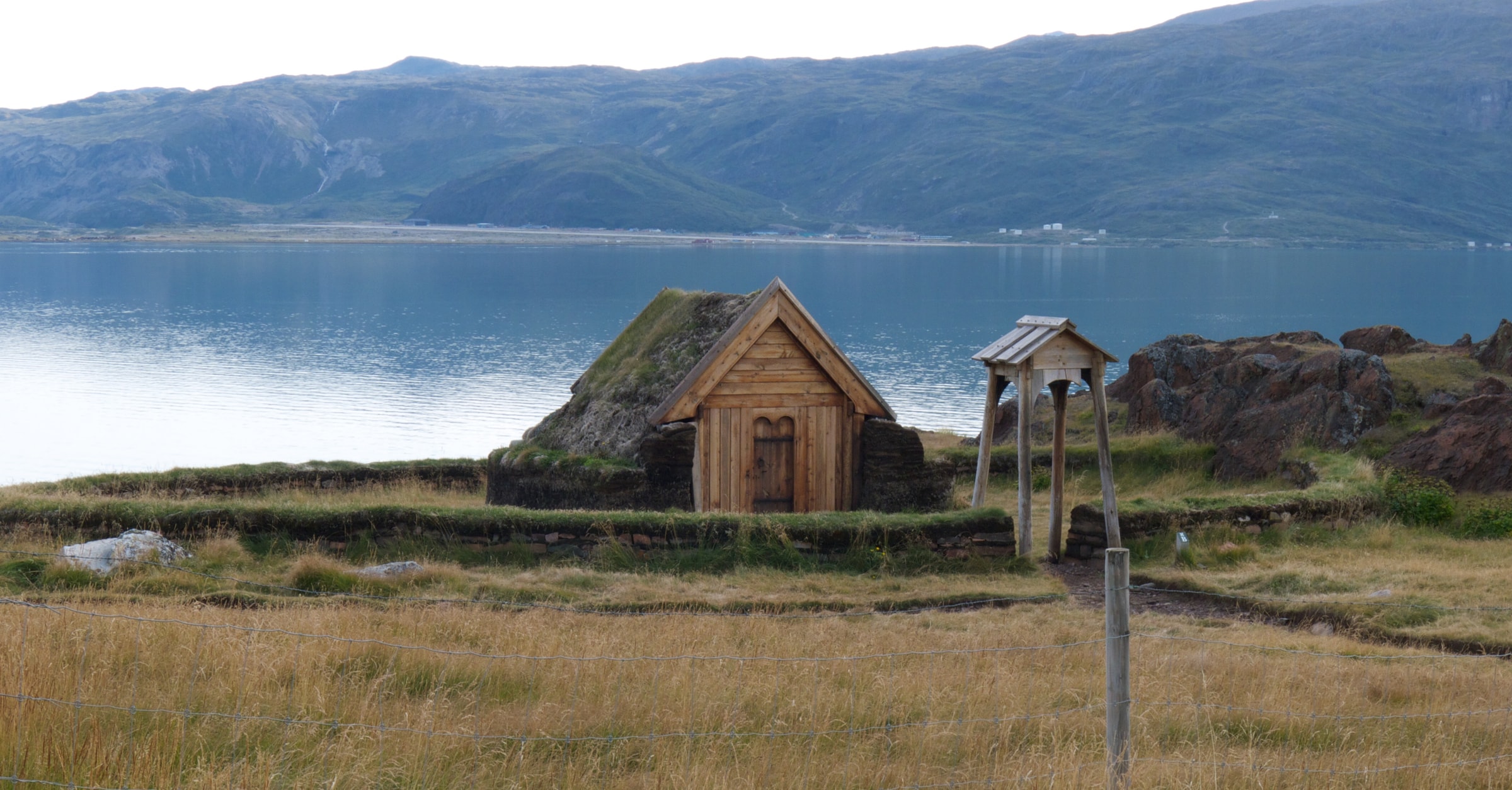
So it might become as warm as it was a thousand years ago when the Vikings had colonies there. ???
 
So it might become as warm as it was a thousand years ago when the Vikings had colonies there. ???
The Viking era warmth was regional and short lived; it doesn’t compare to the global, long term changes we’re seeing now. Localized warm periods in the past don’t invalidate the broader patterns of global climate change or the risks associated with sustained temperature increases. Context matters: one warm decade or century in one region isn’t the same as systemic, worldwide warming.
 
Adding a new layer of ice each year doesn’t mean the ice sheet is gaining mass overall. What matters is the net balance between accumulation (snowfall) and loss (melting and calving into the ocean). Even if Greenland gets new snow every winter, if it loses more ice through melting and iceberg calving than it gains, the ice sheet is shrinking.

Satellite measurements show that Greenland has been losing hundreds of gigatons of ice per year on average in recent decades. So annual snowfall continues, but the net trend is still mass loss, which contributes to sea level rise. The presence of a new layer doesn’t contradict that. It’s just one part of a complex system.
Speaking of recent decades;
...
Glacier Girl is a Lockheed P-38 Lightning, World War II fighter plane, 41-7630, c/n 222-5757, restored to flying condition after being buried beneath the Greenland ice sheet for over 50 years.

On 15 July 1942, due to poor weather and limited visibility, six P-38 fighters of 94th Fighter Squadron/1st FG and two B-17 bombers of a bombardment squadron were forced to return to Greenland en route to Great Britain during Operation Bolero and made emergency landings on the ice field. All the crew members were subsequently rescued, but Glacier Girl, along with the unit's five other fighters and the two B-17's, were eventually buried under 268 feet (82 m) of snow and ice that built up over the ensuing decades.

Fifty years later, in 1992, the plane was brought to the surface by members of the Greenland Expedition Society after years of searching and excavation. The aircraft was eventually transported to Middlesboro, Kentucky, where it was restored to flying condition.<a href="Glacier Girl - Wikipedia"><span>[</span>2<span>]</span></a> The excavation of Glacier Girl was documented in an episode of The History Channel's Mega Movers series, titled "Extreme Aircraft Recovery".

The Lightning returned to the air in October 2002.
...

IIRC, it takes about 10 inches of snow to compact into an inch of ice. So how much snow would have to fall on Greenland to produce 268 feet of snow ?

1770658177546.webp


1770658201985.webp
 
The Viking era warmth was regional and short lived; it doesn’t compare to the global, long term changes we’re seeing now. Localized warm periods in the past don’t invalidate the broader patterns of global climate change or the risks associated with sustained temperature increases. Context matters: one warm decade or century in one region isn’t the same as systemic, worldwide warming.
Didn't answer the question.
Is it as warm NOW, or WILL IT BE as warm as one thousand years ago when the Vikings had settlements there ?


1770658639678.webp
 
Last edited:
Adding a new layer of ice each year doesn’t mean the ice sheet is gaining mass overall. What matters is the net balance between accumulation (snowfall) and loss (melting and calving into the ocean). Even if Greenland gets new snow every winter, if it loses more ice through melting and iceberg calving than it gains, the ice sheet is shrinking.

Satellite measurements show that Greenland has been losing hundreds of gigatons of ice per year on average in recent decades. So annual snowfall continues, but the net trend is still mass loss, which contributes to sea level rise. The presence of a new layer doesn’t contradict that. It’s just one part of a complex system.
Source showing the data you vaguely state. ???
 
Speaking of recent decades;
...
Glacier Girl is a Lockheed P-38 Lightning, World War II fighter plane, 41-7630, c/n 222-5757, restored to flying condition after being buried beneath the Greenland ice sheet for over 50 years.

On 15 July 1942, due to poor weather and limited visibility, six P-38 fighters of 94th Fighter Squadron/1st FG and two B-17 bombers of a bombardment squadron were forced to return to Greenland en route to Great Britain during Operation Bolero and made emergency landings on the ice field. All the crew members were subsequently rescued, but Glacier Girl, along with the unit's five other fighters and the two B-17's, were eventually buried under 268 feet (82 m) of snow and ice that built up over the ensuing decades.

Fifty years later, in 1992, the plane was brought to the surface by members of the Greenland Expedition Society after years of searching and excavation. The aircraft was eventually transported to Middlesboro, Kentucky, where it was restored to flying condition.<a href="Glacier Girl - Wikipedia"><span>[</span>2<span>]</span></a> The excavation of Glacier Girl was documented in an episode of The History Channel's Mega Movers series, titled "Extreme Aircraft Recovery".

The Lightning returned to the air in October 2002.
...

IIRC, it takes about 10 inches of snow to compact into an inch of ice. So how much snow would have to fall on Greenland to produce 268 feet of snow ?

View attachment 1217157

View attachment 1217158
This actually supports my point rather than undermining it, which will continue to happen every time you post actual data. Glacier Girl shows that Greenland has long had strong accumulation in its interior. Snow can indeed build up and compact into hundreds of feet of ice over decades in cold, high altitude regions. That’s completely uncontroversial and has been known for over a century. But local accumulation in the interior does not tell you the net mass balance of the entire ice sheet. It just tells you that snowfall happens and compacts, which nobody disputes.

The relevant question is what’s happening at the system level: total accumulation versus total loss. Modern measurements show that Greenland is losing more ice through surface melt and coastal calving than it gains from snowfall, even while the interior continues to accumulate. So yes, enough snow can bury a plane. And at the same time, the ice sheet as a whole can still be shrinking. Those two facts are not in tension. They’re exactly what “net mass loss” means in a spatially complex system.
 
Didn't answer the question.
Is it as warm NOW, or WILL IT BE as warm as one thousand years ago when the Vikings had settlements there ?


View attachment 1217162
Your question only works if you pretend the Viking era in Greenland and the modern climate are the same kind of thing. They aren’t. The Medieval Warm Period was a regional pattern in parts of the North Atlantic, driven largely by ocean circulation. What’s happening now is global warming across land, oceans, and the atmosphere. Climate science isn’t about whether one spot once hit a similar temperature, it’s about the global average, the rate of change, and the fact that it’s happening everywhere at once.

Yes, you can find local places today that match or exceed Viking era warmth, but the current situation is fundamentally different because it’s a planet wide energy imbalance, not a regional blip. You're confusing a historical anecdote with a systemic physical trend.
 
Source showing the data you vaguely state. ???
If you want actual evidence of Greenland’s net ice loss rather than anecdotes about chains of snow, here are multiple independent sources showing it isn’t just speculation.


The ice loss data comes from physics anyone can measure. Satellites like GRACE track changes in Earth’s gravity caused by mass moving around, and ice has mass. If Greenland loses ice, gravity changes. That’s Newton, not politics. Multiple international groups, commercial satellites, and even Greenland’s own scientists confirm the same trend.

Your Glacier Girl example actually proves the principle: ice can accumulate massively, but if the sheet still shrinks overall, it’s losing more than it gains. Add in tide gauges going back centuries, and it’s obvious that sea levels rise because land ice is melting. To believe otherwise, you’d have to accept a conspiracy spanning global satellites, naval records, insurers, and decades of independent data, which is far more complex than just acknowledging Greenland is losing ice.
 
What makes it different is the rapid rise in atmospheric CO2, which is unprecedented in speed and scale compared with natural changes over the last several hundred thousand years.
And based upon 1C per doubling of CO2 is only responsible for 0.22C to 0.5C.
 
Even though temperatures today are still below some previous interglacials, the combination of elevated CO2, global industrial activity, and ongoing emissions is pushing the system in a direction that natural cycles alone wouldn’t produce.
I call BS on that. CO2 has never been shown to drive climate changes. Your conclusion is based upon flawed models of climate sensitivity.
 
I call BS on that. CO2 has never been shown to drive climate changes. Your conclusion is based upon flawed models of climate sensitivity.
Have you joined his thread on the subject of climate change?
 
The pace of change matters. It’s not just absolute temperature or CO2 concentration.
Actually it doesn't. D-O events during the last glacial period documented large and rapid temperature increases and decreases - 5C swings up and down - over a period of several decades.

D-O events.webp


The rate of warming today is no different than the last 2000 years.
rate of warming is not unprecedented.webp
 
And based upon 1C per doubling of CO2 is only responsible for 0.22C to 0.5C.
The 0.22–0.5°C you’re citing is just the direct warming from CO2 doubling without considering climate feedbacks. The actual climate system isn’t passive. That’s why the IPCC and climate models project total warming of roughly 3–4.5°C per CO2 doubling rather than the bare 1°C estimate.

It’s also worth noting that the speed of the current CO2 rise is far faster than any natural changes over the last hundreds of thousands of years. Rapid increases don’t give ecosystems or carbon sinks time to adjust, which magnifies the effects beyond what simple equilibrium calculations suggest.
 
15th post
The 0.22–0.5°C you’re citing is just the direct warming from CO2 doubling without considering climate feedbacks. The actual climate system isn’t passive. That’s why the IPCC and climate models project total warming of roughly 3–4.5°C per CO2 doubling rather than the bare 1°C estimate.

It’s also worth noting that the speed of the current CO2 rise is far faster than any natural changes over the last hundreds of thousands of years. Rapid increases don’t give ecosystems or carbon sinks time to adjust, which magnifies the effects beyond what simple equilibrium calculations suggest.
Not exactly. It is based on an incremental 120 ppm of CO2 which is not a doubling from pre-industrial, interglacial CO2 levels. The 0.55C is without convective currents. The 0.22C is based upon only 44% of the GHG effect of the entire atmosphere is realized at the surface because of convective currents.

But yes, I am totally ignoring feedbacks just like the IPCC is totally ignoring natural warming which is idiotic and disingenuous.

The rate of change is meaningless. The argument that carbon sinks don't have time to adjust is idiotic. If that were true we would have much more CO2 in the atmosphere. Only about 50% of man's emissions are in the atmosphere. It's even less if you factor in the oceans should be releasing CO2 to the atmosphere as the planet warms. Where did the rest go if the planet wasn't already equilibrating the CO2?
 
The 0.22–0.5°C you’re citing is just the direct warming from CO2 doubling without considering climate feedbacks. The actual climate system isn’t passive. That’s why the IPCC and climate models project total warming of roughly 3–4.5°C per CO2 doubling rather than the bare 1°C estimate.

It’s also worth noting that the speed of the current CO2 rise is far faster than any natural changes over the last hundreds of thousands of years. Rapid increases don’t give ecosystems or carbon sinks time to adjust, which magnifies the effects beyond what simple equilibrium calculations suggest.
Do you believe orbital cycles are responsible for D-O events which saw temperature swings from glacial temperatures to interglacial temperature and back again over the period of a few decades? Or do you believe as most do that ocean currents were responsible for D-O events?
 
I call BS on that. CO2 has never been shown to drive climate changes. Your conclusion is based upon flawed models of climate sensitivity.
The role of CO2 in climate change isn’t just based on models. It’s grounded in physical chemistry and radiative physics. Carbon dioxide absorbs infrared radiation, which traps heat in the atmosphere. This has been measured and quantified in laboratories for over a century. Models aren’t the source of the effect; they’re a tool to integrate observed physics and feedbacks across the global climate system.
 
The role of CO2 in climate change isn’t just based on models. It’s grounded in physical chemistry and radiative physics. Carbon dioxide absorbs infrared radiation, which traps heat in the atmosphere. This has been measured and quantified in laboratories for over a century. Models aren’t the source of the effect; they’re a tool to integrate observed physics and feedbacks across the global climate system.
Yes, 1C per doubling of CO2 is grounded in science. 3.5 to 4.5C is not. That is a result of a flawed computer model which assumes all warming is due to CO2. Which ignores the vast and overwhelming evidence from the geologic record that the planet's temperature naturally fluctuates within glacial periods and interglacial periods. Not to mention the fact that the current interglacial period is 2C cooler than previous interglacial periods despite having 120 ppm MORE CO2.

My problem isn't with the instantaneous GHG effect of CO2 which is well established at 1C per doubling of CO2. It's with their flawed models and doomsday predictions of catastrophic climate change. The only catastrophic climate change in our future will be when the gulf stream switches off.
 
Back
Top Bottom