Chris Mooney wrote The Republican Brain from a liberal perspective, geared toward other liberal readers. The majority of the book confirms opinions that many scientifically-minded liberals hold about conservative bias and adds the latest in psychological research to explain why the dissemination of facts has become highly polarized in this country. To summarize:
1. Republicans distort facts for their benefit far more often than Democrats--global warming and history are cited most in this book, although Mooney uses a wide variety of examples.
2. There are known psychological reasons for these differences including development and use of different parts of the brain. These differences go on to influence personality, friends, career path, and even which states people move to. The most interesting study is the "smart idiot" effect, which means that politically knowledgeable conservatives are often more biased and less persuadable than ignorant conservatives or liberals (i.e., conservatives engage in motivated reasoning).
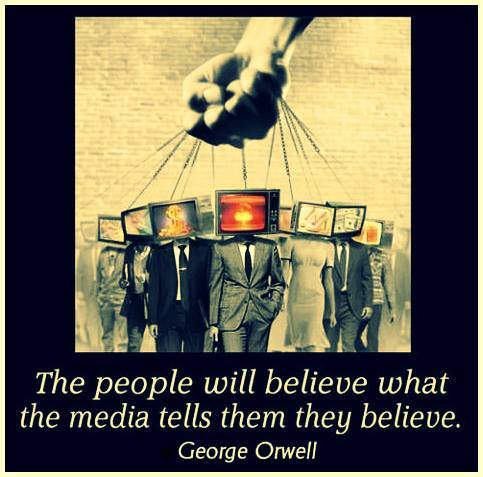
3. The liberal/conservative divide has widened over the past few decades not only because of the conservative revolution of the 1970s-80s, but also because of the growth of cable news and the Internet. The new sources allow conservatives to have easy access to like-minded thinkers and a wide array of "experts" to back up their erroneous claims and create a new reality that conforms to their worldview.
Overall, Mooney does an good job addressing the above points, and the book is well worth the read for anyone interested in the partisan divide. However, the book still left me disappointed and I found myself rushing through the detailed study with Dr. Everett Young, which should have contained less statistics and more analysis. As Mooney explains in the prelude, his previous book, The Republican War on Science, was highly popular among liberals but did nothing to change conservative opinions. The reason of course is the inherent propensity in conservatives to predispose of any information that contradicts their deeply held beliefs. But any liberal who has attempted to debate a conservative already knows this: facts, logic, and scientific reasoning always fail in such discussions. Mooney's writing style is geared toward liberals and he admits that conservatives will not buy his arguments--although at least now he knows why!
I was hoping for more advice on how liberals should address and debate conservatives considering the advances in psychology. Mooney offers a few tidbits, mostly in the conclusion. To address the problems with rewriting history, liberals need to leave the debunking to the experts and instead tell their own stories about historical figures that are accurate, interesting, and emphasize liberal values. He also elaborates on a political point that has been discussed among liberals in recent years--it is pointless to try and compromise with conservatives (especially Obama vs Congress). Liberals need to "be more conservative" not in their political views, but by acquiring some of the positive traits of conservatives such as unity, loyalty, and shared purpose. This theme is similar to the "pep talk" that Mooney has given to scientists in the past and it applies to any advocacy group looking for influence.
Based on the recent advances in liberal vs. conservative psychology, there is a book to be written about how liberals should address and debate conservatives. From the Republican Brain, we now know why conservatives refuse to accept certain facts, but what is now needed it a detailed guide for how liberals should go about changing conservative falsehoods and winning arguments.
I hesitate to give this book only 3/5 stars, but this book has some repetition, loses focus at times in the second half, and has some undeveloped ideas. Other authors such as Malcolm Gladwell and recently Charles Duhigg are better at grasping the applications of psychological studies. But considering that Mooney only worked on this book for a year, he is well on his way to becoming an expert on the liberal vs. conservative divide.