Zone1 The Roman Catholic idea of "Purgatory?"

Does the near death experience account of Howard Storm sound like Purgatory?

  • No

    Votes: 1 25.0%
  • Yes

    Votes: 0 0.0%
  • I kind of hope so, I am not sure if I will make heaven immediately?!

    Votes: 1 25.0%
  • NO, THIS IS A TERRIBLE DECEPTION AND HERESY!

    Votes: 0 0.0%
  • Other answer, please be specific in a reply.

    Votes: 2 50.0%

  • Total voters
    4

DennisPTate

Gold Member
Joined
Nov 6, 2025
Messages
3,099
Reaction score
1,211
Points
163
Ever since I began to study near death experience accounts I have been thinking and thinking and thinking about the Roman Catholic idea of "Purgatory?"

The near death experience of former Atheist Howard Storm reminds me of the Catholic teachings on the State of the Dead in many ways.

I actually wondered if I could join the Roman Catholic church while I was still living in Nova Scotia, but the doctrine of "Transsubstantiation" was kind of challenging. Even though I could use the basics of String Theory, The Anthropic Principle, Tehilliard's Law of Complexity Consciousnes and many of the studies on Parapsychology to attempt to explain that doctrine I still ran into a brick wall when I confronted the freedom of choice for a priest or bishop to at least temporarily lack faith?


Does the near death experience account of former Atheist Howard Storm remind you of the Roman Catholic idea of "Purgatory?"


[Howard Storm] :

4. The Life Review of Howard Storm​

Next, they wanted to talk about my life. To my surprise my life played out before me, maybe six or eight feet in front of me, from beginning to end.

The life review was very much in their control, and they showed me my life, but not from my point of view. I saw me in my life and this whole thing was a lesson, even though I didn’t know it at the time. They were trying to teach me something, but I didn’t know it was a teaching experience, because I didn’t know that I would be coming back. We just watched my life from beginning to the end. Some things they slowed down on, and zoomed in on and other things they went right through.

My life was shown in a way that I had never thought of before. All of the things that I had worked to achieve, the recognition that I had worked for, in elementary school, in high school, in college, and in my career, they meant nothing in this setting.

I could feel their feelings of sorrow and suffering, or joy, as my life’s review unfolded. They didn’t say that something was bad or good, but I could feel it. And I could sense all those things they were indifferent to. They didn’t, for example, look down on my high school shot-put record. They just didn’t feel anything towards it, nor towards other things which I had taken so much pride in.

What they responded to was how I had interacted with other people. That was the long and short of it. Unfortunately, most of my interactions with other people didn’t measure up with how I should have interacted, which was in a loving way. Whenever I did react during my life in a loving way they rejoiced.

Most of the time I found that my interactions with other people had been manipulative. During my professional career, for example, I saw myself sitting in my office, playing the college professor, while a student came to me with a personal problem. I sat there looking compassionate, and patient, and loving, while inside I was bored to death. I would check my watch under my desk as I anxiously waited for the student to finish.

I got to go through all those kinds of experiences in the company of these magnificent beings.

"
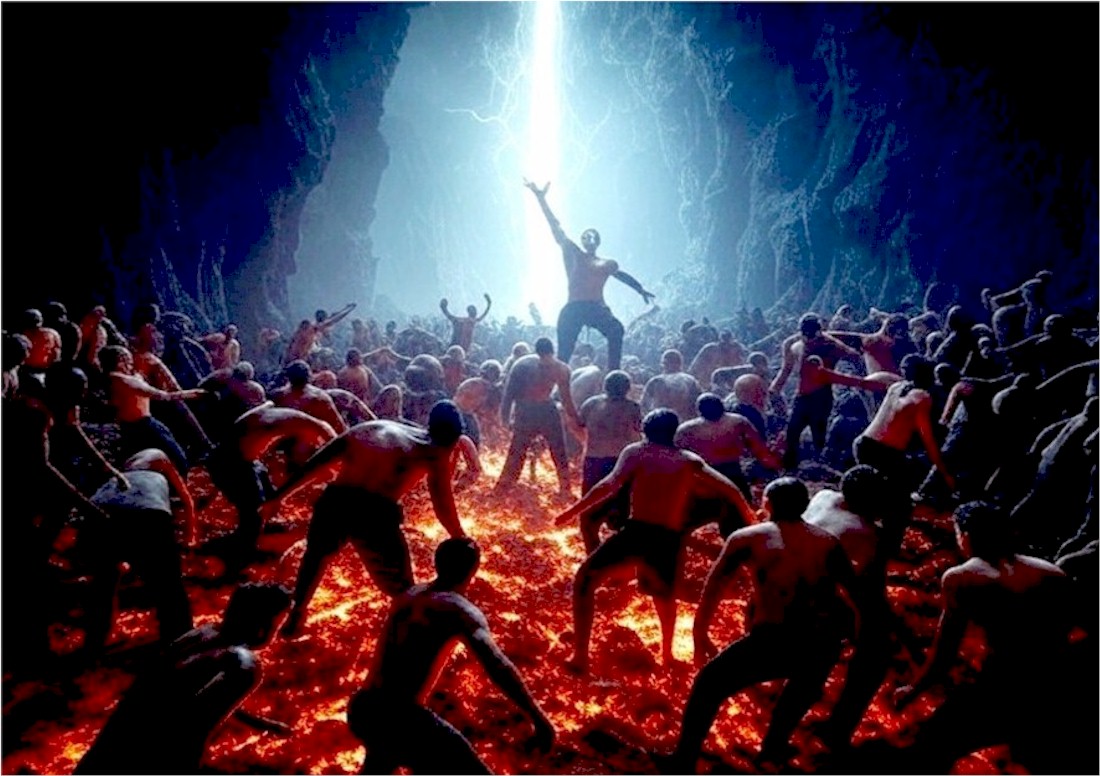
 
We don't have to wonder about what happens when we die. The rich man talking to Abraham tells us of one place we go, and Paul tells us where those who belong to Christ go. Heaven or Hell are the only options in the Bible.
Catholic doctrine tossed out the story of the rich man and the beggar, and opted for a new place to go.

Christ doesn't need "purification", and it is His record we enter Heaven with. To God, you look like Christ. You even smell like Christ to God.
Eph. 5:2 and walk in love, just as Christ loved us and gave Himself up for us as a fragrant sacrificial offering to God

But at least the Catholic dogma gave all those limbo babies back to God.
 
We don't have to wonder about what happens when we die. The rich man talking to Abraham tells us of one place we go, and Paul tells us where those who belong to Christ go. Heaven or Hell are the only options in the Bible.
Catholic doctrine tossed out the story of the rich man and the beggar, and opted for a new place to go.

Christ doesn't need "purification", and it is His record we enter Heaven with. To God, you look like Christ. You even smell like Christ to God.
Eph. 5:2 and walk in love, just as Christ loved us and gave Himself up for us as a fragrant sacrificial offering to God

But at least the Catholic dogma gave all those limbo babies back to God.

I hate to admit it but I think that you are correct, there definitely do seem to be two very different places to go in the afterlife!

I was an Atheist until Evangelist Garner Ted Armstrong got me to believe in the "Soul Sleep" doctrine but once I began to read these NDE accounts I could no longer understand the scriptures in that way.

By the way I am partly Irish myself.
 
Then let's grieve in unison for what is happening to the motherland...:eek:

Even before I was in elementary school I was able to sing along to the "Irish Songs of Rebellion" made famous by The Clancy Brothers and Tommy Makem!


I think that they taught me the first poem that I ever recited.....
"Up the long ladder and sown the short rope....."
..... I could go on but it is better that I not do so.......

Can you imagine the theological... philosophical.... intellectual crisis that I went through when I found out that my dad's ancestors were from Norther Ireland................ and were not exactly the same branch of the Irish as my mom's people The Malloy's!?


Last edited:
Ever since I began to study near death experience accounts I have been thinking and thinking and thinking about the Roman Catholic idea of "Purgatory?"
Purgatory is a final purification. Some believe the moment they die, they suddenly become ideal and are whisked into the heavenly afterlife. Catholic belief is that our character isn't automatically changed at the moment of death. We are the same character we were the moment after death as we were the moment before. Yet, we are children and friends of God and our eternal home is heaven.

One analogy I heard points to the care one receives in surgery to repair what needs repairing. All is well, except post surgery recovery often requires the work of physical rehabilitation to reach one's full potential. Another is how fire burns rust off iron and makes it shine.

Carlos Acustis, born in Italy in 1991, was recently declared a saint. When he was a teen, he created a website to document and promote the awareness of Eucharistic miracles from around the world. That might help you if you have interest in Transubstantiation.
 
I am not particularly religious. But if, when we die, we will end up either in hell or in heaven, that doesn’t preclude “purgatory.”

For, if purgatory exists at all, it isn’t a final destination. It’s just a place between the end of life on this mortal plane and one or the other final places (heaven or hell).

I’m no biblical scholar by any stretch. But I’m not sure the Bible even mentions “purgatory.” When one of the two men crucified along side of Jesus spoke to Jesus about Jesus’ divinity, I recall that Jesus told him that he would be in heaven today with “Me.” No mention by Jesus of any intermediate place between here and the hereafter.
 
I recall that Jesus told him that he would be in heaven today with “Me.” No mention by Jesus of any intermediate place between here and the hereafter.
Jesus said, "You will be with me in paradise." Jesus did not ascend into heaven for another forty days. Heaven and paradise became intertwined, but it appears paradise is a place of peace, also a garden, that is sometimes to be thought 'outside' of heaven (whatever that might mean).
 
Purgatory is a final purification. Some believe the moment they die, they suddenly become ideal and are whisked into the heavenly afterlife. Catholic belief is that our character isn't automatically changed at the moment of death. We are the same character we were the moment after death as we were the moment before. Yet, we are children and friends of God and our eternal home is heaven.

One analogy I heard points to the care one receives in surgery to repair what needs repairing. All is well, except post surgery recovery often requires the work of physical rehabilitation to reach one's full potential. Another is how fire burns rust off iron and makes it shine.

Carlos Acustis, born in Italy in 1991, was recently declared a saint. When he was a teen, he created a website to document and promote the awareness of Eucharistic miracles from around the world. That might help you if you have interest in Transubstantiation.
Yes, I do like that analogy of doctors and nurses repairing some of our organs during surgery.

That fits amazingly well with the astonishing near death experience of Robert Marshall who credits his wife's prayers for him largely for the amazing mission that was given to him by Jesus.

This testimony can have a unifying effect on the divided Christian denominations.


“I DIED FOR 44 HOURS & GOD ANSWERED THE MYSTERIES OF LIFE!” on the Randy Kay channel.​


447,176 views Premiered Apr 25, 2025

After dying three times for a total of 44 hours in Heaven, Robert describes Heaven in vivid detail. But what makes this episode like none other is that Robert hears answers from Jesus about some the most mysterious questions of all-time:
1. How old is the earth?
2. What happened to the dinasaurs?
3. What happened to the Garden of Eden?
4. How were different ethnicities formed?
5. Why did Jesus use parables?...and so much more!
 
Purgatory is a final purification. Some believe the moment they die, they suddenly become ideal and are whisked into the heavenly afterlife. Catholic belief is that our character isn't automatically changed at the moment of death. We are the same character we were the moment after death as we were the moment before. Yet, we are children and friends of God and our eternal home is heaven.

One analogy I heard points to the care one receives in surgery to repair what needs repairing. All is well, except post surgery recovery often requires the work of physical rehabilitation to reach one's full potential. Another is how fire burns rust off iron and makes it shine.

Carlos Acustis, born in Italy in 1991, was recently declared a saint. When he was a teen, he created a website to document and promote the awareness of Eucharistic miracles from around the world. That might help you if you have interest in Transubstantiation.
What happens in Purgatory? Do you work off residual sin?
 
Jesus said, "You will be with me in paradise." Jesus did not ascend into heaven for another forty days. Heaven and paradise became intertwined, but it appears paradise is a place of peace, also a garden, that is sometimes to be thought 'outside' of heaven (whatever that might mean).
I stand corrected.

And informed. I guess the Roman Catholic belief in Paradise is validly based.
 
Paradise is a place among the spirits of the dead. Jesus told the thief on the cross that TODAY you will be with me in paradise. Jesus then went among the spirits of the dead to teach his gospel on that very day and only on the third day did he return and resurrect in his body.

1 Peter 3:18-20
18 For Christ also hath once suffered for sins, the just for the unjust, that he might bring us to God, being put to death in the flesh, but quickened by the Spirit:
19 By which also he went and preached unto the spirits in prison;
20 Which sometime were disobedient, when once the longsuffering of God waited in the days of Noah, while the ark was a preparing, wherein few, that is, eight souls were saved by water.

1 Peter 4:6
6 For for this cause was the gospel preached also to them that are dead, that they might be judged according to men in the flesh, but live according to God in the spirit.

For a latter-day revelation on this topic read: Doctrine and Covenants 138
 
Last edited:
I stand corrected.

And informed. I guess the Roman Catholic belief in Paradise is validly based.

Roman Catholics were off to a good start by borrowing the idea of "Purgatory" from Jewish Theologians, [who had converted to Catholicism].

Secondly people have been having these near death experiences all the way back to either Plato or Socrates who wrote up a near death experience that a soldier had.


1. Introduction to Plato’s Er NDE​

Plato’s Myth of Er, presented in the final book of The Republic, offers one of the earliest recorded accounts resembling a near-death experience (NDE). In the story, Er, a soldier who seemingly dies in battle, is revived twelve days later and recounts an extraordinary journey into the afterlife. During his time in the realm of the dead, Er witnesses the process of judgment, the fates of souls, and the cycle of reincarnation, themes that bear striking similarities to modern accounts of NDEs.


What happens in Purgatory? Do you work off residual sin?
I have not heard of 'residual' sin, so I'll need an example.

Catholics take part in the Sacrament of Reconciliation (confession), and every Catholic is chagrined that the same (venial) sins are confessed over and over and over again. We understand sin separates us from God--and as hard as we try, we choose that separation (as minor as it may be) to God. It's a sin(s) we must overcome to be fully in the presence of God--so that the sin(s) is no longer drawing us away, keeping us apart from God. That analogy of physical rehabilitation after surgery to reach our full physical potential comes into play here. We undergo spiritual rehabilitation to gain the strength to overcome the sin that prevents one from fully enjoying/taking part in God's presence.
 
What happens in Purgatory? Do you work off residual sin?
If the near death experience of former Atheist Howard Storm is relevant it seems that he was sent back to live out his life and develop a whole new way of reacting to others, as well as to his Creator.
 
I have not heard of 'residual' sin, so I'll need an example.

Catholics take part in the Sacrament of Reconciliation (confession), and every Catholic is chagrined that the same (venial) sins are confessed over and over and over again. We understand sin separates us from God--and as hard as we try, we choose that separation (as minor as it may be) to God. It's a sin(s) we must overcome to be fully in the presence of God--so that the sin(s) is no longer drawing us away, keeping us apart from God. That analogy of physical rehabilitation after surgery to reach our full physical potential comes into play here. We undergo spiritual rehabilitation to gain the strength to overcome the sin that prevents one from fully enjoying/taking part in God's presence.


residual ~ remaining after the greater part or quantity has gone.

The problem I have is that Jesus isn't even mentioned in your post. And the, as hard as we try, part of it.
Every sin you have ever committed has been nailed to the cross Christ died on. There is nothing we can add to His work. If we could work off sin, large or small, then Jesus dying on the cross wouldn't be necessary. We don't have to overcome what Jesus missed. We are white as snow because of His gift to us.
You don't need rehabilitation when someone else was operated on.
Jesus>:11_2_1043: <us
 
Last edited:
15th post
residual ~ remaining after the greater part or quantity has gone.

The problem I have is that Jesus isn't even mentioned in your post. And the, as hard as we try, part of it.
Every sin you have ever committed has been nailed to the cross Christ died on. There is nothing we can add to His work. If we could work off sin, large or small, then Jesus dying on the cross wouldn't be necessary. We don't have to overcome what Jesus missed. We are white as snow because of His gift to us.
You don't need rehabilitation when someone else was operated on.
For me, the problem is that Jesus wasn't recognized in the post--but moving on. Jesus taught repentance for the forgiveness of sins, meaning turning away from sin and to God. Is it your feeling that people can keep on sinning and God no longer minds due to Paul's analogy of sins being nailed to the cross? Paul is referencing what happened in those days when a law or mandate was rescinded: The public was notified of this by pounding a nail through that law or mandate.

Jesus also taught that we should discern the will of God and follow it. Was this teaching also nailed to the cross, and no one is required to follow it? Isn't calling on Christ's name and having faith in him a mandate? Was that nailed to the cross? We could go on and on.

Jesus was teaching, "Sins are forgiven" long before the crucifixion, noting it was repentance (turning from sin to God) for the forgiveness of sins.
 
Is it your feeling that people can keep on sinning and God no longer minds due to Paul's analogy of sins being nailed to the cross
Romans 6:1 What then shall we say? Shall we continue in sin so that grace may increase? Certainly not!
Jeremiah 7:9-10
Will you steal and murder, commit adultery and perjury, burn incense to Baal, and follow other gods that you have not known, / and then come and stand before Me in this house, which bears My Name, and say, ‘We are delivered, so we can continue with all these abominations’?


Paul is referencing what happened in those days when a law or mandate was rescinded: The public was notified of this by pounding a nail through that law or mandate.
Paul made an analogy to explain what happens to our sin if we belong to Christ. Just like Christ's last word on the cross is the same word used to show a debt was paid in full. If Jesus was successful in paying your debt, what are you planning on working off, so you can get into Heaven?


Jesus also taught that we should discern the will of God and follow it. Was this teaching also nailed to the cross, and no one is required to follow
No, our sins were nailed to the cross and forgotten by our Father. Jesus never nailed His teachings to the cross. His words will never pass away.

Matthew 24:35 Heaven and earth will pass away, but my words will never pass away.
Jesus was teaching, "Sins are forgiven" long before the crucifixion, noting it was repentance (turning from sin to God) for the forgiveness of sins
Maybe you could loosen the reins on redemption a bit to include the magnitude of His grace. The thief on the cross merely recognized Jesus for whom He was, and his sins were forgiven. The woman that was about to be stoned to death for adultery didn't confess her sins, before Christ forgave her. The Gentile woman that touched His robe. In fact if people heard He was on His way to their village, everybody that needed help would line the roads, and all that touched Him were healed.

Matthew 15:30-31
Large crowds came to Him, bringing the lame, the blind, the crippled, the mute, and many others, and laid them at His feet, and He healed them. / The crowd was amazed when they saw the mute speaking, the crippled restored, the lame walking, and the blind seeing. And they glorified the God of Israel.

Jesus wouldn't risk you missing a sin that would keep you from Him. I think you are going to be pleasantly surprised when your time comes, and you go right to Him and receive your reward for being a good Christian. I think He wrote your name in His book of Life awhile ago.

Isaiah 43:1"Fear not, for I have redeemed you; I have called you by name, you are mine".
 
From the Catholic perspective, you are making the case for purgatory. Let's look at that.

Romans 6:1 What then shall we say? Shall we continue in sin so that grace may increase? Certainly not!
Jeremiah 7:9-10
Will you steal and murder, commit adultery and perjury, burn incense to Baal, and follow other gods that you have not known, / and then come and stand before Me in this house, which bears My Name, and say, ‘We are delivered, so we can continue with all these abominations’?
Notice Paul's astonishment that some were taking his words that sin did not matter. This is because Paul understood repentance/change of heart for the forgiveness of sins--the turn from disobedience to obedience. Our past sins can come back to haunt us, even though we gave them up long ago and turned to obedience. Paul's words assure us these sins have been nailed to the cross, erased, and long forgotten. Let's consider the case you brought up:

The woman that was about to be stoned to death for adultery didn't confess her sins, before Christ forgave her.
Jesus told the woman, "...nor do I condemn you; go and sin no more."

Let's consider the these possibilities. The first is that the woman never again committed adultery, she turned to obedience and a happy ending. But note that Jesus used the word 'condemn' not 'forgive'. In Judaism/Hebrew there is a difference. Condemn is used as a judicial assessment of wrongdoing that serves as a call to repentance/the return to right action and correction. Forgiveness involves restitution and repentance/the return to right action and correction.

The second possibility is that (let's say) the woman tried, but she could not overcome the sin of adultery and return to right action--and she dies. Her heart could not give up that attachment to sin and turn to God. Note she was trying. Whatever our sinful attachments may be when we die, is it an "oh well" situation where both the sin and sinner are welcomed into heaven? Or, is there a purification/rehabilitation process (purgatory) to overcome that attachment to sin so that one's heart may experience the bliss of being attached totally to God?

Jesus expected correction and a return to right action from this woman--and he told her so in the words of that time.


Paul made an analogy to explain what happens to our sin if we belong to Christ. Just like Christ's last word on the cross is the same word used to show a debt was paid in full. If Jesus was successful in paying your debt, what are you planning on working off, so you can get into Heaven?
This has us returning to the question, Has one's heart completely given up its attachment to sin/disobedience to God, or has it kept the attachment to that little bit of that sinful pleasure for oneself? Is God going to accept sin into heaven?


No, our sins were nailed to the cross and forgotten by our Father. Jesus never nailed His teachings to the cross. His words will never pass away.

Matthew 24:35 Heaven and earth will pass away, but my words will never pass away.
Remember that both forgiveness and the words of condemnation expect/require giving up and/or providing restitution for that wrong-doing. Those were Jesus words--over and over again when he was speaking of forgiveness and not condemning.

In the English language, words evolve into different/other meanings. The Hebrew/Aramaic retain the same meanings over time. Remember Jews (and Jesus) used that concept of purgatory for the heart still attached to a sin(s).
 
Jesus wouldn't risk you missing a sin that would keep you from Him. I think you are going to be pleasantly surprised when your time comes, and you go right to Him and receive your reward for being a good Christian. I think He wrote your name in His book of Life awhile ago.
Yes. I'll be astonished if sin is welcomed and embraced in heaven. I don't know about others, but I look forward to the time where no sin has any hold on my heart at all. I'll happily undergo the rehabilitation/purification process to rid myself of those sins.
 

New Topics

Back
Top Bottom