Navigation
Install the app
How to install the app on iOS
Follow along with the video below to see how to install our site as a web app on your home screen.
Note: This feature may not be available in some browsers.
More options
Style variation
You are using an out of date browser. It may not display this or other websites correctly.
You should upgrade or use an alternative browser.
You should upgrade or use an alternative browser.
The Indictment of Former President Trump Is An Abuse of Prosecutorial Power For Political Purposes – The Motive Is Clear on Its Face
- Thread starter Doc7505
- Start date


excalibur
Diamond Member
- Mar 19, 2015
- 29,057
- 58,820
- 2,290
This from a former federal prosecutor.
A much shortened version of the original.
 shipwreckedcrew.substack.com
A much shortened version of the original.
...
Before turning to the Trump indictment, let me provide you a real world example that I was just involved in over the past few months.
In the Oath Keepers indictment charging Stewart Rhodes and others with “seditious conspiracy,” the allegations of that indictment made repeated references to a “Rhodes Plan” to attack the Capitol building on January 6.
But over the course of two trials, spanning nearly 4 months and involving the testimony of more than 60 witnesses, not a single witness testified that they knew about, heard about, or that there even existed a “Rhodes Plan” to attack the Capitol.
In closing arguments the Government prosecutors had to resort to arguing that the existence of a “Rhodes Plan” could be “inferred” by the actions of the defendants. They argued that the “Rhodes Plan” that they so explicitly described and referred to over and over again in the indictment could have been “implicit” — nothing that was ever mentioned or actually discussed by any of the defendants.
But the narrative in the press and public consciousness created by the language of the indictment drafted by the DOJ prosecutors took hold as “fact” notwithstanding that the only place such a “fact” existed was in the minds of the prosecutors while sitting at their computers and typing in the words.
Additionally, the indictment referred over and over to an “QRF” — a “quick reaction force” — staged in Arlington, Virginia, armed and standing by in case they were needed to come into D.C. to assist in attacking and/or holding the Capitol to prevent the Congressional certification of the 2020 election.
But “QRF” is a military term. Every witness with a military background that testified about a “QRF” defined it a force standing-by to assist another military unit that encounters unexpected trouble and is in need of being rescued from a difficult or precarious situation.
In military terminology, the repeated references and descriptions by the prosecutors of the QRF was inaccurate, and not what the ex-military members of the Oath Keepers were discussing. What the prosecutors were calling a “QRF” would have been called an “Assault Team” in the military. If the Oath Keepers were staging an armed group in Virginia to join in the attack and/or to hold the Capitol, they would have called it an “assault team” and not a “QRF.”
But that didn’t matter when the indictment was written and filed by DOJ. Accuracy took a backseat to the Government’s narrative claim that an armed group of men were waiting in Virginia to cross the Potomac and use force to attack the Capitol building on January 6. This was reported in the media as a “fact” because the prosecutors said it was a “fact” in the allegations of their speaking indictment.
Now we have the Trump indictment.
Beyond the fact that the Special Counsel took 49 pages to describe facts that could be summarized in a one or two paragraphs — thereby injecting into the public discourse (i.e., Special Counsel Jack Smith fed the “beast” that is mainstream media and social media) a narrative of unnecessary allegations about which at this point he does not need to disclose his evidence — he wrote the charges in a fashion that is gratuitous and intended only to inflame public passions over the disputed documents.
When a federal prosecutor charges a conspiracy or a scheme to defraud, one of the charging requirements is that one or more “overt acts” with regard to a conspiracy, or one or more “executions” of the scheme be alleged in the text of the indictment.
...
So, when SCO Jack Smith made a determination to submit to the Grand Jury in the Southern District of Florida a proposed indictment with a serial listing of 31 documents, each as a basis for a separate criminal count, he did not do so because the law required that. He did so because he wanted that to be in the public narrative as reported by mainstream media and social media.
That exposes the exercise as one that is more political than legal. He did more than the law required — which should be DOJ’s lodestar. He did what advances the political cause of reducing the chances that candidate Donald Trump might again be elected President in 2024.
...
This brings me back once again to the Trump indictment.
I predict that this case does not go to trial prior to November 2024. I think the Smith SCO has brought this case at a time early enough that it will attempt to force the case to trial prior to the 2024 election. If it had waited much longer the chances that it would go to trial prior to November 2024 would be zero.
But while the Sixth Amendment provides for the right to a “speedy and public trial,” that right is guaranteed to the accused, not to the Government. The statutory Speedy Trial Act provides for a time period between indictment and trial that is sufficient to afford counsel for the defendant the reasonable time necessary for effective preparation, taking into account the nature and complexity of the case. With 32 years experience in federal criminal trial practice, I cannot envision any federal judge forcing this case to trial in the next 12-14 months, and any later than that will be at a time that Donald Trump might once again be the GOP nominee for President in the 2024 election.
But the true motives of the Smith SCO are revealed by the nature of what it has chosen to include in the public filing. If the case cannot get to trial prior to November 2024, having the narrative contained in the allegations set forth take hold as “facts” in the consciousness of the public — and the electorate — is the next best thing. They have a dutiful mainstream media and rabid social media to trumpet and amplify the allegations for months as if they are established facts.
These are now the well-established rules of the “lawfare” game played by progressive-dominated DOJ against its political opponents. The rules are dishonest, duplicitous, and lead to abusive prosecutorial practices when placed in the hands of political hacks.
When the Justice Department is captured by an ethos that the “ends justifies the means”, “justice” as the guiding lodestar is compromised.
I’ll close here with a famous quote — famous among lawyers at least — from the Supreme Court nearly 90 years ago in Berger v. United States:
I’m going to end this first article here, and reserve for another day an actual analysis of the allegations and statutes at issue. There is a reason for that, and I’ll explain that reason at a later date.
Before turning to the Trump indictment, let me provide you a real world example that I was just involved in over the past few months.
In the Oath Keepers indictment charging Stewart Rhodes and others with “seditious conspiracy,” the allegations of that indictment made repeated references to a “Rhodes Plan” to attack the Capitol building on January 6.
But over the course of two trials, spanning nearly 4 months and involving the testimony of more than 60 witnesses, not a single witness testified that they knew about, heard about, or that there even existed a “Rhodes Plan” to attack the Capitol.
In closing arguments the Government prosecutors had to resort to arguing that the existence of a “Rhodes Plan” could be “inferred” by the actions of the defendants. They argued that the “Rhodes Plan” that they so explicitly described and referred to over and over again in the indictment could have been “implicit” — nothing that was ever mentioned or actually discussed by any of the defendants.
But the narrative in the press and public consciousness created by the language of the indictment drafted by the DOJ prosecutors took hold as “fact” notwithstanding that the only place such a “fact” existed was in the minds of the prosecutors while sitting at their computers and typing in the words.
Additionally, the indictment referred over and over to an “QRF” — a “quick reaction force” — staged in Arlington, Virginia, armed and standing by in case they were needed to come into D.C. to assist in attacking and/or holding the Capitol to prevent the Congressional certification of the 2020 election.
But “QRF” is a military term. Every witness with a military background that testified about a “QRF” defined it a force standing-by to assist another military unit that encounters unexpected trouble and is in need of being rescued from a difficult or precarious situation.
In military terminology, the repeated references and descriptions by the prosecutors of the QRF was inaccurate, and not what the ex-military members of the Oath Keepers were discussing. What the prosecutors were calling a “QRF” would have been called an “Assault Team” in the military. If the Oath Keepers were staging an armed group in Virginia to join in the attack and/or to hold the Capitol, they would have called it an “assault team” and not a “QRF.”
But that didn’t matter when the indictment was written and filed by DOJ. Accuracy took a backseat to the Government’s narrative claim that an armed group of men were waiting in Virginia to cross the Potomac and use force to attack the Capitol building on January 6. This was reported in the media as a “fact” because the prosecutors said it was a “fact” in the allegations of their speaking indictment.
Now we have the Trump indictment.
Beyond the fact that the Special Counsel took 49 pages to describe facts that could be summarized in a one or two paragraphs — thereby injecting into the public discourse (i.e., Special Counsel Jack Smith fed the “beast” that is mainstream media and social media) a narrative of unnecessary allegations about which at this point he does not need to disclose his evidence — he wrote the charges in a fashion that is gratuitous and intended only to inflame public passions over the disputed documents.
When a federal prosecutor charges a conspiracy or a scheme to defraud, one of the charging requirements is that one or more “overt acts” with regard to a conspiracy, or one or more “executions” of the scheme be alleged in the text of the indictment.
...
So, when SCO Jack Smith made a determination to submit to the Grand Jury in the Southern District of Florida a proposed indictment with a serial listing of 31 documents, each as a basis for a separate criminal count, he did not do so because the law required that. He did so because he wanted that to be in the public narrative as reported by mainstream media and social media.
That exposes the exercise as one that is more political than legal. He did more than the law required — which should be DOJ’s lodestar. He did what advances the political cause of reducing the chances that candidate Donald Trump might again be elected President in 2024.
...
This brings me back once again to the Trump indictment.
I predict that this case does not go to trial prior to November 2024. I think the Smith SCO has brought this case at a time early enough that it will attempt to force the case to trial prior to the 2024 election. If it had waited much longer the chances that it would go to trial prior to November 2024 would be zero.
But while the Sixth Amendment provides for the right to a “speedy and public trial,” that right is guaranteed to the accused, not to the Government. The statutory Speedy Trial Act provides for a time period between indictment and trial that is sufficient to afford counsel for the defendant the reasonable time necessary for effective preparation, taking into account the nature and complexity of the case. With 32 years experience in federal criminal trial practice, I cannot envision any federal judge forcing this case to trial in the next 12-14 months, and any later than that will be at a time that Donald Trump might once again be the GOP nominee for President in the 2024 election.
But the true motives of the Smith SCO are revealed by the nature of what it has chosen to include in the public filing. If the case cannot get to trial prior to November 2024, having the narrative contained in the allegations set forth take hold as “facts” in the consciousness of the public — and the electorate — is the next best thing. They have a dutiful mainstream media and rabid social media to trumpet and amplify the allegations for months as if they are established facts.
These are now the well-established rules of the “lawfare” game played by progressive-dominated DOJ against its political opponents. The rules are dishonest, duplicitous, and lead to abusive prosecutorial practices when placed in the hands of political hacks.
When the Justice Department is captured by an ethos that the “ends justifies the means”, “justice” as the guiding lodestar is compromised.
I’ll close here with a famous quote — famous among lawyers at least — from the Supreme Court nearly 90 years ago in Berger v. United States:
[The Prosecutor] is the representative not of an ordinary party to a controversy, but of a sovereignty whose obligation to govern impartially is as compelling as its obligation to govern at all; and whose interest, therefore, in a criminal prosecution is not that it shall win a case, but that justice shall be done.
As such, he is in a peculiar and very definite sense the servant of the law, the twofold aim of which is that guilt shall not escape or innocence suffer.
He may prosecute with earnestness and vigor — indeed he should do so. But while he may strike hard blows, he is not at liberty to strike foul ones. It is as much his duty to refrain from improper methods calculated to produce a wrongful conviction as it is to use every legitimate means to bring about a just one.
I’m going to end this first article here, and reserve for another day an actual analysis of the allegations and statutes at issue. There is a reason for that, and I’ll explain that reason at a later date.
The Indictment of Former President Trump Is An Abuse of Prosecutorial Power For Political Purposes - The Motive Is Clear on Its Face
Taking 49 Pages To Unnecessarily Describe Details Exposes The Real Purpose of The Indictment -- To Serve As A Press Release
shipwreckedcrew.substack.com

rightwinger
Award Winning USMB Paid Messageboard Poster
- Aug 4, 2009
- 310,641
- 270,633
- 3,615
Time for Crooked Donnie to pay the Piper


Manonthestreet
Diamond Member
- May 20, 2014
- 41,576
- 33,922
- 3,645

excalibur
Diamond Member
- Mar 19, 2015
- 29,057
- 58,820
- 2,290
Time for Crooked Donnie to pay the Piper
Troll.
Manonthestreet
Diamond Member
- May 20, 2014
- 41,576
- 33,922
- 3,645


We will still vote for him. Just for spite.Time for Crooked Donnie to pay the Piper
Manonthestreet
Diamond Member
- May 20, 2014
- 41,576
- 33,922
- 3,645
All she could say was I dont know..........and they dropped it........guilty as hell......try again
Luttig, who was appointed to the bench by George H.W. Bush and was floated as a possible GOP Supreme Court pick, wrote on Tuesday night that any administration, Democratic or Republican, would have charged Trump for violating the Espionage Act and other federal statutes:EX Conservative Judge Puts Trump in his place= any AG would indict Trump Under the circumstances

Conservative ex-judge: Trump ‘dared’ DOJ to prosecute him
Former federal Judge J. Michael Luttig is putting Donald Trump in his place — and making a record — once again.www.msnbc.com
Indeed, following Trump's arraignment, Luttig wrote that the defendant “dared, taunted, provoked, and goaded” Smith and his team to bring charges:
Echoing points I’ve made here on the Deadline: Legal Blog that Trump’s alleged obstruction is likely what put him over the edge into charging territory, Luttig wrote that Trump “could have avoided and prevented this prosecution” and “would never have been indicted for taking these documents.”
The former federal judge’s point aligns with past Justice Department practice, as I’ve noted in explaining why others who’ve cooperated in classified documents investigations — such as Pence — haven’t been charged but Trump has.
Luttig’s lessons likely won’t reach Trump supporters as they desperately mount avant-garde legal defenses by misreading and misapplying the Presidential Records Act and prior precedent.
But it’s nonetheless important to make these points — not only for those willing to hear them but for the historical record as well.

Pete7469
Diamond Member
- Banned
- #314
It does something else the DNC endeavors to do, marginalizes our global prestige.
Pretty soon the Nicaraguans are going to be pissed that Trump's wall is preventing their return home because there pretty much ain't no difference left.
We're in a banana republic...

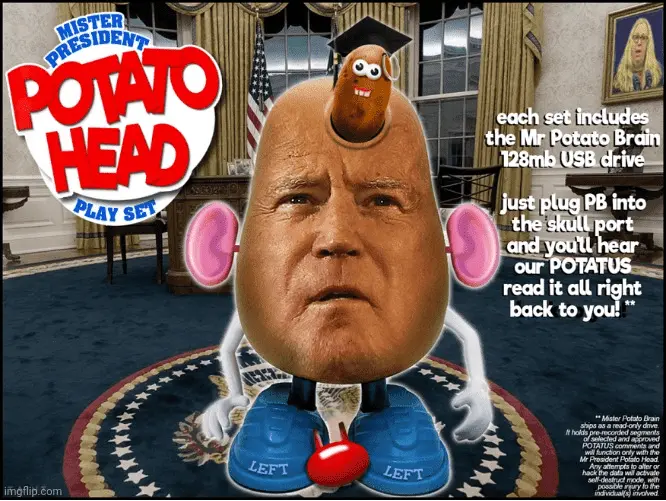
Thanks to vacuous mouth breathers who mailed in ballots for a potato.
Pretty soon the Nicaraguans are going to be pissed that Trump's wall is preventing their return home because there pretty much ain't no difference left.
We're in a banana republic...
Thanks to vacuous mouth breathers who mailed in ballots for a potato.
Last edited:

schmidlap
Platinum Member
- Oct 30, 2020
- 14,919
- 9,524
- 1,138
Fantasize as you will.So that means gulags for political opponents of YOUR far Left party, gotcha. ******* Stalinist.
Elsewhere, the American judicial system adheres to the rules of evidence.

GMCGeneral
Diamond Member
Not in your Commie little world there, Brezhnev. Your side will do anything and everything, legal or illegal, to try and squelch any and all opposition to your sick agenda, ************. I hope that when the nukes hit, you and your ilk suffer long.Fantasize as you will.
Elsewhere, the American judicial system adheres to the rules of evidence.

Kilroy2
Gold Member
- Dec 22, 2018
- 8,339
- 3,019
- 210
Bottom line the top leaders and others were found guilty. The legal process is what it is. They had representation by a lawyer and a trial. They can appeal. Yeah some will see them as hero's but that is the price of democracy. The blame game.
This will either inspire additional deep state talk and government over-reach or some will have to ask is it really worth it?
As they talk about deep state and government over reach it is still clear that they still benefit from the process that they want to overthrow. They had the benefits that society offer them but chose to abuse them based on rhetoric and opinions offered by others.
How easy is it to wrap oneself in the flag and claim that my actions are virtuous
Prosecutors discretion is what it is. They have to focus on what they believe they can prove and win a conviction. Will everyone agree, no but that is the system. They had a trial. They did not win. They can appeal but it is no guarantee that it will work.
That what makes America great is freedom of choice and then it is gone with one silly action.
People will draw a line in the sand and be on either side of that line.
people will dissect it to look for points that support their views.
The fact remains some took it to far instead of doing a basic protest in the front of the building. I guess they were afraid of looking like hippies or others concerned with civil rights.
The fact remains they did try to disrupt a legitimate government process. This on the rhetoric of one man who is next in line to be put in jail.
I guess if Trump wins re-election he can pardon himself or maybe do a Nixon two step and have the replacement president pardon him.
This will either inspire additional deep state talk and government over-reach or some will have to ask is it really worth it?
As they talk about deep state and government over reach it is still clear that they still benefit from the process that they want to overthrow. They had the benefits that society offer them but chose to abuse them based on rhetoric and opinions offered by others.
How easy is it to wrap oneself in the flag and claim that my actions are virtuous
Prosecutors discretion is what it is. They have to focus on what they believe they can prove and win a conviction. Will everyone agree, no but that is the system. They had a trial. They did not win. They can appeal but it is no guarantee that it will work.
That what makes America great is freedom of choice and then it is gone with one silly action.
People will draw a line in the sand and be on either side of that line.
people will dissect it to look for points that support their views.
The fact remains some took it to far instead of doing a basic protest in the front of the building. I guess they were afraid of looking like hippies or others concerned with civil rights.
The fact remains they did try to disrupt a legitimate government process. This on the rhetoric of one man who is next in line to be put in jail.
I guess if Trump wins re-election he can pardon himself or maybe do a Nixon two step and have the replacement president pardon him.

Lastamender
Diamond Member
- Dec 28, 2011
- 65,087
- 59,287
- 3,600
What Gods? Mao and Lenin?The gods bless Jack Smith and the Florida Grand Jury!
schmidlap
Platinum Member
- Oct 30, 2020
- 14,919
- 9,524
- 1,138
You are, apparently, unfamiliar with American jurisprudence.Not in your Commie little world there, Brezhnev. Your side will do anything and everything, legal or illegal, to try and squelch any and all opposition to your sick agenda, ************. I hope that when the nukes hit, you and your ilk suffer long.
Here, in the U.S.A., no one is above the law, and after a grand jury determines evidence is sufficient for prosecution, an indictment is issued.
A jury of the defendant's peers is presented with that evidence, and the defendant's attorney(s) attempt(s) to refute or mitigate the evidence
The jury then deliberates, and a verdict is issued.
A presumption of innocence pertains, unless and until a verdict of guilty is issued.
Call me a patriot, but we Americans find this approach works very well, and are justly proud of it.
Similar threads

- Replies
- 57
- Views
- 571


- Replies
- 14
- Views
- 262


- Replies
- 18
- Views
- 370

- Replies
- 2
- Views
- 193


