
Democrats held the House starting 2007. The crash came that year. Coincidence? I think not.That's as fucked up as anything I've read here. The Democrats did not block "Republican efforts to rein in Freddie and Fannie’s disastrous intervention in the housing market."The excuses, falsehoods, and distortions that liberals are floating in this thread are both sad and astounding. Let’s review them:
-- The huge jump in FY 2009 spending was Bush’s fault, not Obama’s.
Wrong. Obama signed all but a handful of the FY 2009 spending measures, because Reid and Pelosi stalled them so they could hike spending and have Obama sign them. This is a matter of verifiable fact. (See the links in my OP and in my reply to Rex Nutting’s discredited nonsense.)
And, what about the spending bills in FY 2010 and 2011, both of which ran trillion-plus deficits? Who signed those? How about the spending bills in FY 2012, 2013, and 2014, which, thanks to the Republicans, were not as reckless as earlier ones but which still included massive deficits? Who signed those? That would be Barack Obama.
-- Part of the big jump in FY 2009 included the federal bailout and takeover of Freddie and Fannie.
Uh, yeah, and that bailout would have been avoided if the Democrats, including Barack Obama, had not repeatedly blocked Republican efforts to rein in Freddie and Fannie’s disastrous intervention in the housing market. Anyone can go on YouTube and see footage of the lying and demagoguery that Democrats employed to block GOP efforts to impose tougher regulations on Freddie and Fannie. Bush even warned about Freddie and Fannie’s irresponsible intervention in one of his State of the Union addresses.
And Freddie and Fannie catastrophic meddling in the housing market was the main cause of the Great Recession. There would have been far, far fewer bad home loans to bundle into "toxic assets" if Freddie and Fannie had not funded/secured trillions of dollars’ worth of unwise home loans.
-- But what about the Social Security cost of living increase? Surely that was not Obama’s fault, right?
Oh, and SS cost of living increases never happen! They happen at least every few years and sometimes every year. So that’s a pretty lame excuse for Obama’s reckless spending. Plus, that cost of living increase accounted for a rather small fraction of the $7.5 trillion that Obama has added to the debt since January 2009.
--
That is complete rightie bullshit.
It is true Democrats didn't recognize the problem and it is true that some, like Barney Frank are on record as being against any reform -- but don't let any rightwing nuts convince anyone that Democrats blocked the majority party Republicans. They didn't.
Blocking majority party Republicans could only have been accomplished had the minority party Democrats filibustered any of the related Republican bills. They didn't.
Not a single GSE reform bill got past Republican leadership in the Senate.
Not one.
One House bill passed only to have Bush shit all over it as ineffective. That bill too died in the Senate as Republican leadership refused to put it on the Senate's legislative calendar.
Democrats work wrong on the issue. Dead wrong. But Republicans were in charge, not Democrats. And the majority party Republicans failed to pass reform which could have averted the financial meltdown.
Navigation
Install the app
How to install the app on iOS
Follow along with the video below to see how to install our site as a web app on your home screen.
Note: This feature may not be available in some browsers.
More options
Style variation
You are using an out of date browser. It may not display this or other websites correctly.
You should upgrade or use an alternative browser.
You should upgrade or use an alternative browser.
The Facts About Obama's Economic Record
- Thread starter mikegriffith1
- Start date

Faun
Diamond Member
- Nov 14, 2011
- 126,711
- 128,354
- 3,635
- Banned
- #142
By 2007, the vast majority of toxic loans, which cratered the economy, were already written. The time to take action was years earlier. You do realize that when the credit markets locked up, most folks who would bail on their loan had already been in their homes for years, right?Democrats held the House starting 2007. The crash came that year. Coincidence? I think not.That's as fucked up as anything I've read here. The Democrats did not block "Republican efforts to rein in Freddie and Fannie’s disastrous intervention in the housing market."The excuses, falsehoods, and distortions that liberals are floating in this thread are both sad and astounding. Let’s review them:
-- The huge jump in FY 2009 spending was Bush’s fault, not Obama’s.
Wrong. Obama signed all but a handful of the FY 2009 spending measures, because Reid and Pelosi stalled them so they could hike spending and have Obama sign them. This is a matter of verifiable fact. (See the links in my OP and in my reply to Rex Nutting’s discredited nonsense.)
And, what about the spending bills in FY 2010 and 2011, both of which ran trillion-plus deficits? Who signed those? How about the spending bills in FY 2012, 2013, and 2014, which, thanks to the Republicans, were not as reckless as earlier ones but which still included massive deficits? Who signed those? That would be Barack Obama.
-- Part of the big jump in FY 2009 included the federal bailout and takeover of Freddie and Fannie.
Uh, yeah, and that bailout would have been avoided if the Democrats, including Barack Obama, had not repeatedly blocked Republican efforts to rein in Freddie and Fannie’s disastrous intervention in the housing market. Anyone can go on YouTube and see footage of the lying and demagoguery that Democrats employed to block GOP efforts to impose tougher regulations on Freddie and Fannie. Bush even warned about Freddie and Fannie’s irresponsible intervention in one of his State of the Union addresses.
And Freddie and Fannie catastrophic meddling in the housing market was the main cause of the Great Recession. There would have been far, far fewer bad home loans to bundle into "toxic assets" if Freddie and Fannie had not funded/secured trillions of dollars’ worth of unwise home loans.
-- But what about the Social Security cost of living increase? Surely that was not Obama’s fault, right?
Oh, and SS cost of living increases never happen! They happen at least every few years and sometimes every year. So that’s a pretty lame excuse for Obama’s reckless spending. Plus, that cost of living increase accounted for a rather small fraction of the $7.5 trillion that Obama has added to the debt since January 2009.
--
That is complete rightie bullshit.
It is true Democrats didn't recognize the problem and it is true that some, like Barney Frank are on record as being against any reform -- but don't let any rightwing nuts convince anyone that Democrats blocked the majority party Republicans. They didn't.
Blocking majority party Republicans could only have been accomplished had the minority party Democrats filibustered any of the related Republican bills. They didn't.
Not a single GSE reform bill got past Republican leadership in the Senate.
Not one.
One House bill passed only to have Bush shit all over it as ineffective. That bill too died in the Senate as Republican leadership refused to put it on the Senate's legislative calendar.
Democrats work wrong on the issue. Dead wrong. But Republicans were in charge, not Democrats. And the majority party Republicans failed to pass reform which could have averted the financial meltdown.
Oh ... wait ... forgot who I'm talking to .... the
 forum jester ... the dumbest poster on the forum.
mikegriffith1
Mike Griffith
- Thread starter
- #143
The real unemployment rate, the one that most media talking heads rarely mention, is called the U-6, and according to the Department of Labor, the U-6 rate is now 10.8%. Under Obama the U-6 has been as high as 17%. See:
U6 Unemployment Rate Portal Seven
The Big Lie 5.6 Unemployment
In contrast, under George W. Bush, the U-6 stayed below 10% for the vast majority of his presidency, and it didn't go above 12% until the last three months of his second term. That sharp upswing came because of the Great Recession in 2008, which was largely caused by massive--and disastrous--federal intervention in the home loan industry (via Fannie Mae, Freddie Mac, and the CRA), which led to the housing crisis, which in turn triggered--and largely caused--the Great Recession.
By the way, liberals often claim that Freddie and Fannie's activity in unwise mortgages was going down when the housing bubble exploded, but this errant claim is based on false information supplied by--shock of shocks--Freddie and Fannie. It turns out that Freddie and Fannie markedly under-reported how much mortgage debt they were securing and financing.
U6 Unemployment Rate Portal Seven
The Big Lie 5.6 Unemployment
In contrast, under George W. Bush, the U-6 stayed below 10% for the vast majority of his presidency, and it didn't go above 12% until the last three months of his second term. That sharp upswing came because of the Great Recession in 2008, which was largely caused by massive--and disastrous--federal intervention in the home loan industry (via Fannie Mae, Freddie Mac, and the CRA), which led to the housing crisis, which in turn triggered--and largely caused--the Great Recession.
By the way, liberals often claim that Freddie and Fannie's activity in unwise mortgages was going down when the housing bubble exploded, but this errant claim is based on false information supplied by--shock of shocks--Freddie and Fannie. It turns out that Freddie and Fannie markedly under-reported how much mortgage debt they were securing and financing.

edthecynic
Censored for Cynicism
- Oct 20, 2008
- 43,044
- 6,888
- 1,830
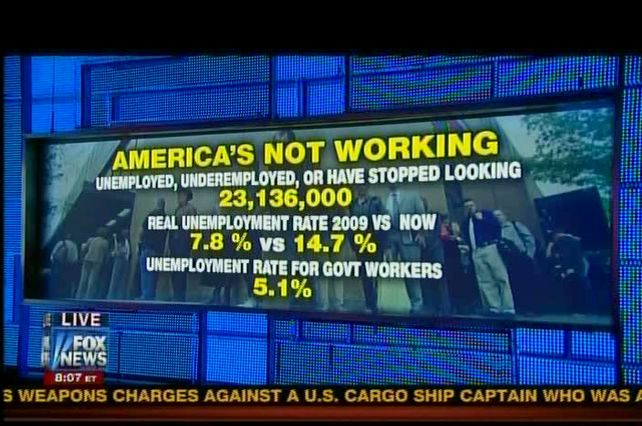
The real UE rate has never been the U-6 rate. For every president before Obama the real rate was the U-3 rate and as soon as a Republican is elected president, the Right will insist the U-3 is the real rate.The real unemployment rate, the one that most media talking heads rarely mention, is called the U-6
In fact, when the FOX Gossip Channel compared Bush's "real" rate to Obama's they used the U-3 rate for Bush and the U-6 rate for Obama.
Faun
Diamond Member
- Nov 14, 2011
- 126,711
- 128,354
- 3,635
- Banned
- #145
First of all, the U-6 is not even an "unemployment rate," no less the, "real unemployment rate." It can't be ... it includes people who are working. What kind of unemployment rate includes employed people? That aside, Bush started with a U-6 rate and nearly doubled it from 7.3% to 14.2%. Under Obama, it's gone from 14.2% to 10.8%.The real unemployment rate, the one that most media talking heads rarely mention, is called the U-6, and according to the Department of Labor, the U-6 rate is now 10.8%. Under Obama the U-6 has been as high as 17%. See:
U6 Unemployment Rate Portal Seven
The Big Lie 5.6 Unemployment
In contrast, under George W. Bush, the U-6 stayed below 10% for the vast majority of his presidency, and it didn't go above 12% until the last three months of his second term. That sharp upswing came because of the Great Recession in 2008, which was largely caused by massive--and disastrous--federal intervention in the home loan industry (via Fannie Mae, Freddie Mac, and the CRA), which led to the housing crisis, which in turn triggered--and largely caused--the Great Recession.
By the way, liberals often claim that Freddie and Fannie's activity in unwise mortgages was going down when the housing bubble exploded, but this errant claim is based on false information supplied by--shock of shocks--Freddie and Fannie. It turns out that Freddie and Fannie markedly under-reported how much mortgage debt they were securing and financing.
And your nonsense about Fannie and Freddie is easily dismissed. The markets began overheating in 2002 when the federal fund rate dropped to under 2% and dirt cheap ARMs were being handed out like candy; and without requiring a down payment...
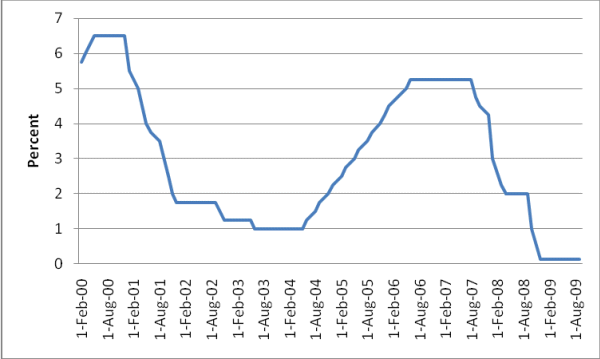
... by 2004 and 2005, the bubble was out of control ...

... by 2006, some states were already recording record foreclosures as rising interest rates inflated their ARMs to more than they could afford. And thanks to Bush's no down payment plan, it was more financially advantageous for many to simply walk away from their loans than to stay.
Sorry, but you cons don't get to rewrite history to absolve the right from the damage they caused this nation.
mikegriffith1
Mike Griffith
- Thread starter
- #146
First of all, the U-6 is not even an "unemployment rate," no less the, "real unemployment rate." It can't be ... it includes people who are working. What kind of unemployment rate includes employed people? That aside, Bush started with a U-6 rate and nearly doubled it from 7.3% to 14.2%. Under Obama, it's gone from 14.2% to 10.8%.The real unemployment rate, the one that most media talking heads rarely mention, is called the U-6, and according to the Department of Labor, the U-6 rate is now 10.8%. Under Obama the U-6 has been as high as 17%. See:
U6 Unemployment Rate Portal Seven
The Big Lie 5.6 Unemployment
In contrast, under George W. Bush, the U-6 stayed below 10% for the vast majority of his presidency, and it didn't go above 12% until the last three months of his second term. That sharp upswing came because of the Great Recession in 2008, which was largely caused by massive--and disastrous--federal intervention in the home loan industry (via Fannie Mae, Freddie Mac, and the CRA), which led to the housing crisis, which in turn triggered--and largely caused--the Great Recession.
By the way, liberals often claim that Freddie and Fannie's activity in unwise mortgages was going down when the housing bubble exploded, but this errant claim is based on false information supplied by--shock of shocks--Freddie and Fannie. It turns out that Freddie and Fannie markedly under-reported how much mortgage debt they were securing and financing.
And your nonsense about Fannie and Freddie is easily dismissed. The markets began overheating in 2002 when the federal fund rate dropped to under 2% and dirt cheap ARMs were being handed out like candy; and without requiring a down payment...
... by 2004 and 2005, the bubble was out of control ...
... by 2006, some states were already recording record foreclosures as rising interest rates inflated their ARMs to more than they could afford. And thanks to Bush's no down payment plan, it was more financially advantageous for many to simply walk away from their loans than to stay.
Sorry, but you cons don't get to rewrite history to absolve the right from the damage they caused this nation.
It is you who is rewriting history, and you are also abjectly ignoring obvious facts because you can't explain them. The U-6 most certainly is--and is universally recognized as--an unemployment rate. It includes the currently unemployed who are counted in the U-3 unemployment rate, those who have given up and are not counted in the U-3, and those who are underemployed, i.e., those who want full-time work but can't find it and are thus stuck with working in part-time jobs (these are the people whom you call "employed people"!). Even CNBC recognizes the U-6 as the "real unemployment rate":
Chart What s the real unemployment rate
See also: U-6 Unemployment Rate - What Does It Mean
And I will again note that under Bush the U-6 stayed below 10% for the vast majority of his presidency, and it didn't go above 12% until the last three months of his second term, whereas under Obama the U-6 has been above 10% during the entire time of the Obama "recovery." Yes, that's right--let's repeat that: The U-6 has been above 10% during every single month of Obama's "recovery," whereas under Bush it was below 10% for nearly his entire presidency.
As for your claim that Freddie and Fannie played little or no role in the housing bubble, I suppose you and your fellow denialists would have us believe that it's just one big whopping coincidence that risky home loans exploded in number after Freddie and Fannie began to secure such loans, right? Just a staggering, mind-boggling coincidence, right? Peter Wallison provides a reality check in his response to David Min (author of the article "For the Last Time, Fannie and Freddie Didn't Cause the Housing Crisis," which liberals are fond of quoting and whose arguments you and others have been repeating):
"Now that the SEC has sued Fannie Mae and Freddie Mac for failure to disclose the subprime and other low quality loans they held and securitized, this really is the last time we'll hear from David Min and others who have been trying to protect the government from blame for the financial crisis.
"The SEC's suit is based on the failure of Fannie and Freddie to disclose the poor quality of the mortgages that they were buying, holding and securitizing. As the SEC said in its press release on the suit: "Fannie Mae and Freddie Mac executives told the world that their subprime exposure was substantially smaller than it really was." This explains why Min and others--despite the insolvency of Fannie and Freddie--have continued to argue that the two companies did not hold substantial amounts of subprime and other low quality loans. Fannie and Freddie simply failed to disclose this information.
"The Financial Crisis Inquiry Commission failed completely in its mission because it refused to inquire seriously into what Fannie and Freddie had done. My dissent however, based on the research of my AEI colleague Edward Pinto, contains all this data, and even points out that Fannie and Freddie had failed to disclose it to the market. Although the FCIC had subpoena power and could have put Fannie and Freddie executives under oath, the FCIC did not want to know the facts that the SEC has now discovered. It was a travesty and a whitewash, and a waste of taxpayer funds. It has also misled people like David Min and others into believing that Fannie and Freddie were--as the FCIC said in its majority report--only "marginal" players in the financial crisis. It's lucky for the FCIC that the SEC doesn't have jurisdiction over false government reports." (See
Free fall How government policies brought down the housing market and How Fannie Freddie and politicians caused the crisis )
And the Wall Street Journal:Free fall How government policies brought down the housing market and How Fannie Freddie and politicians caused the crisis )
How did we get here? Let's review: In order to curry congressional support after their accounting scandals in 2003 and 2004, Fannie Mae and Freddie Mac committed to increased financing of "affordable housing." They became the largest buyers of subprime and Alt-A mortgages between 2004 and 2007, with total GSE exposure eventually exceeding $1 trillion. In doing so, they stimulated the growth of the subpar mortgage market and substantially magnified the costs of its collapse.
It is important to understand that, as GSEs, Fannie and Freddie were viewed in the capital markets as government-backed buyers (a belief that has now been reduced to fact). Thus they were able to borrow as much as they wanted for the purpose of buying mortgages and mortgage-backed securities. Their buying patterns and interests were followed closely in the markets. If Fannie and Freddie wanted subprime or Alt-A loans, the mortgage markets would produce them. By late 2004, Fannie and Freddie very much wanted subprime and Alt-A loans. Their accounting had just been revealed as fraudulent, and they were under pressure from Congress to demonstrate that they deserved their considerable privileges. Among other problems, economists at the Federal Reserve and Congressional Budget Office had begun to study them in detail, and found that -- despite their subsidized borrowing rates -- they did not significantly reduce mortgage interest rates. In the wake of Freddie's 2003 accounting scandal, Fed Chairman Alan Greenspan became a powerful opponent, and began to call for stricter regulation of the GSEs and limitations on the growth of their highly profitable, but risky, retained portfolios.
If they were not making mortgages cheaper and were creating risks for the taxpayers and the economy, what value were they providing? The answer was their affordable-housing mission. So it was that, beginning in 2004, their portfolios of subprime and Alt-A loans and securities began to grow. Subprime and Alt-A originations in the U.S. rose from less than 8% of all mortgages in 2003 to over 20% in 2006. During this period the quality of subprime loans also declined, going from fixed rate, long-term amortizing loans to loans with low down payments and low (but adjustable) initial rates, indicating that originators were scraping the bottom of the barrel to find product for buyers like the GSEs. (Blame Fannie Mae and Congress For the Credit Mess - WSJ )
Last edited:

Dragonlady
Designing Woman
That article is an opinion piece written by two scholars from a right-wing anti-government think tank. No stats, no studies, no facts or figures, and an anti-government bias. Of course they blame the government funded agencies for the housing bubble. It couldn't possibly be the greedy Wall Street pricks who did it.

RoshawnMarkwees
Assimilationist
Greedy Wall St pricks are no different from any naturally greedy human who will take advantage of an opportunity that presents itself. The opportunity was made possible by bad government policy. Those Wall St pricks are no more complicit than those home buyer pricks who took those loans knowing they likely would default.That article is an opinion piece written by two scholars from a right-wing anti-government think tank. No stats, no studies, no facts or figures, and an anti-government bias. Of course they blame the government funded agencies for the housing bubble. It couldn't possibly be the greedy Wall Street pricks who did it.

rightwinger
Award Winning USMB Paid Messageboard Poster
- Aug 4, 2009
- 312,254
- 275,476
- 3,615
Can you tell us about the Labor Participation Rate again?
That sounds so interesting
That sounds so interesting
mikegriffith1
Mike Griffith
- Thread starter
- #150
Can you tell us about the Labor Participation Rate again?
That sounds so interesting
So ignore all the other economic facts that refute your position (median income, the U-6 rate, the debt-to-GDP ratio, the debt, the deficit, pitiful GDP growth, etc., etc.) and cling to the one indicator that you think helps you? Tell me, how many of those labor "participants" are working part-time jobs? How many have stagnant wages? How many have taken pay cuts (which gets back to median income and overall wages)?
It's just amazing the way you folks simply refuse to deal with the economy is a rational, honest manner. Of course, if a Republican were in the White House, you'd have no problem admitting that the recovery has been the weakest and slowest in modern history and that the handling of the federal budget has been reckless.
The reason that Obama's recovery has been the worst in the modern era is that, unlike other presidents, Obama has sucked huge chunks of money out of the economy whereas Reagan, JFK, and Bush put huge chunks of money back into the economy by allowing people to keep more of their own money. That's the big difference. (Even Clinton cut taxes substantially, although he also raised others, but he also held spending to a growth of only 9%, the lowest increase rate since JFK.)
EdwardBaiamonte
Platinum Member
- Nov 23, 2011
- 34,612
- 2,174
- 1,100
That article is an opinion piece written by two scholars from a right-wing anti-government think tank. No stats, no studies, no facts or figures, and an anti-government bias. Of course they blame the government funded agencies for the housing bubble. It couldn't possibly be the greedy Wall Street pricks who did it.
dear, people on Wall Street and most streets have always wanted to make as much money as possible. That never changed so could not have caused the housing crisis. What did change were govt mandates that Fanny/Freddie lend to more and more unqualified buyers, i.e, buyers that the Republican free market said could not afford homes of their own. This is why Fanny Freddie ended up with 76% of all the sub prime and Alt A mortgages and must take the blame for the huge recession that almost turned into a worldwide depression.
Do you understand now??
Last edited:
RoshawnMarkwees
Assimilationist
If a repub was in the White House the drilling ban wouldn't have been reimposed and there would be no need to even discuss any recovery.Can you tell us about the Labor Participation Rate again?
That sounds so interesting
So ignore all the other economic facts that refute your position (median income, the U-6 rate, the debt-to-GDP ratio, the debt, the deficit, pitiful GDP growth, etc., etc.) and cling to the one indicator that you think helps you? Tell me, how many of those labor "participants" are working part-time jobs? How many have stagnant wages? How many have taken pay cuts (which gets back to median income and overall wages)?
It's just amazing the way you folks simply refuse to deal with the economy is a rational, honest manner. Of course, if a Republican were in the White House, you'd have no problem admitting that the recovery has been the weakest and slowest in modern history and that the handling of the federal budget has been reckless.
The reason that Obama's recovery has been the worst in the modern era is that, unlike other presidents, Obama has sucked huge chunks of money out of the economy whereas Reagan, JFK, and Bush put huge chunks of money back into the economy by allowing people to keep more of their own money. That's the big difference. (Even Clinton cut taxes substantially, although he also raised others, but he also held spending to a growth of only 9%, the lowest increase rate since JFK.)
Faun
Diamond Member
- Nov 14, 2011
- 126,711
- 128,354
- 3,635
- Banned
- #153
Fox dumbs down its viewers.The real UE rate has never been the U-6 rate. For every president before Obama the real rate was the U-3 rate and as soon as a Republican is elected president, the Right will insist the U-3 is the real rate.The real unemployment rate, the one that most media talking heads rarely mention, is called the U-6
In fact, when the FOX Gossip Channel compared Bush's "real" rate to Obama's they used the U-3 rate for Bush and the U-6 rate for Obama.

Faun
Diamond Member
- Nov 14, 2011
- 126,711
- 128,354
- 3,635
- Banned
- #154
1. What do Fannie Mae and Freddie Mac do?First of all, the U-6 is not even an "unemployment rate," no less the, "real unemployment rate." It can't be ... it includes people who are working. What kind of unemployment rate includes employed people? That aside, Bush started with a U-6 rate and nearly doubled it from 7.3% to 14.2%. Under Obama, it's gone from 14.2% to 10.8%.The real unemployment rate, the one that most media talking heads rarely mention, is called the U-6, and according to the Department of Labor, the U-6 rate is now 10.8%. Under Obama the U-6 has been as high as 17%. See:
U6 Unemployment Rate Portal Seven
The Big Lie 5.6 Unemployment
In contrast, under George W. Bush, the U-6 stayed below 10% for the vast majority of his presidency, and it didn't go above 12% until the last three months of his second term. That sharp upswing came because of the Great Recession in 2008, which was largely caused by massive--and disastrous--federal intervention in the home loan industry (via Fannie Mae, Freddie Mac, and the CRA), which led to the housing crisis, which in turn triggered--and largely caused--the Great Recession.
By the way, liberals often claim that Freddie and Fannie's activity in unwise mortgages was going down when the housing bubble exploded, but this errant claim is based on false information supplied by--shock of shocks--Freddie and Fannie. It turns out that Freddie and Fannie markedly under-reported how much mortgage debt they were securing and financing.
And your nonsense about Fannie and Freddie is easily dismissed. The markets began overheating in 2002 when the federal fund rate dropped to under 2% and dirt cheap ARMs were being handed out like candy; and without requiring a down payment...
... by 2004 and 2005, the bubble was out of control ...
... by 2006, some states were already recording record foreclosures as rising interest rates inflated their ARMs to more than they could afford. And thanks to Bush's no down payment plan, it was more financially advantageous for many to simply walk away from their loans than to stay.
Sorry, but you cons don't get to rewrite history to absolve the right from the damage they caused this nation.
It is you who is rewriting history, and you are also abjectly ignoring obvious facts because you can't explain them. The U-6 most certainly is--and is universally recognized as--an unemployment rate. It includes the currently unemployed who are counted in the U-3 unemployment rate, those who have given up and are not counted in the U-3, and those who are underemployed, i.e., those who want full-time work but can't find it and are thus stuck with working in part-time jobs (these are the people whom you call "employed people"!). Even CNBC recognizes the U-6 as the "real unemployment rate":
Chart What s the real unemployment rate
See also: U-6 Unemployment Rate - What Does It Mean
And I will again note that under Bush the U-6 stayed below 10% for the vast majority of his presidency, and it didn't go above 12% until the last three months of his second term, whereas under Obama the U-6 has been above 10% during the entire time of the Obama "recovery." Yes, that's right--let's repeat that: The U-6 has been above 10% during every single month of Obama's "recovery," whereas under Bush it was below 10% for nearly his entire presidency.
As for your claim that Freddie and Fannie played little or no role in the housing bubble, I suppose you and your fellow denialists would have us believe that it's just one big whopping coincidence that risky home loans exploded in number after Freddie and Fannie began to secure such loans, right? Just a staggering, mind-boggling coincidence, right? Peter Wallison provides a reality check in his response to David Min (author of the article "For the Last Time, Fannie and Freddie Didn't Cause the Housing Crisis," which liberals are fond of quoting and whose arguments you and others have been repeating):
"Now that the SEC has sued Fannie Mae and Freddie Mac for failure to disclose the subprime and other low quality loans they held and securitized, this really is the last time we'll hear from David Min and others who have been trying to protect the government from blame for the financial crisis.
"The SEC's suit is based on the failure of Fannie and Freddie to disclose the poor quality of the mortgages that they were buying, holding and securitizing. As the SEC said in its press release on the suit: "Fannie Mae and Freddie Mac executives told the world that their subprime exposure was substantially smaller than it really was." This explains why Min and others--despite the insolvency of Fannie and Freddie--have continued to argue that the two companies did not hold substantial amounts of subprime and other low quality loans. Fannie and Freddie simply failed to disclose this information.
"The Financial Crisis Inquiry Commission failed completely in its mission because it refused to inquire seriously into what Fannie and Freddie had done. My dissent however, based on the research of my AEI colleague Edward Pinto, contains all this data, and even points out that Fannie and Freddie had failed to disclose it to the market. Although the FCIC had subpoena power and could have put Fannie and Freddie executives under oath, the FCIC did not want to know the facts that the SEC has now discovered. It was a travesty and a whitewash, and a waste of taxpayer funds. It has also misled people like David Min and others into believing that Fannie and Freddie were--as the FCIC said in its majority report--only "marginal" players in the financial crisis. It's lucky for the FCIC that the SEC doesn't have jurisdiction over false government reports." (SeeAnd the Wall Street Journal:
Free fall How government policies brought down the housing market and How Fannie Freddie and politicians caused the crisis )
How did we get here? Let's review: In order to curry congressional support after their accounting scandals in 2003 and 2004, Fannie Mae and Freddie Mac committed to increased financing of "affordable housing." They became the largest buyers of subprime and Alt-A mortgages between 2004 and 2007, with total GSE exposure eventually exceeding $1 trillion. In doing so, they stimulated the growth of the subpar mortgage market and substantially magnified the costs of its collapse.
It is important to understand that, as GSEs, Fannie and Freddie were viewed in the capital markets as government-backed buyers (a belief that has now been reduced to fact). Thus they were able to borrow as much as they wanted for the purpose of buying mortgages and mortgage-backed securities. Their buying patterns and interests were followed closely in the markets. If Fannie and Freddie wanted subprime or Alt-A loans, the mortgage markets would produce them. By late 2004, Fannie and Freddie very much wanted subprime and Alt-A loans. Their accounting had just been revealed as fraudulent, and they were under pressure from Congress to demonstrate that they deserved their considerable privileges. Among other problems, economists at the Federal Reserve and Congressional Budget Office had begun to study them in detail, and found that -- despite their subsidized borrowing rates -- they did not significantly reduce mortgage interest rates. In the wake of Freddie's 2003 accounting scandal, Fed Chairman Alan Greenspan became a powerful opponent, and began to call for stricter regulation of the GSEs and limitations on the growth of their highly profitable, but risky, retained portfolios.
If they were not making mortgages cheaper and were creating risks for the taxpayers and the economy, what value were they providing? The answer was their affordable-housing mission. So it was that, beginning in 2004, their portfolios of subprime and Alt-A loans and securities began to grow. Subprime and Alt-A originations in the U.S. rose from less than 8% of all mortgages in 2003 to over 20% in 2006. During this period the quality of subprime loans also declined, going from fixed rate, long-term amortizing loans to loans with low down payments and low (but adjustable) initial rates, indicating that originators were scraping the bottom of the barrel to find product for buyers like the GSEs. (Blame Fannie Mae and Congress For the Credit Mess - WSJ )
The primary function of Fannie Mae and Freddie Mac is to provide liquidity to the nation’s mortgage finance system. Fannie and Freddie purchase home loans made by private firms (provided the loans meet strict size, credit, and underwriting standards), package those loans into mortgage-backed securities, and guarantee the timely payment of principal and interest on those securities to outside investors. Fannie and Freddie also hold some home loans and mortgage securities in their own investment portfolios.
Since mortgage lenders don’t have to hold these loans on their balance sheets, they have more capital available to make loans to other creditworthy borrowers. Lenders also have an added incentive to offer safe and sustainable products—namely long-term, fixed-rate mortgages—because they know Fannie and Freddie will likely purchase them. Since Fannie and Freddie guarantee payments in the event of a default—for a fee, of course—investors don’t have to worry about credit risk, which makes mortgages a particularly attractive investment.
Under this system, mortgage credit was continuously available well into the late-1990s under terms and at prices that put sustainable homeownership within reach for most American families. By the end of that decade, however, Wall Street had figured out how to purchase and securitize mortgages without needing Fannie and Freddie as intermediaries, leading to a fundamental shift in the U.S. mortgage market.
2. What role did Fannie and Freddie play in inflating the housing bubble of the mid- to late-2000s?
Contrary to conservative talking points, the answer is very little. During the bubble, loan originators backed by Wall Street capital began operating beyond the Fannie and Freddie system that had been working for decades by peddling large quantities of high-risk subprime mortgages with terms and features that drastically increased the chance of default. Many of those loans were predatory products such as hybrid adjustable-rate mortgages with balloon payments that required serial refinancing, or negative amortization, mortgages that increased the unpaid balance over time.
Wall Street firms such as Lehman Brothers and Bear Stearns packaged these high-risk loans into securities, got the credit-rating agencies to bless them, and then passed them along to investors, who were often unaware or misinformed of the underlying risks. It was the poor performance of the loans in these “private-label” securities—those not owned or guaranteed by Fannie and Freddie—that led to the financial meltdown, according to the bipartisan Financial Crisis Inquiry Commission, among other independent researchers.
more...
Faun
Diamond Member
- Nov 14, 2011
- 126,711
- 128,354
- 3,635
- Banned
- #155
The U-6 rate is not an unemployment rate. Again, it can't be because it includes employed people.First of all, the U-6 is not even an "unemployment rate," no less the, "real unemployment rate." It can't be ... it includes people who are working. What kind of unemployment rate includes employed people? That aside, Bush started with a U-6 rate and nearly doubled it from 7.3% to 14.2%. Under Obama, it's gone from 14.2% to 10.8%.The real unemployment rate, the one that most media talking heads rarely mention, is called the U-6, and according to the Department of Labor, the U-6 rate is now 10.8%. Under Obama the U-6 has been as high as 17%. See:
U6 Unemployment Rate Portal Seven
The Big Lie 5.6 Unemployment
In contrast, under George W. Bush, the U-6 stayed below 10% for the vast majority of his presidency, and it didn't go above 12% until the last three months of his second term. That sharp upswing came because of the Great Recession in 2008, which was largely caused by massive--and disastrous--federal intervention in the home loan industry (via Fannie Mae, Freddie Mac, and the CRA), which led to the housing crisis, which in turn triggered--and largely caused--the Great Recession.
By the way, liberals often claim that Freddie and Fannie's activity in unwise mortgages was going down when the housing bubble exploded, but this errant claim is based on false information supplied by--shock of shocks--Freddie and Fannie. It turns out that Freddie and Fannie markedly under-reported how much mortgage debt they were securing and financing.
And your nonsense about Fannie and Freddie is easily dismissed. The markets began overheating in 2002 when the federal fund rate dropped to under 2% and dirt cheap ARMs were being handed out like candy; and without requiring a down payment...
... by 2004 and 2005, the bubble was out of control ...
... by 2006, some states were already recording record foreclosures as rising interest rates inflated their ARMs to more than they could afford. And thanks to Bush's no down payment plan, it was more financially advantageous for many to simply walk away from their loans than to stay.
Sorry, but you cons don't get to rewrite history to absolve the right from the damage they caused this nation.
It is you who is rewriting history, and you are also abjectly ignoring obvious facts because you can't explain them. The U-6 most certainly is--and is universally recognized as--an unemployment rate. It includes the currently unemployed who are counted in the U-3 unemployment rate, those who have given up and are not counted in the U-3, and those who are underemployed, i.e., those who want full-time work but can't find it and are thus stuck with working in part-time jobs (these are the people whom you call "employed people"!). Even CNBC recognizes the U-6 as the "real unemployment rate":
Chart What s the real unemployment rate
See also: U-6 Unemployment Rate - What Does It Mean
And I will again note that under Bush the U-6 stayed below 10% for the vast majority of his presidency, and it didn't go above 12% until the last three months of his second term, whereas under Obama the U-6 has been above 10% during the entire time of the Obama "recovery." Yes, that's right--let's repeat that: The U-6 has been above 10% during every single month of Obama's "recovery," whereas under Bush it was below 10% for nearly his entire presidency.
As for your claim that Freddie and Fannie played little or no role in the housing bubble, I suppose you and your fellow denialists would have us believe that it's just one big whopping coincidence that risky home loans exploded in number after Freddie and Fannie began to secure such loans, right? Just a staggering, mind-boggling coincidence, right? Peter Wallison provides a reality check in his response to David Min (author of the article "For the Last Time, Fannie and Freddie Didn't Cause the Housing Crisis," which liberals are fond of quoting and whose arguments you and others have been repeating):
"Now that the SEC has sued Fannie Mae and Freddie Mac for failure to disclose the subprime and other low quality loans they held and securitized, this really is the last time we'll hear from David Min and others who have been trying to protect the government from blame for the financial crisis.
"The SEC's suit is based on the failure of Fannie and Freddie to disclose the poor quality of the mortgages that they were buying, holding and securitizing. As the SEC said in its press release on the suit: "Fannie Mae and Freddie Mac executives told the world that their subprime exposure was substantially smaller than it really was." This explains why Min and others--despite the insolvency of Fannie and Freddie--have continued to argue that the two companies did not hold substantial amounts of subprime and other low quality loans. Fannie and Freddie simply failed to disclose this information.
"The Financial Crisis Inquiry Commission failed completely in its mission because it refused to inquire seriously into what Fannie and Freddie had done. My dissent however, based on the research of my AEI colleague Edward Pinto, contains all this data, and even points out that Fannie and Freddie had failed to disclose it to the market. Although the FCIC had subpoena power and could have put Fannie and Freddie executives under oath, the FCIC did not want to know the facts that the SEC has now discovered. It was a travesty and a whitewash, and a waste of taxpayer funds. It has also misled people like David Min and others into believing that Fannie and Freddie were--as the FCIC said in its majority report--only "marginal" players in the financial crisis. It's lucky for the FCIC that the SEC doesn't have jurisdiction over false government reports." (SeeAnd the Wall Street Journal:
Free fall How government policies brought down the housing market and How Fannie Freddie and politicians caused the crisis )
How did we get here? Let's review: In order to curry congressional support after their accounting scandals in 2003 and 2004, Fannie Mae and Freddie Mac committed to increased financing of "affordable housing." They became the largest buyers of subprime and Alt-A mortgages between 2004 and 2007, with total GSE exposure eventually exceeding $1 trillion. In doing so, they stimulated the growth of the subpar mortgage market and substantially magnified the costs of its collapse.
It is important to understand that, as GSEs, Fannie and Freddie were viewed in the capital markets as government-backed buyers (a belief that has now been reduced to fact). Thus they were able to borrow as much as they wanted for the purpose of buying mortgages and mortgage-backed securities. Their buying patterns and interests were followed closely in the markets. If Fannie and Freddie wanted subprime or Alt-A loans, the mortgage markets would produce them. By late 2004, Fannie and Freddie very much wanted subprime and Alt-A loans. Their accounting had just been revealed as fraudulent, and they were under pressure from Congress to demonstrate that they deserved their considerable privileges. Among other problems, economists at the Federal Reserve and Congressional Budget Office had begun to study them in detail, and found that -- despite their subsidized borrowing rates -- they did not significantly reduce mortgage interest rates. In the wake of Freddie's 2003 accounting scandal, Fed Chairman Alan Greenspan became a powerful opponent, and began to call for stricter regulation of the GSEs and limitations on the growth of their highly profitable, but risky, retained portfolios.
If they were not making mortgages cheaper and were creating risks for the taxpayers and the economy, what value were they providing? The answer was their affordable-housing mission. So it was that, beginning in 2004, their portfolios of subprime and Alt-A loans and securities began to grow. Subprime and Alt-A originations in the U.S. rose from less than 8% of all mortgages in 2003 to over 20% in 2006. During this period the quality of subprime loans also declined, going from fixed rate, long-term amortizing loans to loans with low down payments and low (but adjustable) initial rates, indicating that originators were scraping the bottom of the barrel to find product for buyers like the GSEs. (Blame Fannie Mae and Congress For the Credit Mess - WSJ )
Here's a link to the BLS website ... you show me where they call the U-6 an "unemployment" rate...
Table A-15. Alternative measures of labor underutilization

JoeB131
Diamond Member
On one hand, this administration has clearly damaged the psyche of American business with various statements it has made and actions such as the ACA. And in an increasingly competitive global economy, that's some pretty lousy timing.
Yes, poor American business, they were all ready to make our lives better and then Obama hurt their sensitive little feelings by saying they didn't build that.
JoeB131
Diamond Member
If a repub was in the White House the drilling ban wouldn't have been reimposed and there would be no need to even discuss any recovery.
Right. Because a few hundred jobs in drilling would have made all the difference.
Faun
Diamond Member
- Nov 14, 2011
- 126,711
- 128,354
- 3,635
- Banned
- #158
Umm... part time employment for economic reasons is down about 17% to 6.7m since Obama became president...Can you tell us about the Labor Participation Rate again?
That sounds so interesting
So ignore all the other economic facts that refute your position (median income, the U-6 rate, the debt-to-GDP ratio, the debt, the deficit, pitiful GDP growth, etc., etc.) and cling to the one indicator that you think helps you? Tell me, how many of those labor "participants" are working part-time jobs? How many have stagnant wages? How many have taken pay cuts (which gets back to median income and overall wages)?
It's just amazing the way you folks simply refuse to deal with the economy is a rational, honest manner. Of course, if a Republican were in the White House, you'd have no problem admitting that the recovery has been the weakest and slowest in modern history and that the handling of the federal budget has been reckless.
The reason that Obama's recovery has been the worst in the modern era is that, unlike other presidents, Obama has sucked huge chunks of money out of the economy whereas Reagan, JFK, and Bush put huge chunks of money back into the economy by allowing people to keep more of their own money. That's the big difference. (Even Clinton cut taxes substantially, although he also raised others, but he also held spending to a growth of only 9%, the lowest increase rate since JFK.)
Bureau of Labor Statistics Data
And claiming Obama sucked huge amounts of money out of the economy is just denying reality. His stimulus plan in 2009 actually did the polar opposite of what you claim.
Last edited:
Faun
Diamond Member
- Nov 14, 2011
- 126,711
- 128,354
- 3,635
- Banned
- #159
Business owner David Siegel epitomizes rightwing thinking...On one hand, this administration has clearly damaged the psyche of American business with various statements it has made and actions such as the ACA. And in an increasingly competitive global economy, that's some pretty lousy timing.
Yes, poor American business, they were all ready to make our lives better and then Obama hurt their sensitive little feelings by saying they didn't build that.
In 2012, Mr. Siegel made a veiled threat to his employees about the danger of voting for Obama would hurt his business and potentially cost them their jobs ...
In 2014, following Obama's re-election, Mr. Siegel's company posted record profits...
RoshawnMarkwees
Assimilationist
No, because the price of oil would have stayed down where it was before your hack came in and reimposed restrictions, driving the price back up.If a repub was in the White House the drilling ban wouldn't have been reimposed and there would be no need to even discuss any recovery.
Right. Because a few hundred jobs in drilling would have made all the difference.
Similar threads


- Replies
- 19
- Views
- 197


- Replies
- 2
- Views
- 164

- Replies
- 72
- Views
- 296


New Topics
-

-
Antifa leaders panic after DOJ pursues conspiracy charges against Minnesota operatives
- Started by Hollie
- Replies: 1
-
 Socialized medicine explained in one short clip
- Started by Votto
- Replies: 0
-


