US Secretary of State Hillary Clinton spoke of the need to prevent northern Mali becoming a "safe haven" from which militants could launch attacks against America. British Prime Minister David Cameron said this "global threat" required a response that would take "years, even decades". "Just as we had to deal with that in Pakistan and in Afghanistan so the world needs to come together to deal with this threat in North Africa," he said. But militancy in the Sahara and Sahel, which stretches across the desert regions of Mali, Algeria, Libya, Niger and Mauritania, is tied to local dynamics and plays on local grievances and it would be a mistake to see all of the region's numerous armed groups as always acting in unison.
The only clear parallel with the border area between Afghanistan and Pakistan where the Taliban have flourished, analysts say, is the absence of central governments, which are unable or unwilling to counter extremism. This is a long-standing problem in northern Mali. It emerged more recently in North African countries that saw Arab Spring uprisings, including Libya and Tunisia, allowing militant groups to gain ground. "Right now we're not seeing as much an uptick in the strength of these groups as much as we are new areas that they're able to operate in because of the weakening of states," said William Lawrence, North Africa director for International Crisis Group. "That's the major change in the last two years."
Kidnappings
The most prominent militant group in North Africa is al-Qaeda in the Islamic Maghreb (AQIM), formed from the remnants of the Islamist insurgency in Algeria Its leaders have increasingly aligned themselves with international jihad (holy war), adopting the al-Qaeda name in 2007. In the desert over the past ten years they have raised their profile - and tens if not hundreds of millions of dollars in ransom money - by taking westerners hostage. Robert Fowler, a Canadian former UN diplomat kidnapped in Niger in 2008, has described the professionalism and apparent religious fervour of the men who abducted him. "Their every act was considered and needed to be justifiable in terms of their chosen path of jihad," he wrote in his book, A Season in Hell.
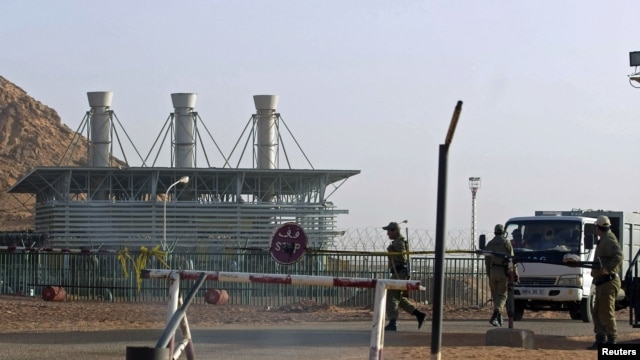
The kidnappers were led by Mokhtar Belmokhtar, who more recently formed the AQIM splinter group, the Signed-in-Blood Battalion, blamed for January's attack on the Algerian gas plant of In Amenas. Two other groups, Ansar Dine - dominated by former Tuareg rebels - and the Movement for Unity and Jihad in West Africa (Mujao), took control of northern Mali's major towns and cities following a coup in the capital, Bamako, last March. They destroyed shrines sacred to Sufi Muslims and applied a radical version of Sharia law, chopping off the hands of thieves, authorising the stoning of adulterers, and forcing women to wear veils. The Associated Press reported in December that they had set up bases in the desert north of Kidal, using heavy machinery to dig a network of tunnels, trenches and ramparts.
Social climbing