
WEATHER53
Diamond Member
- Apr 13, 2017
- 40,203
- 28,727
- 3,615
No and no one is saying that nor doing that childSO they can legally stop you based on the color of your skin?
Follow along with the video below to see how to install our site as a web app on your home screen.
Note: This feature may not be available in some browsers.
No and no one is saying that nor doing that childSO they can legally stop you based on the color of your skin?

Yes, they are,No and no one is saying that nor doing that child

Please tell me where I said you made that particular claim,Show us all please where I said that the public vote for members of the supreme court?
Give it up. Your churlish whining fails to persuade.You are attacking a strawman, pretending I said X when I actually said not X, you just don't care about true or false, you simply do not care.
That’s not the content of what you provided . In certain areas of concentration of illegals, speaking Spanish solely may get you detained. Not brown skin only liar
We’ve been through all of this, the dainty. And it is beyond meaningful question that we are a Constitutional republic and very much NOT a democracy. And that’s for all the reasons the Framers based that fact upon.try and do some research:
Opinion
Eugene Volokh
Is the United States of America a republic or a democracy?
I often hear people argue that the United States is a republic, not a democracy. But that’s a false dichotomy. A common definition of “republic” is, to quote the American Heritage Dictionary, “A political order in which the supreme power lies in a body of citizens who are entitled to vote for officers and representatives responsible to them” — we are that. A common definition of “democracy” is, “Government by the people, exercised either directly or through elected representatives” — we are that, too.
The United States is not a direct democracy, in the sense of a country in which laws (and other government decisions) are made predominantly by majority vote. Some lawmaking is done this way, on the state and local levels, but it’s only a tiny fraction of all lawmaking. But we are a representative democracy, which is a form of democracy.
And indeed the American form of government has been called a “democracy” by leading American statesmen and legal commentators from the Framing on. It’s true that some Framing-era commentators made arguments that distinguished “democracy” and “republic”; see, for instance, The Federalist (No. 10), though even that first draws the distinction between “pure democracy” and a “republic,” only later just saying “democracy.” But even in that era, “representative democracy” was understood as a form of democracy, alongside “pure democracy”: John Adams used the term “representative democracy” in 1794; so did Noah Webster in 1785; so did St. George Tucker in his 1803 edition of Blackstone; so did Thomas Jefferson in 1815. Tucker’s Blackstone likewise uses “democracy” to describe a representative democracy, even when the qualifier “representative” is omitted.
==================================================
What was a “Democracy” in the Eighteenth Century?
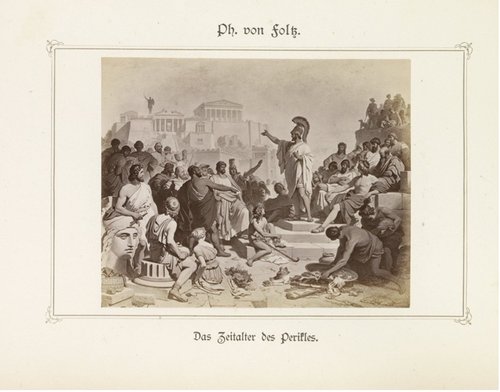
According to James Madison, democracy was a form of government where “the people meet and exercise the government in person” and decide issues by voting.2 The Framers were not impressed by this system. Alexander Hamilton said that “ancient democracies” lacked “one feature of good government. Their very character was tyranny.”3 John Adams called direct democracies “impracticable.”4 James Madison saw direct democracies as “spectacles of turbulence and contention.”5
Why the distrust for democracy? In the eighteenth century, it was not clear how direct democracy would function across vast geographic areas and with large populations. Political thinkers had long concluded that direct democracies could only work in relatively small city-states. The colonies’ elite leaders also worried that democracies tended to dissolve into factional infighting and allow a majority to overpower minority views.
What was a “Republic” in the Eighteenth Century?
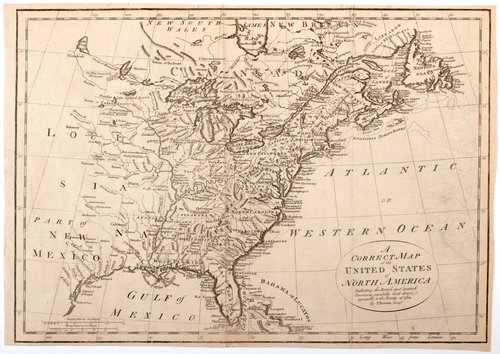
In a republic, according to Madison, the people “assemble and administer” government by empowering “their representatives and agents” to make decisions.7 James Madison argued that “a republic may be extended over a large region,” because it only required representatives to travel, rather than all voting citizens.8 In a well-designed republic, representatives would focus on the broader public good, rather than local or factional interests.9
Yet some critics feared that republics gave too much power to a small, usually wealthy, group of citizens. They easily imagined a republic giving way to “an aristocracy.”10 One opponent of the U.S. Constitution, for example, suggested that the proposed government would allow “opulent and ambitious” men to subvert “the equality established by our democratic forms of government” in state constitutions.11
A Democratic Republic
The Constitution’s Framers ultimately created what Americans today would call a democratic republic, or a representative democracy, where people vote for representatives to govern on their behalf. But their distrust of democracy showed through in the final document, which contained relatively few democratic elements.
The president, senate, and judiciary would be chosen by representatives, rather than the people. Only the House of Representatives would be directly elected.17 But some opponents of the Constitution complained that even this branch “will have but very little democracy in it.”18 Representatives would serve relatively large constituencies, initially around 30,000 people each. As Madison explained, larger districts would ensure that “members of limited information” would not be elected. But critics worried that having tens of thousands of constituents would keep representatives from close contact with ordinary people.19 Moreover, since the Constitution allowed state legislatures to decide who was qualified to vote, the only people choosing representatives were property-owning adult white men.
In the 1790s, the French Revolution re-animated the ideal of democracy, leading more ordinary people to assert that they should have a role in their government. By 1800, it had shifted once again to refer mostly to Thomas Jefferson’s political party, which advocated for a moderate version of popular rule.20 In the early nineteenth century, the definitions of republic and democracy merged as democracy came to refer to the peoples’ practice of popular sovereignty through the election of representatives.21 While the Constitution incorporated some elements of democracy, “We the People” have, since its inception, defined and redefined what it means to live in a democratic republic.

The tards feel posting any link at all is somehow proofYour cite doesn’t support your claim.

Good thing we live in a republic where 49 people can vote to take the property of 51 people because they properly gerrymandered their representation.A pure democracy is 51 people out of a hundred voting to take all the property of the remaining 49.

I think it would be better if the public did elect the supreme court judges, we elect the president (executive) and congress (legislative) so why not judicial? Seems to be a better fit to the constitution's opening "We the people".Please tell me where I said you made that particular claim,
Give it up. Your churlish whining fails to persuade.
Let’s make this simpler for your diminutive intellect.
My government is constrained by the Constitution. The discussion had been about us being an alleged democracy. We aren’t.
For you tell us that the People (eligible voters) don’t elect the Justices of the SCOTUS is simply a recognition that we are not a democracy; and that’s by design.
A question based on your false premise isn’t worth asking much less bothering to further address.As we learned last week after Trump's series of embarrassing losses, it's spot on.
Why do you think Trump should be allowed to break the law with his military deployments?

Stating we use a representative democratic form of government is not saying we are not a constitutional republic. It is you people who keep making distinctions without much of a difference.We’ve been through all of this, the dainty. And it is beyond meaningful question that we are a Constitutional republic and very much NOT a democracy. And that’s for all the reasons the Framers based that fact upon.
Your lengthy post is off topic for this thread, anyway.
I decline to waste time by repeating to a brick wall( i.e., you) all the arguments and discussions had in other threads. You wanna try to argue your already failed contention yet again? Fine. But not in this thread.
Stay on topic.
I think it would be better if the public did elect the supreme court judges, we elect the president (executive) and congress (legislative) so why not judicial? Seems to be a better fit to the constitution's opening "We the people".
They are definitely relying on AI and racial profiling.
Thus their mountains of errors.
Thats what the initial judge found. Note this lifts the halt only. it is still going to trial.Your cite doesn’t support your claim.

Good thing we live in a republic where 49 people can vote to take the property of 51 people because they properly gerrymandered their representation.
Spoken like a true troll.You're welcome, you shit-for-brains.
It’s more sophisticated than your pointless statement.An over simple analysis from a simpleton.
Saying that we “use a representative democracy” instead of acknowledging that ARE a Constitutional republic, instead, IS saying that we aren’t a Constitutional republic. And that’s why you’re wrong yet again, the daintyStating we use a representative democratic form of government is not saying we are not a constitutional republic. It is you people who keep making distinctions without much of a difference.


