Solar Bankruptcy: Pine Gate Renewables (boom to bust continues)

SunsetMommy is a DISHONEST Cherry Picker misleading this MAGAt board on every single topic.

AI Overview
Yes, solar energy is Booming globally and in the U.S., experiencing Record installations, becoming the Fastest-growing electricity source, Dominating new power capacity additions, driven by Lower costs, Strong demand (especially from data centers/AI), and supportive policies, with Massive Growth in utility-scale projects and domestic manufacturing, even as challenges like grid connection persist.

Key indicators of solar's boom:
  • Record-Breaking Capacity: The world added significant solar capacity in 2024 and the first half of 2025, with installations surging past previous years.
  • Fastest-Growing Source: Solar is the quickest-growing electricity source, accounting for a huge percentage (e.g., 66% in the U.S. in 2024) of new generating capacity.
  • Outpacing Other Sources: Solar and battery storage are adding far more capacity than natural gas or nuclear plants.
  • Demand Drivers: Big Tech's need for clean energy for data centers and increasing electricity demand are fueling massive new projects.
  • Domestic Manufacturing: U.S. solar module manufacturing capacity grew dramatically in 2024.
  • Policy & Economics: Strong federal incentives (like the ITC) and falling costs make solar economically attractive, despite some policy shifts.
Challenges:
  • Grid & Transmission: Connecting all this new solar to the grid and building necessary transmission lines remains a major bottleneck.
  • Policy Uncertainty: Some policy changes and potential tariffs create near-term market uncertainty, though long-term demand is strong.

Last edited: Today at 10:41 AM
Quote Reply abu afak
Report
 
Last edited:
SunsetMommy is a DISHONEST Cherry Picker misleading this MAGAt board on every single topic.

AI Overview
Yes, solar energy is Booming globally and in the U.S., experiencing Record installations, becoming the Fastest-growing electricity source, Dominating new power capacity additions, driven by Lower costs, Strong demand (especially from data centers/AI), and supportive policies, with Massive Growth in utility-scale projects and domestic manufacturing, even as challenges like grid connection persist.

Key indicators of solar's boom:
  • Record-Breaking Capacity: The world added significant solar capacity in 2024 and the first half of 2025, with installations surging past previous years.
  • Fastest-Growing Source: Solar is the quickest-growing electricity source, accounting for a huge percentage (e.g., 66% in the U.S. in 2024) of new generating capacity.
  • Outpacing Other Sources: Solar and battery storage are adding far more capacity than natural gas or nuclear plants.
  • Demand Drivers: Big Tech's need for clean energy for data centers and increasing electricity demand are fueling massive new projects.
  • Domestic Manufacturing: U.S. solar module manufacturing capacity grew dramatically in 2024.
  • Policy & Economics: Strong federal incentives (like the ITC) and falling costs make solar economically attractive, despite some policy shifts.
Challenges:
  • Grid & Transmission: Connecting all this new solar to the grid and building necessary transmission lines remains a major bottleneck.
  • Policy Uncertainty: Some policy changes and potential tariffs create near-term market uncertainty, though long-term demand is strong.

Last edited: Today at 10:41 AM
Quote Reply abu afak
Report
Solar is on the decline now that the tax deductions and subsidies have stopped
 
So, unless you are a total "green freak" it's just not viable when you look at the up-front costs (with no fed tax break now) and future maintenance which is where solar installers really make their money.

Most are not even aware that they only have a lifespan of around 20 years. And each year they are in use, the power they produce decreases. The older panels at about 3% per year, newer ones at around 1% per year (which increases to 5-10% as they age). That is why they only have a lifespan of 20-30 years.

At which point they then need to be replaced.

I knew people that bought into Home Solar early on at the start of the 2000s, and are already trying to figure out how they will replace their now useless solar panels.

And this is nothing new, this has been known about for decades. That is why there was no attempt to salvage the solar panels on the Mir when it reached the end of its lifespan. Sure, it had a hell of a lot of solar panels on it, I was working at Hughes-Boeing when it was taken out of service and allowed to enter the atmosphere and crash into the South Pacific.

Many were trying to propose pulling off the solar panels and putting them on ISS. But the problem was, those panels were 15 years old, so were only producing a fraction of the power that they were when they were new. And while possible, there simply was no cost or labor advantage to try and save them.

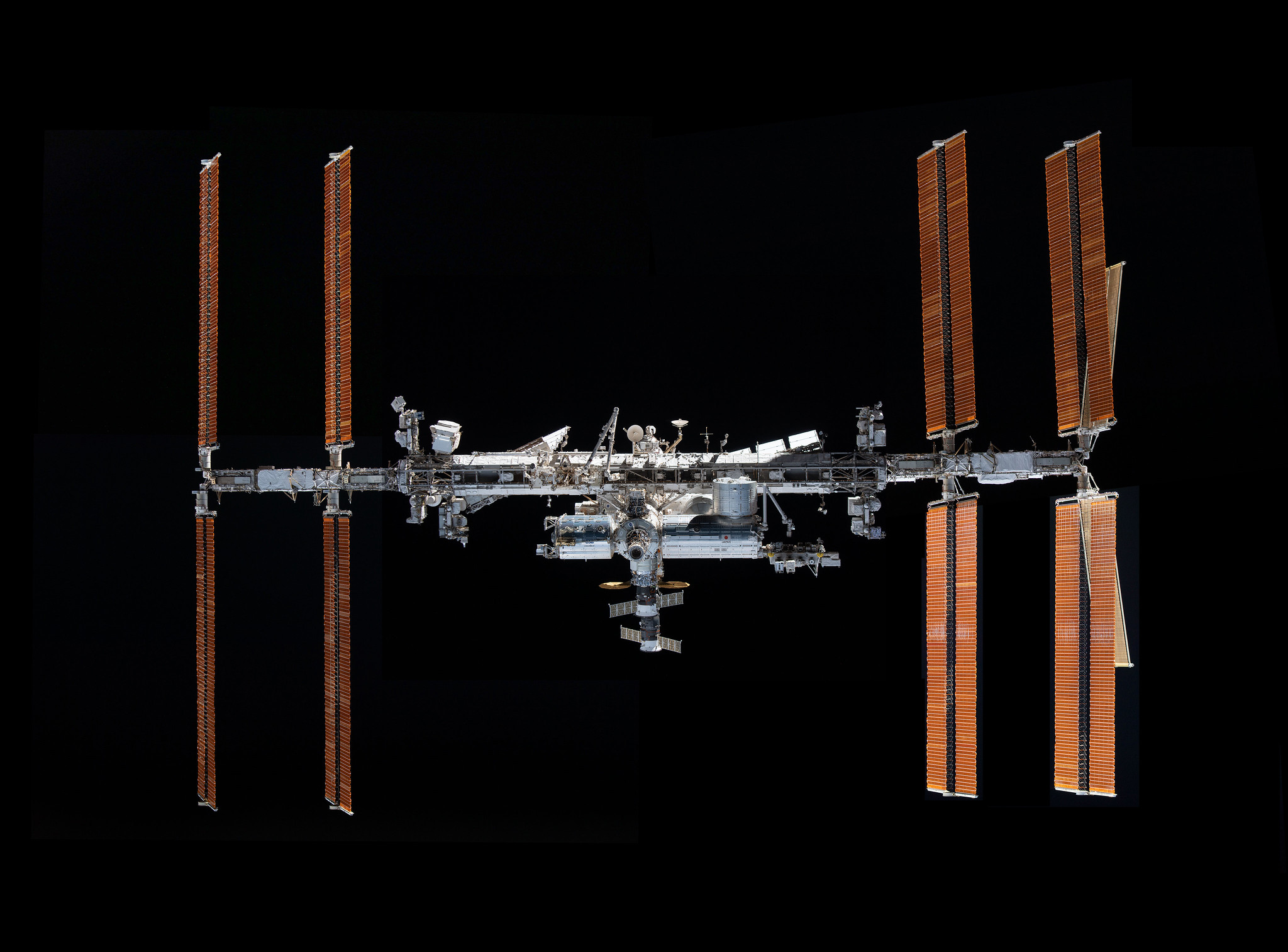
And one thing that has been done on the ISS to extend its lifespan was iROSA. Short for "ISS Roll-Out Solar Arrays". If you look at photos of the ISS made since 2023, you are not actually seeing the original solar panels. Those are already dead, what you see is a replacement that was installed in front of them.

That is why if somebody is observant, they will notice the original solar panels were black.

ISS_Update_Credit_OlegNovitskiy-2_cropped-800x533.jpg


And today, if somebody looks at the solar panels they look copper.

jsc2021e064214_alt_0.jpg


In other words, you are not seeing the original 1990s-early 2000s solar panels. You are seeing 2-3 year old replacements.

 
Last edited:
Add the cost of subsidies and surplus energy at night. Solar cant meet the the demand of the future economy. The outcome will be a catastrophe. That wont happen now because we are supporting nuclear and fossil fuels.

Which ignorant strawman are you arguing with? ... free electricity during the day is a bad thing? ... HAW HAW HAW HAW HAW HAW HAW ... just because it's only free during the day? ...

Yes, you'll have to burn natural gas at night ... and when smelting steel ... duh ...
 
To be more accurate, it is simply not cost effective without huge subsidies. It does work, it simply will never save as much as it costs to install them.

That is why the "solar industry" has been imploding once the subsidies expired.

Do you have hard numbers on that, say, at 40¢ kW-hr, with and without 30% subsidy? ... and after 20 years, you're only replacing the panel ... not the electronics and mounting hardware ... those should last a century ... how much will panels cost in twenty years? ...

Think "Redding", not "Eureka" ...
 
Was over $50K in 2018 in CA to put on roof panels. Now? Probably $100K?

Bunch of uninsured illegals pounding nails in your roof willy-nilly uncontrolled. What could go wrong? They fake a falloff and sue?

Panels go bad before you get any savings you dumb Black-tounged OXYEN.
I see idiots putting them on roofs in MN.
How effective are they when covered in snow for months on end?

Then when you need new shingles all that crap has to come off and reinstalled after a new roof.
 
If you're off grid or in an RV great. Bring out one or two panels.
Just like lithium batteries are great for hand held power tools, but not the truck that carries them and tows trailers.

No one is going to want to buy a used electric truck with 150,000 miles and a diminished battery, never mind the loss of value compared to an ICE vehicle.
Disposable Bic trucks.
 
No one is going to want to buy a used electric truck with 150,000 miles and a diminished battery, never mind the loss of value compared to an ICE vehicle.

That is one thing a lot of people are now starting to learn. The resale value of electric vehicles is almost nothing.

There is a Nissan Leaf for sale where I live, 2012, for $2,500. Of course, the battery is dead which means the buyer will have to put in will be well over $8,000. That means it would cost somebody over $10,000 to just get a 13 year old electric vehicle and make it operational again.

A lot of people in the last year learned that the hard way when they suddenly went mental about Elon Musk. That was a real slap in the face to all of those that had been pushing electric vehicles for the past two decades. To one day realize that those vehicles crap out a lot of their value as soon as you buy them. Far more than a conventional or even hybrid does.

New cars typically depreciate around 20% the first year, up to 60% after five years where the depreciation typically slows down.

In comparison, if you buy an electric car you have dumped half the value the moment you pull out of the lot. And at the end of 5 years they are only worth about 20% of their value (which is at that point quite literally scrap value because it costs more to replace the batteries than the car is worth).
 
Solar is on the decline now that the tax deductions and subsidies have stopped
LOL Tell me, do you like telling lies? Solar is not only increasing, it is becoming the go to solution when new generation is needed fast. Nukes and fossil fuel generating plants take a long time to build, you can build out a large solar farm in less than a year.

In 2025, the U.S. is expected to install approximately 43 gigawatts (GW) of new solar capacity, contributing significantly to the country's renewable energy growth.

Installed​

Context​

The growth in solar capacity reflects a broader trend towards renewable energy in the U.S., with solar energy becoming a leading source of new electricity generation. This increase is driven by various factors, including technological advancements, policy support, and a growing emphasis on clean energy solutions to combat climate change. As the U.S. continues to transition towards a more sustainable energy system, solar power is expected to play a crucial role in meeting future energy demands.
 
I wouldn't bother in Fairbanks, Alaska ... or London, England ... I get that ... use what's available, and if that's coal, have at it ... the OP has hydro, so he should use that (cheapest-in-the-nation) ... Texas has gas, Chicago has hot air ...

If everyone had that simple view, green energy would be much farther along than under its current proponents with their all or nothing feast or famine POV.
 
15th post
Do you have hard numbers on that, say, at 40¢ kW-hr, with and without 30% subsidy? ... and after 20 years, you're only replacing the panel ... not the electronics and mounting hardware ... those should last a century ... how much will panels cost in twenty years? ...

Think "Redding", not "Eureka" ...
Well said. Right now they are finding ways to create panels with new materials, like perovskite, that cost far less, and deliver up to 30% to 35% efficiency.
 
Well said. Right now they are finding ways to create panels with new materials, like perovskite, that cost far less, and deliver up to 30% to 35% efficiency.

I don't have a problem with people wanting to use Solar Energy, what I object is the absurd tax breaks the rich gets out of it, and the government manadating them by force while the industry is still young the lack of transmission lines and back up power creates a future of increased browouts and even black outs.

Let the MARKET be the guideline.
 
Let the MARKET be the guideline.

Wiser words have never been uttered.

When the system / government complex is unwilling to let the system be the guide, you know we are in for some colossal bullshit ahead; when politics gets involved, you know it is going to be one massive clusterfuck of ego, vanity, ignorance, and corruption.
 
LOL Tell me, do you like telling lies? Solar is not only increasing, it is becoming the go to solution when new generation is needed fast. Nukes and fossil fuel generating plants take a long time to build, you can build out a large solar farm in less than a year.

In 2025, the U.S. is expected to install approximately 43 gigawatts (GW) of new solar capacity, contributing significantly to the country's renewable energy growth.

Installed​

Context​

The growth in solar capacity reflects a broader trend towards renewable energy in the U.S., with solar energy becoming a leading source of new electricity generation. This increase is driven by various factors, including technological advancements, policy support, and a growing emphasis on clean energy solutions to combat climate change. As the U.S. continues to transition towards a more sustainable energy system, solar power is expected to play a crucial role in meeting future energy demands.
Trump has ended thr subsidies and we will focus on nuclear and fossil fuels. Solar which shuts down at night cant meet the demand of AI and data centers. It also costs a lot more when you add subsides and back up energy needed at night. Its dead
 
Back
Top Bottom