
Stormy Daniels
Gold Member
- Mar 19, 2018
- 7,570
- 2,817
- 265
I can't help but wonder if Lakhota should even exist.
Follow along with the video below to see how to install our site as a web app on your home screen.
Note: This feature may not be available in some browsers.

/—-/ Libtards wear class envy as a badge of honor.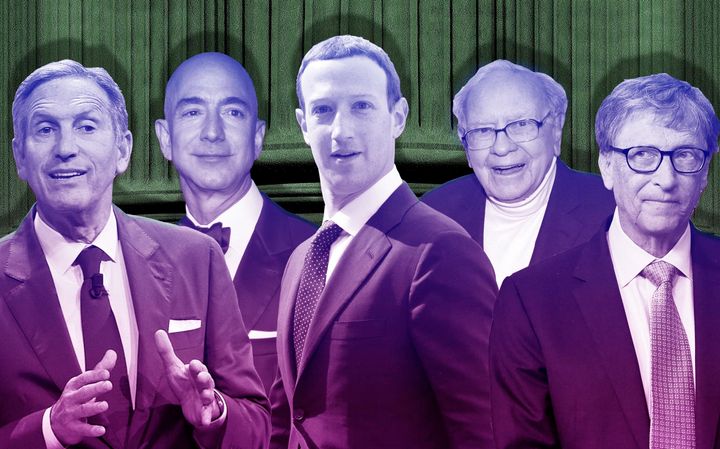
You know what’s not cool anymore? Billionaires.
Alexandria Ocasio-Cortez and Elizabeth Warren believe some Americans have too much money, and they’re not alone.
Their very existence is now the subject of political debate, sparked most recently by tax-the-rich proposals from two prominent politicians.
Sen. Elizabeth Warren (D-Mass.) proposed placing a 2 percent tax on wealth over $50 million and 3 percent on assets over $1 billion. Rep. Alexandria Ocasio-Cortez (D-N.Y.) said she wants to increase the marginal tax rate on those earning more than $10 million a year.
Their ideas went viral, starting a mainstream conversation about inequality and wealth.
This kind of talk has always existed among a certain group of hard-core progressives and left-leaning economists, but heading into next year’s presidential election, the idea that the super-rich should pay their fair share is gaining real momentum.
Marshall Steinbaum, a research director at the left-leaning Roosevelt Institute, has advocated taxing the rich at higher rates for years. “We do not need billionaires,” Steinbaum told HuffPost. “The economy’s done better without billionaires in the past.”
For Steinbaum, higher taxes on the wealthy would mean freeing up more money for everyone else. If you think of the economy as a pie, right now, billionaires are getting just about all of it, while we’re all left splitting just one slice.
If you raise taxes on the richest, their incentive to grab at every morsel declines. The theory is they’ll fight a little less hard to depress everyone else’s wages if they know that every extra million is going to get taxed away. A high-paid CEO has less incentive to keep workers’ wages low so he can get a bigger payday.
Billionaires were once a rare breed. In the past few decades, as the U.S. has slashed tax rates, their numbers have exploded, far outpacing inflation.
Since 2008, the number of billionaires in the world has doubled, according to a report published last week by the anti-poverty nonprofit Oxfam. In just the last year, billionaires raked in an astonishing $2.5 billion each day.
In 1982, the first year Forbes debuted its list of the 400 richest Americans, there were about a dozen billionaires. The richest man in the U.S. back then was an 85-year-old shipping magnate with an estimated worth of $2 billion, or $5.2 billion in today’s dollars.
"We do not need billionaires. The economy’s done better without billionaires in the past."
--Marshall Steinbaum, Roosevelt Institute
Nowadays, Forbes’ list is entirely billionaires. The richest is Amazon founder Jeff Bezos, worth $160 billion.
More: Should Billionaires Even Exist?
I agree! Billionaires aren't cool anymore! The playing field is tilted like the Titanic before it went down. There is no logical reason for so few to have so much. What do you think?
/—-/ OK libtard, what is a fair amount?The rich already pay far more than a fair share.
No, they don't.

/—-/ OK libtard, what is a fair amount?The rich already pay far more than a fair share.
No, they don't.
70% above $10 million. Just like AOC said.
I don't see any problem with billionaires per se. The Walton Family revolutionized retail and their invention of Walmart made it possible for tens of millions to save money and make their own money go further. The prices charged by the Walton Family are significantly less than Mom and Pop charged, and it wasn't do to the fact they were cheap.
If WMT would have been stopped, the world would be worse off.


You know what’s not cool anymore? Billionaires.
Alexandria Ocasio-Cortez and Elizabeth Warren believe some Americans have too much money, and they’re not alone.
Their very existence is now the subject of political debate, sparked most recently by tax-the-rich proposals from two prominent politicians.
Sen. Elizabeth Warren (D-Mass.) proposed placing a 2 percent tax on wealth over $50 million and 3 percent on assets over $1 billion. Rep. Alexandria Ocasio-Cortez (D-N.Y.) said she wants to increase the marginal tax rate on those earning more than $10 million a year.
Their ideas went viral, starting a mainstream conversation about inequality and wealth.
This kind of talk has always existed among a certain group of hard-core progressives and left-leaning economists, but heading into next year’s presidential election, the idea that the super-rich should pay their fair share is gaining real momentum.
Marshall Steinbaum, a research director at the left-leaning Roosevelt Institute, has advocated taxing the rich at higher rates for years. “We do not need billionaires,” Steinbaum told HuffPost. “The economy’s done better without billionaires in the past.”
For Steinbaum, higher taxes on the wealthy would mean freeing up more money for everyone else. If you think of the economy as a pie, right now, billionaires are getting just about all of it, while we’re all left splitting just one slice.
If you raise taxes on the richest, their incentive to grab at every morsel declines. The theory is they’ll fight a little less hard to depress everyone else’s wages if they know that every extra million is going to get taxed away. A high-paid CEO has less incentive to keep workers’ wages low so he can get a bigger payday.
Billionaires were once a rare breed. In the past few decades, as the U.S. has slashed tax rates, their numbers have exploded, far outpacing inflation.
Since 2008, the number of billionaires in the world has doubled, according to a report published last week by the anti-poverty nonprofit Oxfam. In just the last year, billionaires raked in an astonishing $2.5 billion each day.
In 1982, the first year Forbes debuted its list of the 400 richest Americans, there were about a dozen billionaires. The richest man in the U.S. back then was an 85-year-old shipping magnate with an estimated worth of $2 billion, or $5.2 billion in today’s dollars.
"We do not need billionaires. The economy’s done better without billionaires in the past."
--Marshall Steinbaum, Roosevelt Institute
Nowadays, Forbes’ list is entirely billionaires. The richest is Amazon founder Jeff Bezos, worth $160 billion.
More: Should Billionaires Even Exist?
I agree! Billionaires aren't cool anymore! The playing field is tilted like the Titanic before it went down. There is no logical reason for so few to have so much. What do you think?

 y’all done messed up now.
The rich already pay far more than a fair share.
/——/ Trump is making rich blue states pay their fair share and Libs scream bloody murder.The rich already pay far more than a fair share.
Not even close
First cortez is a moron. Billionaire s for the most part built their business and deserve to be rewarded for their effort .
You know what’s not cool anymore? Billionaires.
Alexandria Ocasio-Cortez and Elizabeth Warren believe some Americans have too much money, and they’re not alone.
Their very existence is now the subject of political debate, sparked most recently by tax-the-rich proposals from two prominent politicians.
Sen. Elizabeth Warren (D-Mass.) proposed placing a 2 percent tax on wealth over $50 million and 3 percent on assets over $1 billion. Rep. Alexandria Ocasio-Cortez (D-N.Y.) said she wants to increase the marginal tax rate on those earning more than $10 million a year.
Their ideas went viral, starting a mainstream conversation about inequality and wealth.
This kind of talk has always existed among a certain group of hard-core progressives and left-leaning economists, but heading into next year’s presidential election, the idea that the super-rich should pay their fair share is gaining real momentum.
Marshall Steinbaum, a research director at the left-leaning Roosevelt Institute, has advocated taxing the rich at higher rates for years. “We do not need billionaires,” Steinbaum told HuffPost. “The economy’s done better without billionaires in the past.”
For Steinbaum, higher taxes on the wealthy would mean freeing up more money for everyone else. If you think of the economy as a pie, right now, billionaires are getting just about all of it, while we’re all left splitting just one slice.
If you raise taxes on the richest, their incentive to grab at every morsel declines. The theory is they’ll fight a little less hard to depress everyone else’s wages if they know that every extra million is going to get taxed away. A high-paid CEO has less incentive to keep workers’ wages low so he can get a bigger payday.
Billionaires were once a rare breed. In the past few decades, as the U.S. has slashed tax rates, their numbers have exploded, far outpacing inflation.
Since 2008, the number of billionaires in the world has doubled, according to a report published last week by the anti-poverty nonprofit Oxfam. In just the last year, billionaires raked in an astonishing $2.5 billion each day.
In 1982, the first year Forbes debuted its list of the 400 richest Americans, there were about a dozen billionaires. The richest man in the U.S. back then was an 85-year-old shipping magnate with an estimated worth of $2 billion, or $5.2 billion in today’s dollars.
"We do not need billionaires. The economy’s done better without billionaires in the past."
--Marshall Steinbaum, Roosevelt Institute
Nowadays, Forbes’ list is entirely billionaires. The richest is Amazon founder Jeff Bezos, worth $160 billion.
More: Should Billionaires Even Exist?
I agree! Billionaires aren't cool anymore! The playing field is tilted like the Titanic before it went down. There is no logical reason for so few to have so much. What do you think?

Heavily taxing them is taking their money, shit for brains. How is allowing people to keep what they have acquired through entirely voluntary transactions "gaming the system?"How much of those rich people's money do you believe you deserve?
You know what’s not cool anymore? Billionaires.
Alexandria Ocasio-Cortez and Elizabeth Warren believe some Americans have too much money, and they’re not alone.
Their very existence is now the subject of political debate, sparked most recently by tax-the-rich proposals from two prominent politicians.
Sen. Elizabeth Warren (D-Mass.) proposed placing a 2 percent tax on wealth over $50 million and 3 percent on assets over $1 billion. Rep. Alexandria Ocasio-Cortez (D-N.Y.) said she wants to increase the marginal tax rate on those earning more than $10 million a year.
Their ideas went viral, starting a mainstream conversation about inequality and wealth.
This kind of talk has always existed among a certain group of hard-core progressives and left-leaning economists, but heading into next year’s presidential election, the idea that the super-rich should pay their fair share is gaining real momentum.
Marshall Steinbaum, a research director at the left-leaning Roosevelt Institute, has advocated taxing the rich at higher rates for years. “We do not need billionaires,” Steinbaum told HuffPost. “The economy’s done better without billionaires in the past.”
For Steinbaum, higher taxes on the wealthy would mean freeing up more money for everyone else. If you think of the economy as a pie, right now, billionaires are getting just about all of it, while we’re all left splitting just one slice.
If you raise taxes on the richest, their incentive to grab at every morsel declines. The theory is they’ll fight a little less hard to depress everyone else’s wages if they know that every extra million is going to get taxed away. A high-paid CEO has less incentive to keep workers’ wages low so he can get a bigger payday.
Billionaires were once a rare breed. In the past few decades, as the U.S. has slashed tax rates, their numbers have exploded, far outpacing inflation.
Since 2008, the number of billionaires in the world has doubled, according to a report published last week by the anti-poverty nonprofit Oxfam. In just the last year, billionaires raked in an astonishing $2.5 billion each day.
In 1982, the first year Forbes debuted its list of the 400 richest Americans, there were about a dozen billionaires. The richest man in the U.S. back then was an 85-year-old shipping magnate with an estimated worth of $2 billion, or $5.2 billion in today’s dollars.
"We do not need billionaires. The economy’s done better without billionaires in the past."
--Marshall Steinbaum, Roosevelt Institute
Nowadays, Forbes’ list is entirely billionaires. The richest is Amazon founder Jeff Bezos, worth $160 billion.
More: Should Billionaires Even Exist?
I agree! Billionaires aren't cool anymore! The playing field is tilted like the Titanic before it went down. There is no logical reason for so few to have so much. What do you think?
I'm comfortably retired and don't need it - but many people do. However, that's not the point. It's not about taking from them - it's about ungaming the system so they can't amass such wealth. They must be heavily taxed above a certain income level of about $10 million - with a tax rate of at least 70% on all income above that.
You mean with great wealth comes scheming parasites trying to get their hands on it.With great wealth - comes great taxes!
ROFL! And where was it established that the moral rate of taxation is 70%? Taxation is theft, so the moral rate is zero. The last thing we need is to hand over the wealth of this country to the government. Most of the money you're talking about taxing away ends up being invested in American companies. Hand that over to the government so it can dispense it to parasites is the dumbest thing I can imagine.
You know what’s not cool anymore? Billionaires.
Alexandria Ocasio-Cortez and Elizabeth Warren believe some Americans have too much money, and they’re not alone.
Their very existence is now the subject of political debate, sparked most recently by tax-the-rich proposals from two prominent politicians.
Sen. Elizabeth Warren (D-Mass.) proposed placing a 2 percent tax on wealth over $50 million and 3 percent on assets over $1 billion. Rep. Alexandria Ocasio-Cortez (D-N.Y.) said she wants to increase the marginal tax rate on those earning more than $10 million a year.
Their ideas went viral, starting a mainstream conversation about inequality and wealth.
This kind of talk has always existed among a certain group of hard-core progressives and left-leaning economists, but heading into next year’s presidential election, the idea that the super-rich should pay their fair share is gaining real momentum.
Marshall Steinbaum, a research director at the left-leaning Roosevelt Institute, has advocated taxing the rich at higher rates for years. “We do not need billionaires,” Steinbaum told HuffPost. “The economy’s done better without billionaires in the past.”
For Steinbaum, higher taxes on the wealthy would mean freeing up more money for everyone else. If you think of the economy as a pie, right now, billionaires are getting just about all of it, while we’re all left splitting just one slice.
If you raise taxes on the richest, their incentive to grab at every morsel declines. The theory is they’ll fight a little less hard to depress everyone else’s wages if they know that every extra million is going to get taxed away. A high-paid CEO has less incentive to keep workers’ wages low so he can get a bigger payday.
Billionaires were once a rare breed. In the past few decades, as the U.S. has slashed tax rates, their numbers have exploded, far outpacing inflation.
Since 2008, the number of billionaires in the world has doubled, according to a report published last week by the anti-poverty nonprofit Oxfam. In just the last year, billionaires raked in an astonishing $2.5 billion each day.
In 1982, the first year Forbes debuted its list of the 400 richest Americans, there were about a dozen billionaires. The richest man in the U.S. back then was an 85-year-old shipping magnate with an estimated worth of $2 billion, or $5.2 billion in today’s dollars.
"We do not need billionaires. The economy’s done better without billionaires in the past."
--Marshall Steinbaum, Roosevelt Institute
Nowadays, Forbes’ list is entirely billionaires. The richest is Amazon founder Jeff Bezos, worth $160 billion.
More: Should Billionaires Even Exist?
I agree! Billionaires aren't cool anymore! The playing field is tilted like the Titanic before it went down. There is no logical reason for so few to have so much. What do you think?
There is nothing wrong with Billionaires as long as they are paying at least 70% on income taxes and capital gains taxes.
Walmart has done more for the poor than all the government social programs put together.I don't see any problem with billionaires per se. The Walton Family revolutionized retail and their invention of Walmart made it possible for tens of millions to save money and make their own money go further. The prices charged by the Walton Family are significantly less than Mom and Pop charged, and it wasn't do to the fact they were cheap.
If WMT would have been stopped, the world would be worse off.
/----/ The Facts About Who Pays the Most in Taxes in AmericaThe rich already pay far more than a fair share.
Not even close
Correct. Not even close. They don't even pay enough for the military to protect their assets.


