Should Billionaires Even Exist?

5c51ed9124000096019fa4e8.jpeg


You know what’s not cool anymore? Billionaires.

Alexandria Ocasio-Cortez and Elizabeth Warren believe some Americans have too much money, and they’re not alone.

Their very existence is now the subject of political debate, sparked most recently by tax-the-rich proposals from two prominent politicians.

Sen. Elizabeth Warren (D-Mass.) proposed placing a 2 percent tax on wealth over $50 million and 3 percent on assets over $1 billion. Rep. Alexandria Ocasio-Cortez (D-N.Y.) said she wants to increase the marginal tax rate on those earning more than $10 million a year.

Their ideas went viral, starting a mainstream conversation about inequality and wealth.

This kind of talk has always existed among a certain group of hard-core progressives and left-leaning economists, but heading into next year’s presidential election, the idea that the super-rich should pay their fair share is gaining real momentum.

Marshall Steinbaum, a research director at the left-leaning Roosevelt Institute, has advocated taxing the rich at higher rates for years. “We do not need billionaires,” Steinbaum told HuffPost. “The economy’s done better without billionaires in the past.”

For Steinbaum, higher taxes on the wealthy would mean freeing up more money for everyone else. If you think of the economy as a pie, right now, billionaires are getting just about all of it, while we’re all left splitting just one slice.

If you raise taxes on the richest, their incentive to grab at every morsel declines. The theory is they’ll fight a little less hard to depress everyone else’s wages if they know that every extra million is going to get taxed away. A high-paid CEO has less incentive to keep workers’ wages low so he can get a bigger payday.

Billionaires were once a rare breed. In the past few decades, as the U.S. has slashed tax rates, their numbers have exploded, far outpacing inflation.

Since 2008, the number of billionaires in the world has doubled, according to a report published last week by the anti-poverty nonprofit Oxfam. In just the last year, billionaires raked in an astonishing $2.5 billion each day.

In 1982, the first year Forbes debuted its list of the 400 richest Americans, there were about a dozen billionaires. The richest man in the U.S. back then was an 85-year-old shipping magnate with an estimated worth of $2 billion, or $5.2 billion in today’s dollars.

"We do not need billionaires. The economy’s done better without billionaires in the past."
--Marshall Steinbaum, Roosevelt Institute​

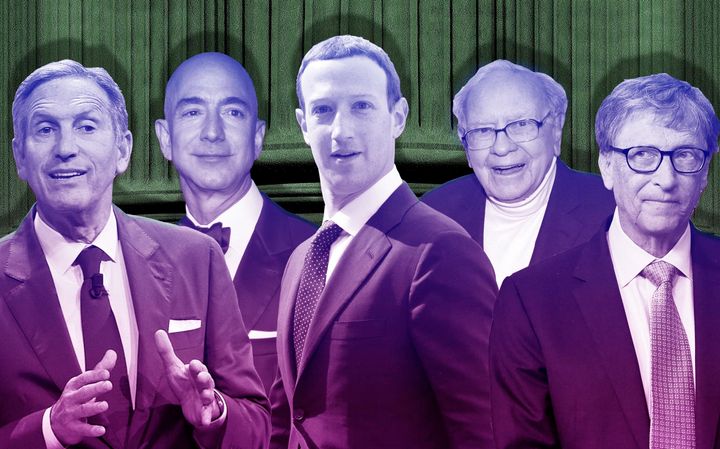
Nowadays, Forbes’ list is entirely billionaires. The richest is Amazon founder Jeff Bezos, worth $160 billion.

More: Should Billionaires Even Exist?

I agree! Billionaires aren't cool anymore! The playing field is tilted like the Titanic before it went down. There is no logical reason for so few to have so much. What do you think?
Probably not, The massive wealth of so few shows our capitalism is broken.
How so? What would you rather have, government collect all our money and divide it up as they see fit?
I’d prefer good capitalism where the rich aren’t working with the politicians to hose the people.

I actually agree with this statement. But I don't believe this statement accurately reflects your views.
 
Probably not, The massive wealth of so few shows our capitalism is broken.

And if those "few" were government bureaucrats, rather than private entrepreneurs, that'd be all good, eh?
Those few have gotten a lot of help from government bureaucrats.

True that. We should put a stop to collusion between government and business. But that doesn't really answer my question. Do you think it would be better if government had control of all that capital, rather than private investors?
Why would you suggest that? I’m a free market capitalist, that means the government doesn’t pick winners and losers. Many of our ultra wealthy were picked.

Hmmm... nah...just not believing you. I bet you just want them to pick different winners and losers, amiright?
Then be a dumbass if you wish.
 
5c51ed9124000096019fa4e8.jpeg


You know what’s not cool anymore? Billionaires.

Alexandria Ocasio-Cortez and Elizabeth Warren believe some Americans have too much money, and they’re not alone.

Their very existence is now the subject of political debate, sparked most recently by tax-the-rich proposals from two prominent politicians.

Sen. Elizabeth Warren (D-Mass.) proposed placing a 2 percent tax on wealth over $50 million and 3 percent on assets over $1 billion. Rep. Alexandria Ocasio-Cortez (D-N.Y.) said she wants to increase the marginal tax rate on those earning more than $10 million a year.

Their ideas went viral, starting a mainstream conversation about inequality and wealth.

This kind of talk has always existed among a certain group of hard-core progressives and left-leaning economists, but heading into next year’s presidential election, the idea that the super-rich should pay their fair share is gaining real momentum.

Marshall Steinbaum, a research director at the left-leaning Roosevelt Institute, has advocated taxing the rich at higher rates for years. “We do not need billionaires,” Steinbaum told HuffPost. “The economy’s done better without billionaires in the past.”

For Steinbaum, higher taxes on the wealthy would mean freeing up more money for everyone else. If you think of the economy as a pie, right now, billionaires are getting just about all of it, while we’re all left splitting just one slice.

If you raise taxes on the richest, their incentive to grab at every morsel declines. The theory is they’ll fight a little less hard to depress everyone else’s wages if they know that every extra million is going to get taxed away. A high-paid CEO has less incentive to keep workers’ wages low so he can get a bigger payday.

Billionaires were once a rare breed. In the past few decades, as the U.S. has slashed tax rates, their numbers have exploded, far outpacing inflation.

Since 2008, the number of billionaires in the world has doubled, according to a report published last week by the anti-poverty nonprofit Oxfam. In just the last year, billionaires raked in an astonishing $2.5 billion each day.

In 1982, the first year Forbes debuted its list of the 400 richest Americans, there were about a dozen billionaires. The richest man in the U.S. back then was an 85-year-old shipping magnate with an estimated worth of $2 billion, or $5.2 billion in today’s dollars.

"We do not need billionaires. The economy’s done better without billionaires in the past."
--Marshall Steinbaum, Roosevelt Institute​

Nowadays, Forbes’ list is entirely billionaires. The richest is Amazon founder Jeff Bezos, worth $160 billion.

More: Should Billionaires Even Exist?

I agree! Billionaires aren't cool anymore! The playing field is tilted like the Titanic before it went down. There is no logical reason for so few to have so much. What do you think?
Probably not, The massive wealth of so few shows our capitalism is broken.

How so? What would you rather have, government collect all our money and divide it up as they see fit?
I’d prefer good capitalism where the rich aren’t working with the politicians to hose the people.

I actually agree with this statement. But I don't believe this statement accurately reflects your views.
Based on what?
 
5c51ed9124000096019fa4e8.jpeg


You know what’s not cool anymore? Billionaires.

Alexandria Ocasio-Cortez and Elizabeth Warren believe some Americans have too much money, and they’re not alone.

Their very existence is now the subject of political debate, sparked most recently by tax-the-rich proposals from two prominent politicians.

Sen. Elizabeth Warren (D-Mass.) proposed placing a 2 percent tax on wealth over $50 million and 3 percent on assets over $1 billion. Rep. Alexandria Ocasio-Cortez (D-N.Y.) said she wants to increase the marginal tax rate on those earning more than $10 million a year.

Their ideas went viral, starting a mainstream conversation about inequality and wealth.

This kind of talk has always existed among a certain group of hard-core progressives and left-leaning economists, but heading into next year’s presidential election, the idea that the super-rich should pay their fair share is gaining real momentum.

Marshall Steinbaum, a research director at the left-leaning Roosevelt Institute, has advocated taxing the rich at higher rates for years. “We do not need billionaires,” Steinbaum told HuffPost. “The economy’s done better without billionaires in the past.”

For Steinbaum, higher taxes on the wealthy would mean freeing up more money for everyone else. If you think of the economy as a pie, right now, billionaires are getting just about all of it, while we’re all left splitting just one slice.

If you raise taxes on the richest, their incentive to grab at every morsel declines. The theory is they’ll fight a little less hard to depress everyone else’s wages if they know that every extra million is going to get taxed away. A high-paid CEO has less incentive to keep workers’ wages low so he can get a bigger payday.

Billionaires were once a rare breed. In the past few decades, as the U.S. has slashed tax rates, their numbers have exploded, far outpacing inflation.

Since 2008, the number of billionaires in the world has doubled, according to a report published last week by the anti-poverty nonprofit Oxfam. In just the last year, billionaires raked in an astonishing $2.5 billion each day.

In 1982, the first year Forbes debuted its list of the 400 richest Americans, there were about a dozen billionaires. The richest man in the U.S. back then was an 85-year-old shipping magnate with an estimated worth of $2 billion, or $5.2 billion in today’s dollars.

"We do not need billionaires. The economy’s done better without billionaires in the past."
--Marshall Steinbaum, Roosevelt Institute​

Nowadays, Forbes’ list is entirely billionaires. The richest is Amazon founder Jeff Bezos, worth $160 billion.

More: Should Billionaires Even Exist?

I agree! Billionaires aren't cool anymore! The playing field is tilted like the Titanic before it went down. There is no logical reason for so few to have so much. What do you think?
Probably not, The massive wealth of so few shows our capitalism is broken.

How so? What would you rather have, government collect all our money and divide it up as they see fit?
I’d prefer good capitalism where the rich aren’t working with the politicians to hose the people.

How are we being hosed? Please give me an example or two.
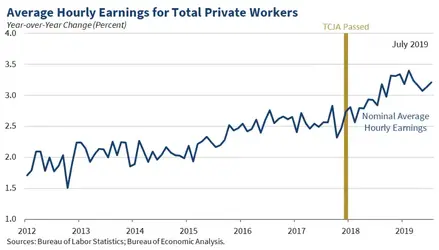
Trillion dollar deficits. Weak wage growth. Huge increases in healthcare costs...

And the rich are responsible for that? I don't see how.

Average-Hourly-Earnings-for-Total-Private-Workers-1-820x468.webp
 
5c51ed9124000096019fa4e8.jpeg


You know what’s not cool anymore? Billionaires.

Alexandria Ocasio-Cortez and Elizabeth Warren believe some Americans have too much money, and they’re not alone.

Their very existence is now the subject of political debate, sparked most recently by tax-the-rich proposals from two prominent politicians.

Sen. Elizabeth Warren (D-Mass.) proposed placing a 2 percent tax on wealth over $50 million and 3 percent on assets over $1 billion. Rep. Alexandria Ocasio-Cortez (D-N.Y.) said she wants to increase the marginal tax rate on those earning more than $10 million a year.

Their ideas went viral, starting a mainstream conversation about inequality and wealth.

This kind of talk has always existed among a certain group of hard-core progressives and left-leaning economists, but heading into next year’s presidential election, the idea that the super-rich should pay their fair share is gaining real momentum.

Marshall Steinbaum, a research director at the left-leaning Roosevelt Institute, has advocated taxing the rich at higher rates for years. “We do not need billionaires,” Steinbaum told HuffPost. “The economy’s done better without billionaires in the past.”

For Steinbaum, higher taxes on the wealthy would mean freeing up more money for everyone else. If you think of the economy as a pie, right now, billionaires are getting just about all of it, while we’re all left splitting just one slice.

If you raise taxes on the richest, their incentive to grab at every morsel declines. The theory is they’ll fight a little less hard to depress everyone else’s wages if they know that every extra million is going to get taxed away. A high-paid CEO has less incentive to keep workers’ wages low so he can get a bigger payday.

Billionaires were once a rare breed. In the past few decades, as the U.S. has slashed tax rates, their numbers have exploded, far outpacing inflation.

Since 2008, the number of billionaires in the world has doubled, according to a report published last week by the anti-poverty nonprofit Oxfam. In just the last year, billionaires raked in an astonishing $2.5 billion each day.

In 1982, the first year Forbes debuted its list of the 400 richest Americans, there were about a dozen billionaires. The richest man in the U.S. back then was an 85-year-old shipping magnate with an estimated worth of $2 billion, or $5.2 billion in today’s dollars.

"We do not need billionaires. The economy’s done better without billionaires in the past."
--Marshall Steinbaum, Roosevelt Institute​

Nowadays, Forbes’ list is entirely billionaires. The richest is Amazon founder Jeff Bezos, worth $160 billion.

More: Should Billionaires Even Exist?

I agree! Billionaires aren't cool anymore! The playing field is tilted like the Titanic before it went down. There is no logical reason for so few to have so much. What do you think?
Probably not, The massive wealth of so few shows our capitalism is broken.

How so? What would you rather have, government collect all our money and divide it up as they see fit?
I’d prefer good capitalism where the rich aren’t working with the politicians to hose the people.

I actually agree with this statement. But I don't believe this statement accurately reflects your views.
Based on what?

Just my perception of your views based on your posts. But I could very definitely be wrong.

Let me ask you this, if you think capitalism is broken, what would you do to fix it?
 
Probably not, The massive wealth of so few shows our capitalism is broken.

How so? What would you rather have, government collect all our money and divide it up as they see fit?
I’d prefer good capitalism where the rich aren’t working with the politicians to hose the people.

I actually agree with this statement. But I don't believe this statement accurately reflects your views.
Based on what?

Just my perception of your views based on your posts. But I could very definitely be wrong.

Let me ask you this, if you think capitalism is broken, what would you do to fix it?
Need to get government out. End corporate welfare. Workers need more rights, non competes aren’t good capitalism.
 
Probably not, The massive wealth of so few shows our capitalism is broken.

How so? What would you rather have, government collect all our money and divide it up as they see fit?
I’d prefer good capitalism where the rich aren’t working with the politicians to hose the people.

I actually agree with this statement. But I don't believe this statement accurately reflects your views.
Based on what?

Just my perception of your views based on your posts. But I could very definitely be wrong.

Let me ask you this, if you think capitalism is broken, what would you do to fix it?
End all the near monopolies and wage collusion. Let markets work.
 
How so? What would you rather have, government collect all our money and divide it up as they see fit?
I’d prefer good capitalism where the rich aren’t working with the politicians to hose the people.

I actually agree with this statement. But I don't believe this statement accurately reflects your views.
Based on what?

Just my perception of your views based on your posts. But I could very definitely be wrong.

Let me ask you this, if you think capitalism is broken, what would you do to fix it?
End all the near monopolies and wage collusion. Let markets work.

How would you end "near monopolies"? Examples?
 
I’d prefer good capitalism where the rich aren’t working with the politicians to hose the people.

I actually agree with this statement. But I don't believe this statement accurately reflects your views.
Based on what?

Just my perception of your views based on your posts. But I could very definitely be wrong.

Let me ask you this, if you think capitalism is broken, what would you do to fix it?
End all the near monopolies and wage collusion. Let markets work.

How would you end "near monopolies"? Examples?
America Has A Monopoly Problem
 
I actually agree with this statement. But I don't believe this statement accurately reflects your views.
Based on what?

Just my perception of your views based on your posts. But I could very definitely be wrong.

Let me ask you this, if you think capitalism is broken, what would you do to fix it?
End all the near monopolies and wage collusion. Let markets work.

How would you end "near monopolies"? Examples?
America Has A Monopoly Problem

Not really interested in reading an article you might not have even read. I'm suspicious because of your hedging on the term "near" monopolies. If 90% of a given market likes one company best - would you call that a "near monopoly"? If so, what measures would you take to break it up?
 
Here's the thing, Brain357. I actually agree that many large corporations enjoy market domination via collusion with government. They use their lobbying clout to manipulate regulation in their favor, and to penalize their competition. If you are interested in targeting that kind of corruption, I'm down with that. But what is usually going on, among those concerned about income inequality, is that it's simply the fact that a given company has a large market share that makes them a target. There's rarely any effort to go after the actual corruption. The goal is remedial solutions that assume the guilt of the company without really identifying, much less, proving it.
 
I’d prefer good capitalism where the rich aren’t working with the politicians to hose the people.

I actually agree with this statement. But I don't believe this statement accurately reflects your views.
Based on what?

Just my perception of your views based on your posts. But I could very definitely be wrong.

Let me ask you this, if you think capitalism is broken, what would you do to fix it?
End all the near monopolies and wage collusion. Let markets work.

How would you end "near monopolies"? Examples?
Simple. Break them up. It’s been done before. TR did it. I suspect today no potus would dare do what he did. The big corporations are too powerful. Therein lies the problem.
 
5c51ed9124000096019fa4e8.jpeg


You know what’s not cool anymore? Billionaires.

Alexandria Ocasio-Cortez and Elizabeth Warren believe some Americans have too much money, and they’re not alone.

Their very existence is now the subject of political debate, sparked most recently by tax-the-rich proposals from two prominent politicians.

Sen. Elizabeth Warren (D-Mass.) proposed placing a 2 percent tax on wealth over $50 million and 3 percent on assets over $1 billion. Rep. Alexandria Ocasio-Cortez (D-N.Y.) said she wants to increase the marginal tax rate on those earning more than $10 million a year.

Their ideas went viral, starting a mainstream conversation about inequality and wealth.

This kind of talk has always existed among a certain group of hard-core progressives and left-leaning economists, but heading into next year’s presidential election, the idea that the super-rich should pay their fair share is gaining real momentum.

Marshall Steinbaum, a research director at the left-leaning Roosevelt Institute, has advocated taxing the rich at higher rates for years. “We do not need billionaires,” Steinbaum told HuffPost. “The economy’s done better without billionaires in the past.”

For Steinbaum, higher taxes on the wealthy would mean freeing up more money for everyone else. If you think of the economy as a pie, right now, billionaires are getting just about all of it, while we’re all left splitting just one slice.

If you raise taxes on the richest, their incentive to grab at every morsel declines. The theory is they’ll fight a little less hard to depress everyone else’s wages if they know that every extra million is going to get taxed away. A high-paid CEO has less incentive to keep workers’ wages low so he can get a bigger payday.

Billionaires were once a rare breed. In the past few decades, as the U.S. has slashed tax rates, their numbers have exploded, far outpacing inflation.

Since 2008, the number of billionaires in the world has doubled, according to a report published last week by the anti-poverty nonprofit Oxfam. In just the last year, billionaires raked in an astonishing $2.5 billion each day.

In 1982, the first year Forbes debuted its list of the 400 richest Americans, there were about a dozen billionaires. The richest man in the U.S. back then was an 85-year-old shipping magnate with an estimated worth of $2 billion, or $5.2 billion in today’s dollars.

"We do not need billionaires. The economy’s done better without billionaires in the past."
--Marshall Steinbaum, Roosevelt Institute​

Nowadays, Forbes’ list is entirely billionaires. The richest is Amazon founder Jeff Bezos, worth $160 billion.

More: Should Billionaires Even Exist?

I agree! Billionaires aren't cool anymore! The playing field is tilted like the Titanic before it went down. There is no logical reason for so few to have so much. What do you think?
Probably not, The massive wealth of so few shows our capitalism is broken.

How so? What would you rather have, government collect all our money and divide it up as they see fit?
I’d prefer good capitalism where the rich aren’t working with the politicians to hose the people.

How are we being hosed? Please give me an example or two.
Who do you think funds presidential campaigns. It ain’t grandma.
 
5c51ed9124000096019fa4e8.jpeg


You know what’s not cool anymore? Billionaires.

Alexandria Ocasio-Cortez and Elizabeth Warren believe some Americans have too much money, and they’re not alone.

Their very existence is now the subject of political debate, sparked most recently by tax-the-rich proposals from two prominent politicians.

Sen. Elizabeth Warren (D-Mass.) proposed placing a 2 percent tax on wealth over $50 million and 3 percent on assets over $1 billion. Rep. Alexandria Ocasio-Cortez (D-N.Y.) said she wants to increase the marginal tax rate on those earning more than $10 million a year.

Their ideas went viral, starting a mainstream conversation about inequality and wealth.

This kind of talk has always existed among a certain group of hard-core progressives and left-leaning economists, but heading into next year’s presidential election, the idea that the super-rich should pay their fair share is gaining real momentum.

Marshall Steinbaum, a research director at the left-leaning Roosevelt Institute, has advocated taxing the rich at higher rates for years. “We do not need billionaires,” Steinbaum told HuffPost. “The economy’s done better without billionaires in the past.”

For Steinbaum, higher taxes on the wealthy would mean freeing up more money for everyone else. If you think of the economy as a pie, right now, billionaires are getting just about all of it, while we’re all left splitting just one slice.

If you raise taxes on the richest, their incentive to grab at every morsel declines. The theory is they’ll fight a little less hard to depress everyone else’s wages if they know that every extra million is going to get taxed away. A high-paid CEO has less incentive to keep workers’ wages low so he can get a bigger payday.

Billionaires were once a rare breed. In the past few decades, as the U.S. has slashed tax rates, their numbers have exploded, far outpacing inflation.

Since 2008, the number of billionaires in the world has doubled, according to a report published last week by the anti-poverty nonprofit Oxfam. In just the last year, billionaires raked in an astonishing $2.5 billion each day.

In 1982, the first year Forbes debuted its list of the 400 richest Americans, there were about a dozen billionaires. The richest man in the U.S. back then was an 85-year-old shipping magnate with an estimated worth of $2 billion, or $5.2 billion in today’s dollars.

"We do not need billionaires. The economy’s done better without billionaires in the past."
--Marshall Steinbaum, Roosevelt Institute​

Nowadays, Forbes’ list is entirely billionaires. The richest is Amazon founder Jeff Bezos, worth $160 billion.

More: Should Billionaires Even Exist?

I agree! Billionaires aren't cool anymore! The playing field is tilted like the Titanic before it went down. There is no logical reason for so few to have so much. What do you think?
Probably not, The massive wealth of so few shows our capitalism is broken.

How so? What would you rather have, government collect all our money and divide it up as they see fit?
I’d prefer good capitalism where the rich aren’t working with the politicians to hose the people.

How are we being hosed? Please give me an example or two.
Who do you think funds presidential campaigns. It ain’t grandma.

I don't see campaign contributions as hosing the people.
 
5c51ed9124000096019fa4e8.jpeg


You know what’s not cool anymore? Billionaires.

Alexandria Ocasio-Cortez and Elizabeth Warren believe some Americans have too much money, and they’re not alone.

Their very existence is now the subject of political debate, sparked most recently by tax-the-rich proposals from two prominent politicians.

Sen. Elizabeth Warren (D-Mass.) proposed placing a 2 percent tax on wealth over $50 million and 3 percent on assets over $1 billion. Rep. Alexandria Ocasio-Cortez (D-N.Y.) said she wants to increase the marginal tax rate on those earning more than $10 million a year.

Their ideas went viral, starting a mainstream conversation about inequality and wealth.

This kind of talk has always existed among a certain group of hard-core progressives and left-leaning economists, but heading into next year’s presidential election, the idea that the super-rich should pay their fair share is gaining real momentum.

Marshall Steinbaum, a research director at the left-leaning Roosevelt Institute, has advocated taxing the rich at higher rates for years. “We do not need billionaires,” Steinbaum told HuffPost. “The economy’s done better without billionaires in the past.”

For Steinbaum, higher taxes on the wealthy would mean freeing up more money for everyone else. If you think of the economy as a pie, right now, billionaires are getting just about all of it, while we’re all left splitting just one slice.

If you raise taxes on the richest, their incentive to grab at every morsel declines. The theory is they’ll fight a little less hard to depress everyone else’s wages if they know that every extra million is going to get taxed away. A high-paid CEO has less incentive to keep workers’ wages low so he can get a bigger payday.

Billionaires were once a rare breed. In the past few decades, as the U.S. has slashed tax rates, their numbers have exploded, far outpacing inflation.

Since 2008, the number of billionaires in the world has doubled, according to a report published last week by the anti-poverty nonprofit Oxfam. In just the last year, billionaires raked in an astonishing $2.5 billion each day.

In 1982, the first year Forbes debuted its list of the 400 richest Americans, there were about a dozen billionaires. The richest man in the U.S. back then was an 85-year-old shipping magnate with an estimated worth of $2 billion, or $5.2 billion in today’s dollars.

"We do not need billionaires. The economy’s done better without billionaires in the past."
--Marshall Steinbaum, Roosevelt Institute​

Nowadays, Forbes’ list is entirely billionaires. The richest is Amazon founder Jeff Bezos, worth $160 billion.

More: Should Billionaires Even Exist?

I agree! Billionaires aren't cool anymore! The playing field is tilted like the Titanic before it went down. There is no logical reason for so few to have so much. What do you think?
Doom berg is going to be your party’s nominee so what’s your point
 
Probably not, The massive wealth of so few shows our capitalism is broken.

How so? What would you rather have, government collect all our money and divide it up as they see fit?
I’d prefer good capitalism where the rich aren’t working with the politicians to hose the people.

How are we being hosed? Please give me an example or two.
Who do you think funds presidential campaigns. It ain’t grandma.

I don't see campaign contributions as hosing the people.
LOL. WTF dude. Think.
 
15th post
How so? What would you rather have, government collect all our money and divide it up as they see fit?
I’d prefer good capitalism where the rich aren’t working with the politicians to hose the people.

I actually agree with this statement. But I don't believe this statement accurately reflects your views.
Based on what?

Just my perception of your views based on your posts. But I could very definitely be wrong.

Let me ask you this, if you think capitalism is broken, what would you do to fix it?
Need to get government out. End corporate welfare. Workers need more rights, non competes aren’t good capitalism.

The government is responsible of all business starts and continuing.
 
Based on what?

Just my perception of your views based on your posts. But I could very definitely be wrong.

Let me ask you this, if you think capitalism is broken, what would you do to fix it?
End all the near monopolies and wage collusion. Let markets work.

How would you end "near monopolies"? Examples?
America Has A Monopoly Problem

Not really interested in reading an article you might not have even read. I'm suspicious because of your hedging on the term "near" monopolies. If 90% of a given market likes one company best - would you call that a "near monopoly"? If so, what measures would you take to break it up?
Yes I would call that a near monopoly. It's noted you don't want to educate yourself.
 
Ok so you take away the wealth of all the billionaires, multi millionaires, then what? it doesn’t touch the current annual deficit or scratch the surface. So let’s add anyone with current asset values of $500,000!, take it away, then what?
So who will be be left to maintain or invest to create jobs, the government? that’s a laugh. Do you think for one minute a person is going to assume the responsibility, or have the required management skills to develop a business, then to top it off willing to work for meager crumbs? Really? Sad to point out this scenario has ever worked before, so why should it work now? Some people either don’t think or simply fail to have the mental capacity to do so.
 
Here's the thing, Brain357. I actually agree that many large corporations enjoy market domination via collusion with government. They use their lobbying clout to manipulate regulation in their favor, and to penalize their competition. If you are interested in targeting that kind of corruption, I'm down with that. But what is usually going on, among those concerned about income inequality, is that it's simply the fact that a given company has a large market share that makes them a target. There's rarely any effort to go after the actual corruption. The goal is remedial solutions that assume the guilt of the company without really identifying, much less, proving it.
Clearly we need to stop the lobbying. We need serious campaign finance reform. Then we need to break up all the near monopolies and get markets working. We need to get some power back to the workers.
 

New Topics

Back
Top Bottom