
jc456
Diamond Member
- Dec 18, 2013
- 161,056
- 40,444
- 2,180
well you claimed I didn't. why?Good for you. Good job
Follow along with the video below to see how to install our site as a web app on your home screen.
Note: This feature may not be available in some browsers.
well you claimed I didn't. why?Good for you. Good job

I keep fools happy by just agreeing with them. The idiots then normally just go away. The full on retards linger.well you claimed I didn't. why?
so you are happy, I see you fooled your ownself.I keep fools happy by just agreeing with them. The idiots then normally just go away. The full on retards linger.

You are lingering.so you are happy, I see you fooled your ownself.
I'm a glacier.You are lingering.

UV radiation penetrates slightly over 500 meters deep and dumps it's energy all along that path. It is constantly being renewed, and has been for billions of years. It takes a lot of time for heat, at that depth, to percolate back up to the surface.Are you completely ignoring the 2nd Law of Thermodynamics? ... what keeps this energy in the oceans? ...
Better: how does this energy travel down the water column to be stored? ... or are you storing all this energy (1,360 joules per second per square meter) in the top layer of water molecules? ... remember, no thermal convection in the oceans ...
Yep. The high heat capacity of water allows the ocean to store a large amount of energy. Waves, tides, and currents help distribute heat throughout the ocean, moving it from warmer to cooler latitudes and deeper levels. Thermohaline circulation gradually mixes surface and deep waters over long periods, contributing to the overall heat distribution within the ocean. The ocean stores heat more readily than it releases heat. This is due to its vast size, high heat capacity, and the slow movement of water, which allows it to absorb and retain a large amount of heat from the sun.UV radiation penetrates slightly over 500 meters deep and dumps it's energy all along that path. It is constantly being renewed, and has been for billions of years. It takes a lot of time for heat, at that depth, to percolate back up to the surface.
Not at all. Why do you believe the ocean warming violates the SLoT? The empirical climate evidence from the geologic record shows that for the last 3 million years the oceans and atmosphere warm when the northern deglaciates and cool when the northern hemisphere glaciates.Are you completely ignoring the 2nd Law of Thermodynamics?

Are you completely ignoring the 2nd Law of Thermodynamics? ... what keeps this energy in the oceans? ...
Better: how does this energy travel down the water column to be stored? ... or are you storing all this energy (1,360 joules per second per square meter) in the top layer of water molecules? ... remember, no thermal convection in the oceans ...

Never. Just the Jihad Squad ,Bernie , and Fatass Pritzker.Are you suggesting we do away with the democrat party?

UV radiation penetrates slightly over 500 meters deep and dumps it's energy all along that path. It is constantly being renewed, and has been for billions of years. It takes a lot of time for heat, at that depth, to percolate back up to the surface.
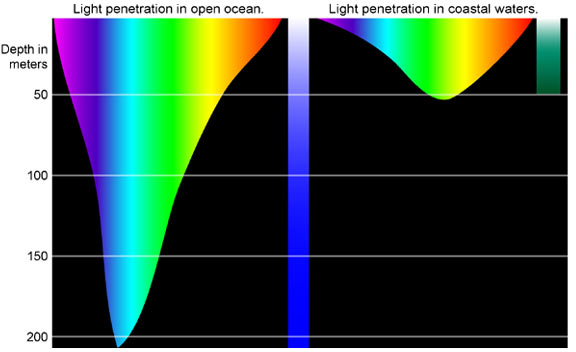
Not at all. Why do you believe the ocean warming violates the SLoT? The empirical climate evidence from the geologic record shows that for the last 3 million years the oceans and atmosphere warm when the northern deglaciates and cool when the northern hemisphere glaciates.
View attachment 1110687
View attachment 1110689
Soooooooo, what happens in the desert at night?Which ignorant strawman are you arguing with? ... I said the ocean cannot warm without also waourrming the atmosphere ... both are either in equilibrium or forces are acting to bring them into equilibrium ... notwithstanding convection ...
The ocean is a desert with its life underground, and the perfect disguise above....la,la,la...la-la-la-la...oops that's a song by America.Soooooooo, what happens in the desert at night?
What happens in the desert when it happens to be next to an ocean...at night....
You're starting to remind me of SSDD.
Didn't you hear, the CO2 in the air keeps the desert hot at night? That powerful shit hotter than sun rays.Soooooooo, what happens in the desert at night?
What happens in the desert when it happens to be next to an ocean...at night....
You're starting to remind me of SSDD.
I didn't get that from your statement.Which ignorant strawman are you arguing with? ... I said the ocean cannot warm without also warming the atmosphere ... both are either in equilibrium or forces are acting to bring them into equilibrium ... notwithstanding convection ...
Are you completely ignoring the 2nd Law of Thermodynamics? ... what keeps this energy in the oceans? ...
Better: how does this energy travel down the water column to be stored? ... or are you storing all this energy (1,360 joules per second per square meter) in the top layer of water molecules? ... remember, no thermal convection in the oceans ...

90% One line Burden shifting posts, just Baiting/Trolling/Last-Wording, Never Rebutting his opponents.I didn't get that from your statement.
What other lines did you think I should have added. Brevity is a virtue. You should try it.90% One line Burden shifting posts, just Baiting/Trolling/Last-Wording, Never Rebutting his opponents.
Because he has No case.
A poor relation to the "Demand Endless Detail Fallacy."
(ReinyDays)
`
Soooooooo, what happens in the desert at night?
What happens in the desert when it happens to be next to an ocean...at night....
You're starting to remind me of SSDD.
What strawman? I asked you a simple question.I wish you'd introduce me to this strawman you're arguing with ... a desert is dry land ... rocks don't evaporate ...
Coastal Baja is quite mild compared to the Sonora Desert to the east ... San Diego average highs 66ºF in January, 77ºF in August {Cite} ... and the City sits within the divergence zone there ... and next to the Pacific ...
Do you or SSDD know how to make an in-line citation? ...


