SCOTUS rulings say it's OK to have "murders, rape, and armed robbery???" Buttercup

People violate the law every day (they are called Dumbocrats). That includes left-wing Supreme Court Justices intentionally ignoring the U.S. Constitution in favor of their own personal political agenda.
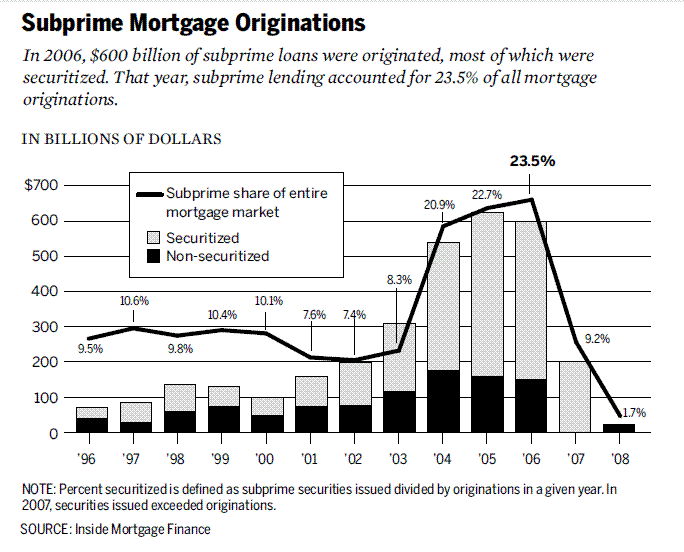
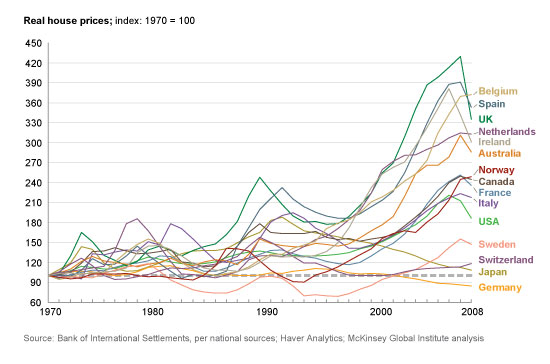
Weird, it's like YOU live in some ALTERNATE UNIVERSE where facts and history don't matter like when you blame Gov't policy like CRA for Dubya's failure to reign in the Banksters in their WORLD WIDE SUBPRIME BUBBLE?
Yeah I can see how THIS was on BJ Bill's shoulders Cupcake:
Looks to me you're already started writing your autobiography. In case you haven't been paying attention I already recently debunked all that "blame Bush and banks" BS through an earlier post. However here it is again in showing you're completely wrong yet again. Wow, surprising as it may be.
.
Up until 1995 the Community Reinvestment Act was largely a requirement to support "community groups" in poor neighborhoods. ... But after 1995 the scope of the law was dramatically increased.
Over the strenuous objections of the banks themselves and some Republicans in Congress,
CRA was renewed and modified in such a way that it gave far more power to the federal government to punish banks for not lending more widely in poor neighborhoods. The classic "fair housing" laws from the Martin Luther King Jr. era of civil rights were deemed insufficient. ...
Subprime loans to minority applicants exploded ten fold in the mid-1990s as a result. ..]
Under New Deal-era regulatory rules of Glass-Steagall, commercial banks and investment banks were separated. When that act was repealed as part of banking deregulation in 1999, commercial banks and investment banks were able to merge, subject to approval by regulators.
However,
the banks' CRA rating was taken into account in the decision. This meant that a high CRA rating became an important prerequisite for mergers, which increased the pressure on the banks to make these risky loans. The banks also were given permission to put these loans into packages of securities that could then be sold into investment markets.
Economist's View: Yet Again, It Wasn't the Community Reinvestment Act...
This below taken from an actual government document, identified by the GAO/GGD abbreviated attachment, outlining the changes:
Federal Reserve Board: Merger Process Needs Guidelines for Community Reinvestment Issues
( letter report 9/24/1999 GAO/GGD-99-180 )
In 1993,
the Clinton Administration instructed the federal bank regulators to revise the CRA regulations by moving from a process- and paperwork-based system to a performance-based system focusing on results, especially the results in LMI areas of an institution's communities. Based on these instructions, the federal banking agencies replaced the qualitative CRA examination system with a more quantitative system that is based on actual performance.
( PAGE 4 )
After the performance-based CRA regulations were issued in 1995, FFIEC published Interagency Questions and Answers regarding Community Reinvestment in 1997 and 1999. The 1989 statement was withdrawn effective April 5, 1999, and replaced by the Interagency Questions and Answers regarding Community Reinvestment.13 The 1989 Statement, which was in effect during the mergers contained in our study, including guidance on the following issues: * the basic components of an effective CRA policy, * the role of examination reports on CRA performance in reviewing applications, * the need for periodic review and documentation by financial institutions of their CRA performance, and * the role of commitments in assessing and institution's performance. Most notably, the
regulators concluded in the Statement that the CRA record of the institution, as reflected in its examination reports, would be given great weight in the application process. In the Interagency Questions and Answers for 1999, the regulators continued to stress the significants of the CRA examination in the application process, and they stated the examination is an important, and often controlling, factor in the consideration of an institution's record. 14 According to the 1989 Statement, the CRA examination is not conclusive evidence in the face of significant and supported allegations from a commenter. Moreover, the balance may be shifted further when the examination is not recent or the particular issue raised in the 13 Questions and Answers regarding Community Reinvestment, 64 Fed. Reg.
23618-23648 (1999). 14 64 Fed. Reg. at 23641. GAO/GGD-99-180
(Page 9)
Guidelines for Community of Reinvestment Issues B-280468 application preceding was not addressed in the examination. During the development of the performance-based CRA regulations, a number of commenters expressed concern that the regulators may provide a "safe harbor" to depository institutions from challenges to their CRA performance record in the application process if they achieved an outstanding CRA rating. However,
in the preamble of the 1995 final rule on the CRA regulations, the regulators reconfirmed the importance of the public comments in the applications process by acknowledging that materials related to CRA performance received during the applications process can and do provide relevant and valuable information.
Federal Reserve Board: Merger Process Needs Guidelines for
"It was not the banks that created the mortgage crisis. It was, plain and simple, Congress who forced everybody to go and give mortgages to people who were on the cusp. Now, I'm not saying I'm sure that was terrible policy, because a lot of those people who got homes still have them and they wouldn't have gotten them without that."
"But they were the ones who pushed Fannie and Freddie to make a bunch of loans that were imprudent, if you will. They were the ones that pushed the banks to loan to everybody. And now we want to go vilify the banks because it's one target, it's easy to blame them and congress certainly isn't going to blame themselves. At the same time, Congress is trying to pressure banks to loosen their lending standards to make more loans. This is exactly the same speech they criticized them for."
Bloomberg: 'Plain and simple,' Congress caused the mortgage crisis, not the banks | Capital New York