Report: EU building hundreds of illegal structures for Palestinians in Area C of West Bank

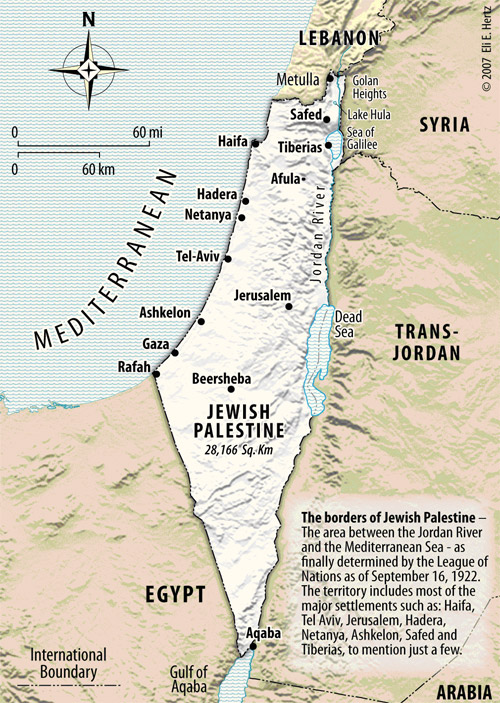
Oh dear, and this one is copyrighted 2007, by the Hasbara methinks:

mandate-map-1.jpg


A copy of the original which is in the UN archives, keep trying as the details of the treaty this is part of are given for you to look it up. See if the words differ to the map ?

There is no such map in the UN archives. Quit lying. What you will find in the archives is something like this. Unlike you, I know how to access the UN Archives.

palestine1.jpg


Try again as this is a survey map of only part of Palestine, it is not a map of the allocation granted to the various parties.

What a semi literate fool you are Abdul trying to pass this off as a map attached to a LoN treaty

It is a map from the UN archives you idiot. That's what you claimed your Hasbara maps come from. They don't. Notice the link is to the UN archives knucklehead.

http://unispal.un.org/unispal.nsf/4...310db0a90525655600795225/$FILE/palestine1.jpg
 
Oh dear, and this one is copyrighted 2007, by the Hasbara methinks:

mandate-map-1.jpg


A copy of the original which is in the UN archives, keep trying as the details of the treaty this is part of are given for you to look it up. See if the words differ to the map ?

There is no such map in the UN archives. Quit lying. What you will find in the archives is something like this. Unlike you, I know how to access the UN Archives.

palestine1.jpg


Try again as this is a survey map of only part of Palestine, it is not a map of the allocation granted to the various parties.

What a semi literate fool you are Abdul trying to pass this off as a map attached to a LoN treaty

It is a map from the UN archives you idiot. That's what you claimed your Hasbara maps come from. They don't. Notice the link is to the UN archives knucklehead.

http://unispal.un.org/unispal.nsf/4...310db0a90525655600795225/$FILE/palestine1.jpg


And is dated 1937 and is not a map of allocated land under LoN treaty. What don't you understand, the map shows nothing at all about the topic under debate. So as a link it is totally irrelevant and should be deleted.
 
By the way the earliest map map of Palestine held in the UN Archive for the LoN is from 1936, so that alone demonstrates that you have been lying all along:

Here is the last (earliest) map on the list of maps of Palestine held in the UN archives:

http://unispal.un.org/unispal.nsf/vMaps?OpenView&Start=284


Keep trying as the maps are there for the looking, along with the detailed descriptions.

No, they are not, because they do not exist. I have linked you to the list of maps in the archive and the earliest one there is from 1936. You can bullshit your looney Zionist friends (who want to be bullshitted) but you can't bullshit me. You haven't a clue as to how to navigate the archive you knucklehead.
 
I feel a RoccoR moment coming over me....and back in the room....fun though reading this "map war" is, sadly it’s irrelevant to the OP.

The OP states, “The EU is establishing facts on the ground in the West Bank, building hundreds of illegal structures near Ma'ale Adumim and E1 which the government does not remove because it does not want a diplomatic tangle with the Europeans, according to a report released by Regavim.”

OK, let’s look at the legality of these EU structures. I asked earlier for clarification on area C, which I think we can all agree is territory occupied by Israel since 1967 and over which Israel has control. However, Oslo accords or no Oslo accords, Israel does not have sovereignty over this area nor has it formally annexed the area (an illegal act in any event). This makes Israel an occupying power as defined by The Hague convention of 1907 subsequently incorporated into the Geneva Conventions (IV).

Still with me? Under both The Hague and Geneva conventions an occupying power must, “...ensure, as far as possible, public order and safety, while respecting, unless absolutely prevented, the laws in force in the country” (article 43 Hague)

Basically this means that Israeli law does not necessarily apply in the occupied territories so how can these structures be “illegal”?

Well we can perhaps spend a lot of time and energy debating the status of Palestine between 1948 and 1967 yet again, but to save us all the bother, ultimately the laws that applied in area C between 1948 and 1967 whatever its status, were either Jordanian (Planning Law Number 79) or British (The Town and Country Planning Law 1945).

It may come as a surprise to some that the Zionist Occupation Forces recognise (and often abuse) the Jordanian legal system within the occupied territories of Palestine, which means that the law that applies in any building and construction work is the Jordanian Planning Law number 79 of 1966

In a nutshell, this law requires any development plans to be prepared, approved, and kept up to date by local authorities and construction permits may be refused if a development conflicts with the local plan; penalties for unpermitted development may include, in extreme cases, demolition. The law provides for a High Planning Council advised by a Central Planning Department which would prepare and approve 'regional' plans, and local municipalities or groups of villages would prepare 'outline' and 'detailed' plans, to be approved by the High Planning Council and District Commission, respectively. All of these institutions exist within the PA.

Consequently as a) The EU does not recognise the Zionist Occupation of Palestine as either legal or permanent, building permits would have been sought from the PA before building work commenced. The EU structures are therefore legal under International Law and Israel knows it. This is why the structures have not been demolished.

The OP is therefore misleading and a rather pathetic attempt to somehow create equivalency between Zionist settlement building (illegal) and EU building (legal) where none exists.

Typical Hasbara BS

Not so respectfully, Challenger.
 
I feel a RoccoR moment coming over me....and back in the room....fun though reading this "map war" is, sadly it’s irrelevant to the OP.

The OP states, “The EU is establishing facts on the ground in the West Bank, building hundreds of illegal structures near Ma'ale Adumim and E1 which the government does not remove because it does not want a diplomatic tangle with the Europeans, according to a report released by Regavim.”

OK, let’s look at the legality of these EU structures. I asked earlier for clarification on area C, which I think we can all agree is territory occupied by Israel since 1967 and over which Israel has control. However, Oslo accords or no Oslo accords, Israel does not have sovereignty over this area nor has it formally annexed the area (an illegal act in any event). This makes Israel an occupying power as defined by The Hague convention of 1907 subsequently incorporated into the Geneva Conventions (IV).

Still with me? Under both The Hague and Geneva conventions an occupying power must, “...ensure, as far as possible, public order and safety, while respecting, unless absolutely prevented, the laws in force in the country” (article 43 Hague)

Basically this means that Israeli law does not necessarily apply in the occupied territories so how can these structures be “illegal”?

Well we can perhaps spend a lot of time and energy debating the status of Palestine between 1948 and 1967 yet again, but to save us all the bother, ultimately the laws that applied in area C between 1948 and 1967 whatever its status, were either Jordanian (Planning Law Number 79) or British (The Town and Country Planning Law 1945).

It may come as a surprise to some that the Zionist Occupation Forces recognise (and often abuse) the Jordanian legal system within the occupied territories of Palestine, which means that the law that applies in any building and construction work is the Jordanian Planning Law number 79 of 1966

In a nutshell, this law requires any development plans to be prepared, approved, and kept up to date by local authorities and construction permits may be refused if a development conflicts with the local plan; penalties for unpermitted development may include, in extreme cases, demolition. The law provides for a High Planning Council advised by a Central Planning Department which would prepare and approve 'regional' plans, and local municipalities or groups of villages would prepare 'outline' and 'detailed' plans, to be approved by the High Planning Council and District Commission, respectively. All of these institutions exist within the PA.

Consequently as a) The EU does not recognise the Zionist Occupation of Palestine as either legal or permanent, building permits would have been sought from the PA before building work commenced. The EU structures are therefore legal under International Law and Israel knows it. This is why the structures have not been demolished.

The OP is therefore misleading and a rather pathetic attempt to somehow create equivalency between Zionist settlement building (illegal) and EU building (legal) where none exists.

Typical Hasbara BS

Not so respectfully, Challenger.


They are illegal by dint of a treaty signed by Israel and the PLO giving Israel full control of that area.
 
Always 'interesting' watching the 'map wars' here...

That really have no bearing to the situation, particularly if you support Israel and it's occupation!

Go Google the name on the map... Perhaps thats a more interesting topic!

There are some interesting articles on this link... Eli E. Hertz - Op-Eds - Arutz Sheva
 
I feel a RoccoR moment coming over me....and back in the room....fun though reading this "map war" is, sadly it’s irrelevant to the OP.

The OP states, “The EU is establishing facts on the ground in the West Bank, building hundreds of illegal structures near Ma'ale Adumim and E1 which the government does not remove because it does not want a diplomatic tangle with the Europeans, according to a report released by Regavim.”

OK, let’s look at the legality of these EU structures. I asked earlier for clarification on area C, which I think we can all agree is territory occupied by Israel since 1967 and over which Israel has control. However, Oslo accords or no Oslo accords, Israel does not have sovereignty over this area nor has it formally annexed the area (an illegal act in any event). This makes Israel an occupying power as defined by The Hague convention of 1907 subsequently incorporated into the Geneva Conventions (IV).

Still with me? Under both The Hague and Geneva conventions an occupying power must, “...ensure, as far as possible, public order and safety, while respecting, unless absolutely prevented, the laws in force in the country” (article 43 Hague)

Basically this means that Israeli law does not necessarily apply in the occupied territories so how can these structures be “illegal”?

Well we can perhaps spend a lot of time and energy debating the status of Palestine between 1948 and 1967 yet again, but to save us all the bother, ultimately the laws that applied in area C between 1948 and 1967 whatever its status, were either Jordanian (Planning Law Number 79) or British (The Town and Country Planning Law 1945).

It may come as a surprise to some that the Zionist Occupation Forces recognise (and often abuse) the Jordanian legal system within the occupied territories of Palestine, which means that the law that applies in any building and construction work is the Jordanian Planning Law number 79 of 1966

In a nutshell, this law requires any development plans to be prepared, approved, and kept up to date by local authorities and construction permits may be refused if a development conflicts with the local plan; penalties for unpermitted development may include, in extreme cases, demolition. The law provides for a High Planning Council advised by a Central Planning Department which would prepare and approve 'regional' plans, and local municipalities or groups of villages would prepare 'outline' and 'detailed' plans, to be approved by the High Planning Council and District Commission, respectively. All of these institutions exist within the PA.

Consequently as a) The EU does not recognise the Zionist Occupation of Palestine as either legal or permanent, building permits would have been sought from the PA before building work commenced. The EU structures are therefore legal under International Law and Israel knows it. This is why the structures have not been demolished.

The OP is therefore misleading and a rather pathetic attempt to somehow create equivalency between Zionist settlement building (illegal) and EU building (legal) where none exists.

Typical Hasbara BS

Not so respectfully, Challenger.


They are illegal by dint of a treaty signed by Israel and the PLO giving Israel full control of that area.

No treaty has ever been signed. That's why it's called the Oslo "Accords" not the Oslo "Treaty", furthermore you forgot the word "temporary" and the clause, "pending final status agreement" in your reply.
 
I thought the OP was posting an article from The Onion.
 
I feel a RoccoR moment coming over me....and back in the room....fun though reading this "map war" is, sadly it’s irrelevant to the OP.

The OP states, “The EU is establishing facts on the ground in the West Bank, building hundreds of illegal structures near Ma'ale Adumim and E1 which the government does not remove because it does not want a diplomatic tangle with the Europeans, according to a report released by Regavim.”

OK, let’s look at the legality of these EU structures. I asked earlier for clarification on area C, which I think we can all agree is territory occupied by Israel since 1967 and over which Israel has control. However, Oslo accords or no Oslo accords, Israel does not have sovereignty over this area nor has it formally annexed the area (an illegal act in any event). This makes Israel an occupying power as defined by The Hague convention of 1907 subsequently incorporated into the Geneva Conventions (IV).

Still with me? Under both The Hague and Geneva conventions an occupying power must, “...ensure, as far as possible, public order and safety, while respecting, unless absolutely prevented, the laws in force in the country” (article 43 Hague)

Basically this means that Israeli law does not necessarily apply in the occupied territories so how can these structures be “illegal”?

Well we can perhaps spend a lot of time and energy debating the status of Palestine between 1948 and 1967 yet again, but to save us all the bother, ultimately the laws that applied in area C between 1948 and 1967 whatever its status, were either Jordanian (Planning Law Number 79) or British (The Town and Country Planning Law 1945).

It may come as a surprise to some that the Zionist Occupation Forces recognise (and often abuse) the Jordanian legal system within the occupied territories of Palestine, which means that the law that applies in any building and construction work is the Jordanian Planning Law number 79 of 1966

In a nutshell, this law requires any development plans to be prepared, approved, and kept up to date by local authorities and construction permits may be refused if a development conflicts with the local plan; penalties for unpermitted development may include, in extreme cases, demolition. The law provides for a High Planning Council advised by a Central Planning Department which would prepare and approve 'regional' plans, and local municipalities or groups of villages would prepare 'outline' and 'detailed' plans, to be approved by the High Planning Council and District Commission, respectively. All of these institutions exist within the PA.

Consequently as a) The EU does not recognise the Zionist Occupation of Palestine as either legal or permanent, building permits would have been sought from the PA before building work commenced. The EU structures are therefore legal under International Law and Israel knows it. This is why the structures have not been demolished.

The OP is therefore misleading and a rather pathetic attempt to somehow create equivalency between Zionist settlement building (illegal) and EU building (legal) where none exists.

Typical Hasbara BS

Not so respectfully, Challenger.


They are illegal by dint of a treaty signed by Israel and the PLO giving Israel full control of that area.

No treaty has ever been signed. That's why it's called the Oslo "Accords" not the Oslo "Treaty", furthermore you forgot the word "temporary" and the clause, "pending final status agreement" in your reply.


Means nothing when taken in regards to what was agreed and signed for


Key agreements in the Oslo process were:

  • The Oslo I Accord (1993). The "Declaration of Principles on Interim Self-Government Arrangements" ("DOPOISGA"),[10] which declared the aim of the negotiations and set forth the framework for the interim period. Dissolution of the Israeli Civil Administration upon the inauguration of the Palestinian Legislative Council (Article VII).
  • The Gaza–Jericho Agreement or Cairo Agreement (1994). Partial Israeli withdrawal within three weeks from Gaza Strip and Jericho area, being the start of the five-year transitional period (Article V of Oslo I). Simultaneously transfer of limited power to the Palestinian Authority (PA), which was established in the same agreement.[4] Part of the Agreement was the Protocol on Economic Relations (Paris Protocol), which regulates the economic relationship between Israel and the Palestinian Authority, but in effect integrated the Palestinian economy into the Israeli one.[11] This agreement was superseded by the Oslo II Accord, except for Article XX (Confidence-Building Measures). Article XX dictated the release or turn over of Palestinian detainees and prisoners by Israel. The Paris Protocol was incorporated in Article XXIV of Oslo II.
  • The Oslo II Accord (1995). Division of the West Bank into Areas, in effect fragmenting it into numerous enclaves and banning the Palestinians from some 60% of the West Bank. Redeployment of Israeli troops from Area A and from other areas through "Further Redeployments". Election of the Palestinian Legislative Council (Palestinian parlement, PLC), replacing the PA upon its inauguration. Deployment of Palestinian Police replacing Israeli military forces in Area A. Safe passage between West Bank and Gaza. Most importantly, start of negotiations on a final settlement of remaining issues, to be concluded before 4 May 1999.
All later agreements had the purpose to implement the former three key agreements.


And this which explains the legality of the Settlements

Continued settlement expansion[edit]
While Peres had limited settlement construction at the request of US Secretary of State, Madeleine Albright,[18] Netanyahu continued construction within existing Israeli settlements,[19] and put forward plans for the construction of a new neighborhood, Har Homa, in East Jerusalem. However, he fell far short of the Shamir government's 1991–92 level and refrained from building new settlements, although the Oslo agreements stipulated no such ban.[18] Construction of Housing Units Before Oslo: 1991–92: 13,960, After Oslo: 1994–95: 3,840, 1996–1997: 3,570.[20]
 
I feel a RoccoR moment coming over me....and back in the room....fun though reading this "map war" is, sadly it’s irrelevant to the OP.

The OP states, “The EU is establishing facts on the ground in the West Bank, building hundreds of illegal structures near Ma'ale Adumim and E1 which the government does not remove because it does not want a diplomatic tangle with the Europeans, according to a report released by Regavim.”

OK, let’s look at the legality of these EU structures. I asked earlier for clarification on area C, which I think we can all agree is territory occupied by Israel since 1967 and over which Israel has control. However, Oslo accords or no Oslo accords, Israel does not have sovereignty over this area nor has it formally annexed the area (an illegal act in any event). This makes Israel an occupying power as defined by The Hague convention of 1907 subsequently incorporated into the Geneva Conventions (IV).

Still with me? Under both The Hague and Geneva conventions an occupying power must, “...ensure, as far as possible, public order and safety, while respecting, unless absolutely prevented, the laws in force in the country” (article 43 Hague)

Basically this means that Israeli law does not necessarily apply in the occupied territories so how can these structures be “illegal”?

Well we can perhaps spend a lot of time and energy debating the status of Palestine between 1948 and 1967 yet again, but to save us all the bother, ultimately the laws that applied in area C between 1948 and 1967 whatever its status, were either Jordanian (Planning Law Number 79) or British (The Town and Country Planning Law 1945).

It may come as a surprise to some that the Zionist Occupation Forces recognise (and often abuse) the Jordanian legal system within the occupied territories of Palestine, which means that the law that applies in any building and construction work is the Jordanian Planning Law number 79 of 1966

In a nutshell, this law requires any development plans to be prepared, approved, and kept up to date by local authorities and construction permits may be refused if a development conflicts with the local plan; penalties for unpermitted development may include, in extreme cases, demolition. The law provides for a High Planning Council advised by a Central Planning Department which would prepare and approve 'regional' plans, and local municipalities or groups of villages would prepare 'outline' and 'detailed' plans, to be approved by the High Planning Council and District Commission, respectively. All of these institutions exist within the PA.

Consequently as a) The EU does not recognise the Zionist Occupation of Palestine as either legal or permanent, building permits would have been sought from the PA before building work commenced. The EU structures are therefore legal under International Law and Israel knows it. This is why the structures have not been demolished.

The OP is therefore misleading and a rather pathetic attempt to somehow create equivalency between Zionist settlement building (illegal) and EU building (legal) where none exists.

Typical Hasbara BS

Not so respectfully, Challenger.


They are illegal by dint of a treaty signed by Israel and the PLO giving Israel full control of that area.

No treaty has ever been signed. That's why it's called the Oslo "Accords" not the Oslo "Treaty", furthermore you forgot the word "temporary" and the clause, "pending final status agreement" in your reply.


Means nothing when taken in regards to what was agreed and signed for


Key agreements in the Oslo process were:

  • The Oslo I Accord (1993). The "Declaration of Principles on Interim Self-Government Arrangements" ("DOPOISGA"),[10] which declared the aim of the negotiations and set forth the framework for the interim period. Dissolution of the Israeli Civil Administration upon the inauguration of the Palestinian Legislative Council (Article VII).
  • The Gaza–Jericho Agreement or Cairo Agreement (1994). Partial Israeli withdrawal within three weeks from Gaza Strip and Jericho area, being the start of the five-year transitional period (Article V of Oslo I). Simultaneously transfer of limited power to the Palestinian Authority (PA), which was established in the same agreement.[4] Part of the Agreement was the Protocol on Economic Relations (Paris Protocol), which regulates the economic relationship between Israel and the Palestinian Authority, but in effect integrated the Palestinian economy into the Israeli one.[11] This agreement was superseded by the Oslo II Accord, except for Article XX (Confidence-Building Measures). Article XX dictated the release or turn over of Palestinian detainees and prisoners by Israel. The Paris Protocol was incorporated in Article XXIV of Oslo II.
  • The Oslo II Accord (1995). Division of the West Bank into Areas, in effect fragmenting it into numerous enclaves and banning the Palestinians from some 60% of the West Bank. Redeployment of Israeli troops from Area A and from other areas through "Further Redeployments". Election of the Palestinian Legislative Council (Palestinian parlement, PLC), replacing the PA upon its inauguration. Deployment of Palestinian Police replacing Israeli military forces in Area A. Safe passage between West Bank and Gaza. Most importantly, start of negotiations on a final settlement of remaining issues, to be concluded before 4 May 1999.
All later agreements had the purpose to implement the former three key agreements.


And this which explains the legality of the Settlements

Continued settlement expansion[edit]
While Peres had limited settlement construction at the request of US Secretary of State, Madeleine Albright,[18] Netanyahu continued construction within existing Israeli settlements,[19] and put forward plans for the construction of a new neighborhood, Har Homa, in East Jerusalem. However, he fell far short of the Shamir government's 1991–92 level and refrained from building new settlements, although the Oslo agreements stipulated no such ban.[18] Construction of Housing Units Before Oslo: 1991–92: 13,960, After Oslo: 1994–95: 3,840, 1996–1997: 3,570.[20]

From written (not customary) International Law:

"Prohibited actions include forcibly transferring protected persons from the occupied territories to the territory of the occupying power.
It is unlawful under the Fourth Geneva Convention for an occupying power to transfer parts of its own population into the territory it occupies. This means that international humanitarian law prohibits the establishment of settlements, as these are a form of population transfer into occupied territory. Any measure designed to expand or consolidate settlements is also illegal. Confiscation of land to build or expand settlements is similarly prohibited."

What does the law say about the establishment of settlements in occupied territory - ICRC
 
I feel a RoccoR moment coming over me....and back in the room....fun though reading this "map war" is, sadly it’s irrelevant to the OP.

The OP states, “The EU is establishing facts on the ground in the West Bank, building hundreds of illegal structures near Ma'ale Adumim and E1 which the government does not remove because it does not want a diplomatic tangle with the Europeans, according to a report released by Regavim.”

OK, let’s look at the legality of these EU structures. I asked earlier for clarification on area C, which I think we can all agree is territory occupied by Israel since 1967 and over which Israel has control. However, Oslo accords or no Oslo accords, Israel does not have sovereignty over this area nor has it formally annexed the area (an illegal act in any event). This makes Israel an occupying power as defined by The Hague convention of 1907 subsequently incorporated into the Geneva Conventions (IV).

Still with me? Under both The Hague and Geneva conventions an occupying power must, “...ensure, as far as possible, public order and safety, while respecting, unless absolutely prevented, the laws in force in the country” (article 43 Hague)

Basically this means that Israeli law does not necessarily apply in the occupied territories so how can these structures be “illegal”?

Well we can perhaps spend a lot of time and energy debating the status of Palestine between 1948 and 1967 yet again, but to save us all the bother, ultimately the laws that applied in area C between 1948 and 1967 whatever its status, were either Jordanian (Planning Law Number 79) or British (The Town and Country Planning Law 1945).

It may come as a surprise to some that the Zionist Occupation Forces recognise (and often abuse) the Jordanian legal system within the occupied territories of Palestine, which means that the law that applies in any building and construction work is the Jordanian Planning Law number 79 of 1966

In a nutshell, this law requires any development plans to be prepared, approved, and kept up to date by local authorities and construction permits may be refused if a development conflicts with the local plan; penalties for unpermitted development may include, in extreme cases, demolition. The law provides for a High Planning Council advised by a Central Planning Department which would prepare and approve 'regional' plans, and local municipalities or groups of villages would prepare 'outline' and 'detailed' plans, to be approved by the High Planning Council and District Commission, respectively. All of these institutions exist within the PA.

Consequently as a) The EU does not recognise the Zionist Occupation of Palestine as either legal or permanent, building permits would have been sought from the PA before building work commenced. The EU structures are therefore legal under International Law and Israel knows it. This is why the structures have not been demolished.

The OP is therefore misleading and a rather pathetic attempt to somehow create equivalency between Zionist settlement building (illegal) and EU building (legal) where none exists.

Typical Hasbara BS

Not so respectfully, Challenger.


They are illegal by dint of a treaty signed by Israel and the PLO giving Israel full control of that area.

No treaty has ever been signed. That's why it's called the Oslo "Accords" not the Oslo "Treaty", furthermore you forgot the word "temporary" and the clause, "pending final status agreement" in your reply.


Means nothing when taken in regards to what was agreed and signed for


Key agreements in the Oslo process were:

  • The Oslo I Accord (1993). The "Declaration of Principles on Interim Self-Government Arrangements" ("DOPOISGA"),[10] which declared the aim of the negotiations and set forth the framework for the interim period. Dissolution of the Israeli Civil Administration upon the inauguration of the Palestinian Legislative Council (Article VII).
  • The Gaza–Jericho Agreement or Cairo Agreement (1994). Partial Israeli withdrawal within three weeks from Gaza Strip and Jericho area, being the start of the five-year transitional period (Article V of Oslo I). Simultaneously transfer of limited power to the Palestinian Authority (PA), which was established in the same agreement.[4] Part of the Agreement was the Protocol on Economic Relations (Paris Protocol), which regulates the economic relationship between Israel and the Palestinian Authority, but in effect integrated the Palestinian economy into the Israeli one.[11] This agreement was superseded by the Oslo II Accord, except for Article XX (Confidence-Building Measures). Article XX dictated the release or turn over of Palestinian detainees and prisoners by Israel. The Paris Protocol was incorporated in Article XXIV of Oslo II.
  • The Oslo II Accord (1995). Division of the West Bank into Areas, in effect fragmenting it into numerous enclaves and banning the Palestinians from some 60% of the West Bank. Redeployment of Israeli troops from Area A and from other areas through "Further Redeployments". Election of the Palestinian Legislative Council (Palestinian parlement, PLC), replacing the PA upon its inauguration. Deployment of Palestinian Police replacing Israeli military forces in Area A. Safe passage between West Bank and Gaza. Most importantly, start of negotiations on a final settlement of remaining issues, to be concluded before 4 May 1999.
All later agreements had the purpose to implement the former three key agreements.


And this which explains the legality of the Settlements

Continued settlement expansion[edit]
While Peres had limited settlement construction at the request of US Secretary of State, Madeleine Albright,[18] Netanyahu continued construction within existing Israeli settlements,[19] and put forward plans for the construction of a new neighborhood, Har Homa, in East Jerusalem. However, he fell far short of the Shamir government's 1991–92 level and refrained from building new settlements, although the Oslo agreements stipulated no such ban.[18] Construction of Housing Units Before Oslo: 1991–92: 13,960, After Oslo: 1994–95: 3,840, 1996–1997: 3,570.[20]
being the start of the five-year transitional period​

Indeed.
 
montelatici, et al,

This is codified in the Geneva Convention (Article 49) and the Rome Statutes (Article 8 (2b) viii). I think you need to read it again. What it says is:

Convention (IV) relative to the Protection of Civilian Persons in Time of War. Geneva, 12 August 1949.
Deportations, transfers, evacuations

  • ARTICLE 49 [ Link ]

    Individual or mass forcible transfers, as well as deportations of protected persons from occupied territory to the territory of the Occupying Power or to that of any other country, occupied or not, are prohibited, regardless of their motive.
    Nevertheless, the Occupying Power may undertake total or partial evacuation of a given area if the security of the population or imperative military reasons so demand. Such evacuations may not involve the displacement of protected persons outside the bounds of the occupied territory except when for material reasons it is impossible to avoid such displacement. Persons thus evacuated shall be transferred back to their homes as soon as hostilities in the area in question have ceased.
    The Occupying Power undertaking such transfers or evacuations shall ensure, to the greatest practicable extent, that proper accommodation is provided to receive the protected persons, that the removals are effected in satisfactory conditions of hygiene, health, safety and nutrition, and that members of the same family are not separated.
    The Protecting Power shall be informed of any transfers and evacuations as soon as they have taken place.
    The Occupying Power shall not detain protected persons in an area particularly exposed to the dangers of war unless the security of the population or imperative military reasons so demand.
    The Occupying Power shall not deport or transfer parts of its own civilian population into the territory it occupies.
The last sentence is the operative phrase. The wording in the Rome Statues is slightly different.

  • (viii) The transfer, directly or indirectly, by the Occupying Power of parts of its own civilian population into the territory it occupies, or the deportation or transfer of all or parts of the population of the occupied territory within or outside this territory;
From written (not customary) International Law:

"Prohibited actions include forcibly transferring protected persons from the occupied territories to the territory of the occupying power.
It is unlawful under the Fourth Geneva Convention for an occupying power to transfer parts of its own population into the territory it occupies. This means that international humanitarian law prohibits the establishment of settlements, as these are a form of population transfer into occupied territory. Any measure designed to expand or consolidate settlements is also illegal. Confiscation of land to build or expand settlements is similarly prohibited."

What does the law say about the establishment of settlements in occupied territory - ICRC
(COMMENT)

I think there is room for litigation. The Settlement issue is an integral part of the Oslo Accords. In the Oslo Accords, Area "C" is established by agreement with the Arab Palestinian people under the authority of the PLO/PA. It falls under --- "issues that will be negotiated in the permanent status negotiations."

ARTICLE XXI Settlement of Differences and Disputes,
Any difference relating to the application of this Agreement shall be referred to the appropriate coordination and cooperation mechanism established under this Agreement. The provisions of Article XV of the DOP shall apply to any such difference which is not settled through the appropriate coordination and cooperation mechanism, namely:

1.Disputes arising out of the application or interpretation of this Agreement or any related agreements pertaining to the interim shall be settled through the Liaison Committee.​

2. Disputes which cannot be settled by negotiations may be settled by a mechanism of conciliation to be agreed between the Parties.​

3. The Parties may agree to submit to arbitration disputes relating to the interim period, which cannot be settled through conciliation. To this end, upon the agreement of both Parties, the Parties will establish an Arbitration Committee.​

The Oslo Accords have a dispute process which have not been exploited by the PLO/PA.

Most Respectfully,
R
 
Do you just enjoy reading the nonsense you write, Rocco. Why are always so full of shit?

Let me explain this to you carefully once and for all so that you quit posting this nonsense.

First, your implication that Article 49(6) is intended to protect the citizens of the occupying power, in this case Israeli citizens, is ridiculous and has been rejected by every International Law expert. The sole purpose of the 4th Geneva Convention is to protect the civilians living under occupation, not the citizens of the occupying power, who are not afforded any protection by the Convention.

Second, the term “transfer” does not imply forced, as evidenced by another article in the Convention, Article 49(1), which forbids the deportation of civilians from the occupied territories, and uses the phrase “forcible transfer,” not simply the term “transfer,” as Article 49(6) does.

Further, the settler’s voluntary cooperation in the transfer does not diminish from its illegal character, pursuant to the sixth paragraph of Article 49, as long as the Occupying Power stands behind the project.

Article 49(6) is always applicable as long as the occupying power is facilitating the transfer of its own citizens, whether forced or not. What Article 49 (6) aimed to prevent was not situations such as those in which Nazi Germany was deporting its Jewish citizens to the death camps, but instead Nazi Germany’s intention to transfer its ethnic German citizens into the Eastern European territories it conquered as part of its Lebensraum policy to alter the demographics of those territories.

So once and for all. Shut up. Your BS may fool some of your little, mentally challenged that have little or no higher education, Zionutter friends, but not someone that has some familiarity with international law.
 
montelatici, et al,

I think you need to re-read the posting.

Do you just enjoy reading the nonsense you write, Rocco. Why are always so full of shit?

Let me explain this to you carefully once and for all so that you quit posting this nonsense.

First, your implication that Article 49(6) is intended to protect the citizens of the occupying power, in this case Israeli citizens, is ridiculous and has been rejected by every International Law expert. The sole purpose of the 4th Geneva Convention is to protect the civilians living under occupation, not the citizens of the occupying power, who are not afforded any protection by the Convention.

Second, the term “transfer” does not imply forced, as evidenced by another article in the Convention, Article 49(1), which forbids the deportation of civilians from the occupied territories, and uses the phrase “forcible transfer,” not simply the term “transfer,” as Article 49(6) does.

Further, the settler’s voluntary cooperation in the transfer does not diminish from its illegal character, pursuant to the sixth paragraph of Article 49, as long as the Occupying Power stands behind the project.

Article 49(6) is always applicable as long as the occupying power is facilitating the transfer of its own citizens, whether forced or not. What Article 49 (6) aimed to prevent was not situations such as those in which Nazi Germany was deporting its Jewish citizens to the death camps, but instead Nazi Germany’s intention to transfer its ethnic German citizens into the Eastern European territories it conquered as part of its Lebensraum policy to alter the demographics of those territories.

So once and for all. Shut up. Your BS may fool some of your little, mentally challenged that have little or no higher education, Zionutter friends, but not someone that has some familiarity with international law.
(COMMENT)

I posted Article 49 so that anyone reading the post can see the referenced material.

I made two implications:
  • FIRST, that Article 49 aspects need to be litigate in the light of the fact that the Palestinians agreed to Area "C".
  • SECOND: The Palestinians have not followed the agreed upon dispute resolution process.
Neither of these implications have anything to do with your diatribe. I did not raise the "force" issue at all, nor did I imply that Article 49 is for the benefit of the Occupying Power.

Most Respectfully,
R
 
15th post
montelatici, et al,

I think you need to re-read the posting.

Do you just enjoy reading the nonsense you write, Rocco. Why are always so full of shit?

Let me explain this to you carefully once and for all so that you quit posting this nonsense.

First, your implication that Article 49(6) is intended to protect the citizens of the occupying power, in this case Israeli citizens, is ridiculous and has been rejected by every International Law expert. The sole purpose of the 4th Geneva Convention is to protect the civilians living under occupation, not the citizens of the occupying power, who are not afforded any protection by the Convention.

Second, the term “transfer” does not imply forced, as evidenced by another article in the Convention, Article 49(1), which forbids the deportation of civilians from the occupied territories, and uses the phrase “forcible transfer,” not simply the term “transfer,” as Article 49(6) does.

Further, the settler’s voluntary cooperation in the transfer does not diminish from its illegal character, pursuant to the sixth paragraph of Article 49, as long as the Occupying Power stands behind the project.

Article 49(6) is always applicable as long as the occupying power is facilitating the transfer of its own citizens, whether forced or not. What Article 49 (6) aimed to prevent was not situations such as those in which Nazi Germany was deporting its Jewish citizens to the death camps, but instead Nazi Germany’s intention to transfer its ethnic German citizens into the Eastern European territories it conquered as part of its Lebensraum policy to alter the demographics of those territories.

So once and for all. Shut up. Your BS may fool some of your little, mentally challenged that have little or no higher education, Zionutter friends, but not someone that has some familiarity with international law.
(COMMENT)

I posted Article 49 so that anyone reading the post can see the referenced material.

I made two implications:
  • FIRST, that Article 49 aspects need to be litigate in the light of the fact that the Palestinians agreed to Area "C".
  • SECOND: The Palestinians have not followed the agreed upon dispute resolution process.
Neither of these implications have anything to do with your diatribe. I did not raise the "force" issue at all, nor did I imply that Article 49 is for the benefit of the Occupying Power.

Most Respectfully,
R
Where does it say in Oslo that settlements are legal.

Agreements cannot trump international law.
 
I feel a RoccoR moment coming over me....and back in the room....fun though reading this "map war" is, sadly it’s irrelevant to the OP.

The OP states, “The EU is establishing facts on the ground in the West Bank, building hundreds of illegal structures near Ma'ale Adumim and E1 which the government does not remove because it does not want a diplomatic tangle with the Europeans, according to a report released by Regavim.”

OK, let’s look at the legality of these EU structures. I asked earlier for clarification on area C, which I think we can all agree is territory occupied by Israel since 1967 and over which Israel has control. However, Oslo accords or no Oslo accords, Israel does not have sovereignty over this area nor has it formally annexed the area (an illegal act in any event). This makes Israel an occupying power as defined by The Hague convention of 1907 subsequently incorporated into the Geneva Conventions (IV).

Still with me? Under both The Hague and Geneva conventions an occupying power must, “...ensure, as far as possible, public order and safety, while respecting, unless absolutely prevented, the laws in force in the country” (article 43 Hague)

Basically this means that Israeli law does not necessarily apply in the occupied territories so how can these structures be “illegal”?

Well we can perhaps spend a lot of time and energy debating the status of Palestine between 1948 and 1967 yet again, but to save us all the bother, ultimately the laws that applied in area C between 1948 and 1967 whatever its status, were either Jordanian (Planning Law Number 79) or British (The Town and Country Planning Law 1945).

It may come as a surprise to some that the Zionist Occupation Forces recognise (and often abuse) the Jordanian legal system within the occupied territories of Palestine, which means that the law that applies in any building and construction work is the Jordanian Planning Law number 79 of 1966

In a nutshell, this law requires any development plans to be prepared, approved, and kept up to date by local authorities and construction permits may be refused if a development conflicts with the local plan; penalties for unpermitted development may include, in extreme cases, demolition. The law provides for a High Planning Council advised by a Central Planning Department which would prepare and approve 'regional' plans, and local municipalities or groups of villages would prepare 'outline' and 'detailed' plans, to be approved by the High Planning Council and District Commission, respectively. All of these institutions exist within the PA.

Consequently as a) The EU does not recognise the Zionist Occupation of Palestine as either legal or permanent, building permits would have been sought from the PA before building work commenced. The EU structures are therefore legal under International Law and Israel knows it. This is why the structures have not been demolished.

The OP is therefore misleading and a rather pathetic attempt to somehow create equivalency between Zionist settlement building (illegal) and EU building (legal) where none exists.

Typical Hasbara BS

Not so respectfully, Challenger.


They are illegal by dint of a treaty signed by Israel and the PLO giving Israel full control of that area.

No treaty has ever been signed. That's why it's called the Oslo "Accords" not the Oslo "Treaty", furthermore you forgot the word "temporary" and the clause, "pending final status agreement" in your reply.


Means nothing when taken in regards to what was agreed and signed for


Key agreements in the Oslo process were:

  • The Oslo I Accord (1993). The "Declaration of Principles on Interim Self-Government Arrangements" ("DOPOISGA"),[10] which declared the aim of the negotiations and set forth the framework for the interim period. Dissolution of the Israeli Civil Administration upon the inauguration of the Palestinian Legislative Council (Article VII).
  • The Gaza–Jericho Agreement or Cairo Agreement (1994). Partial Israeli withdrawal within three weeks from Gaza Strip and Jericho area, being the start of the five-year transitional period (Article V of Oslo I). Simultaneously transfer of limited power to the Palestinian Authority (PA), which was established in the same agreement.[4] Part of the Agreement was the Protocol on Economic Relations (Paris Protocol), which regulates the economic relationship between Israel and the Palestinian Authority, but in effect integrated the Palestinian economy into the Israeli one.[11] This agreement was superseded by the Oslo II Accord, except for Article XX (Confidence-Building Measures). Article XX dictated the release or turn over of Palestinian detainees and prisoners by Israel. The Paris Protocol was incorporated in Article XXIV of Oslo II.
  • The Oslo II Accord (1995). Division of the West Bank into Areas, in effect fragmenting it into numerous enclaves and banning the Palestinians from some 60% of the West Bank. Redeployment of Israeli troops from Area A and from other areas through "Further Redeployments". Election of the Palestinian Legislative Council (Palestinian parlement, PLC), replacing the PA upon its inauguration. Deployment of Palestinian Police replacing Israeli military forces in Area A. Safe passage between West Bank and Gaza. Most importantly, start of negotiations on a final settlement of remaining issues, to be concluded before 4 May 1999.
All later agreements had the purpose to implement the former three key agreements.


And this which explains the legality of the Settlements

Continued settlement expansion[edit]
While Peres had limited settlement construction at the request of US Secretary of State, Madeleine Albright,[18] Netanyahu continued construction within existing Israeli settlements,[19] and put forward plans for the construction of a new neighborhood, Har Homa, in East Jerusalem. However, he fell far short of the Shamir government's 1991–92 level and refrained from building new settlements, although the Oslo agreements stipulated no such ban.[18] Construction of Housing Units Before Oslo: 1991–92: 13,960, After Oslo: 1994–95: 3,840, 1996–1997: 3,570.[20]

From written (not customary) International Law:

"Prohibited actions include forcibly transferring protected persons from the occupied territories to the territory of the occupying power.
It is unlawful under the Fourth Geneva Convention for an occupying power to transfer parts of its own population into the territory it occupies. This means that international humanitarian law prohibits the establishment of settlements, as these are a form of population transfer into occupied territory. Any measure designed to expand or consolidate settlements is also illegal. Confiscation of land to build or expand settlements is similarly prohibited."

What does the law say about the establishment of settlements in occupied territory - ICRC


But says nothing about those people going of their own free will, which destroys your argument as does the WRITTEN and AGREED agreements that gives the Israelis the legal right to build settlements in the west bank, So you can take your FAUX interpretation of the Geneva conventions and shove it were the Iraqi's shoved the iron bar when they caught their leader.
 
I feel a RoccoR moment coming over me....and back in the room....fun though reading this "map war" is, sadly it’s irrelevant to the OP.

The OP states, “The EU is establishing facts on the ground in the West Bank, building hundreds of illegal structures near Ma'ale Adumim and E1 which the government does not remove because it does not want a diplomatic tangle with the Europeans, according to a report released by Regavim.”

OK, let’s look at the legality of these EU structures. I asked earlier for clarification on area C, which I think we can all agree is territory occupied by Israel since 1967 and over which Israel has control. However, Oslo accords or no Oslo accords, Israel does not have sovereignty over this area nor has it formally annexed the area (an illegal act in any event). This makes Israel an occupying power as defined by The Hague convention of 1907 subsequently incorporated into the Geneva Conventions (IV).

Still with me? Under both The Hague and Geneva conventions an occupying power must, “...ensure, as far as possible, public order and safety, while respecting, unless absolutely prevented, the laws in force in the country” (article 43 Hague)

Basically this means that Israeli law does not necessarily apply in the occupied territories so how can these structures be “illegal”?

Well we can perhaps spend a lot of time and energy debating the status of Palestine between 1948 and 1967 yet again, but to save us all the bother, ultimately the laws that applied in area C between 1948 and 1967 whatever its status, were either Jordanian (Planning Law Number 79) or British (The Town and Country Planning Law 1945).

It may come as a surprise to some that the Zionist Occupation Forces recognise (and often abuse) the Jordanian legal system within the occupied territories of Palestine, which means that the law that applies in any building and construction work is the Jordanian Planning Law number 79 of 1966

In a nutshell, this law requires any development plans to be prepared, approved, and kept up to date by local authorities and construction permits may be refused if a development conflicts with the local plan; penalties for unpermitted development may include, in extreme cases, demolition. The law provides for a High Planning Council advised by a Central Planning Department which would prepare and approve 'regional' plans, and local municipalities or groups of villages would prepare 'outline' and 'detailed' plans, to be approved by the High Planning Council and District Commission, respectively. All of these institutions exist within the PA.

Consequently as a) The EU does not recognise the Zionist Occupation of Palestine as either legal or permanent, building permits would have been sought from the PA before building work commenced. The EU structures are therefore legal under International Law and Israel knows it. This is why the structures have not been demolished.

The OP is therefore misleading and a rather pathetic attempt to somehow create equivalency between Zionist settlement building (illegal) and EU building (legal) where none exists.

Typical Hasbara BS

Not so respectfully, Challenger.


They are illegal by dint of a treaty signed by Israel and the PLO giving Israel full control of that area.

No treaty has ever been signed. That's why it's called the Oslo "Accords" not the Oslo "Treaty", furthermore you forgot the word "temporary" and the clause, "pending final status agreement" in your reply.


Means nothing when taken in regards to what was agreed and signed for


Key agreements in the Oslo process were:

  • The Oslo I Accord (1993). The "Declaration of Principles on Interim Self-Government Arrangements" ("DOPOISGA"),[10] which declared the aim of the negotiations and set forth the framework for the interim period. Dissolution of the Israeli Civil Administration upon the inauguration of the Palestinian Legislative Council (Article VII).
  • The Gaza–Jericho Agreement or Cairo Agreement (1994). Partial Israeli withdrawal within three weeks from Gaza Strip and Jericho area, being the start of the five-year transitional period (Article V of Oslo I). Simultaneously transfer of limited power to the Palestinian Authority (PA), which was established in the same agreement.[4] Part of the Agreement was the Protocol on Economic Relations (Paris Protocol), which regulates the economic relationship between Israel and the Palestinian Authority, but in effect integrated the Palestinian economy into the Israeli one.[11] This agreement was superseded by the Oslo II Accord, except for Article XX (Confidence-Building Measures). Article XX dictated the release or turn over of Palestinian detainees and prisoners by Israel. The Paris Protocol was incorporated in Article XXIV of Oslo II.
  • The Oslo II Accord (1995). Division of the West Bank into Areas, in effect fragmenting it into numerous enclaves and banning the Palestinians from some 60% of the West Bank. Redeployment of Israeli troops from Area A and from other areas through "Further Redeployments". Election of the Palestinian Legislative Council (Palestinian parlement, PLC), replacing the PA upon its inauguration. Deployment of Palestinian Police replacing Israeli military forces in Area A. Safe passage between West Bank and Gaza. Most importantly, start of negotiations on a final settlement of remaining issues, to be concluded before 4 May 1999.
All later agreements had the purpose to implement the former three key agreements.


And this which explains the legality of the Settlements

Continued settlement expansion[edit]
While Peres had limited settlement construction at the request of US Secretary of State, Madeleine Albright,[18] Netanyahu continued construction within existing Israeli settlements,[19] and put forward plans for the construction of a new neighborhood, Har Homa, in East Jerusalem. However, he fell far short of the Shamir government's 1991–92 level and refrained from building new settlements, although the Oslo agreements stipulated no such ban.[18] Construction of Housing Units Before Oslo: 1991–92: 13,960, After Oslo: 1994–95: 3,840, 1996–1997: 3,570.[20]
being the start of the five-year transitional period

Indeed.


Which was extended by mutual consent, or didn't you read that part in a subsequent meeting ?


Wye River Memorandum

The Wye River Memorandum was an agreement negotiated between Israel and the Palestinian Authority at a summit in Wye River (US) held from 15–23 October 1998. The Memorandum aimed to resume the implementation of the 1995 Interim Agreement on the West Bank and the Gaza Strip (Oslo II Accord). It was signed on the final day, 23 October 1998.[1] On 17 November, Israel's 120 member parliament, the Knesset, approved the Memorandum by a vote of 75–19. The Memorandum determined that it would enter into force on 2 November 1998, ten days from the date of signature.

Wye River Memorandum - Wikipedia the free encyclopedia
 
montelatici, et al,

I think you need to re-read the posting.

Do you just enjoy reading the nonsense you write, Rocco. Why are always so full of shit?

Let me explain this to you carefully once and for all so that you quit posting this nonsense.

First, your implication that Article 49(6) is intended to protect the citizens of the occupying power, in this case Israeli citizens, is ridiculous and has been rejected by every International Law expert. The sole purpose of the 4th Geneva Convention is to protect the civilians living under occupation, not the citizens of the occupying power, who are not afforded any protection by the Convention.

Second, the term “transfer” does not imply forced, as evidenced by another article in the Convention, Article 49(1), which forbids the deportation of civilians from the occupied territories, and uses the phrase “forcible transfer,” not simply the term “transfer,” as Article 49(6) does.

Further, the settler’s voluntary cooperation in the transfer does not diminish from its illegal character, pursuant to the sixth paragraph of Article 49, as long as the Occupying Power stands behind the project.

Article 49(6) is always applicable as long as the occupying power is facilitating the transfer of its own citizens, whether forced or not. What Article 49 (6) aimed to prevent was not situations such as those in which Nazi Germany was deporting its Jewish citizens to the death camps, but instead Nazi Germany’s intention to transfer its ethnic German citizens into the Eastern European territories it conquered as part of its Lebensraum policy to alter the demographics of those territories.

So once and for all. Shut up. Your BS may fool some of your little, mentally challenged that have little or no higher education, Zionutter friends, but not someone that has some familiarity with international law.
(COMMENT)

I posted Article 49 so that anyone reading the post can see the referenced material.

I made two implications:
  • FIRST, that Article 49 aspects need to be litigate in the light of the fact that the Palestinians agreed to Area "C".
  • SECOND: The Palestinians have not followed the agreed upon dispute resolution process.
Neither of these implications have anything to do with your diatribe. I did not raise the "force" issue at all, nor did I imply that Article 49 is for the benefit of the Occupying Power.

Most Respectfully,
R
Where does it say in Oslo that settlements are legal.

Agreements cannot trump international law.


Already posted that for you

YES THEY CAN as that is how International law comes about, by agreements made between two consenting parties. If this was not the case the whole world would be in perpetual war.
 
Back
Top Bottom