"When they go to regular dating sites, they don't see options for polygamy. They don't see options for finding second, third or fourth wives," he said. Enter "AyoPoligami" - a new smartphone app developed by Pranayama, which aims to "bring together male users with women who are willing to make 'big families'." Loosely translated as "Let's do polygamy", the Tinder-style dating app has already stirred up controversy since its April launch in Indonesia, where over 80 percent of the 250 million population are Muslim and polygamy is legal. Muslim men can take up to four wives in Indonesia, the world's most populous Muslim country, if permission is granted by a court and the first wife gives her consent.
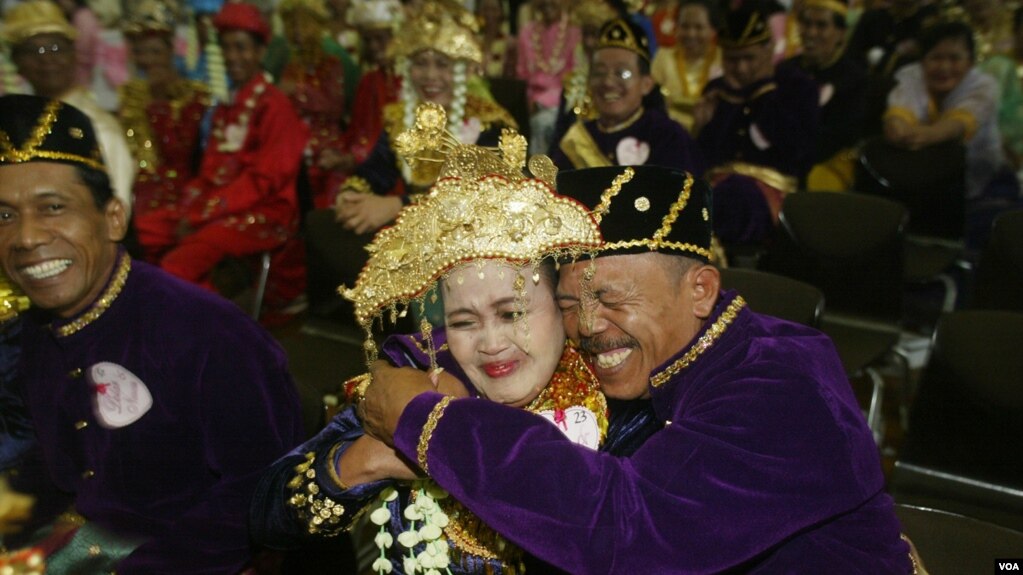
An Indonesian bride and groom hug during a mass wedding ceremony attended by 47 couples in Jakarta, Indonesia
Court officials could not provide figures of how many people in Indonesia are polygamous, but activists say cases of men giving false information to gain permission and manipulation of women are common. The app has been downloaded over 10,000 times before it stopped registering new members following concerns of fake accounts were being set up, and men using the site without the knowledge of their first wives. A new version is set to be launched on Oct. 5, and will impose stricter rules on users including requiring them to provide an identification card, marital status and a letter of permission from their first wives.
'This is what God planned for me'
Iyus Yusuf Fasyiya, an Indonesian factory worker who has two wives, said he used the app to share tips with other users on how to maintain a polygamous marriage. "Many members are looking for wives - they ask about how to start, how to maintain polygamous marriages, and also government regulations," he said from his home village in Bogor, about 90-minute drive from the capital Jakarta. The 37-year-old dodged questions about whether he was using the app to look for another wife but said he continues to learn about polygamy, after he took on his second wife six years following his first marriage in 2000. "It just happened, this is what God planned for me," said Fasyiya, who takes turns to see his two wives and five children who live in nearby villages.
The majority of the app users were men, but there were also about 4,000 women who have registered, the app developer said. Lawyer Rachmat Dwi Putranto, who deals with marriage matters, said polygamy is "not that easily achieved" as Indonesian courts will only give permission if the first wife is disabled, ill or cannot bear children.
Violence against women