That makes a lot of sense.
Limit the profits they can make and they'll only be going after those things they consider profitable.
Hard to have health insurance if no one is providing it.
Another statement with no foundation in reality. Insurance companies do and will continue to provide health insurance.
Your mistaken perception is based on false understanding of how business and economics works. Most companies do not earn a profit. They do provide imce for their employees and owners. Many are specifically designed as not for profit and non profit.
As long as people can earn a living providing insurance, companies will provide insurance.
Out of respect for what I think are rationale posts on your part, I'll try to pull some more out of these statements.
Most companies do not earn a profit ? Are you talking insurance companies or companies in general ?
Yes, companies in general. Small to large businesses. Businesses that are in truly competitive markets.
And, this shouldn't be all that surprising when we consider the details.
{I put some work into this....}
The whole concept breaks down into three parts, micro-economic theory, business accounting, and empirical data.
Micro Economic Theory
According to classical economic theory, most business shouldn't be earning a profit. Profit means that the market is not efficient or competitive. Where there are profits, then new businesses will enter the market, driving down prices to cost. At that point, no profit. Where profit exists in the medium and long term, there is market inefficiency which violates basic Adam Smith classical markets.
Business Accounting
It is, of course, important that we are working with the same definition of "profit". And, it is important that we are clear about the difference between how personal income taxes and business taxes are determined. Basically, there are no "expense deductions" in personal income taxes. I only point this out because that is what we are most familiar with and it's a bit difference for business taxes. Business taxes are calculated after costs, after expenses. Materials and labor costs are expenses. {Yeah, my comment in econ class what "You telling me that the CEO's $3 million salary is considered "not profit"? "Yes"} Interest payments on business loans are expensed. Depreciation of equipment is expensed.
It's simple enough to see if we do the accounting. By the time all is said and done,
Earnings = Revenues - costs.
EBIT {Earnings before interest and taxes}= (Price * Quantity_Sold) - (Wages * Labor Hours + Rent * Equipment_Hours)
..........{ That's the economics way of parcing it out. Facilities are lumped with equipment)
Profit is earnings after interest and taxes.
EBT {Earnings before taxes} = EBIT - interest
Taxes =t*EBT
Profit is {Earnings after taxes} = (1-t)*EBT
We can look up the terminology on investopedia and wiki. It get's a bit muddled, duplicated, overlapping, etc in real business accounting. So it is important that we have this basic set that we agree on. Business accounting concerns itself with EBIT. Economics generally doesn't care. Sometimes, accounting, finance, and economics overlap with differences. Never the less,
Wiki agrees with "In accounting and finance, earnings before interest and taxes (EBIT), is a measure of a firm's profit that excludes interest and income tax expenses."
So, the way wiki puts it, EBIT is profit before interest and taxes. That is actually a good way to put it because if we look about the definitions, there is this fuzziness in the use of "profit", "earnings", and "revenues".
For our purposes, what we are really interested in is "profit" AFTER everything. Otherwise, what are we talking about really? All companies have revenues, they must. In order to have to owe taxes, all companies must first have earnings after interest and other deductions. So, after tax "earnings", would be profit.
And, in fact, yes. Most companies do not earn a profit. Most companies just mange to make payroll. This isn't to say that the owner's don't make a nice income. They should. If they aren't, everyone else should be looking for work. Along "Main Street" where I live, most don't pay federal and state taxes. They simply don't have any earnings after expenses. They do pay sales tax, which they simply account for during the sale, and property taxes. Can't get past those because they are before expenses. But, after expenses taxes, typically they don't. That is, at least, what a new business owner has come to understand having talked with other business owners in the area. They obviously pay any income taxes on the salary they draw.
In classical theory, even high owner and CEO salary will attract competition, driving down earnings. So most companies better not be earning profits or we don't have free markets.
Empirical Data
I found some estimate that said in 2000, there were about 25 million businesses in the US with an average of 12 employees per business.
"The US government says in 2006 there were 6 million firms and 7.6 million establishments."
Another source puts it at 28 million small businesses with 22 million single individual businesses (owner only).
Another says, "Firms with less than 20 workers made up 89.7 percent of these businesses. ... Add in the number of nonemployer firms there were 22.1 million in 2010"
I find an article saying that companies paid $191 billion in corporate income taxes in 2010. Roughly speaking, let's say that there were 25 million businesses. That amounts to about $7000 in tax revenue per business. Same source, 26% of "profits" paid in taxes. {there is that fuzzy word usage.} Never the less, $30k per company, that is pocket change. So, in those terms, it isn't that far fetched that most business don't make a profit.
So, it really isn't that odd of an idea, that most companies, don't make a profit. First,markets where there are to few firms attract competition. Even though, technically, owner and CEO salaries aren't profit, high salaries will attract competition and drive them down. Profit is after taxes and interest. Companies must meet costs. But if costs equal revenues, earnings are zero, taxes are zero, and profits are zero. In 2010, about 90% of businesses were 20 or fewer workers. I have no doubt that the owners did okay. But there is no reason why the business should have either earned a profit or paid taxes. If they are, they are doing something wrong. Any earnings should be put into expanding into the market, no sitting in the bank earning near zero interest and being subject to taxes.
It would be nice to have an actual number of businesses that paid net taxes and actual number that earned significant profit. {$1000 wouldn't be significant.}


 Stay classy


 I got a NEW Krugman thread in the works.
  He is a TRUE PATRIOTIC AMERICAN.

 You sure you vote Repub? Most of them wouldn't be able to.
  You have to read ALLLLLL the way to the 2nd paragraph to see it
  The middle sentence I left out supports my argument as well. The guy was basically saying don't throw out the baby w/ the bath water & Heritage-funded, attack dogs AKA- Repubs went after him.


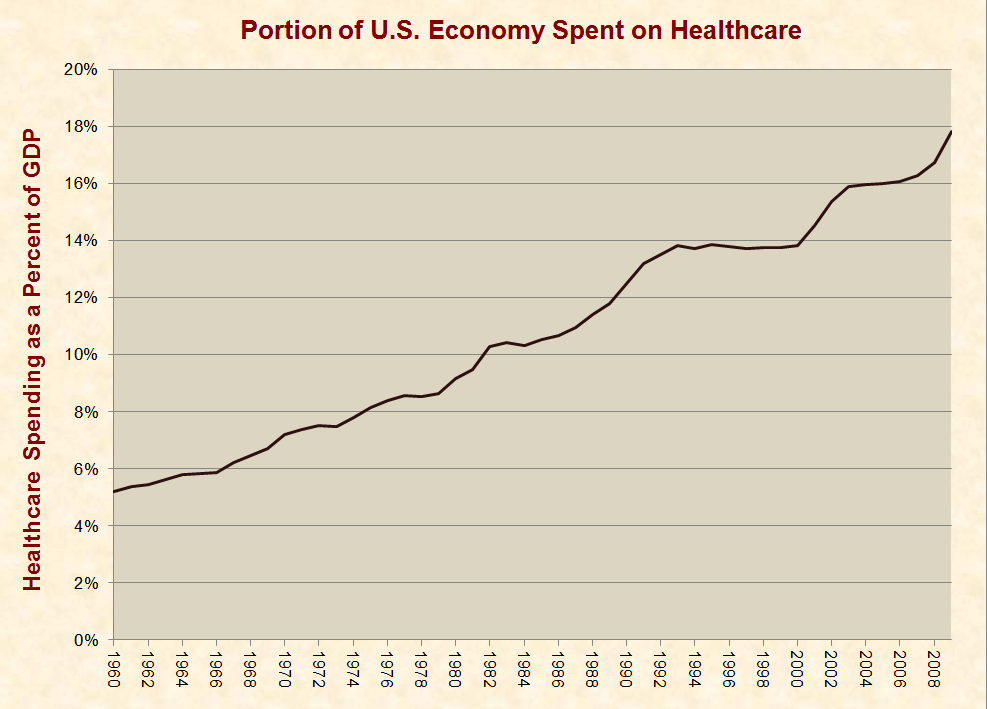
 PLUS 60% of bankruptcies were healthcare related.


