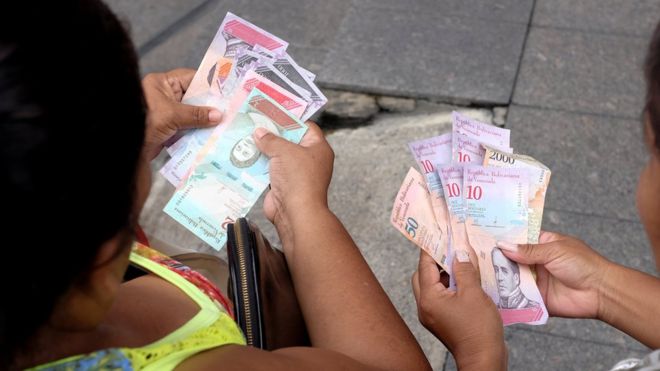
Across this economically hollowed-out country where inflation is approaching 1 million percent and food, medicine, jobs and money are in short supply, residents worried anew as Venezuela’s president hit what many here see as the panic button Monday in an effort to restart a country that once thrived with opportunity. The nation’s currency — the bolivar — will be devalued, sales taxes increased and minimum wages hiked more than 3,500%, drastic adjustments that President Nicolas Maduro said he hoped would jump-start the economy.
Critics, though, predicted the worst, saying the measures are bound to fail because of rampant corruption in the country, low productivity and crippling U.S. sanctions. Business owners said they can’t possibly afford the 3,670% increase in minimum wages that Maduro requested, and trade groups immediately called for a nationwide strike Tuesday to protest the measures.
The immediate impact of the measures was difficult to gauge, as Monday was declared a holiday by Maduro so that officials could quickly adjust to his plan. Traffic was light in downtown Caracas and many streets in the capital were reported to be deserted.
A man pushes a cart past graffiti reading "Hunger" in Caracas, Venezuela
Although Venezuela boasts enormous oil riches, crude production — the source of 90% of the country’s exports — has been in steady decline over the last decade. Due to a lack of spare parts and the loss of workers who’ve headed for the borders in search of better lives, the country’s refineries are operating at only one third capacity and — once unthinkable — fuel is now being imported. Throughout the economy’s slow descent, Maduro, who took power in 2013 following the death of his predecessor and mentor Hugo Chavez, has blamed the United States for waging an “economic war” against his country, citing sanctions that have blocked access to banking and hampered Venezuela’s ability to purchase oil field and refining equipment.
“We are going to dismantle this perverse capitalist neo-liberal war and install a virtuous economic system [that is] balanced, sustainable, healthy and productive,” Maduro said Sunday night in a televised address from Miraflores, the presidential palace. But critics say the moribund economy is a reflection of the socialist economic model installed by Chavez: Price controls, import duties and nationalization of companies that were then turned over to inexperienced worker cooperatives all combined to undermine Venezuela’s once-robust productivity.
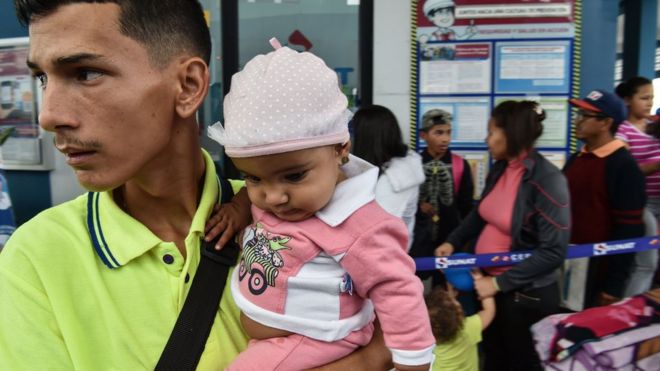
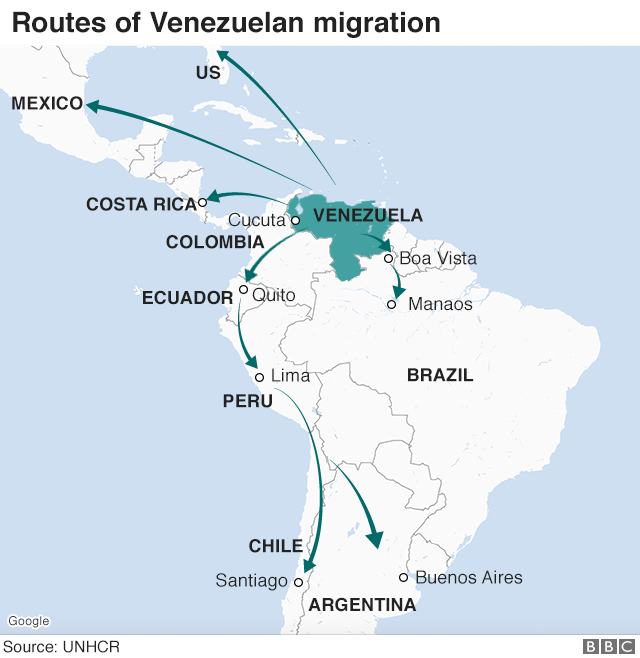
Moreover, Venezuelan productivity in sectors as varied as dairy products and auto manufacturing has been devastated in recent years as the workforce flees. An estimated 2.5 million people, or roughly 7% of the 31 million people who lived in Venezuela in 2016, have
poured into Brazil, Colombia and other nearby countries. Social services such as education and healthcare have also been hurt by the departure of teachers, nurses and doctors. Once welcomed, the Venezuelan migrants are now finding that countries like Peru and Ecuador are tightening their borders, saying they can no longer cope with the crush of humanity. At the Brazilian border town of Pacaraima, citizens attacked a migrant camp over the weekend after a reported stabbing.
MORE