
Litwin
Diamond Member
Recent archival discoveries have revealed a surprising and culturally rich chapter in Belarusian history: Belarusian-language texts written in Hebrew/Yiddish letters. Although Belarusian is traditionally associated with Cyrillic and, to a lesser extent, Latin script — and although Belarusian Tatars historically used Arabic script — scholars now confirm the existence of a fourth writing tradition: Belarusian written in Hebrew/Yiddish characters.
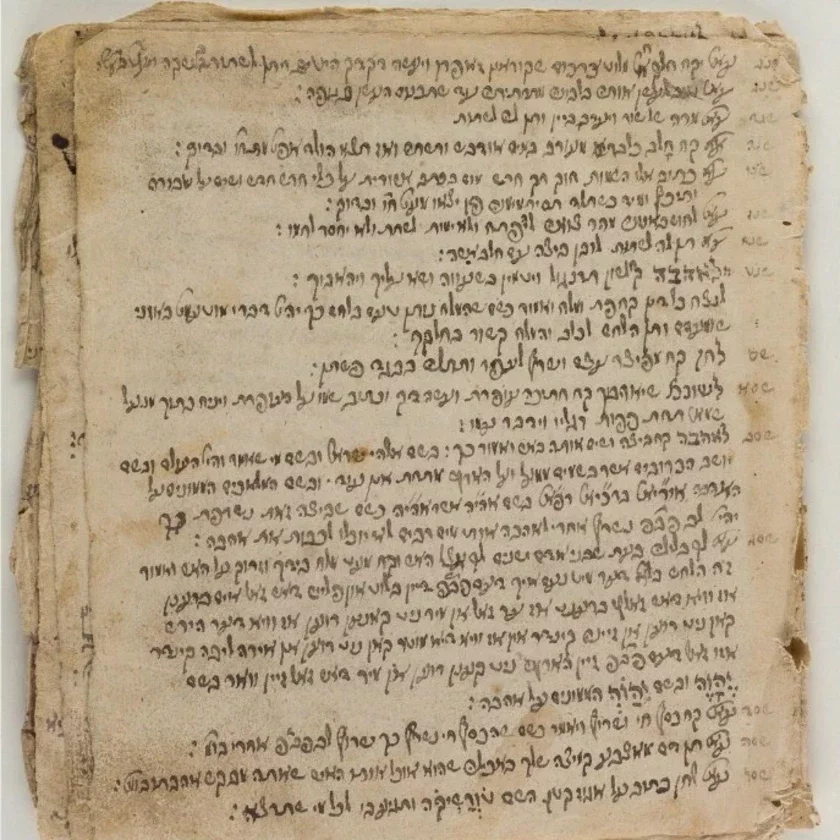
This breakthrough came when researcher Yoel Matveev, a Belarusian-born Jewish linguist and writer, examined manuscripts from the private collection of William Gross in Tel Aviv. These 19th‑century manuscripts, now digitized by the National Library of Israel, contain magical formulas, charms, and folk incantations written in Hebrew cursive. While most of the texts are in Hebrew or Yiddish, Matveev discovered something unexpected: entire passages written in Belarusian, but recorded using the Hebrew alphabet.
These Belarusian fragments are unmistakably rooted in Belarusian folklore. They include classic motifs such as a golden pine tree in an open field, a golden maiden sitting on a golden chair, and a serpent‑queen speaking from a golden nest. These images correspond directly to well‑known Belarusian folk incantations documented in ethnographic collections. The article emphasizes that these are not random borrowings but authentic Belarusian folk texts, preserved by Jewish scribes who lived among Belarusians and absorbed elements of local oral culture.
The discovery is historically significant for several reasons. First, it confirms that Belarusian Jews not only spoke Belarusian but also wrote it, choosing the alphabet they were most familiar with — Hebrew/Yiddish script. This expands the understanding of Belarusian linguistic history, showing that the language existed in multiple parallel writing systems, depending on the community. Second, it demonstrates that Jewish communities played a role in preserving Belarusian folklore, sometimes recording material that might otherwise have been lost.
The article places this discovery in a broader historical context. Writing local languages in Hebrew script was not unusual in medieval Europe. Jewish scholars often added glosses in local languages to Hebrew manuscripts, and the famous Kyivan Letter from the 10th century contains the name “Kyiv” written in Hebrew letters. But Belarusian examples were rare and understudied — until now.
Although the article does not mention Harry Potter, modern readers have jokingly compared these magical Belarusian texts in Yiddish letters to “Belarusian Harry Potter manuscripts written by Jewish mystics.” The real value, however, lies in the cultural insight: these manuscripts show a deep, centuries‑old interaction between Jewish and Belarusian communities, where languages, beliefs, and folklore intertwined.
The discovery opens new directions for linguists, folklorists, and historians, offering a richer understanding of Belarusian cultural diversity and the unexpected ways in which traditions were preserved.
the full text :

 nashaniva-com.translate.goog
This breakthrough came when researcher Yoel Matveev, a Belarusian-born Jewish linguist and writer, examined manuscripts from the private collection of William Gross in Tel Aviv. These 19th‑century manuscripts, now digitized by the National Library of Israel, contain magical formulas, charms, and folk incantations written in Hebrew cursive. While most of the texts are in Hebrew or Yiddish, Matveev discovered something unexpected: entire passages written in Belarusian, but recorded using the Hebrew alphabet.
These Belarusian fragments are unmistakably rooted in Belarusian folklore. They include classic motifs such as a golden pine tree in an open field, a golden maiden sitting on a golden chair, and a serpent‑queen speaking from a golden nest. These images correspond directly to well‑known Belarusian folk incantations documented in ethnographic collections. The article emphasizes that these are not random borrowings but authentic Belarusian folk texts, preserved by Jewish scribes who lived among Belarusians and absorbed elements of local oral culture.
The discovery is historically significant for several reasons. First, it confirms that Belarusian Jews not only spoke Belarusian but also wrote it, choosing the alphabet they were most familiar with — Hebrew/Yiddish script. This expands the understanding of Belarusian linguistic history, showing that the language existed in multiple parallel writing systems, depending on the community. Second, it demonstrates that Jewish communities played a role in preserving Belarusian folklore, sometimes recording material that might otherwise have been lost.
The article places this discovery in a broader historical context. Writing local languages in Hebrew script was not unusual in medieval Europe. Jewish scholars often added glosses in local languages to Hebrew manuscripts, and the famous Kyivan Letter from the 10th century contains the name “Kyiv” written in Hebrew letters. But Belarusian examples were rare and understudied — until now.
Although the article does not mention Harry Potter, modern readers have jokingly compared these magical Belarusian texts in Yiddish letters to “Belarusian Harry Potter manuscripts written by Jewish mystics.” The real value, however, lies in the cultural insight: these manuscripts show a deep, centuries‑old interaction between Jewish and Belarusian communities, where languages, beliefs, and folklore intertwined.
The discovery opens new directions for linguists, folklorists, and historians, offering a richer understanding of Belarusian cultural diversity and the unexpected ways in which traditions were preserved.
the full text :
Габрэіца: выявілася, па-беларуску пісалі і чацвёртым алфавітам, і ім карысталіся чарнакніжнікі
Аказваецца, акрамя звыклых нам кірыліцы і лацінкі, а таксама арабіцы, якой пісалі па-беларуску нашы татары, існаваў яшчэ адзін, зусім невядомы, але ад таго яшчэ больш цікавы графічны варыянт — яўрэйскі алфавіт
nashaniva-com.translate.goog


