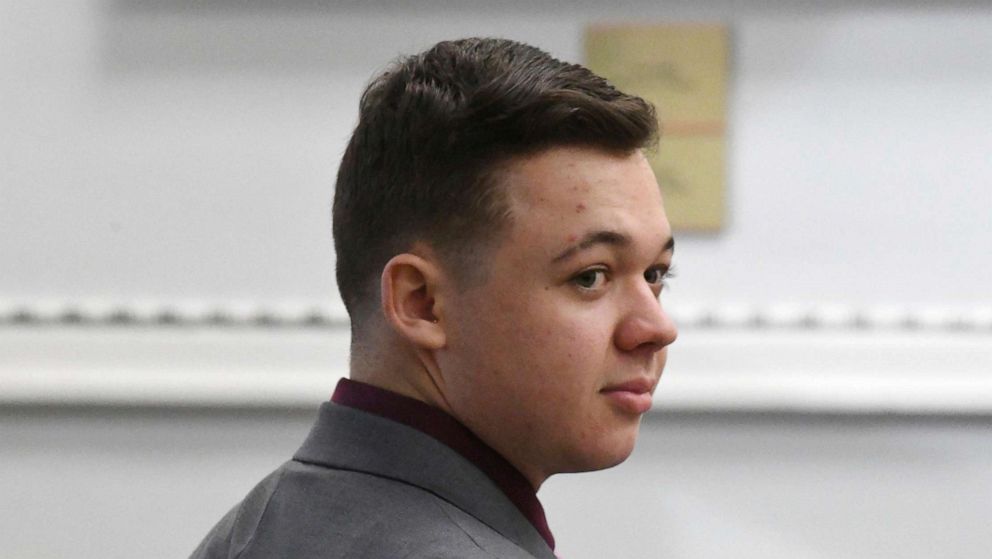
No surrender over here. I just know not to continue with the mentally ill.
So, regardless of whether Rittenhouse should have been there or was illegally in possession of a firearm (like several others there) he still had a right to self-defense, right?
The law is pretty clear, right?
Wisconsin Statutes 939.48
939.48 Self-defense and defense of others.
(1) A person is privileged to threaten or intentionally use force against another for the purpose of preventing or terminating what the person reasonably believes to be an unlawful interference with his or her person by such other person. The actor may intentionally use only such force or threat thereof as the actor reasonably believes is necessary to prevent or terminate the interference. The actor may not intentionally use force which is intended or likely to cause death or great bodily harm unless the actor reasonably believes that such force is necessary to prevent imminent death or great bodily harm to himself or herself.
(1m)
(a) In this subsection:
1. “Dwelling" has the meaning given in s.
895.07 (1) (h).
2. “Place of business" means a business that the actor owns or operates.
(ar) If an actor intentionally used force that was intended or likely to cause death or great bodily harm, the court may not consider whether the actor had an opportunity to flee or retreat before he or she used force and shall presume that the actor reasonably believed that the force was necessary to prevent imminent death or great bodily harm to himself or herself if the actor makes such a claim under sub.
(1) and either of the following applies:
1. The person against whom the force was used was in the process of unlawfully and forcibly entering the actor's dwelling, motor vehicle, or place of business, the actor was present in the dwelling, motor vehicle, or place of business, and the actor knew or reasonably believed that an unlawful and forcible entry was occurring.
2. The person against whom the force was used was in the actor's dwelling, motor vehicle, or place of business after unlawfully and forcibly entering it, the actor was present in the dwelling, motor vehicle, or place of business, and the actor knew or reasonably believed that the person had unlawfully and forcibly entered the dwelling, motor vehicle, or place of business.
(b) The presumption described in par.
(ar) does not apply if any of the following applies:
1. The actor was engaged in a criminal activity or was using his or her dwelling, motor vehicle, or place of business to further a criminal activity at the time.
2. The person against whom the force was used was a public safety worker, as defined in s.
941.375 (1) (b), who entered or attempted to enter the actor's dwelling, motor vehicle, or place of business in the performance of his or her official duties. This subdivision applies only if at least one of the following applies:
a. The public safety worker identified himself or herself to the actor before the force described in par.
(ar) was used by the actor.
b. The actor knew or reasonably should have known that the person entering or attempting to enter his or her dwelling, motor vehicle, or place of business was a public safety worker.
(
2) Provocation affects the privilege of self-defense as follows:
(a)
A person who engages in unlawful conduct of a type likely to provoke others to attack him or her and thereby does provoke an attack is not entitled to claim the privilege of self-defense against such attack, except when the attack which ensues is of a type causing the person engaging in the unlawful conduct to reasonably believe that he or she is in imminent danger of death or great bodily harm.
In such a case, the person engaging in the unlawful conduct is privileged to act in self-defense, but the person is not privileged to resort to the use of force intended or likely to cause death to the person's assailant unless
the person reasonably believes he or she has exhausted every other reasonable means to escape from or otherwise avoid death or great bodily harm at the hands of his or her assailant.
(b) The privilege lost by provocation may be regained if the actor in good faith withdraws from the fight and gives adequate notice thereof to his or her assailant.
(c) A person who provokes an attack, whether by lawful or unlawful conduct, with intent to use such an attack as an excuse to cause death or great bodily harm to his or her assailant is not entitled to claim the privilege of self-defense.