We did decide, we incorporated the fundamental concept that ALL citizens should enjoy the equal protections of the law and that discriminatory laws should not be enacted that target citizens for unequal treatment for capricious and invidious reasons.
Now if "we the people" want to change that fundamental concept of American jurisprudence, we can do that. Simply pass a 28th Amendment to the Constitutoin that reads: "Homposexuals are not included in the before mentioned equal protections and due process provisions."
Get 2/3rd's of both houses of Congress to agree and than 3/4's of the states and that should do it.
>>>>
Marriage isnt a right, it's a privelege; like driving. Blind people cannot drive. Should they use the 14th to sue in the US Supreme Court for the "right" to drive?
All persons born or naturalized in the United States, and subject to the jurisdiction thereof, are citizens of the United States and of the State wherein they reside. No State shall make or enforce any law which shall abridge the privileges or immunities of citizens of the United States; nor shall any State deprive any person of life, liberty, or property, without due process of law; nor deny to any person within its jurisdiction the equal protection of the laws.
Whether you consider it a "right" or a privilege is pretty irrelevant. States can't capriciously or invidiously deny privileges either. Your opinion not withstanding, the SCOTUS has referred to Civil Marraige as a right multiple times including: Loving v Virginia, Zablocki v Wisconsin, Turner v Safley, and about a dozen other cases.
Actually blind people can drive, they just have to do it in their own vehcile on private property. The Drivers License is for operation of a motor-vehicle on public roads. If challenged the State would have to provide a compelling government interest in preventing blind people from operating a multi-ton vehicle on public roads. Which presenting a clear and present danger to other motorists and pedestrians is.
There is no compelling governent interest though in treating like situated couples differently. In this case like situated couples includes law abiding, tax paying, US Citizen, non-related, consenting, adults in different-sex couples and law abiding, tax paying, US Citizen, non-related, consenting, adults in same-sex couples.
Men cannot use women's shower rooms and vice versa; it's an exclusive privelege. Using those rooms is not a "right". Should they use the 14th to sue in the US Supreme Court for the "right" to use opposite gender bathrooms?
They could try but they'd loose. The law has general applicability, not the case in marriage where some are allowed and some are denied.
Polygamists, incest and minor people who want to marry can't access that privelege. Will they use any potential US Supreme Court decision to sue for the "right" to marry?
Each would have to present their case and in each case the government would have to provide a compelling government reason. Pretty easy in the case of polygamy and incest.
You might want to check your fact on "minors", minors can already marry in many states - for example in New Hampshire a girl as young as 13 can get Civilly Married and then travel to any other state and it's valid.
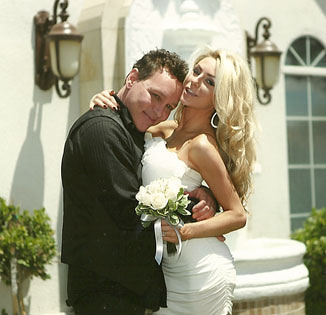
Courtney Stodden was 16 when she married Doug Hutchison. Hutchison was 51 at the time.
>>>>