
there is no gerrymandering of the Senate seats.... have no idea why that is being brought up for the Senate seats...?Why the hell is this idiotic idea of Senatorial gerrymandering becoming so popular? I'm hearing it constantly in the past several months.
Navigation
Install the app
How to install the app on iOS
Follow along with the video below to see how to install our site as a web app on your home screen.
Note: This feature may not be available in some browsers.
More options
Style variation
You are using an out of date browser. It may not display this or other websites correctly.
You should upgrade or use an alternative browser.
You should upgrade or use an alternative browser.
Joy Behar: Dems Lost Senate Because of Gerrymandering
- Thread starter Dont Taz Me Bro
- Start date


Andylusion
Platinum Member
Picking up the 7 new Democratic governor-ships, will help with the voter suppression problems...
So how exactly? Give me an example of voter suppression? Not allowing illegals to vote? What are we talking about, that you think a democrap governor will fix?


Lakhota
Diamond Member
Democrats really have an uphill battle on how Republicans have the districts gerrymandered.
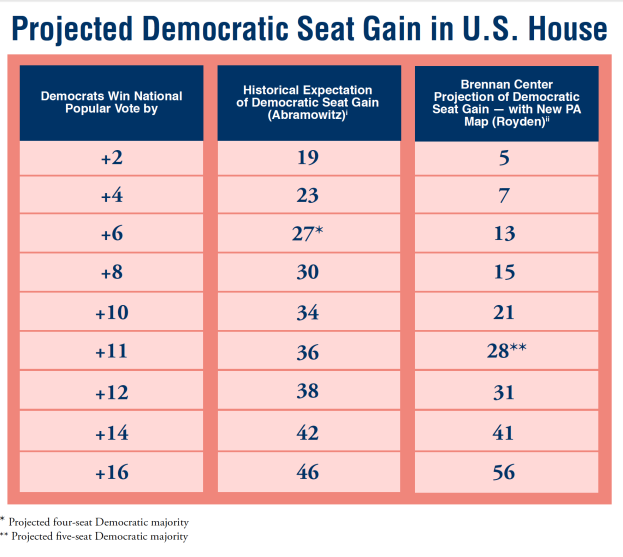
Extreme Gerrymandering & the 2018 Midterm
Extreme Gerrymandering & the 2018 Midterm

- Thread starter
- Moderator
- #26
It's true. Most smart people know that fact. Gerrymandering and voter suppression put Democrats at a great disadvantage.
Democrats may be ecstatic that they retook the House of Representatives, but their decisive victory conceals a harsher reality: It took a landslide in the popular vote to get them here, and they are projected to lose seats in the Senate.
Those facts speak to just how far the U.S. election system is tilted in the Republicans’ favor. Through a combination of fundamental factors and partisan gerrymandering, Republicans on Tuesday retained their grip on the Senate and many state houses without a national majority.
Certain factors give Republicans a natural advantage. In the Senate, the disproportionate representation of small states is part of the body’s original design. But that advantage, which benefits white voters, has become more lopsided than the framers of the Constitution likely ever imagined as the country’s population and demographics evolve. Today, 20 senators from urban states represent roughly half the country’s population, while the other, rural half elects the remaining 80.
U.S. Election Rules Doomed Democrats' Chances Of Taking The Senate

- Thread starter
- Moderator
- #27
Why the hell is this idiotic idea of Senatorial gerrymandering becoming so popular? I'm hearing it constantly in the past several months.
It's the latest excuse the extreme left has latched onto to explain why they lose.
- Thread starter
- Moderator
- #28
Democrats really have an uphill battle on how Republicans have the districts gerrymandered.
Extreme Gerrymandering & the 2018 Midterm
She was talking about the Senate, not the House. You can't gerrymander a statewide race.

Toro
Diamond Member
A cactus is smarter than this dumb shrew
ABC News political analyst Matthew Dowd said, “There has been a battle that happened in 2016 between geography, which Republicans have............
.............. Last night was an even bigger example of that. So Democrats won the popular vote last night by 8 million votes. They lose U.S. Senate races in red areas—”
Behar interjected, “Because of gerrymandering.”
Dowd corrected her by saying, “Well it’s not gerrymandering, that’s the Constitution. The districts are gerrymandered, but the states are part of the Constitution.”
Joy Behar: Dems Lost Senate Because of Gerrymandering | Breitbart
Republican legislators put too many liberals in California.
That’s why they lost.


Examples would be, if there were a Democratic governor in Georgia, then the new exact match laws would not have taken place, at least not without the person being notified that a period or letter was missing on their voter registration that did not match the government's file on you, instead of just disqualifying without notice the registration applicant....Picking up the 7 new Democratic governor-ships, will help with the voter suppression problems...
So how exactly? Give me an example of voter suppression? Not allowing illegals to vote? What are we talking about, that you think a democrap governor will fix?
In North Dakota, if it had a Democratic governor, the legislatures would not have instituted that those on Indian reservations now needed a street address on their voter ID's shown to vote, when most people on the reservations did not live on a named street... a Democratic governor would have looked out for his citizens and not have passed the law in the first place or with the law in place would have made certain all the Natives on the Reservation would have been given ID's with a street address so they could vote...
Gov issued ID's at the polls have absolutely nothing to do with illegals.... they have ID's.... We need to stop illegals from being REGISTERED to vote by vetting applicants, before the State gives them a voter registration card and puts them on the voter rolls... they should have to use E-verify, which verifies citizenship for employers before they hire, well we should do that before the State approves the registration.

JWBooth
Diamond Member
Never underestimate the stupidity of a celebrity dimocrapA cactus is smarter than this dumb shrew
ABC News political analyst Matthew Dowd said, “There has been a battle that happened in 2016 between geography, which Republicans have............
.............. Last night was an even bigger example of that. So Democrats won the popular vote last night by 8 million votes. They lose U.S. Senate races in red areas—”
Behar interjected, “Because of gerrymandering.”
Dowd corrected her by saying, “Well it’s not gerrymandering, that’s the Constitution. The districts are gerrymandered, but the states are part of the Constitution.”
Joy Behar: Dems Lost Senate Because of Gerrymandering | Breitbart
Andylusion
Platinum Member
Democrats really have an uphill battle on how Republicans have the districts gerrymandered.
Extreme Gerrymandering & the 2018 Midterm
So your claim is that simply because you didn't win, what projections said you would win.... therefore it is gerrymandering?
Maybe you missed it, but Trump won the presidency while you projections said Hillary would win by a landslide.
So, if your projections not just failed, but were devastatingly wrong about the biggest election in the entire country.... why does it surprise you that your midterm election projections were wrong?
Do you people have to find some excuse for every single failure you have in life? Because you sound like Hugo Chavez trying to find someone to blame when Venezuelan stores can't even keep coffee in stock.
It's childish.... and pathetic. Grow up. Left-wingers are all babies these days, melting snowflakes of toddler emotionalism. Every single time you people don't get what you want, I just wait a few days and out come the waaaaabulances, trying to point fingers.

rightwinger
Award Winning USMB Paid Messageboard Poster
- Aug 4, 2009
- 311,565
- 274,178
- 3,615
Major victory for DemsDemocrats really have an uphill battle on how Republicans have the districts gerrymandered.
Extreme Gerrymandering & the 2018 Midterm
So your claim is that simply because you didn't win, what projections said you would win.... therefore it is gerrymandering?
Maybe you missed it, but Trump won the presidency while you projections said Hillary would win by a landslide.
So, if your projections not just failed, but were devastatingly wrong about the biggest election in the entire country.... why does it surprise you that your midterm election projections were wrong?
Do you people have to find some excuse for every single failure you have in life? Because you sound like Hugo Chavez trying to find someone to blame when Venezuelan stores can't even keep coffee in stock.
It's childish.... and pathetic. Grow up. Left-wingers are all babies these days, melting snowflakes of toddler emotionalism. Every single time you people don't get what you want, I just wait a few days and out come the waaaaabulances, trying to point fingers.
They had to win by more than 12 percent of the vote to overcome Gerrymandering
Trump only needed to win 47 percent of the vote, while HIllary needed to win 53 percent to get elected
It is not a level playing field.....Republicans rule from a minority
Lakhota
Diamond Member
Major victory for DemsDemocrats really have an uphill battle on how Republicans have the districts gerrymandered.
Extreme Gerrymandering & the 2018 Midterm
So your claim is that simply because you didn't win, what projections said you would win.... therefore it is gerrymandering?
Maybe you missed it, but Trump won the presidency while you projections said Hillary would win by a landslide.
So, if your projections not just failed, but were devastatingly wrong about the biggest election in the entire country.... why does it surprise you that your midterm election projections were wrong?
Do you people have to find some excuse for every single failure you have in life? Because you sound like Hugo Chavez trying to find someone to blame when Venezuelan stores can't even keep coffee in stock.
It's childish.... and pathetic. Grow up. Left-wingers are all babies these days, melting snowflakes of toddler emotionalism. Every single time you people don't get what you want, I just wait a few days and out come the waaaaabulances, trying to point fingers.
They had to win by more than 12 percent of the vote to overcome Gerrymandering
Trump only needed to win 47 percent of the vote, while HIllary needed to win 53 percent to get elected
It is not a level playing field.....Republicans rule from a minority
Thank you for stating the obvious facts! Trump supporters just don't get it. Just imagine how they'd squawk if the shoe was on the other foot.

- Moderator
- #36
We should compile a list of must read civics books and start sending them to people like behar
- Moderator
- #37
Oh dear, voter suppression is not the same as gerrymandering Miss Joy!
No one was suppressed
- Moderator
- #38
Why the hell is this idiotic idea of Senatorial gerrymandering becoming so popular? I'm hearing it constantly in the past several months.
Our educational system is abysmal
- Moderator
- #39
Never underestimate the stupidity of a celebrity dimocrapA cactus is smarter than this dumb shrew
ABC News political analyst Matthew Dowd said, “There has been a battle that happened in 2016 between geography, which Republicans have............
.............. Last night was an even bigger example of that. So Democrats won the popular vote last night by 8 million votes. They lose U.S. Senate races in red areas—”
Behar interjected, “Because of gerrymandering.”
Dowd corrected her by saying, “Well it’s not gerrymandering, that’s the Constitution. The districts are gerrymandered, but the states are part of the Constitution.”
Joy Behar: Dems Lost Senate Because of Gerrymandering | Breitbart
When you think they can’t get dumber they insist on proving you wrong. And they do
- Moderator
- #40
Democrats really have an uphill battle on how Republicans have the districts gerrymandered.
Extreme Gerrymandering & the 2018 Midterm
So your claim is that simply because you didn't win, what projections said you would win.... therefore it is gerrymandering?
Maybe you missed it, but Trump won the presidency while you projections said Hillary would win by a landslide.
So, if your projections not just failed, but were devastatingly wrong about the biggest election in the entire country.... why does it surprise you that your midterm election projections were wrong?
Do you people have to find some excuse for every single failure you have in life? Because you sound like Hugo Chavez trying to find someone to blame when Venezuelan stores can't even keep coffee in stock.
It's childish.... and pathetic. Grow up. Left-wingers are all babies these days, melting snowflakes of toddler emotionalism. Every single time you people don't get what you want, I just wait a few days and out come the waaaaabulances, trying to point fingers.
There has to be an excuse. He can’t admit he is wrong about something. He can’t!
Similar threads

- Replies
- 45
- Views
- 943


- Replies
- 27
- Views
- 634


- Replies
- 16
- Views
- 226


New Topics
-
Trump repeats call for Supreme Court to end automatic U.S. birthright citizenship.
- Started by johnwk
- Replies: 0
-
Springdale man leaves kids, aged 5 and 6 months.
- Started by Polishprince
- Replies: 2
-
 If you measure your own Blood Pressure do you take it on both right and left arm? Mine is always lower on the left.
- Started by MarathonMike
- Replies: 11
-
Trump admin has found 146K migrant kids who went missing under Biden: DHS chief
- Started by Doc7505
- Replies: 4
-


