well, the clinton campaign’s russian agent still has a trial pending for lying to the fbi about his involvement with the campaigns russian hoaxBye bye Russiagate. Now Trump can forget about this great win for Hillary and go back to doing what he does best, lying his ass off! Bigly!!!

Trump's 'Russiagate' falls apart with Durham's Sussmann fail
Why everyone but special counsel John Durham seemed to see the Michael Sussmann verdict coming.www.msnbc.com
Navigation
Install the app
How to install the app on iOS
Follow along with the video below to see how to install our site as a web app on your home screen.
Note: This feature may not be available in some browsers.
More options
Style variation
You are using an out of date browser. It may not display this or other websites correctly.
You should upgrade or use an alternative browser.
You should upgrade or use an alternative browser.
John Durham Case Update: Jury Finds Michael Sussmann NOT guilty of lying to the FBI
- Thread starter MAGA Macho Man
- Start date
lantern2814
Diamond Member
- Jul 17, 2018
- 15,390
- 12,593
- 2,290
**** you you no job, misogynist, racist asshole. Truth hurt you you lying racist prick? It isn’t over. Sussman was guilty as sin, confirmed by jurors admitting he lied to the FBI but claiming it was okay. And another trial coming later this year. Your pathetic excuses don’t change reality moron. So now, you can’t say a word about any Trump associate because you have determined lying to the FBI is okay.Wow, you are acting like a kid who didn't get what he wanted for Christmas.
Here's the problem with Durrrr-ham's case. He didn't charge Sussman with spreading lies about Trump. He charged him with lying about who he was working for. And the FBI was ALREADY investigating Trump and Alfa Bank, so he wasn't giving them anything they weren't already aware of.
It isn't when the FBI is ALREADY INVESTIGATING what you told them about, no.

bripat9643
Diamond Member
- Apr 1, 2011
- 170,170
- 47,448
- 2,180
He sure as hell did admit it. No, he didn't say thatHe did no such thing. As you noted , "the evidence" was on display and what hew said was that considering that evidence...the case should have never come before the court.
allow me to quote:
"“I don’t think it should have been prosecuted. There are bigger things that affect the nation than a possible lie to the FBI.”"
He said nothing about the evidence.
Progs are always wrong. It's not their job to judge the importance of the case.

JoeB131
Diamond Member
His billing records, moron
Sussmann billed about three hours that day, Sept. 19, 2016, to “work and communications regarding confidential project.” Prosecutors working for Special Counsel John Durham have used that billing record, which they showed the jury on Wednesday as they wrapped up their case, in an attempt to directly tie Sussmann’s meeting with the FBI’s then-general counsel, James Baker, to the Clinton campaign.
Sussmann’s defense team at Latham & Watkins has pointed out that the Sept. 19 billing entry does not mention the FBI or refer to a “meeting.” His lawyers have conceded that Sussmann, a cybersecurity and privacy attorney, did represent the Clinton campaign in attempting to push the allegations to the news media, but they have maintained that the meeting with Baker was based on Sussmann’s personal concern for national security and fear that the FBI would be caught “flat-footed” when an article about the claims was published in the press.
Sussmann’s defense, led by Latham partners Sean Berkowitz and Michael Bosworth, has produced its own billing records. One record shows that ahead of a prior meeting with the FBI in 2015 on an unrelated issue involving Joffe, Sussmann specifically referenced the FBI in the billing entry.
They also introduced a Perkins Coie expense report showing that Sussmann billed taxi fares from the day of his meeting with Baker to the law firm generally, and not a specific client. That expense report references a “meeting at FBI.”
Sussmann’s lawyers have argued that sharing the allegations with the FBI went against the interest of his client, the Clinton campaign, which Elias and former Clinton campaign manager Robby Mook testified was distrustful of the FBI. Elias and Mook each said they were unaware of the meeting with Baker.
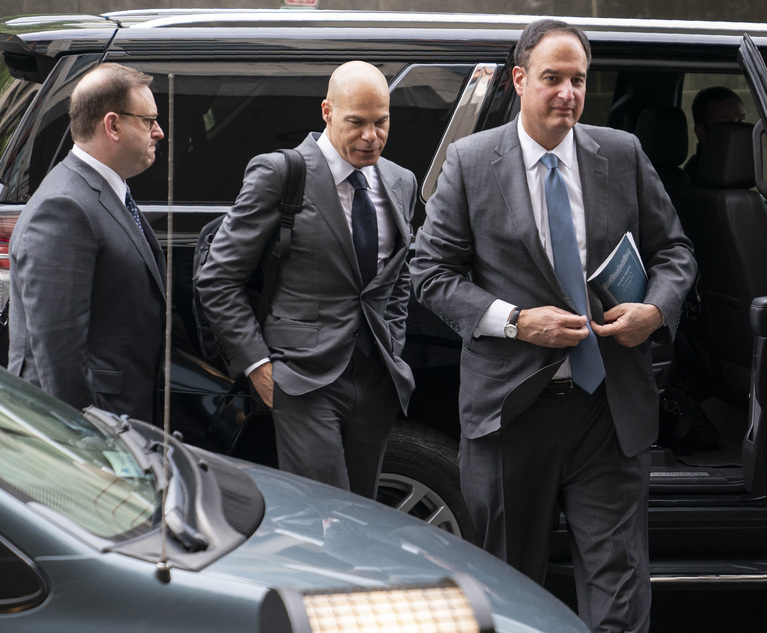
Perkins Coie Billing Records Emerge as Key Evidence in Ex-Partner's Trial | Law.com
Prosecutors have sought to use Michael Sussmann's own records in an attempt to connect his meeting with the FBI about Trump-Russia allegations to the Clinton campaign.

bendog
Diamond Member
And there's no crime in spreading lies about Trump, but it is a crime to lie to the FBI. And as you probably noticed, Durham never even charged that the ACTUAL INFORMATION SUSSMAN PROVIDED TO BAKER WAS UNTRUE.... he came up with zilch.Wow, you are acting like a kid who didn't get what he wanted for Christmas.
Here's the problem with Durrrr-ham's case. He didn't charge Sussman with spreading lies about Trump. He charged him with lying about who he was working for. And the FBI was ALREADY investigating Trump and Alfa Bank, so he wasn't giving them anything they weren't already aware of.
It isn't when the FBI is ALREADY INVESTIGATING what you told them about, no.
So as the statute of limitations was running out, Durham filed the charge that Durham allegedly lied to Baker in an FBI meeting about who he was representing. Some evidence tended to prove that (including the prior email) but other evidence including Baker's own records and statements tended to show Sussman had not lied. So, as should happen in a criminal trial when the evidence is in conflict as to guilt, Sussman was acquitted.
And Durham looks a fool, and Barr and the Trumpmedia are scrambling to find ... something, anything.
But everyone who paid attention knows, there were steady media links by folks with ties to Hillary and Obama alleging links between Trump and Russia. THAT'S NOT ILLEGAL. It wasn't illegal for Trump to say Hillary should be in jail .... for all kinds supposed crimes. It should have been sedition for Trump to continue publishing false claims that the sitting president, Obama, wasn't an American .... but in America, presidents OTHER THAN TRUMP have a pair of balls, and don't get their panties in wads when other pols jam them up ... as he regularly jammed up anyone who offended his HUMONGOUSly fragile ego.
And Mueller's report showed the evidence of Russia helping Trump's campaign.
bendog
Diamond Member
YOU realize facts mean nothing to Angry Child and her "ilk." LOLSussmann billed about three hours that day, Sept. 19, 2016, to “work and communications regarding confidential project.” Prosecutors working for Special Counsel John Durham have used that billing record, which they showed the jury on Wednesday as they wrapped up their case, in an attempt to directly tie Sussmann’s meeting with the FBI’s then-general counsel, James Baker, to the Clinton campaign.
Sussmann’s defense team at Latham & Watkins has pointed out that the Sept. 19 billing entry does not mention the FBI or refer to a “meeting.” His lawyers have conceded that Sussmann, a cybersecurity and privacy attorney, did represent the Clinton campaign in attempting to push the allegations to the news media, but they have maintained that the meeting with Baker was based on Sussmann’s personal concern for national security and fear that the FBI would be caught “flat-footed” when an article about the claims was published in the press.
Sussmann’s defense, led by Latham partners Sean Berkowitz and Michael Bosworth, has produced its own billing records. One record shows that ahead of a prior meeting with the FBI in 2015 on an unrelated issue involving Joffe, Sussmann specifically referenced the FBI in the billing entry.
They also introduced a Perkins Coie expense report showing that Sussmann billed taxi fares from the day of his meeting with Baker to the law firm generally, and not a specific client. That expense report references a “meeting at FBI.”
Sussmann’s lawyers have argued that sharing the allegations with the FBI went against the interest of his client, the Clinton campaign, which Elias and former Clinton campaign manager Robby Mook testified was distrustful of the FBI. Elias and Mook each said they were unaware of the meeting with Baker.
Perkins Coie Billing Records Emerge as Key Evidence in Ex-Partner's Trial | Law.com
Prosecutors have sought to use Michael Sussmann's own records in an attempt to connect his meeting with the FBI about Trump-Russia allegations to the Clinton campaign.www.law.com


Faun
Diamond Member
- Nov 14, 2011
- 126,711
- 128,219
- 3,635
- Banned
- #688
Poor little lying *****. Here’s reality troll. Friend of Sussman’s daughter on the jury. Judge refused to remove her. Judge refused to allow relevant evidence to be introduced. Two jurors have come out and said that lying to the FBI is NO BIG DEAL. Funny how assholes like them and you are okay with lying as long as it’s a Dem. it’s not over yet fatso. Another trial coming. What a shame you’re a fat, ignorant, racist troll loser.
Which text? This one...?
“Jim — it’s Michael Sussmann. I have something time-sensitive (and sensitive) I need to discuss. Do you have availability for a short meeting tomorrow? I’m coming on my own — not on behalf of a client or company — want to help the Bureau. Thanks.”
Faun
Diamond Member
- Nov 14, 2011
- 126,711
- 128,219
- 3,635
- Banned
- #690
well, the clinton campaign’s russian agent still has a trial pending for lying to the fbi about his involvement with the campaigns russian hoax
You're lying again. He's indicted for lying about who he spoke with, not his involvement.
hahaa speaking with someone is being involvedYou're lying again. He's indicted for lying about who he spoke with, not his involvement.
the russian agent was trying to cover for the clinton campaign…and his conspiary to speed putin’s disinformation
clinton and the dnc also attempted to hide their ties to him, hence why they were fined by the FEC for illegally hiding their payments

Fort Fun Indiana
Diamond Member
- Mar 10, 2017
- 122,459
- 131,534
- 3,645
No, it isn't, and you will figure out eventually that this fantasy is going nowhere, like all of your other ones.What she did, her statement is jury nullification.
However, a statement from a juror immediately after the verdict fueled speculation of the impact of juror bias. According to the Washington Times’ Jeff Mordock, the juror reportedly said “I don’t think it should have been prosecuted. There are bigger things that affect the nation than a possible lie to the FBI.”
Sussmann Juror: “There are Bigger Things … Than a Possible Lie to the FBI”
The acquittal of Clinton campaign lawyer Michael Sussmann has been the subject of furious debate among politicians and pundits. Some have argued that the case collapsed from lack of evidence while …jonathanturley.org
she literally said lying to the fbi shouldn’t be prosecuted. Even though it’s against the law…that’s jury nullification.No, it isn't, and you will figure out eventually that this fantasy is going nowhere, like all of your other ones.
Fort Fun Indiana
Diamond Member
- Mar 10, 2017
- 122,459
- 131,534
- 3,645
Took twice as long as the Mueller investigation...couldn't even secure a conviction on a little "process crime", as our cult friends liked to call it to diminish it, when Flynn admitted guilt.Barr/Durham's witch hunt ends in disgrace. What a total disaster.
Their little hoax fairy couldn't even get a worthless little process crime conviction.
Where are the cackling, pointing, parading little peacocks, now?

Nostra
Diamond Member
- Oct 7, 2019
- 93,332
- 84,833
- 3,615
Must be why the defense fought to keep it out, huh?LOL
That text clears Sussmann of lying.
Moron.
Nostra
Diamond Member
- Oct 7, 2019
- 93,332
- 84,833
- 3,615
Right here is the lie you blithering idiot:Nostra posted this is the text...
Jim—it’s Michael Sussmann. I have something time-sensitive (and sensitive) I need to discuss. Do you have availability for a short meeting tomorrow? I’m coming on my own—not on behalf of a client or company—want to help the Bureau. Thanks.
... where's the lie?
I’m coming on my own—not on behalf of a client or company—
Nostra
Diamond Member
- Oct 7, 2019
- 93,332
- 84,833
- 3,615
Yep, he lied, or he should be disbarred for falsely billing Hitlery for hit time at the FBI and for the two thumb drives he gave them.I’m coming on my own—not on behalf of a client or company—want to help the Bureau.
Big fat lie. He billed Hillary for his time visiting the FBI.
Nostra
Diamond Member
- Oct 7, 2019
- 93,332
- 84,833
- 3,615
His billing logs show he billed her for the exact time he was at the FBI, and for two thumb drives that he gave the FBI.******* moron, he billed Hillary to meet with the FBI?? Where's your evidence of that?
You really are stupid, or completely ignorant of this topic....................or both. My money is on both.
lol @ you clowns arguing about proof and who did more wrongWhat was proven was she ok'd releasing dirt on Trump to the press. What was not proven was she asked Sussmann to collect that specific dirt.
My observation is: this whole "reveal" follows the typical pattern of what happens after an elitist politician gets caught doing something wrong.
Information is released so slowly that the frog never realizes it's boiling.
Similar threads

- Replies
- 13
- Views
- 184

- Replies
- 123
- Views
- 1K


- Replies
- 14
- Views
- 249


- Replies
- 18
- Views
- 292


New Topics
-
 Zone1 I'm just curious - Who do you think the anti-christ is, or will be??
- Started by LibertyWeeps
- Replies: 4
-
-
Obama-Appointed Judge Blocks Trump from Halting Immigration from ‘High-Risk Countries’
- Started by excalibur
- Replies: 5
-
 Interesting video about Australia's land renewal program.
- Started by Woodznutz
- Replies: 1
-

Latest Discussions
-
Shohei leads off with a home run and pitches 5 shutout innings. Ruth never did that.
- Latest: Oklahoma Journalist
-

-

