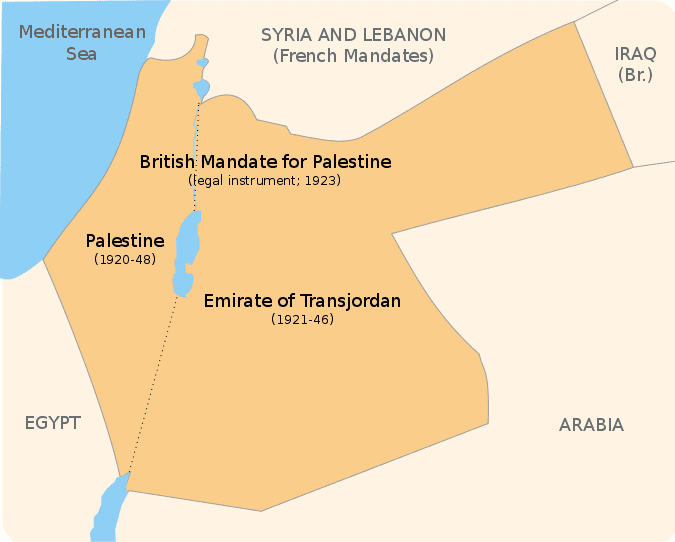
The proposition that Palestine is a state may seem strange to some. It
was not so strange to a U.S. district judge who had to decide the issue in
a 1953 case.81
A man named Kletter was born in Palestine in 1911, when
Palestine was under the control of the Ottoman Turks. As a boy, Kletter
accompanied his mother immigrating to the United States, where she
was naturalized in 1928, thereby conferring U.S. nationality not only on
herself but also on Kletter, then age 17. A few years later Kletter went
back to Palestine, where he was naturalized in 1935. But then he returned
to the United States and wanted privileges that would come with
U.S. nationality.82
Kletter claimed that he was still a U.S. national. He argued that Palestine
was not a state, and therefore that his 1935 naturalization there
was invalid. The U.S. district court disagreed. It said that Kletters naturalization
in Palestine was valid, thus he was no longer a U.S. national:
[N]aturalization in any foreign state . . . constitutes expatriation. The
contention of the plaintiff that Palestine, while under the League of Nations
mandate, was not a foreign state within the meaning of the statute
is wholly without merit.83
In support, the court said that the United
States in 1932 had taken the position that Palestine was a state: This the
Executive branch of the Government did in 1932, the court explained,
with respect to the operation of the most favored nations provision in
treaties of commerce.84
The court found a reference to the 1932 episode in the State Departments
digest of international law, where it is mentioned as
indicating that the United States considered that Palestine was a state.85
http://students.law.umich.edu/mjil/uploads/articles/v32n4-quigley.pdf