
Line array.Idk how it works now, but back in the day, they'd line the 100w amps into a P.A. type system.
Navigation
Install the app
How to install the app on iOS
Follow along with the video below to see how to install our site as a web app on your home screen.
Note: This feature may not be available in some browsers.
More options
Style variation
You are using an out of date browser. It may not display this or other websites correctly.
You should upgrade or use an alternative browser.
You should upgrade or use an alternative browser.
I'm tired of anemic guitar amps!
- Thread starter scruffy
- Start date

I know this was Marshall tube amps:
And tube Wurlitzer, too.

Wurlitzer? Or
Leslie?
My uncle had a Leslie cabinet.

The Duke
Diamond Member
- Jul 30, 2022
- 45,277
- 58,688
- 3,488
I'd have to call an expert that knows about that.Wurlitzer? Or
Leslie?
My uncle had a Leslie cabinet.

He'd know with 1 picture. I figure tube Wurlitzers were around back then.
It's tubes, whatever it is. Idk, can hear differences between transistor and tube.

Not a good thing if you want to save money.
Last edited:
- Thread starter
- #66

toobfreak
Tungsten/Glass Member
- Apr 29, 2017
- 102,915
- 110,221
- 3,615
It's tubes, whatever it is. Idk, can hear differences between transistor and tube.
Good point. Since the 1970s, there has been many attempts to try to force transistors to sound like tubes, probably beginning with the Audio Research Analog Module.
I think a few got closer like Krell with the KAS and KSA Series, but at tremendous cost.
But musicians hear the difference. Tubes are naturally musical. They are valves not switches. Transistors reign supreme with bass amps (below about 100-120 cycles), which is why I still use tube amps for midrange and treble and transistors for bass and sub-bass. Bass is much closer to a square wave and transistors like doing square waves.
It only makes sense--- if musicians are PLAYING with tubes and RECORDING with tubes, why would I not want to use tubes during playback?

- Thread starter
- #68
Transistors reign supreme with bass amps (below about 100-120 cycles)
That's because you need 300 tube watts for bass, and 300 tube watts weigh about 300 pounds!

In my bass rig I use a 1u 2000 watt class D amp that only weighs 11 pounds.
Also a 1u tube preamp I built myself. The whole thing goes into a 2u rack bag over my shoulder. I arrive with that in one hand and the bass in the other.
For outdoor gigs I use either one or two Mesa Diesel Thiele cabs with EVM-15L's, and for clubs a 12" GR bass cube.
I'm too old to be hauling SVT's.
My other favorite bass amp is an Acoustic 370. The speaker has a pair of folded 18" Cerwin-Vega's, they're loud as hell. Doesn't fit in a Jeep though. "Barely" fits in a Tahoe.
Bass needs watts and big speakers, there's no alternative. I've tried every small speaker there is, nothing less than 12" works, and a 12 is mainly to get some midrange out to the back of the room. There's a few 12's that work, just a few though. Most of them fall into the category of what I call "anemic".
Bass is bass, you want low frequencies. Low B on a 5 string is 31 Hz, and it travels through the ground, not in the air. You need speakers strong enough to move a big pile of dirt or a slab of concrete. The little 4x10's are no good, the first time I tried an SWR Goliath I blew a cone clear across the room.
The SVT cabs only work because they don't do low frequencies. Resonant frequency in the 8x10 is about 200 Hz. In the old rock bands the drummer's kick provided the thump for the bass, and if they weren't mixed right the bass ends up sounding like a baritone guitar.
Last edited:
toobfreak
Tungsten/Glass Member
- Apr 29, 2017
- 102,915
- 110,221
- 3,615
Well, its more than that, tubes in general just don't handle low frequencies as well as does a transistor.That's because you need 300 tube watts for bass, and 300 tube watts weigh about 300 pounds!
For bass in my music system, I run three bass amps: a pair of big QSC bipolar amps bridged as mono amps for each mid-bass, and a third class-D amp in my subwoofer down to about 10 cycles. I'm essentially pretty flat from about 16kHz down to about 10-12 Hz, for 10 octave frequency response.In my bass rig I use a 1u 2000 watt class D amp that only weighs 11 pounds.
I'm running about 3,000 watts total, with 18" mid-bass drivers in folded quasi transmission line enclosures and the sub has a special 15" long-throw linear driver with about a 50 pound magnet structure.Bass needs watts and big speakers, there's no alternative.
I almost bought a pair of those years ago myself.The speaker has a pair of folded 18" Cerwin-Vega's, they're loud as hell.
Years ago, we did research using 5.5" drivers for bass. We tried running them in pairs or 4X per channel and it actually worked well, but power handling was limited. But the smaller cones really stepped up the response speed.I've tried every small speaker there is, nothing less than 12" works, and a 12 is mainly to get some midrange out to the back of the room.
31 Hz is nothing. Where it gets crazy is when you start pounding out bass below 20 cycles. You can feel it go through your chest, through your body. A few times, I thought the bass actually affected my heartbeat.Bass is bass, you want low frequencies. Low B on a 5 string is 31 Hz, and it travels through the ground, not in the air. You need speakers strong enough to move a big pile of dirt or a slab of concrete. The little 4x10's are no good, the first time I tried an SWR Goliath I blew a cone clear across the room.
But as you know, bass is everything. Bass energy creates the foundation for music, it provides the visceral impact and punctuation which gives dynamics and life to the music.
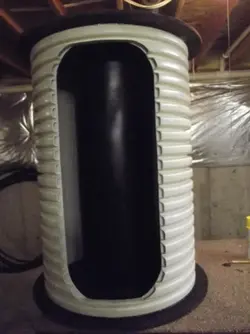
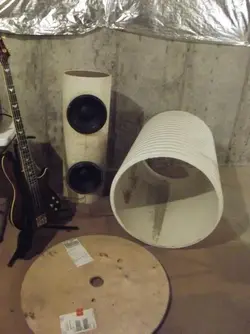
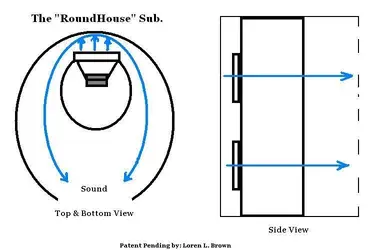
I'm almost ashamed to show my bass cabinet build. On my phone so just a short discription. It's two eminence 10" drivers (can't recall watts) in a folded horn design of my own. It's way more bass than sub.Well, its more than that, tubes in general just don't handle low frequencies as well as does a transistor.
For bass in my music system, I run three bass amps: a pair of big QSC bipolar amps bridged as mono amps for each mid-bass, and a third class-D amp in my subwoofer down to about 10 cycles. I'm essentially pretty flat from about 16kHz down to about 10-12 Hz, for 10 octave frequency response.
View attachment 1149174
I'm running about 3,000 watts total, with 18" mid-bass drivers in folded quasi transmission line enclosures and the sub has a special 15" long-throw linear driver with about a 50 pound magnet structure.
I almost bought a pair of those years ago myself.
View attachment 1149175
Years ago, we did research using 5.5" drivers for bass. We tried running them in pairs or 4X per channel and it actually worked well, but power handling was limited. But the smaller cones really stepped up the response speed.
31 Hz is nothing. I consider that almost lower mid-bass. Where it gets crazy is when you start pound out bass below 20 cycles. You can feel it go through your chest, through your body. A few times, I thought the bass actually affected my heartbeat.
But as you know, bass is everything. Bass energy creates the foundation for music, it provides the visceral impact and punctuation which gives dynamics and life to the music.
Playback recordings of stand up accoustic basses sound awesome (live even) everything else is meh.
Edit: I also use a Qsc amp. I tried to model it on horn resp. I couldn't figure it out. The idea was to build a water resistant cabinet for jamming outdoors.
Attachments

Last edited:
- Thread starter
- #71
So - ultralinear.All fantastic stuff.
Sorry I didn't see your comments sooner.
Because I have two twins, I would like to get one reworked to as close to a blackface as I can get it. Then, when I'm happy with the sound of that one, try some of the mods and maybe even some ideas of my own on the second one.
In a 6L6 or KT88, if you connect the screen grid directly to the plate you're operating in "triode" mode, the screen voltage varies along with the plate voltage and they basically function as one unified element inside the tube
In a blackface Twin, the opposite occurs, the screen voltage is slightly lower than the plate and it never varies, stays fixed while the signals change.
Ultralinear is halfway between the two, the screen voltage changes but not as much. Sometimes back in the 50's they figured out that 43% is about the optimal. This is in phase with the plate so it acts like a form of negative feedback, linearizes the current through the power tubes. That's why ultralinear is clean, it doesn't really "break up" like a blackface does.
The best way to break up a silverface is to overdrive the PI - and even with a master volume you're starting at full power when you do that. I greatly prefer Marshall's method (which he stole from Fender's Bassman), you put a cathode follower directly in front of the PI and overdrive it instead of the PI. Then you can put a tone stack (and master volume) between the cathode follower and the PI and adjust the flavor of your grit.
The Marshall Major schematic I showed earlier doesn't have a cathode follower, it's just about the only Marshall amp that doesn't have one. Because, the Major is ultralinear, therefore loud and clean.
The Major is basically a Williamson design that Jim stole from the RCA tube manual. The NFB doesn't go to the PI, it goes to the gain stage before it. This puts the entire amp into a closed negative feedback loop.
So in my design, I'm running ultralinear KT88's like a Major, but with a long tailed pair PI like a Plexi, with a cathode follower in front of it. So my guitar "thump" is being amplified loud and clean all the way to the power limit.
Which is the same configuration I suggested for the silverface Twin mod, take out the normal channel (no one uses it anyway) and replace it with a cathode follower that sits after the second gain stage but before the reverb recovery. (In the ultralinear TR schematic you'd put it after V2B, between the coupling cap and the reverb resistor). Then boost the gain of the first two preamp stages by using 220k plate resistors and 2.2k cathode resistors. You can use these same part values in the first half of the cathode follower, you'll get a gain of about 40 meaning you can drive the PI with uo to 80 volts p-p. This way you can get Black Sabbath sounds out of your ultralinear Twin. If you want clean again, just turn down the volume control (the preamp volume, that is).
This works great with the reverb. Since the reverb comes after the grit, you get reverberated grit instead of gritty reverb. If you were doing this same thing with pedals you'd have a fuzz box feeding a reverb pedal, going into a loud clean amp.
toobfreak
Tungsten/Glass Member
- Apr 29, 2017
- 102,915
- 110,221
- 3,615
I'm almost ashamed to show my bass cabinet build. On my phone so just a short discription. It's two eminence 10" drivers (can't recall watts) in a folded horn design of my own. It's way more bass than sub. Playback recordings of stand up accoustic basses sound awesome (live even) everything else is meh.
I guess the round cabinet is to avoid peak resonances.
I'm partial to folded horns and transmission lines.
The value of a horn driver cannot be overstated, they are just so damned efficient.
Here are a few (home) systems using a folded horn bass enclosure.
Holly shit that's a lot of info! Bookmarked.So - ultralinear.
In a 6L6 or KT88, if you connect the screen grid directly to the plate you're operating in "triode" mode, the screen voltage varies along with the plate voltage and they basically function as one unified element inside the tube
In a blackface Twin, the opposite occurs, the screen voltage is slightly lower than the plate and it never varies, stays fixed while the signals change.
Ultralinear is halfway between the two, the screen voltage changes but not as much. Sometimes back in the 50's they figured out that 43% is about the optimal. This is in phase with the plate so it acts like a form of negative feedback, linearizes the current through the power tubes. That's why ultralinear is clean, it doesn't really "break up" like a blackface does.
The best way to break up a silverface is to overdrive the PI - and even with a master volume you're starting at full power when you do that. I greatly prefer Marshall's method (which he stole from Fender's Bassman), you put a cathode follower directly in front of the PI and overdrive it instead of the PI. Then you can put a tone stack (and master volume) between the cathode follower and the PI and adjust the flavor of your grit.
The Marshall Major schematic I showed earlier doesn't have a cathode follower, it's just about the only Marshall amp that doesn't have one. Because, the Major is ultralinear, therefore loud and clean.
The Major is basically a Williamson design that Jim stole from the RCA tube manual. The NFB doesn't go to the PI, it goes to the gain stage before it. This puts the entire amp into a closed negative feedback loop.
So in my design, I'm running ultralinear KT88's like a Major, but with a long tailed pair PI like a Plexi, with a cathode follower in front of it. So my guitar "thump" is being amplified loud and clean all the way to the power limit.
Which is the same configuration I suggested for the silverface Twin mod, take out the normal channel (no one uses it anyway) and replace it with a cathode follower that sits after the second gain stage but before the reverb recovery. (In the ultralinear TR schematic you'd put it after V2B, between the coupling cap and the reverb resistor). Then boost the gain of the first two preamp stages by using 220k plate resistors and 2.2k cathode resistors. You can use these same part values in the first half of the cathode follower, you'll get a gain of about 40 meaning you can drive the PI with uo to 80 volts p-p. This way you can get Black Sabbath sounds out of your ultralinear Twin. If you want clean again, just turn down the volume control (the preamp volume, that is).
This works great with the reverb. Since the reverb comes after the grit, you get reverberated grit instead of gritty reverb. If you were doing this same thing with pedals you'd have a fuzz box feeding a reverb pedal, going into a loud clean amp.
Never in my life have I had that kind of time, talent or money at the same time. Beautiful.I guess the round cabinet is to avoid peak resonances.
I'm partial to folded horns and transmission lines.
The value of a horn driver cannot be overstated, they are just so damned efficient.
Here are a few (home) systems using a folded horn bass enclosure.
View attachment 1149182
View attachment 1149183
View attachment 1149184
View attachment 1149185View attachment 1149186
View attachment 1149187
toobfreak
Tungsten/Glass Member
- Apr 29, 2017
- 102,915
- 110,221
- 3,615
Ultralinear is halfway between the two, the screen voltage changes but not as much. Sometimes back in the 50's they figured out that 43% is about the optimal. This is in phase with the plate so it acts like a form of negative feedback, linearizes the current through the power tubes.
Well, that really is the thing, isn't it, Scruff? What better way for a tube to operate as a pure voltage device than if it operates with a constant current through it at all times.
toobfreak If you could share your setup for your signal sweep/ freq response, recording, (shown in your post) that would be awesome.
I do already have a measurement mic in my storage somewhere.
Edit. I just found "true rta" software. I guess it's good enough for my limited needs. Looks good anyway.
I do already have a measurement mic in my storage somewhere.
Edit. I just found "true rta" software. I guess it's good enough for my limited needs. Looks good anyway.
Last edited:
toobfreak
Tungsten/Glass Member
- Apr 29, 2017
- 102,915
- 110,221
- 3,615
If you could share your setup for your signal sweep/ freq response, recording, (shown in your post) that would be awesome.
Well, I have to be careful what I say or show here because I don't want to give away any proprietary information nor show anything that might be recognized by someone!
That said, it is hard to show everything because I don't have good pictures of everything. Worse, I have stuff spread around: I have an equipment rack next to my chair (mostly for control), another rack full of yet more stuff, and a bunch of speakers.
Suffice it to say that I use seven power amps, a stereo tube amp for the treble, a pair of tube monoblocks for the midrange, another pair of bridged stereo solid state amps for the mid-bass, and a monoblock Class-D amp for the subsonics into five speaker cabinets.
Almost all of the crossover is done externally (not at or within the speakers) using a pair of electronic steep-slope crossovers (DOD and dbx). Here is a simplified block diagram comparing it to how a traditional stereo system is set up:
And here is a better plot of my bass response down to 10Hz (limit of what I can generate and measure (black line):
It takes 17 steps to turn everything on and another 20 minutes to warm up and stabilize (I counted). Most of the stuff is switched through a variac to bring the power up on each amplifier gradually.

I meant what measuring software, mic and interface do you recommend or use. It looks like yours is more plotted than a continuous sweep.Well, I have to be careful what I say or show here because I don't want to give away any proprietary information nor show anything that might be recognized by someone!
That said, it is hard to show everything because I don't have good pictures of everything. Worse, I have stuff spread around: I have an equipment rack next to my chair (mostly for control), another rack full of yet more stuff, and a bunch of speakers.
Suffice it to say that I use seven power amps, a stereo tube amp for the treble, a pair of tube monoblocks for the midrange, another pair of bridged stereo solid state amps for the mid-bass, and a monoblock Class-D amp for the subsonics into five speaker cabinets.
Almost all of the crossover is done externally (not at or within the speakers) using a pair of electronic steep-slope crossovers (DOD and dbx). Here is a simplified block diagram comparing it to how a traditional stereo system is set up:
View attachment 1149191
And here is a better plot of my bass response down to 10Hz (limit of what I can generate and measure (black line):
View attachment 1149192
It takes 17 steps to turn everything on and another 20 minutes to warm up and stabilize (I counted). Most of the stuff is switched through a variac to bring the power up on each amplifier gradually.
toobfreak
Tungsten/Glass Member
- Apr 29, 2017
- 102,915
- 110,221
- 3,615
I meant what measuring software, mic and interface do you recommend or use. It looks like yours is more plotted than a continuous sweep.
None. Everything I showed you is from ten years ago or more. I use no measuring software, I drew the diagrams you see myself, designed for my needs, I used an Ivie pro audio analyzer to measure the levels, and I mostly used a Sony test tone generator to create the individual measured frequencies.
And yes, it is plotted because it involved both the individual response patterns of individual amps and speakers as well as some of them being combined, so that I could see the contributions and dynamics of how they combined and interacted with the room.
That explains the plotting points!None. Everything I showed you is from ten years ago or more. I use no measuring software, I drew the diagrams you see myself, designed for my needs, I used an Ivie pro audio analyzer to measure the levels, and I mostly used a Sony test tone generator to create the individual measured frequencies.
And yes, it is plotted because it involved both the individual response patterns of individual amps and speakers as well as some of them being combined, so that I could see the contributions and dynamics of how they combined and interacted with the room.

Similar threads


- Replies
- 2
- Views
- 169


- Replies
- 14
- Views
- 435


New Topics
-
-
 Supreme Court Removes Temporary Protections for Haitian, Syrian Immigrants.
- Started by odanny
- Replies: 9
-

-
 Ewe Boll Has Released His Film ‘Citizen Vigilante’ for 48 Hours Via X Platform
- Started by DonGlock26
- Replies: 1
-

Latest Discussions
-

-
-
7.1 Magnitude Earthquake Strikes Venezuela, Thousands Feared Dead
- Latest: TemplarKormac
