Judaism began as the result of the beliefs of a people developed over hundreds and hundreds of years..
Christianity began as the result of Peter, Paul and others placing Jesus as the core example of their religion as it splintered off from Judaism.
Islam began when an illiterate warlord whose livelihood involved killing people and taking what was their sought a way to bind his warriors more closely to him by investing himself with the charade of divinity, so he had some scribes from the people he conquered cobble together self-serving pseudo-religion.
These children who ball up their little fists and scream "They're all the same" are laughably ignorant.
The version I heard was, to paraphrase;
Muhammad married a widow older than him, a former business associate IIRC.
Yes a gigolo of sorts.
This was in the general region of Mecca, Saudi Arabia today.
Took to using his free time (had much of such) meditating in a nearby cave, hoping for spiritual enlightenment. Reportedly was hoping to "find a religion that would unite the feuding Arab tribes and give common identity, such as he noticed amoung the Byzantine Christians. This is about the 609-32 AD.
An "angel of the Lord" appeared to him and began to dictate what would become the Koran. Muhammad found a scribe to write it down.
Earliest version of the Quran preached peaceful, turn the other cheek sort of message, similar to that of Jesus.
As he and his followers became subject to growing public abuse and insults, the Lord's angel then gave "permission" to fight in self-defense.
Within a few years time, the message had morphed into the need to convert the whole world, all of humankind to the wisdom of Islam. This set off the next 1400 years of conquests and conversions, still ongoing and not completed yet.
...
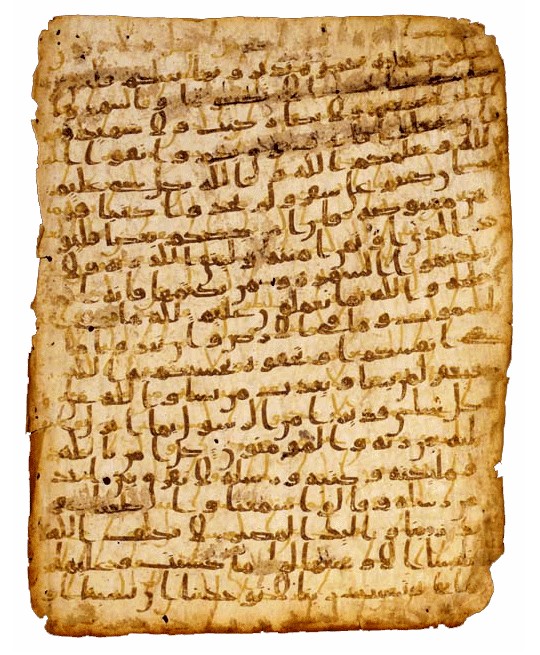
The Quran is the central
religious text of
Islam, which
Muslims believe to be a
revelation from
God (
Arabic: الله,
Allah).The Quran is divided into chapters (
surah), which are then divided into verses (
ayah). Muslims believe the Quran was verbally revealed by Allah to
Muhammad through the angel
Jibril (
Gabriel), gradually over a period of approximately 23 years, starting in late 609, when Muhammad was 39, and concluding in 632, the year of his death. Muslims regard the Quran as the most important miracle of Muhammad, a proof of his prophethood, and the culmination of a series of divine messages that started with the messages revealed to
Adam and ended with Muhammad. It is widely regarded as the finest work in
classical Arabic literature.
...

en.wikipedia.org
...
There are two other text as part of the scriptures/dogma of Islam;
...
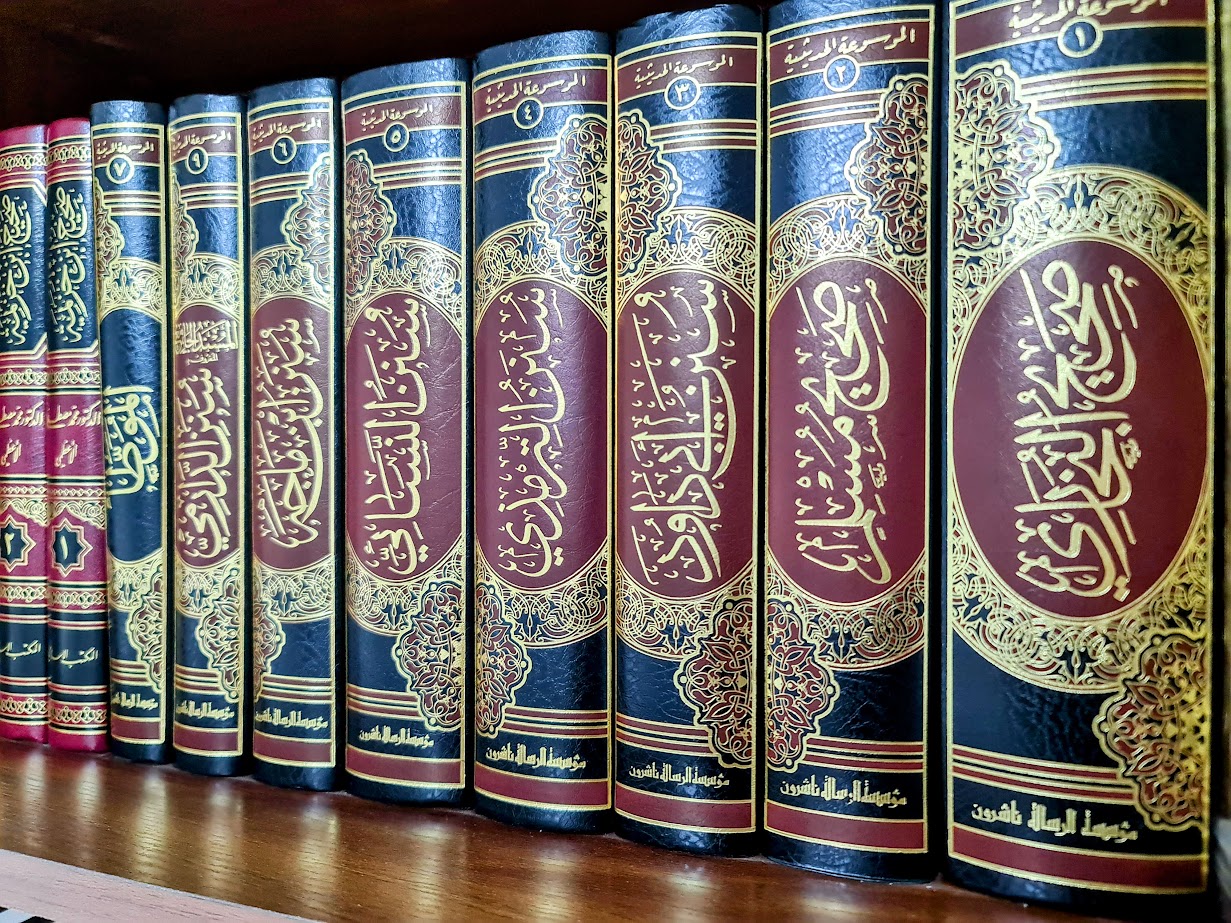
Sunnah is the body of traditions and practices of the
Islamic prophet
Muhammad that constitute a model for
Muslims to follow. For Muslims, the sunnah is what all the Muslims of Muhammad's time supposedly saw, followed, and passed on to the next generations. However, what constitutes the Sunnah, and its interpretation, depends significantly on the specific
Islamic sect and school of thought.
Sunnis rely on six major canonical
hadith collections to document the Sunnah, known as
Kutub al-Sittah. For
Shias, the sunnah is generally documented in
Kutub al-'Arba'a, which give preference to hadiths attributed to the Prophet's family (
Ahl al-Bayt) and the
Twelve Imams. For
Ibadis, the sunnah is documented in the two hadith collections
Jami Sahih and
Tartib al-Musnad.
Sufis hold that Muhammad transmitted his sunnah, including his spiritual values, "through a series of Sufi teachers"
en.wikipedia.org
...
Hadith (
Arabic: حديث) is the Arabic word for a 'report' or an 'account [of an event]' and refers to the Islamic
oral tradition of
anecdotes containing the purported words, actions, and the silent approvals of the Islamic prophet
Muhammad or his immediate circle (
companions in
Sunni Islam,
Ahl al-Bayt in
Shia).
en.wikipedia.org