Where are the memorials for the British soldiers that fought in the War for Independence?
In Britain.
Well, there your are...!
You think you made a point but you didn't.
Nobody from the south is heading to NYC to tear down the Bull, or to DC to unseat Lincoln, or whining about how those statues represent OPPRESSION to them.
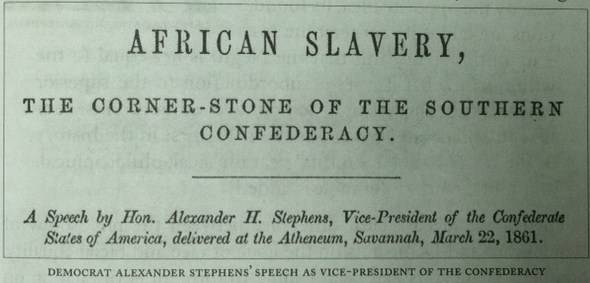
Do you maintain that every utterance of every politician accurately sums up not only the truth of every situation, but the viewpoint of the masses?
A tyrannical government used the slave issue to exert illegal authority over the states. Just as a tyrannical government today uses environmental and homo issues to exert illegal authority over the states.
Five myths about why the South seceded
1. The South seceded over states’ rights.
Confederate states did claim the right to secede, but no state claimed to be seceding for that right. In fact, Confederates opposed states’ rights — that is, the right of Northern states not to support slavery.
On Dec. 24,
1860, delegates at South Carolina’s secession convention adopted a “Declaration of the Immediate Causes Which Induce and Justify the Secession of South Carolina from the Federal Union.” It noted
“an increasing hostility on the part of the non-slaveholding States to the institution of slavery” and protested that Northern states had
failed to “fulfill their constitutional obligations” by interfering with the return of fugitive slaves to bondage. Slavery, not states’ rights, birthed the Civil War.
South Carolina was further upset that New York no longer allowed “slavery transit.”
2. Secession was about tariffs and taxes.
During the nadir of post-civil-war race relations — the terrible years after 1890 when town after town across the North became all-white
“sundown towns” and
state after state across the South prevented African Americans from voting — “anything but slavery” explanations of the Civil War gained traction.
At the infamous Secession Ball in South Carolina, hosted in December by the Sons of Confederate Veterans, “the main reasons for secession were portrayed as high tariffs and Northern states using Southern tax money to build their own infrastructure,”
The Washington Post reported.
These explanations are flatly wrong. High tariffs had prompted the Nullification Controversy in 1831-33, when, after South Carolina demanded the right to nullify federal laws or secede in protest,
President Andrew Jackson threatened force. No state joined the movement, and South Carolina backed down. Tariffs were not an issue in 1860, and Southern states said nothing about them. Why would they? Southerners had written the tariff of 1857, under which the nation was functioning.
Its rates were lower than at any point since 1816.
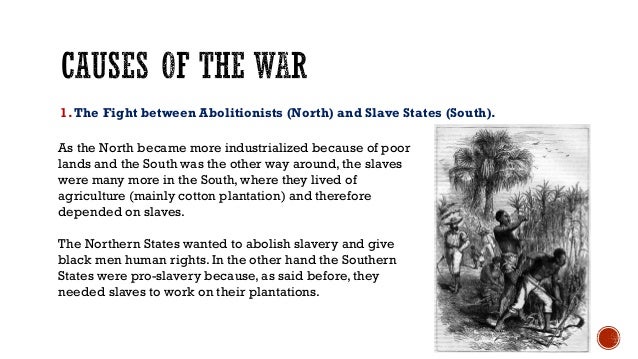
3. Most white Southerners didn’t own slaves, so they wouldn’t secede for slavery.
....However, two ideological factors caused most Southern whites, including those who were not slave-owners, to defend slavery.
First, Americans are wondrous optimists, looking to the upper class and expecting to join it someday. In 1860, many subsistence farmers aspired to become large slave-owners. So poor white Southerners supported slavery then, just as many low-income people support the extension of George W. Bush’s tax cuts for the wealthy now.
Second and more important, belief in white supremacy provided a rationale for slavery
4. Abraham Lincoln went to war to end slavery.
Since the Civil War did end slavery, many Americans think abolition was the Union’s goal. But the North initially went to war to hold the nation together.
Abolition came later.
5. The South couldn’t have made it long as a slave society.
Slavery was hardly on its last legs in 1860. That year, the South produced almost 75 percent of all U.S. exports. Slaves were worth more than all the manufacturing companies and railroads in the nation. No elite class in history has ever given up such an immense interest voluntarily. Moreover, Confederates eyed territorial expansion into Mexico and Cuba. Short of war, who would have stopped them — or forced them to abandon slavery?
To claim that slavery would have ended of its own accord by the mid-20th century is impossible to disprove but difficult to accept.
Five myths about why the South seceded