Eisenhower.s death camps in Germany

Europe faced a famine after the war; limited resources were prioritized for Nazi victims over German soldiers, as they should have been. They weren't 'death camps', and in any case German civilians were fine with prisoners being starved to death while working in their factories, no protests from German workers, so no problem.
Well ,according to all the Krauts , they knew NOTHING. Just "Following Orders".
 
Average Germans knew something, but not the full horror
I have known Germans who were alive at that time one a lady who lived near me and married a British soldier then came to live in England, i was interested in hearing her story about life in Germany at that time, she was from Hamburg, as a girl she was in the BDM so we are talking indoctrination, i asked her about SS soldiers in particular she told me she had known some but just saw them as handsome young men like any young girl would have done, i don't know how much she would have known about the crimes but i believe many Germans knew something, when Soldiers came home on leave they must have talked to their families about what they had done or seen especially in the East, when my Dads army unit took part in the liberation of Bergen Belsen he told me he could smell the place before they arrived at the gates, i believe the population of Bergen was only a few KM away, they would have known, many didn't want to know and looked away, but its a mixed picture
 
The smell would give it away.

This was the 1940s in Europe.

Tell me, do you have any concept of what large stockyards combined with large slaughtering yards and rendering plants smells like? Oh, such locations are pretty much gone in the modern era, but I am old enough to remember such smells. Passing through entire valleys in Japan where the only thing you can smell is the stink from tens of thousands of pigs, as well as the slaughterhouses and rendering yards.

Or similar smells in many US cities even into the 1970s and early 1980s. Even 50 years ago, much of the US was quite fragrant due to things like stockyards, butchering plants, rendering plants, even from the process of preparing timber for use.

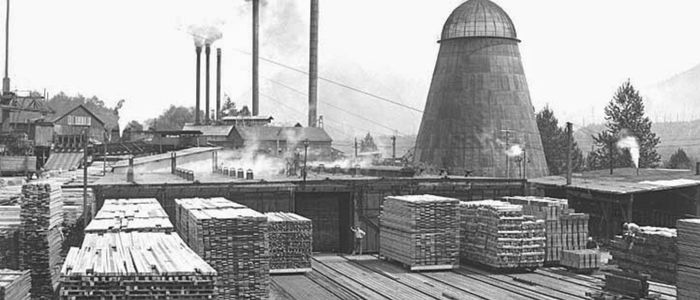
One thing I often shake my head about is how things that I grew up knowing are now completely foreign to those younger than I am. Like Timber Kilns.

Lumber-Business.jpg


Now to a great many over 60, kilns like that were a common sight, especially in California, Oregon, and Washington. And many can still be seen to this day, abandoned as they have not been used for over half a century. But that was a timber kiln, where they would roast lumber in order to help dry it out quickly before it was sent off to the lumberyard.

And good god almighty, when they were in operation they absolutely smelled to high heavens! And it was a smell that all of us that lived in "Timber Country" were more than familiar with. There are a great many areas in California, Oregon, and Idaho that for me have a childhood memory of the stinks associated with them.

And the stink of Chicago was legendary at that time. Dozens of square miles of stockyards, slaughterhouses, butcher shops, meat processing plants, and rendering plants.
 
This was the 1940s in Europe.

Tell me, do you have any concept of what large stockyards combined with large slaughtering yards and rendering plants smells like? Oh, such locations are pretty much gone in the modern era, but I am old enough to remember such smells. Passing through entire valleys in Japan where the only thing you can smell is the stink from tens of thousands of pigs, as well as the slaughterhouses and rendering yards.

Or similar smells in many US cities even into the 1970s and early 1980s. Even 50 years ago, much of the US was quite fragrant due to things like stockyards, butchering plants, rendering plants, even from the process of preparing timber for use.

One thing I often shake my head about is how things that I grew up knowing are now completely foreign to those younger than I am. Like Timber Kilns.

Lumber-Business.jpg


Now to a great many over 60, kilns like that were a common sight, especially in California, Oregon, and Washington. And many can still be seen to this day, abandoned as they have not been used for over half a century. But that was a timber kiln, where they would roast lumber in order to help dry it out quickly before it was sent off to the lumberyard.

And good god almighty, when they were in operation they absolutely smelled to high heavens! And it was a smell that all of us that lived in "Timber Country" were more than familiar with. There are a great many areas in California, Oregon, and Idaho that for me have a childhood memory of the stinks associated with them.

And the stink of Chicago was legendary at that time. Dozens of square miles of stockyards, slaughterhouses, butcher shops, meat processing plants, and rendering plants.
When i was growing up we had a slaughter house in the town i hated going anywhere near it the stench was appalling, but i suspect the stench my Dad experienced on the approach to Bergen Belsen was not quite like that it would have been rotting flesh and burning flesh and garbage.
 
Sorry its going to be a long one, but I watch documentaries on the Second World War often. Never stopping the learning process.

I used to believe that most knew as well but I've come to believe its far more complicated than that unfortunately, some far more guilty than others. We'd like to have an easy explanation and lay collective blame but it's very fuzzy in many cases. Also, there was little poor farming families could do regardless. I'm not excusing, I'd like to think I would join the Resistance if I could. Much easier to say than do, especially if one is a 60 year old. It was the role of Western militaries to fight and win.

The camps were primarily hidden from the local population unless they lived nearby and then they would only really know about the atrocities when they saw men, women and children marched out to their deaths in a field or something. In other cases they could smell the strong, unusual smell from the chimney soot. Still in other cases, the local population helped round up Jewish people. Did they know they were sending them to their deaths? I would think they would suspect that.

Those who did know and didn't find a way to spread the word will have to pay for their sins. G-d will decide who was on which side of the ledger, there were plenty who fell on either side.

These camps were situated hundreds of miles from civilization. Guarded from peering eyes even if you did wander nearby. When those who lived close by knew and/or suspected, far more didn't. Even those who did suspect were living in the boonies. Places that didn't even have telephones or running This isn't to excuse it, but not unlike people today who live in big cities and don't understand the poisoning of some former manufacturing and industrial communities in rural towns, or don't see a problem with illegal immigration (until they were sent by bus up north).

There were multiple instances in which even Jews themselves, the prime objective of the Final Solution who didn't believe the stories they were being told, as confirmed when two men escaped Auschwitz I believe and made their way to Hungary. The Hungarian Jewish community at first thought the stories couldn't be true, they were skeptical at first. The head of the Jewish congress there was murdered in Israel in the 50s for not believing and doing enough to save the Jews. People were enraged.

This man foolishly tried to make a backroom deal with the Germans to try and save some, but he was slow to publish the whistleblower escapees accounts of what happened there. Finally BBC read the report and ran the story and the U.S expressed condemnation .

People also shouldnt forget that the U.S, Canada and others rejected boats of Jews, many eventually captured again and sent to their deaths, that is highly offensive to me and does make my blood boil. This man saved I think 1500 people while 10s of thousands were murdered due to his delays and negotiating when he should have encouraged people to leave before the nazis starting sending them on trains He was a controversial figure and despised by many, still praised in other corners for those 1500 who lived.

We look back and take for granted that we know the depths of their evil. At that time no one could expect these radical, industrialized murder, it was incomprehensible. Who would do this to human beings?

This war and its evils have been an interest of mine since High School. We should educate ourselves as much as possible. Including finding some glimmers of hope in humanity to those who risked their lives or even lost it by not collaborating.

Courage is in short supply today, which does worry me greatly.
We can endlessly debate the morality in all of that until the cows come home. But the USA was exercising its immigration laws in 1939 and had diplomatic relations with both Germany and Japan. At the time those Jews seeking asylum were considered to be economic refugees which was not sufficient criteria for asylum status. So their request for asylum was rejected.

Did we turn a deaf eye and ear to what was happening in Germany? I don't know. It is possible as FDR at that time was not at all interested in involving the USA in war.

I don't know how much our government or Canada's government knew about what was happening to the Jews in Germand and Poland et al once Germany declared war on us. I do believe accounts of American soldiers who were horrified to see the conditions and carnage in the "final solution.'

I can't condone starvation of German prisoners in Allied custody but history does report it happened. Conditions in prison of war camps managed by the Germans were no better. Food was scarce for everybody in war ravaged Germany, but that doesn't justify the behavior by either.

My parents both worked at a POW camp housing German prisoners here in New Mexico. Those prisoners were treated very well.
 
Last edited:
The Confederacy's civilians were starving at the time. Andersonville wasn't noticeably worse than some of the Union's POW camps.

Like Camp Douglas. Which had conditions that were rather similar, resulting in a 17% death rate of those interned there. And over 4,000 Confederates were in a mass grave nearby.

There was nothing really unusual at Andersonville other than there were no permanent buildings for those imprisoned there. And there are ample records that showed Captain Wirz was constantly "pestering" the CSA for more resources, food, and medical supplies to take better care of the men there.

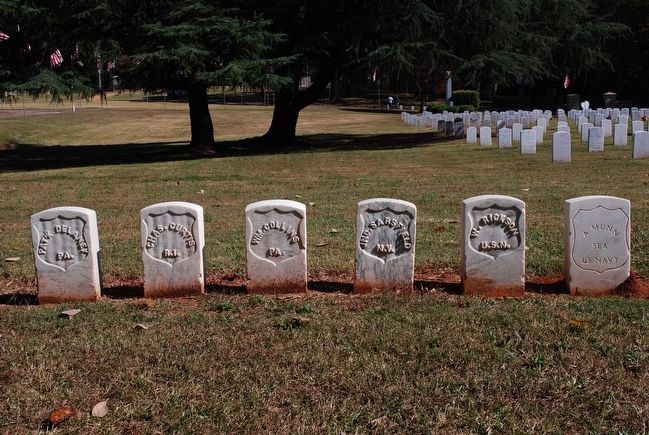
And ultimately, much of the horror was due to US prisoners themselves. The "Andersonville Raiders" in particular. A gang of several dozen POWs that terrorized other inmates. And after petitioning Wirz, some of the inmates were given permission to arm themselves with clubs and called themselves the "Regulators" and worked together to put an end to their attacks.

Even resulting in something still recognized under the Laws of Land Warfare even to this day. Once captured, a Court Martial was organized, with the panel judging the men was assembled from newly arrived inmates. And in the end, most of them were flogged by the other inmates as punishment, the six ringleaders were hanged.

Photo326282.jpg


Where they are buried separate from all the other graves in the cemetery. To show their disgrace by not putting them with the bodies of those they had terrorized.


Back in 2005 I specifically took a weekend trip so I could visit Andersonville. And something I encourage anybody that has a chance and goes to Georgia to do. It was a very sobering site to visit, and it struck me how there were no kids running around screaming and playing, even over a hundred years later those who visited were all somber and contemplative.
 
I recommend two books on this subject:

After the Reich: The Brutal History of the Allied Occupation, by Giles MacDonogh.

Orderly and Humane: The Expulsion of the Germans after the Second World War, by R. M. Douglas.

These books do not sugar-coat the many and substantial brutal excesses that occurred during the Allied occupation after the war, but they correct the extreme picture painted by James Bacque in his book Other Losses: An Investigation into the Mass Deaths of German Prisoneers at the Hands of the French and Americans after World War II.

 
I recommend two books on this subject:

After the Reich: The Brutal History of the Allied Occupation, by Giles MacDonogh.

Orderly and Humane: The Expulsion of the Germans after the Second World War, by R. M. Douglas.

These books do not sugar-coat the many and substantial brutal excesses that occurred during the Allied occupation after the war, but they correct the extreme picture painted by James Bacque in his book Other Losses: An Investigation into the Mass Deaths of German Prisoneers at the Hands of the French and Americans after World War II.

sad facts
 
Back
Top Bottom