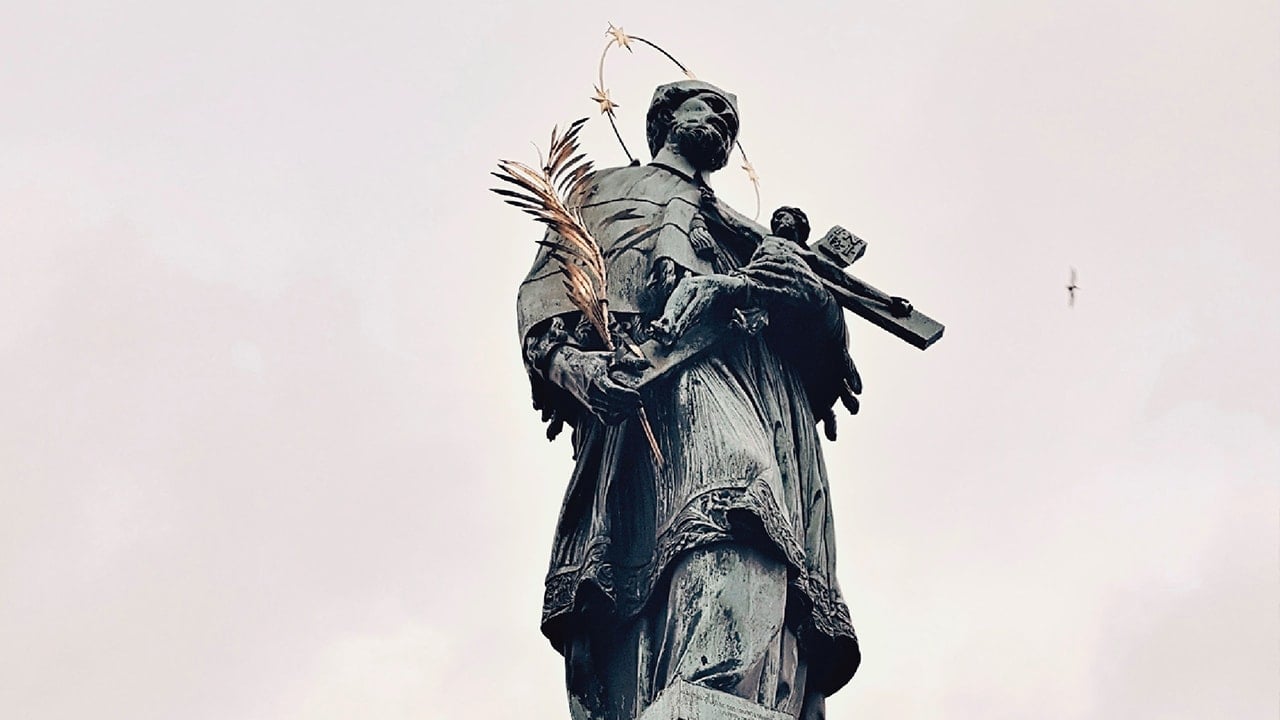
Zone1 Early Christians believed that the bread and wine used in the Eucharist were transformed into the body and blood of Christ

So, no need for priests?
There is no need for priests who think they are performing incantations that transform bread and wine into flesh and blood. There is no need for priests who think they have the power to forgive or not forgive the sin of someone who is seeking God's forgiveness. There is, however, need for ministers and pastors who lead a congregation.

I already said that.
 
Is the priest compelling Jesus? Is Jesus offering his body and blood yet again? Because I don't necessarily see it that way. I don't believe anyone can compel Jesus. And I don't believe he is making another sacrifice.
I appreciate that viewpoint and can understand why you would not take it there.
Would I take communion from a priest who didn't say the right words? What are the right words? I wouldn't take communion from a priest who did not believe the bread and wine, through consecration, are transformed into the actual body and blood of Jesus Christ.
Okay, you say "consecration". Does that not involve an incantation? And Scripture, again, does not give any human the power to do what you say Jesus did, which was to literally change bread and wine into flesh and blood.
 
There is no need for priests who think they are performing incantations that transform bread and wine into flesh and blood. There is no need for priests who think they have the power to forgive or not forgive the sin of someone who is seeking God's forgiveness. There is, however, need for ministers and pastors who lead a congregation.

I already said that.
And you have taken scripture out of context for that express purpose.
 
And you have taken scripture out of context for that express purpose.
I looked at the context. It would bring great comfort and joy to people suffering persecution to remind them that God has made them a royal priesthood, especially for the Jews of that time. They knew how incredibly special that honor really was. It's not taking Scripture out of context at all.
 
Okay, you say "consecration". Does that not involve an incantation? And Scripture, again, does not give any human the power to do what you say Jesus did, which was to literally change bread and wine into flesh and blood.
It involves a request; a plea. Maybe read what Jesus did and said.

You aren't the first person to be shocked by Jesus' command to eat his flesh and drink his blood. He lost a lot of disciples over that command.
  1. Jesus said he was the bread of life and whoever ate this bread would have eternal life. John 6:48-51
  2. The Jews quarreled and said how can this man give us his flesh to eat. John 6:52
  3. So rather than softening his stance he doubled down and said very clearly, unless you eat the flesh of the Son of Man and drink his blood, you do not have life within you. John 6:53
  4. Afterwards his disciples said, this is hard to take. John 6:60
  5. Jesus asked them, does this shock you. John 6:61
  6. Then Jesus explained that it is the spirit that gives life. The flesh is of no avail. John 6:62-63
  7. But they didn't believe in Jesus and they couldn't accept what he was saying because it shocked them like it is shocking you. As a result of this, many [of] his disciples returned to their former way of life and no longer accompanied him. John 6:64-65
He let disciples walk away rather than to soften his stance and make it symbolic. He was given an opportunity to soften it and instead he reinforced what he said by saying the flesh is of no avail.
 
I looked at the context. It would bring great comfort and joy to people suffering persecution to remind them that God has made them a royal priesthood, especially for the Jews of that time. They knew how incredibly special that honor really was. It's not taking Scripture out of context at all.
Except it's driven by your bias against the Catholic Church.
 
Except it's driven by your bias against the Catholic Church.
It's reading the plain meaning of the Scripture. It might be inconvenient for your belief in the Catholic priesthood, but that doesn't void Scripture.
 
It's reading the plain meaning of the Scripture. It might be inconvenient for your belief in the Catholic priesthood, but that doesn't void Scripture.
Scripture doesn't say there is no need for ordained priests. That's you saying that.

It's odd that you are so big on scripture and ignore Jesus' command to eat his flesh and drink his blood.
 
Last edited:
Scripture doesn't say there is no need for ordained priests. That's you saying that.
I'm saying that there's no need for two of the powers that you say Catholic priests have. The rest I have clearly laid out, yet you refuse to acknowledge any of that, only insist I said something different.
It's funny that you are so big on scripture and ignore Jesus' command to eat his flesh and drink his blood.
I'm not ignoring it. You're big on reading in context, so let's look at the context in which Jesus said that. What had He just gotten done doing that was very, very remarkable? Let's look in John 6.

26: Jesus answered, “Very truly I tell you, you are looking for me, not because you saw the signs I performed but because you ate the loaves and had your fill. 27: Do not work for food that spoils, but for food that endures to eternal life, which the Son of Man will give you. For on him God the Father has placed his seal of approval.”

Remember that? He had just finished miraculously feeding thousands of people. Now He's telling His disciples not to seek after physical food, but to seek after "food that endures to eternal life", or Himself. Notice that He's NOT telling them to literally consume His flesh and blood. He's speaking metaphorically. Now, back to Scripture.

30: So they asked him, “What sign then will you give that we may see it and believe you? What will you do? 31: Our ancestors ate the manna in the wilderness; as it is written: ‘He gave them bread from heaven to eat.”

32: Jesus said to them, “Very truly I tell you, it is not Moses who has given you the bread from heaven, but it is my Father who gives you the true bread from heaven. 33: For the bread of God is the bread that comes down from heaven and gives life to the world.”

So, He's NOT speaking of literal bread, but of spiritual nourishment. The manna was a foreshadowing of His sacrifice. It fed the Israelites for a time, then they needed more. Jesus' TRUE bread fills completely and lasts forever.

34: “Sir,” they said, “always give us this bread.”

35: Then Jesus declared, “I am the bread of life. Whoever comes to me will never go hungry, and whoever believes in me will never be thirsty."

Do you maintain that Jesus literally fills the bellies of those who seek Him? Do they never again go hungry? Of course, they go hungry. Otherwise, you would say that you had communion as a young person and never felt hungry again. So, He's OBVIOUSLY speaking metaphorically here.

48: I am the bread of life. 49: Your ancestors ate the manna in the wilderness, yet they died. 50: But here is the bread that comes down from heaven, which anyone may eat and not die. 51: I am the living bread that came down from heaven. Whoever eats this bread will live forever. This bread is my flesh, which I will give for the life of the world.”

52: Then the Jews began to argue sharply among themselves, “How can this man give us his flesh to eat?”

53: Jesus said to them, “Very truly I tell you, unless you eat the flesh of the Son of Man and drink his blood, you have no life in you. 54: Whoever eats my flesh and drinks my blood has eternal life, and I will raise them up at the last day. 55: For my flesh is real food and my blood is real drink. 56: Whoever eats my flesh and drinks my blood remains in me, and I in them. 57: Just as the living Father sent me and I live because of the Father, so the one who feeds on me will live because of me. 58: This is the bread that came down from heaven. Your ancestors ate manna and died, but whoever feeds on this bread will live forever.” 59: He said this while teaching in the synagogue in Capernaum.

If Jesus meant for the people to literally eat His flesh and drink His blood, the Jews would have torn His body apart right there, eaten it and lived forever.

Since they did not and He had no expectation that they would, He's obviously speaking metaphorically. Why do you maintain this must absolutely be taken literally, no other conception allowed, while you twist, bend and distort to avoid being called a priest by God? In fact, you insist only PART of the passage be taken literally, otherwise you would indeed never need to eat again and would live forever. Why is it that you grab that ONE part of it and insist it has to be taken literally while you happily let the rest be metaphorical? It makes far more sense to acknowledge that Jesus is speaking metaphorically through the entire passage.
 
There is no need for a human to forgive sins, and no one can compel Jesus to offer His body and blood for sacrifice again. Take those away and you basically have an ordained minister whose duty is to lead the congregation. I am not that.
Could it be you keep your sins in silence, you confess your sins in silence to Jesus, and in silence you tell yourself your sins have been forgiven, silently recalling Jesus said, "Your sins are forgiven." In other words, you hear your own confession, your silent voice recalls, "Sins are forgiven". Isn't this the very essence of a human, a sinner, forgiving oneself of one's own sins? Yet you say no need for a human to forgive sins. Pause...

In both cases we agree it is Jesus who forgives sins. Could it be what you are really objecting to is letting your sins be known to another, that you wish to keep them buried within yourself?


I am in a royal priesthood because God has made me part of one. The Catholic title of priest is not the same as the one God has given me, and that's the problem. Why do you persist in trying "gotcha" questions when I've clearly laid out my position and what the Word says? If you want to continue down that road, you could answer my question, would you take communion from a priest who didn't say the right words that compel Jesus to offer His body and blood yet again?
Look at the Hebrew etymology for the word priest. It is one who serves, one who officiates. In Exodus God tells Israel they will be a kingdom of priests, a holy nation. In Luke's story of the Good Samaritan Jesus identifies passersby as a Levite and a priest. No one is imagining the entire kingdom of Israel passing by, but a single person who has special duties to the kingdom of priests, one who serves these priests and officiates at ceremonies.
 
There is no need for priests who think they are performing incantations that transform bread and wine into flesh and blood.
Do you refer to your own prayers as "incantations"?
 
I looked at the context. It would bring great comfort and joy to people suffering persecution to remind them that God has made them a royal priesthood, especially for the Jews of that time.
The Jewish people had known for centuries that they were God's kingdom of priests, a holy nation. Jesus was stating what they were already living, or trying to live, even despite Roman governance.
 
It's reading the plain meaning of the Scripture. It might be inconvenient for your belief in the Catholic priesthood, but that doesn't void Scripture.
Scripture confirms a ministerial or special priesthood among the kingdom of priests.
 
Could it be you keep your sins in silence, you confess your sins in silence to Jesus, and in silence you tell yourself your sins have been forgiven, silently recalling Jesus said, "Your sins are forgiven." In other words, you hear your own confession, your silent voice recalls, "Sins are forgiven". Isn't this the very essence of a human, a sinner, forgiving oneself of one's own sins? Yet you say no need for a human to forgive sins. Pause...
No, not at all. When I go the feet of the Savior in repentance, it is not my own voice I hear, but His. I do not dispute at all that we are to confess our sins one to another. What I do dispute is the power the priest has to grant or deny forgiveness if he wants to. I know you don't think he ever denies it, but we don't know what goes on in the confessional.

I do have to ask, however, when you think sin is actually forgiven. Is it when the penitent is made aware of it and repents or only after the priest proclaims it?
In both cases we agree it is Jesus who forgives sins. Could it be what you are really objecting to is letting your sins be known to another, that you wish to keep them buried within yourself?
No, that is not the case. We are commanded to confess our sins to each other.
Look at the Hebrew etymology for the word priest. It is one who serves, one who officiates. In Exodus God tells Israel they will be a kingdom of priests, a holy nation. In Luke's story of the Good Samaritan Jesus identifies passersby as a Levite and a priest. No one is imagining the entire kingdom of Israel passing by, but a single person who has special duties to the kingdom of priests, one who serves these priests and officiates at ceremonies.
I understand all of that and have made my objection clearly known. I have seen on this board a Catholic telling me he/she is not a priest because they are thinking of the Catholic priesthood, not God's. It is a problem to me when Christians deny or will not take a title that God has given them. It's like a slap in the face to God.
 
Last edited:
The Jewish people had known for centuries that they were God's kingdom of priests, a holy nation. Jesus was stating what they were already living, or trying to live, even despite Roman governance.
He made them a ROYAL priesthood, which is greatly elevated from the Mosaic priesthood. Those could not be both kings and priests.
 
It's true. Early Christians believed that the bread and wine used in the Eucharist were transformed into the body and blood of Christ.

The Real Presence is taught by St. Paul. “For as often as you eat this bread and drink the cup, you proclaim the Lord’s death until he comes. Whoever, therefore, eats the bread or drinks the cup of the Lord in an unworthy manner will be guilty of profaning the body and blood of the Lord” (1 Corinthians 11:26-27).

The Real Presence was taught by the twelve apostles. “Let no one eat and drink of your Eucharist but those baptized in the name of the Lord; to this, too the saying of the Lord is applicable: ‘Do not give to dogs what is sacred” (Teaching of the Twelve Apostles, or Didache, 9:5).

The Real Presence was upheld by early Christians.

It was upheld by St. Ignatius of Antioch in the first century: “Consider how contrary to the mind of God are the heterodox in regard to the grace of God which has come to us . . . They abstain from the Eucharist and from prayer, because they do not admit that the Eucharist is the flesh of our Savior Jesus Christ, the flesh which suffered for our sins and which the Father, in His graciousness, raised from the dead.” (St. Ignatius of Antioch, Letter to the Smyrnaeans, circa 90 AD).

It was upheld by St. Justin Martyr in the second century: “This food we call the Eucharist, of which no one is allowed to partake except one who believes that the things we teach are true, and has received the washing for forgiveness of sins and for rebirth, and who lives as Christ handed down to us. For we do not receive these things as common bread or common drink; but as Jesus Christ our Savior being incarnate by God’s Word took flesh and blood for our salvation, so also we have been taught that the food consecrated by the Word of prayer which comes from him, from which our flesh and blood are nourished by transformation, is the flesh and blood of that incarnate Jesus” (St. Justin Martyr, First Apology, circa 150 AD).

It was upheld by St. Clement of Alexandria in the third century: “The one, the Watered Wine, nourishes in faith, while the other, the Spirit, leads us on to immortality. The union of both, however, – of the drink and of the Word, – is called the Eucharist, a praiseworthy and excellent gift. Those who partake of it in faith are sanctified in body and in soul. By the will of the Father, the divine mixture, man, is mystically united to the Spirit and to the Word” (St. Clement of Alexandria, The Instructor of the Children, circa 202 AD).

It was upheld by St. Cyril of Jerusalem in the fourth century: “Since then He Himself has declared and said of the Bread, (This is My Body), who shall dare to doubt any longer? And since He has affirmed and said, (This is My Blood), who shall ever hesitate, saying, that it is not His blood?” (St. Cyril of Jerusalem, Catechetical Lectures, circa 350 AD).

The thing about Protestantism that must be understood is first and foremost, the founders were motivated by selfish goals. 1) They as clergy wanted to get married and have sex. 2) They wanted to be able to divorce. Every single protestant denomination founder did this without exception. They took the easy way out. Not one denomination made things tougher on themselves. None called for more penance, more sacrifice, more self-denial, more sanctity.

To enable all these things, they had to change the entire core belief practices of the Catholic Church to accommodate their selfish whims. Because to keep the core beliefs and practices makes it harder just to change the things you want. You have to remake the whole thing.

And this is why Protestantism is crumbling today. It's man-built, and man-built things don't last.
 
15th post
The thing about Protestantism that must be understood is first and foremost, the founders were motivated by selfish goals. 1) They as clergy wanted to get married and have sex. 2) They wanted to be able to divorce. Every single protestant denomination founder did this without exception. They took the easy way out. Not one denomination made things tougher on themselves. None called for more penance, more sacrifice, more self-denial, more sanctity.

To enable all these things, they had to change the entire core belief practices of the Catholic Church to accommodate their selfish whims. Because to keep the core beliefs and practices makes it harder just to change the things you want. You have to remake the whole thing.

And this is why Protestantism is crumbling today. It's man-built, and man-built things don't last.
That's completely denying what they went through to arrive at the point where they had to break away from the Catholic Church. They did not do so lightly, knowing they faced persecution, imprisonment and death over it.
 
That's completely denying what they went through to arrive at the point where they had to break away from the Catholic Church. They did not do so lightly, knowing they faced persecution, imprisonment and death over it.
Bottom line: The founders wanted to have sex and marry and divorce who they wanted. It all boils down to that. The other stuff sounds good, but it was a smokescreen.

My question is Who are these men who think they can change the perfect teachings of Jesus and His Church? Every organization has corrupt fallible people who do evil things, but how is that justification for wanting to change Jesus' perfect teachings? Answer: It was an excuse for these breakaways to do what they wanted.
 
Indoctrination into what?

Who would want someone who is a subject of the algorithm he/she so freely chose by clicking on every conspiracy theory riddled link or ad?

Your brain is controlled by elements out of your control - your greed, distrust, envy and prejudice led you to this point. It would take wonders for anyone or anything to bring you back to any semblance of a life and sanity.

If something or anyone wants to "indoctrinate" you - you should be jumping head first at the bit and thanking them for the opportunity.

It's either that or find some sort of faith - and pray - pray for the world around you so that the world around you can pray for you.
Sorry, but your post is unintelligible to all but those immersed in religiosity so intense that they have lost all sense of reality.
 
Bottom line: They wanted to have sex and marry and divorce who they wanted. It all boils down to that. The other stuff sounds good, but it was a smokescreen.
Wow, what is your secret to living for hundreds of years? I mean, you must have if you know them all personally like that.
 
Back
Top Bottom