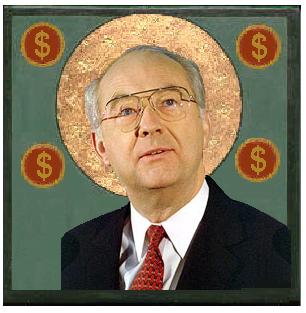
Democrats Caused The Global Financial Meltdown

Prove me wrong loser? isn't that YOUR OWN standard?? That YOU have to prove me wrong??

Fact is republicans had a couple of bills over their time in control but CHOSE to do NOTHING with them after they got out of committee. Talking about it in committee but then CHOOSING not to actual DO anything about it is a LACK OF ACTION.

As usual, you refuse to hold yourself to the same standard that you try to dishonestly and hypocritically hold others to.

At no time could the republicans stop the Fannie & Freddie train wreck without the help of democrats. There was never a republican veto proof majority.

P.S. daveman will love this thread

So did the republicans ever actually TRY? NOPE, they talked about doing something but when push came to shove they failed to act. FACT is democrats didn't filibuster anything because there was NOTHING to filibuster because republicans CHOSE not to send a bill to the floor for a vote.

FACT is that the republicans could have done it on their own with a simple majority because the way republicans are currently misusing the filibuster to say no to everything including bills that they co-sponsored had never been done in the past.
However, due to the FACT that the republicans failed to act, you can't say say for certain that the democrats would have filibustered something that was NEVER put on the floor for a vote.

In the end all you are left with are baseless assumptions in a desperate attempt to blame only democrats and lame excuses in a desperate attempt to excuse the republicans for their inaction.

P.S. Notice how your own standard of proof was applied to you and you failed to actually PROVE anything??
 
Much of the first 35% of this post comes from The American Thinker artical: "Why the Mortgage Crisis Happened" The research & add ins are all mine. Much of the last 30% came from a Whitehouse.gov web page that disapeared the first day Obama took office.

--1991-- ACORN interfered with a House Banking Committee meeting for two days protesting a move to bring CRA reform. "According to the Times, "the same study showed no evidence that nonwhite mortgage applicants were being discriminated against."

--1992-- Enforcement of CRA was "sporadic," as the Washington Times notes, until a Federal Reserve Bank of Boston study asserted that there were "substantially higher denial rates for black and Hispanic applicants than for white applicants."

Lynn Browne was approached by co-author Alicia Munnell to do the study because "community activists were complaining that mortgage loans were not being made in minority communities." According to the Times, however, "the study had mishandled statistics on minority default rates. When the errors were accounted for, the same study showed no evidence that nonwhite mortgage applicants were being discriminated against."

Frank Quaratiello, writing in the Boston Herald, cites Stan Liebowitz: "My guess is that they were interested in finding a particular result." Said Liebowitz, "Richard Syron was head of the Boston Fed at the time. He went on to be the head of Freddie Mac. They were looking for mortgage discrimination, and they found it." According to Quaratiello, Syron became Freddie Mac CEO and chairman in 2003 and "faced increasing pressure to buy up more and more risky mortgages, some of which the Boston Fed's guide had, in effect, served to legitimize." Regarding Syron's total compensation in 2007 of $18.3 million, Liebowitz reportedly quipped, "Nice reward for presiding over unprofessional research behavior, bankrupting Freddie Mac and crippling our financial system, all in the name of politically correct lending."

shortened per our copyright rules.

Care

I'm sorry, but wasn't there a Repug in the White House July, August, September and October of 2008? His name something like bush.
 
--October 1992-- Congress, enacting the Federal Housing Enterprises Financial Safety and Soundness Act of 1992, It "established HUD-imposed housing goals for financing of affordable housing and housing in central cities and other rural and underserved areas." Washington Post In a brief debate unfolded on the floor of the House of Representatives over a bill to create a new regulator for Fannie Mae and Freddie Mac. On one side stood Jim Leach, an Iowa Republican concerned that Congress was "hamstringing" this new OFHEO regulator at the behest of the companies. He warned that the two companies were changing "from being agencies of the public at large to money machines for the stockholding few." On the other side stood Barney Frank, a Massachusetts Democrat who said the companies served a public purpose. They were in the business of lowering the price of mortgage loans.

--September 1993-- The Chicago Sun-Times reports an initiative led by ACORN's Talbott with five area lenders "participating in a $55 million national pilot program with affordable-housing group ACORN to make mortgages for low- and moderate-income people with troubled credit histories." Kurtz notes that the initiative included two of her former targets, Bell Federal Savings and Avondale Federal Savings, who had apparently capitulated under pressure.

--July 1994-- Represented by Obama and others, plaintiffs filed a class-action lawsuit alleging Citibank had "intentionally discriminated against the plaintiffs on the basis of race with respect to a credit transaction" and calling its action "racial discrimination and discriminatory redlining practices." Buycks-Roberson v. Citibank

--November 1994-- President Clinton addressed the National Association of Realtors Conference Anaheim, California "I think we all agree that more Americans should own their own homes, for reasons that are economic and tangible and reasons that are emotional and intangible but go to the heart of what it means to harbor, to nourish, to expand the American dream"..."I am determined to see that you have the opportunity and together we can make that opportunity for the young families of our country. I am committed to a new and unprecedented partnership between industry leaders and community leaders and government to recommit our nation to the idea of homeownership and to create more homeowners than ever before." "The Clinton administration announced the bold new homeownership strategy, which included monumental loosening of credit standards and imposition of subprime lending quotas."

--May 1995-- The FDIC's Board of Directors approved a final rule implementing the Community Reinvestment Act (CRA). The Comptroller of the Currency, the Board of Governors of the Federal Reserve System, and the Office of Thrift Supervision have approved parallel regulations for the institutions they supervise. The joint final rule largely retains the principles and structure of the proposals issued in December 1993 and October 1994. The new CRA regulation replaces the 12 assessment factors contained in the old rule with a more performance-based evaluation process to assess whether financial institutions are meeting the credit needs of their communities, including low- and moderate-income neighborhoods. The new rule establishes different tests for large and small institutions, as well as for retail and wholesale or limited purpose banks.

--June 1995-- The Clinton administration, allied with Rep. Frank, Sen. Ted Kennedy, D-Mass., and Rep. Maxine Waters, D-Calif., directed HUD Secretary Andrew Cuomo to inject GSEs into the subprime mortgage market. "ACORN had come to Congress not only to protect the CRA from GOP reforms but also to expand the reach of quota-based lending to Fannie, Freddie and beyond." What resulted was the broadening of the "acceptability of risky subprime loans throughout the financial system, thus precipitating our current crisis."

The administration announced the bold new homeownership strategy, which included monumental loosening of credit standards and imposition of "SUBPRIME LENDING QUOTAS." HUD reported that President Clinton had committed "to increasing the homeownership rate to 67.5% by the year 2000." The plan was "to reduce the financial, information and systemic barriers to homeownership" which was "amplified by local partnerships at work in over 100 cities."

"Urged on by ACORN, congressional Democrats and the Clinton administration helped push tolerance for high-risk loans through every sector of the banking system — far beyond the sort of banks originally subject to the CRA. So it was the efforts of ACORN and its Democratic allies that first spread the subprime virus from the CRA to Fannie and Freddie and thence to the entire financial system. Soon, Democratic politicians and regulators actually began to take pride in "LOWERED CREDIT STANDARDS" as a sign of "fairness." Attorney General Janet Reno, who had already won a number of bank lending discrimination settlements, sternly announces, "We will tackle lending discrimination wherever it appears." With the new policy in full force, "No loan is exempt; no bank is immune. For those who thumb their nose at us, I promise vigorous enforcement."

--1997-- HUD Secretary Cuomo said, "GSE presence in the subprime market could be of significant benefit to lower-income families, minorities, and families living in underserved areas. "

--April 1998-- HUD announced a $2.1 billion settlement with AccuBanc Mortgage Corp. for alleged discrimination against minority loan applicants. [ame="http://www.youtube.com/watch?v=ivmL-lXNy64"]Affirmative Action Lending[/ame] The funds would provide poor families with down payments and low interest mortgages. "Discrimination isn't always that obvious," said Secretary Cuomo in announcing the AccuBanc deal. "Sometimes more subtle but in many ways more insidious, an institutionalized discrimination that's hidden behind a smiling face." Before the camera, Cuomo admitted the mandate amounted to "affirmative action" lending that would result in a "higher default rate."

The institution would "take a greater risk on these mortgages, yes; to give families mortgages who they would not have given otherwise, yes; they would not have qualified but for this affirmative action on the part of the bank, yes. It is by income, and is it also by minorities? Yes. "With the $2.1 billion, lending that amount in mortgages which will be a higher risk, and I'm sure there will be a higher default rate on those mortgages than on the rest of the portfolio." The CRA allowed ACORN "organizations to collect a fee from the banks for their services in marketing the loans. The Senate Banking Committee had estimated that, as a result of CRA, $9.5 billion had gone to pay for services and salaries of the organizers."

--May 1999-- The Los Angeles Times reports that African-American homeownership is increasing three times as fast as that of whites, with Latino homeowners growing five times as fast, attributing the growth to breathing "the first real life into enforcement of the Community Reinvestment Act." Mandateing that Fannie Mae and Freddie Mac buy mortgages with deviant down payments and debt-to-income ratios, which allowed lenders to approve mortgages for lower-income families that would have been denied otherwise. By now, all pretense had disappeared and lending practices were based upon concerns of discrimination in the banking system regardless of the consequences. Clinton threatened to veto a bill passed by the Senate that had "shortsightedly voted to retrench" CRA, as the Times put it. Under pressure, Fannie Mae was resisting increased targeting, arguing that the result would be more loan defaults. Barry Zigas, head of Fannie Mae's low-income efforts, argued, "There is obviously a limit beyond which (we) can't push (the banks) to produce," the Times reported.

--Fall 1999-- Treasury Secretary Lawrence Summers issued a warning: "Debates about systemic risk should also now include government-sponsored enterprises, which are large and growing rapidly."

--September 1999-- New York Times "With pressure from the Clinton administration, Fannie Mae eased credit requirements on loans it would purchase from lenders, making it easier for banks to lend to borrowers unqualified for conventional loans. Fannie Mae's Raines explained that "there remain too many borrowers whose credit is just a notch below what our underwriting has required who have been relegated to paying significantly higher mortgage rates in the so-called subprime market."

With this action, Fannie Mae put itself at substantial risk in the event of an economic downturn. "From the perspective of many people, including me, this is another thrift industry growing up around us," warned Peter Wallison, a fellow in financial policy studies at the American Enterprise Institute (AEI). "If they fail, the government will have to step up and bail them out the way it stepped up and bailed out the thrift industry." The danger was known.

A study by Freddie Mac, confirming earlier Federal Reserve and FDIC studies, contradicts race discrimination arguments for CRA. The study found that African-Americans with annual incomes of $65,000-$75,000 have on average worse credit records than whites making under $25,000. This showed that the difficulty in qualifying was not because of race but bad credit records. Accordingly, the Federal Reserve Bank of Dallas entitled a paper "Red Lining or Red Herring?"

"City Journal warned that the Clinton administration had turned CRA into 'a vast extortion scheme against the nation's banks,'committing $1 trillion for mortgages and development projects, most of it funneled through the community organizers."

--November 1999-- President Bill Clinton signed into law S.900 Financial Services Modernization Act of 1999 This bill had CRA loan mandates & allowed banks to sell the mandated bad loans to GSEs Fannie, Freddie, pension funds, foreigners & anyone else. This disolved Glass Steagall & made it legal for banks to create bad risky loans with the government backing it allowing it to get a AAA rating. This gave banks a license to steal!!!

--December 2000-- President Bill Clinton signed into law H.R. 4577: Consolidated Appropriations Act, 2001. Consolidated in this bill was Commodity Futures Modernization Act of 2000. This law made most over-the-counter derivatives (“OTC derivatives”) transactions between “sophisticated parties” un-regulated as “futures” under the Commodity Exchange Act (CEA) or as “securities” under the federal securities laws. Instead, banks and securities firms would continue to have their dealings in OTC derivatives supervised by their federal regulators under general “safety and soundness” standards. “Functional regulation”. This was to create an international derivatives market for comodities securities. Clinton & Gore were trying to built the framework for Carbon Cap & Trade Energy Trading Market Scheme with this law. This gave birth to the Enron Loophole. :clap2:
[ame="http://www.youtube.com/watch?v=vFK-UTGH1Zw"]Gore and the Enron Loophole.[/ame]

--April 2001-- The Bush Administrations 2002 Budget Assesment (page 142) "Uncertainties about the Federal Government’s liability have increased in some areas. Consolidation has increased bank size, and deregulation has allowed banks to engage in many risky activities. Thus, the loss to the deposit insurance funds can turn out to be unusually large in some bad years. The potential loss needs to be limited by large insurance reserves and effective regulation. The large size of some GSEs is also a potential problem. Financial trouble of a large GSE could cause strong repercussions in financial markets, affecting Federally insured entities and economic activity."

"In general, direct subsidies are more efficient than credit programs for the purpose of fulfilling social objectives such as helping low-income people, as opposed to economic objectives such as improving credit allocation. Direct subsidies are less likely to interfere with the efficient allocation of resources."

Bush wanted to cut back on the subprime lending because he knew giving people with BAD CREDIT a loan was much more dangerous than giving someone with good credit a down payment subsidy. This is a MAJOR difference! Even someone making millions like Michael Jackson was hopelessly in debt because they can't be financially responsible enough to pay their debts & live within their means. A study by Freddie Mac, confirming earlier Federal Reserve and FDIC studies, contradicts race discrimination arguments for CRA. The study found that African-Americans with annual incomes of $65,000-$75,000 have on average worse credit records than whites making under $25,000. This showed that the difficulty in qualifying was not because of race but bad credit records. Accordingly, the Federal Reserve Bank of Dallas entitled a paper "Red Lining or Red Herring?"

--May 2002-- President Bush calls for the disclosure and corporate governance principles contained in his 10-point plan for corporate responsibility to apply to Fannie Mae and Freddie Mac. (OMB Prompt Letter to OFHEO, 5/29/02)

--September 2003-- Treasury Secretary John Snow testifies before the House Financial Services Committee to recommend that Congress enact "legislation to create a new Federal agency to regulate and supervise the financial activities of our housing-related government sponsored enterprises" and set prudent and appropriate minimum capital adequacy requirements.

The New York Times published on Sept 10th 2003 "The Bush administration today recommended the most significant regulatory overhaul in the housing finance industry since the savings and loan crisis a decade ago. Under the plan, disclosed at a Congressional hearing today, a new agency would be created within the Treasury Department to assume supervision of Fannie Mae and Freddie Mac, the government-sponsored companies that are the two largest players in the mortgage lending industry. The new agency would have the authority, which now rests with Congress, to set one of the two capital-reserve requirements for the companies. It would exercise authority over any new lines of business. And it would determine whether the two are adequately managing the risks of their ballooning portfolios."

[ame="http://www.youtube.com/watch?v=cMnSp4qEXNM"]Bush Tried to Stop This[/ame]

--November 2003-- Council of the Economic Advisers (CEA) Chairman Greg Mankiw explains that any "legislation to reform GSE regulation should empower the new regulator with sufficient strength and credibility to reduce systemic risk." To reduce the potential for systemic instability, the regulator would have "broad authority to set both risk-based and minimum capital standards" and "receivership powers necessary to wind down the affairs of a troubled GSE." (N. Gregory Mankiw, Remarks At The Conference Of State Bank Supervisors State Banking Summit And Leadership, 11/6/03)

--February 2004-- The President's FY05 Budget again highlights the risk posed by the explosive growth of the GSEs and their low levels of required capital, and called for creation of a new, world-class regulator: "The Administration has determined that the safety and soundness regulators of the housing GSEs lack sufficient power and stature to meet their responsibilities, and therefore…should be replaced with a new strengthened regulator." (2005 Budget Analytic Perspectives, pg. 83)

--February 2004-- CEA Chairman Mankiw cautions Congress to "not take [the financial market's] strength for granted." Again, the call from the Administration was to reduce this risk by "ensuring that the housing GSEs are overseen by an effective regulator." Financial Times

--June 2004-- Deputy Secretary of Treasury Samuel Bodman spotlights the risk posed by the GSEs and called for reform, saying "We do not have a world-class system of supervision of the housing government sponsored enterprises (GSEs), even though the importance of the housing financial system that the GSEs serve demands the best in supervision to ensure the long-term vitality of that system. Therefore, the Administration has called for a new, first class, regulatory supervisor for the three housing GSEs: Fannie Mae, Freddie Mac, and the Federal Home Loan Banking System." (Samuel Bodman, House Financial Services Subcommittee on Oversight and Investigations Testimony, 6/16/04)

--Late 2004-- Democrats in congress blocked action to regulate the GSEs Fannie & Freddie.
[ame="http://www.youtube.com/watch?v=_MGT_cSi7Rs&feature=related"]Democrats blocked regulation of Fannie & Freddie.[/ame]

These same Democrats & Obama were paid off by by GSEs Fannie & Freddie!!!:clap2:

--November 2004-- Here is Barney Franks letter to cut funding for OFHEO because they blew the whistle on Subprime criminal activity at Fannie Mae.

--December 2004-- ACORN used congress to force Trillions in CRA loans & payoffs. They recently hit Bank of America for over $800 Billion. (see page 25) of this congress hearing. That is some serious money. Don't tell me ACORN is not pouring on some serious pressure using the CRA compliance criteria.

--2005-- Fannie Mae CEO Frank Raines affirms partnership with Barack Obama & The Congressional Black Caucus" [ame="http://www.youtube.com/watch?v=usvG-s_Ssb0&feature=related"]Frank Raines[/ame]

--April 2005-- Treasury Secretary John Snow repeats his call for GSE reform, saying "Events that have transpired since I testified before this Committee in 2003 reinforce concerns over the systemic risks posed by the GSEs and further highlight the need for real GSE reform to ensure that our housing finance system remains a strong and vibrant source of funding for expanding homeownership opportunities in America… Half-measures will only exacerbate the risks to our financial system." (Secretary John W. Snow, "Testimony Before The U.S. House Financial Services Committee," 4/13/05)

--August 2007-- President Bush emphatically calls on Congress to pass a reform package for Fannie Mae and Freddie Mac, saying "first things first when it comes to those two institutions. Congress needs to get them reformed, get them streamlined, get them focused, and then I will consider other options." (President George W. Bush, Press Conference, The White House, 8/9/07)

--September 2007-- Obama: "Subprime lending started off as a good idea - helping Americans buy homes who couldn’t previously afford to. Financial institutions created new financial instruments that could securitize these loans, slice them into finer and finer risk categories and spread them out among investors around the country and around the world. In theory, this should have allowed mortgage lending to be less risky and more diversified." These same financial institutions were Top Contributors to Barack Obama's Campaign :clap2:

--December 2007-- President Bush again warns Congress of the need to pass legislation reforming GSEs, saying "These institutions provide liquidity in the mortgage market that benefits millions of homeowners, and it is vital they operate safely and operate soundly. So I've called on Congress to pass legislation that strengthens independent regulation of the GSEs – and ensures they focus on their important housing mission. The GSE reform bill passed by the House earlier this year is a good start. But the Senate has not acted. And the United States Senate needs to pass this legislation soon." (President George W. Bush, Discusses Housing, The White House, 12/6/07)

--February 2008-- Assistant Secretary David Nason reiterates the urgency of reforms, says "A new regulatory structure for the housing GSEs is essential if these entities are to continue to perform their public mission successfully." (David Nason, Testimony On Reforming GSE Regulation, Senate Committee On Banking, Housing And Urban Affairs, 2/7/08)

--March 2008-- President Bush calls on Congress to take action and "move forward with reforms on Fannie Mae and Freddie Mac. They need to continue to modernize the FHA, as well as allow State housing agencies to issue tax-free bonds to homeowners to refinance their mortgages." (President George W. Bush, Remarks To The Economic Club Of New York, New York, NY, 3/14/08)

--April 2008-- President Bush urges Congress to pass the much needed legislation and "modernize Fannie Mae and Freddie Mac. [There are] constructive things Congress can do that will encourage the housing market to correct quickly by … helping people stay in their homes." (President George W. Bush, Meeting With Cabinet, the White House, 4/14/08)

--May 2008-- President Bush issues several pleas to Congress to pass legislation reforming Fannie Mae and Freddie Mac before the situation deteriorates further.

--June 2008-- President once again asks Congress to take the necessary measures to address this challenge, saying "we need to pass legislation to reform Fannie Mae and Freddie Mac." (President George W. Bush, Remarks At Swearing In Ceremony For Secretary Of Housing And Urban Development, Washington, D.C., 6/6/08)

--2008-- Fannie and Freddie have purchased about 80% of all new home mortgages in the United States. Their combined investment portfolios held mortgage assets (loans and MBSs) valued at $1.5 trillion (as of June 30, 2008) - These GSE will never pay back tax payer for losses like all the banks have.

--April 2009-- Obama on his world appology tour in Strasbourg, France "difficult to imagine that the inability of somebody to pay for a house in Florida could contribute to the failure of the banking system in Iceland. Today what's difficult to imagine is that we did not act sooner to shape our future." :clap2:

--JULY 2009-- Committee on Oversight and Government Reform released a report on The Role of Government Affordable Housing Policy in Creating the Global Financial Crisis of 2008
 
Last edited:
Wow - great job putting together the liberal policies that laid in motion the eventual resulting financial collapse.

Facts are facts folks - the modern-era Democrats played the far greater hand in creating this mess...
 
Nice job laying that out KissMy.

Republicans need to shoulder their part of the blame, (which they too have difficulty doing), but for the dems to blame literally everything that ails the country/world on them, while refusing to accept any blame, truly is laughable.
 
Note that this article was written in 2005, well before the collapse.

Bush Profiteering from Housing Defaults by James Bovard

Enacting the “American Dream”

The Bush administration finally got its “Dream Act” pushed through Congress in the fall of 2003. The House leadership chose freshman congresswoman Katherine Harris (the Republican hero of the Florida 2000 recount) for the honor of sponsoring the bill. Harris declared,

As our nation continues to confront daunting threats both at home and abroad, we cannot neglect the most basic security of all, and that is a safe, clean, adequate place to live.
One congressional staffer raised the question of whether “HUD will soon send out maids to ensure our right to a clean house.”

When Bush signed the act on December 16, 2003, he declared,

One of the biggest hurdles to homeownership is getting money ... so today I’m honored to be here to sign a law that will help many low-income buyers to overcome that hurdle, and to achieve an important part of the American Dream.
 
Note that this article was written in 2005, well before the collapse.

Bush Profiteering from Housing Defaults by James Bovard

Enacting the “American Dream”

The Bush administration finally got its “Dream Act” pushed through Congress in the fall of 2003. The House leadership chose freshman congresswoman Katherine Harris (the Republican hero of the Florida 2000 recount) for the honor of sponsoring the bill. Harris declared,

As our nation continues to confront daunting threats both at home and abroad, we cannot neglect the most basic security of all, and that is a safe, clean, adequate place to live.
One congressional staffer raised the question of whether “HUD will soon send out maids to ensure our right to a clean house.”

When Bush signed the act on December 16, 2003, he declared,

One of the biggest hurdles to homeownership is getting money ... so today I’m honored to be here to sign a law that will help many low-income buyers to overcome that hurdle, and to achieve an important part of the American Dream.

I am curious...

What was the vote count in the house and the senate?

What was the political breakdown of yae's and nay's?

I dont know the answer...I am truly asking.

Me? I never blame the President for signing a bill that has a majority vote in the houses. I blame the congresspeople and the senators for voting for it when it proves to be a failure.

But that is me.
 
Note that this article was written in 2005, well before the collapse.

Bush Profiteering from Housing Defaults by James Bovard

Enacting the “American Dream”

The Bush administration finally got its “Dream Act” pushed through Congress in the fall of 2003. The House leadership chose freshman congresswoman Katherine Harris (the Republican hero of the Florida 2000 recount) for the honor of sponsoring the bill. Harris declared,

As our nation continues to confront daunting threats both at home and abroad, we cannot neglect the most basic security of all, and that is a safe, clean, adequate place to live.
One congressional staffer raised the question of whether “HUD will soon send out maids to ensure our right to a clean house.”

When Bush signed the act on December 16, 2003, he declared,

One of the biggest hurdles to homeownership is getting money ... so today I’m honored to be here to sign a law that will help many low-income buyers to overcome that hurdle, and to achieve an important part of the American Dream.
An the sheep slurped up that poison immediately, as usual.
 
Note that this article was written in 2005, well before the collapse.

Bush Profiteering from Housing Defaults by James Bovard

Enacting the “American Dream”

The Bush administration finally got its “Dream Act” pushed through Congress in the fall of 2003. The House leadership chose freshman congresswoman Katherine Harris (the Republican hero of the Florida 2000 recount) for the honor of sponsoring the bill. Harris declared,

As our nation continues to confront daunting threats both at home and abroad, we cannot neglect the most basic security of all, and that is a safe, clean, adequate place to live.
One congressional staffer raised the question of whether “HUD will soon send out maids to ensure our right to a clean house.”

When Bush signed the act on December 16, 2003, he declared,

One of the biggest hurdles to homeownership is getting money ... so today I’m honored to be here to sign a law that will help many low-income buyers to overcome that hurdle, and to achieve an important part of the American Dream.

The title of that article is misleading. It does not show Bush profiting from this other than pandering to minorities for votes. But there is a world of difference between the way the democrats & Bush did things. Bush wanted to cut back on the subprime lending because he knew giving people with BAD CREDIT a loan was much more dangerous than giving someone with good credit a down payment subsidy. This is a MAJOR difference! Even someone making millions like Michael Jackson was hopelessly in debt because they can't be financially responsible enough to pay their debts & live within their means.

A study by Freddie Mac, confirming earlier Federal Reserve and FDIC studies, contradicts race discrimination arguments for CRA. The study found that African-Americans with annual incomes of $65,000-$75,000 have on average worse credit records than whites making under $25,000. This showed that the difficulty in qualifying was not because of race but bad credit records. Accordingly, the Federal Reserve Bank of Dallas entitled a paper "Red Lining or Red Herring?"

"City Journal warned that the Clinton administration had turned CRA into 'a vast extortion scheme against the nation's banks,'committing $1 trillion for mortgages and development projects, most of it funneled through the community organizers."
 
Last edited:
Much of the first 35% of this post comes from The American Thinker artical: "Why the Mortgage Crisis Happened"
....And, it's ALL AFTER-the-fact bullshit!!!

October 26, 2008

"Obama's economic narrative of the mortgage crisis ignores the facts. He has put free-market capitalism at the root of the current mortgage industry debacle, denying the real history of government interference in that market.

On September 15, with banking giant Lehman Brothers filing for bankruptcy protection, Obama was given the opening to begin weaving his anti-capitalist storyline. And that he did. Artfully blurring the mortgage industry crisis with generalized tax policy, Obama declared.....
September 15, 2008???? Really??!!! It all began in 2008??????

You should consult with John McCain. He might FINALLY have caught-up to Reality, by now.....but, I wouldn't bet-the-bank on it. :rolleyes:

Nice TRY, Skippy.........

[ame=http://www.youtube.com/watch?v=VcJ4sjgtIR0]YouTube - American Casino[/ame]​
 
Nice job with the links & research KissMy!
...Especially for those Fans-O'-Bullshit

:rolleyes:

3041664166_4b458979ed_o.jpg

"Gramm's long been a handmaiden to Big Finance. In the 1990s, as chairman of the Senate banking committee, he routinely turned down Securities and Exchange Commission chairman Arthur Levitt's requests for more money to police Wall Street; during this period, the sec's workload shot up 80 percent, but its staff grew only 20 percent. Gramm also opposed an sec rule that would have prohibited accounting firms from getting too close to the companies they audited—at one point, according to Levitt's memoir, he warned the sec chairman that if the commission adopted the rule, its funding would be cut. And in 1999, Gramm pushed through a historic banking deregulation bill that decimated Depression-era firewalls between commercial banks, investment banks, insurance companies, and securities firms—setting off a wave of merger mania."
 
Great work.

I am aware of the long list of conspirators - but you put it all together very very well.

While Republicans, and a hungry for easy profits Wall St. certainly share in some of the blame, the warnings were in fact being issued from the Republican side and all but ignored by Democrats, whose easy-lending policies initiated what later became the subprime crisis.
Yeah......Republicans have a looooooooooooooong history of worrying about consumers.

:hellno:

"The problem began in the 1980s, when -- under political pressure from the banking industry -- the Reagan administration and Congress stopped regulating the nation's financial institutions. Commercial banks and savings-and-loans used their political clout -- especially campaign contributions -- to get Congress to loosen restrictions on the kinds of loans they could make."
 
Greenspan and the free marketeers did.
Riiiiiiiiiiiiiiiiiiiiiiiiiiiiiiiiiiiiiight...... :rolleyes:

"The prime goal of the legislation, however, was to keep government regulators from policing credit swaps between firms as a means of trading risk. These unregulated swaps created a casino like structure where firms traded in risk in hopes that their particular picks would come up as strong investments. The unregulated swaps also allowed for bundling of risky investments. The swap related provision of Gramm's bill created a 62 trillion dollar market -- four times the size of US GDP -- that was entirely unregulated. In other words, no-one was looking through the market to make sure firms had assets to cover the losses they guaranteed. According to Michael Greenberger, former director of the CFTC's division of trading and markets, unregulated swaps were at "the heart of the subprime meltdown. I happen to think Gramm did not know what he was doing. I don't think a member in Congress had read the 262-page bill or had thought of the cataclysm it would cause."
 
Rebuffed by Fact Check and the Daily Show?!?!??

My cup runneth under. :lol:

More like your big, fat mouth runneth over time.

:eek:
**** you, dickless.

And the Federal Reserve monopoly STILL is the antithesis of free marketeering......
.....Which would explain why Phil Gramm had decided things would be a little-more safe, overseas, right? :rolleyes:

August 18, 2009

"In recent days yet another wealthy private customer of the Swiss-based banking conglomerate UBS admitted to criminal fraud in a growing parade of perp walks that could extend into the thousands. It is a case that threatens to ensnare former Sen. Phil Gramm, the Texas Republican who is vice chairman of UBS’ investment banking business. Given the widespread involvement of UBS in what the Justice Department alleges were systematic efforts to violate U.S. tax laws, it must be asked: Did Gramm as a top executive have no inkling about what was going on?

Perhaps, but for Gramm this has to be a moment that at the very least tests his ideological commitment to the radical deregulation of banking that he championed during his 24 years in Congress. He joined UBS soon after the bank acquired Enron, a company that had gone bankrupt after jumping through the “Enron loophole” in the Commodity Futures Modernization Act, which Gramm had pushed though Congress."
 
15th post
Note that this article was written in 2005, well before the collapse.

Bush Profiteering from Housing Defaults by James Bovard

Enacting the “American Dream”

The Bush administration finally got its “Dream Act” pushed through Congress in the fall of 2003. The House leadership chose freshman congresswoman Katherine Harris (the Republican hero of the Florida 2000 recount) for the honor of sponsoring the bill. Harris declared,

As our nation continues to confront daunting threats both at home and abroad, we cannot neglect the most basic security of all, and that is a safe, clean, adequate place to live.
One congressional staffer raised the question of whether “HUD will soon send out maids to ensure our right to a clean house.”

When Bush signed the act on December 16, 2003, he declared,

One of the biggest hurdles to homeownership is getting money ... so today I’m honored to be here to sign a law that will help many low-income buyers to overcome that hurdle, and to achieve an important part of the American Dream.

So, you point out a SINGLE article that references a law Bush passed, disregard the litany of points that kiss my pointed out and believe that you are standing on hard ground when you declare that it was the republicans fault. All I can say is...HACK.

There are plenty of people here that are willing to admit it was a colossal failure from both sides. That You are attempting to pin this solely on the republicans when the democrats were so obviously involved and the hackery is quite obvious.
 
Note that this article was written in 2005, well before the collapse.

Bush Profiteering from Housing Defaults by James Bovard

Enacting the “American Dream”

The Bush administration finally got its “Dream Act” pushed through Congress in the fall of 2003. The House leadership chose freshman congresswoman Katherine Harris (the Republican hero of the Florida 2000 recount) for the honor of sponsoring the bill. Harris declared,

As our nation continues to confront daunting threats both at home and abroad, we cannot neglect the most basic security of all, and that is a safe, clean, adequate place to live.
One congressional staffer raised the question of whether “HUD will soon send out maids to ensure our right to a clean house.”

When Bush signed the act on December 16, 2003, he declared,

One of the biggest hurdles to homeownership is getting money ... so today I’m honored to be here to sign a law that will help many low-income buyers to overcome that hurdle, and to achieve an important part of the American Dream.

So, you point out a SINGLE article that references a law Bush passed, disregard the litany of points that kiss my pointed out and believe that you are standing on hard ground when you declare that it was the republicans fault. All I can say is...HACK.

There are plenty of people here that are willing to admit it was a colossal failure from both sides. That You are attempting to pin this solely on the republicans when the democrats were so obviously involved and the hackery is quite obvious.

WOW... Did kiss my declare that it was both sides fault? All I can say is...HACK.

WHAT litany of points??? The first point is a DEAD link that has no article attached to it.
--1991-- ACORN interfered with a House Banking Committee meeting for two days protesting a move to bring CRA reform.


Irony...if people had listened to ACORN, maybe the foreclosure crisis would have been averted...

Acorn Led Financial Sector With Warnings on Lending
The national advocacy group appears to deserve recognition for its prudent -- and ignored -- early advice about home loan practices.

In fact – according to a string of 1999 and 2000 reports in American Banker, a 173-year-old publication calling itself "the leading information resource serving the banking and financial services community" – ACORN was an outspoken, consistent advocate for exactly the kinds of regulations that experts across the political spectrum now agree could have prevented the global economic crisis.

On August 4, 2000, American Banker reported on ACORN protests at nationwide offices of Lehman Brothers – the investment bank that went bankrupt last month because of its investment in over-valued mortgage-backed securities:

"Acorn members said they want Lehman and other investment banks to sign a code of ethics, pledging to adhere to 'best practices' in the mortgage lending business. Though the banks are not lenders, the group argues that they provide capital and financial support to abusive lenders by buying and securitizing their loans.

'They have to look at the terms of the loans they are funding and say they won't buy or securitize loans with unconscionable terms,' said Bertha Lewis, executive director of Acorn in New York. 'These secondary market players can see what kind of loans these are. They must refuse to buy loans from predatory lenders.'"

ACORN's campaign to get investment banks to adopt best practices for the mortgages they bought was aimed at drying up the secondary market for the toxic mortgages now at the bottom of the fallen financial house of cards. If investment banks didn't buy the shady loans, predatory lenders wouldn't receive the capital to make such loans, ACORN reasoned.

Acorn Led Financial Sector With Warnings on Lending - City Limits Magazine - CityLimits.org

ACORN to Protest Predatory Lending at Wells Fargo Annual Meeting

Publication: Business Wire
Date: Thursday, April 22 2004

Business Editors

WASHINGTON--(BUSINESS WIRE)--April 22, 2004

More than 125 ACORN members will demonstrate at Wells Fargo's annual meeting on April 27 to protest the company's predatory lending practices. Members will travel to Wells' San Francisco headquarters to confront Wells' top managers about abusive mortgage loans.

ACORN to Protest Predatory Lending at Wells Fargo Annual Meeting; ACORN Members Will Also Speak at Meeting in Support of Anti-Predatory Lending Resolution. | Trends & Events > Talks & Meetings from AllBusiness.com


Poor People Protest predatory lending practices by Wells Fargo


WASHINGTON - The racially discriminatory, predatory lending practices of Wells Fargo, along with President George Bush’s Social Security Privatization plan, were targets of hundreds of ACORN members protesting in Washington March 7.

Demonstrators from Florida to Massachusetts, to Ohio, to as far away as Chicago descended on Washington, bringing with them ACORN’s “take-it-to-streets” tactics to make known their opposition to the privatization of Social Security; to rally at the offices of major tax preparation firms which make quick “tax-return loans”; and to release a new report demonstrating racial discrimination and predatory lending by Wells Fargo during the group’s 2005 Legislative Conference.

“We have actually been doing a campaign on Wells Fargo, to improve their practices on lending for several years now,” Matthew Mayers, legislative director of the Association of Community Organizations for Reform Now (ACORN), said in an interview.

A lot of ACORN’s attention has been focused on predatory lending practices by banks and mortgage companies that result in low-income people, the elderly, and non-Whites being much more likely to get bad loans that take money away from them unfairly, said Mr. Mayers. Predatory lending involves charging exorbitant interest rates, failing to disclose all loan terms, and marketing to people with financial and credit problems who likely cannot repay a loan. They are loans which are doomed to fail.

In early February, about 100 ACORN demonstrators protested inside and outside the Wells Fargo Financial building in Harrisburg, the capital of Pennsylvania. The protesters occupied the lender’s downtown Harrisburg office for about 20 minutes until police arrived and dispersed the crowd, according to WNEP-TV 16.

Many predatory lending victims have lost their homes, said Mr. Mayers. “They’re sort of ‘bait and switch’ and people don’t know the kind of loan they’re going to get and then they find out” when it’s too late. “Our new study actually shows that people of color, particularly African Americans, are much more likely to be singled out for some of these bad loans.

“We’re really calling on (Wells Fargo) to change their practices,” he said.

In another case, after seven years of litigation by the Federal Trade Commission, the agency reached an agreement with Capital City Mortgage Corp. in late February. Capital City is a Washington-based company whose home-lending practices triggered a national assault on abusive lending. Capital City agreed it would stop making consumer loans that use a house as security and that it would disclose fees and terms on future commercial loans.

Capital City was alleged to have used fraud and deception to put minority homeowners with credit problems into loans they couldn’t afford. The high fees and high-interest penalties reportedly sent many into foreclosure.

Capital City foreclosed on one in five mortgage loans made from 1984 to 1995, and on one in three made from 1989 to 1991. The national foreclosure rate has stayed around one in 100 in recent years, and the percentage of “subprime” loans in foreclosure—those loans made at higher cost to people with faulty credit—is on the order of four in 100.

The FTC has subsequently sued 19 other companies, mostly national or regional firms, and has won millions of dollars in those cases.

“Companies know they can make a lot of money by going into low-income areas and into minority areas where there may not be other options for loans,” said Mr. Mayers. “Years ago, the fight was about ‘red-lining,’ about not getting any type of loans or credit, particularly in urban areas, inner city areas. Now it’s about, not the quantity of the credit, but the quality. They’re giving loans, but a lot of them are really kind of rip-off loans.”

The group can claim some successes, said Mr. Mayers. ACORN has pressured some companies “to change their ways, he noted.

“Probably, the most well known was Household Finance, where we did our typical ACORN tactics of taking it to the streets and mobilizing people. At the same time, the attorney-general had a suit against them and they really cleaned up their act in a lot of ways, worked to get people better loans, and a lot of people found a much more cooperative relationship” with (Household Finance), he said. “The other part of it is that we’ve really pushed for good legislation on the state level. We passed legislation in places like New York and Illinois.”

Poor People Protest predatory lending practices by Wells Fargo
 
Note that this article was written in 2005, well before the collapse.

Bush Profiteering from Housing Defaults by James Bovard

Enacting the “American Dream”

The Bush administration finally got its “Dream Act” pushed through Congress in the fall of 2003. The House leadership chose freshman congresswoman Katherine Harris (the Republican hero of the Florida 2000 recount) for the honor of sponsoring the bill. Harris declared,

As our nation continues to confront daunting threats both at home and abroad, we cannot neglect the most basic security of all, and that is a safe, clean, adequate place to live.
One congressional staffer raised the question of whether “HUD will soon send out maids to ensure our right to a clean house.”

When Bush signed the act on December 16, 2003, he declared,

One of the biggest hurdles to homeownership is getting money ... so today I’m honored to be here to sign a law that will help many low-income buyers to overcome that hurdle, and to achieve an important part of the American Dream.

So, you point out a SINGLE article that references a law Bush passed, disregard the litany of points that kiss my pointed out and believe that you are standing on hard ground when you declare that it was the republicans fault. All I can say is...HACK.

There are plenty of people here that are willing to admit it was a colossal failure from both sides. That You are attempting to pin this solely on the republicans when the democrats were so obviously involved and the hackery is quite obvious.

WOW... Did kiss my declare that it was both sides fault? All I can say is...HACK.

WHAT litany of points??? The first point is a DEAD link that has no article attached to it.
--1991-- ACORN interfered with a House Banking Committee meeting for two days protesting a move to bring CRA reform.


Irony...if people had listened to ACORN, maybe the foreclosure crisis would have been averted...

Acorn Led Financial Sector With Warnings on Lending
The national advocacy group appears to deserve recognition for its prudent -- and ignored -- early advice about home loan practices.

In fact – according to a string of 1999 and 2000 reports in American Banker, a 173-year-old publication calling itself "the leading information resource serving the banking and financial services community" – ACORN was an outspoken, consistent advocate for exactly the kinds of regulations that experts across the political spectrum now agree could have prevented the global economic crisis.

On August 4, 2000, American Banker reported on ACORN protests at nationwide offices of Lehman Brothers – the investment bank that went bankrupt last month because of its investment in over-valued mortgage-backed securities:

"Acorn members said they want Lehman and other investment banks to sign a code of ethics, pledging to adhere to 'best practices' in the mortgage lending business. Though the banks are not lenders, the group argues that they provide capital and financial support to abusive lenders by buying and securitizing their loans.

'They have to look at the terms of the loans they are funding and say they won't buy or securitize loans with unconscionable terms,' said Bertha Lewis, executive director of Acorn in New York. 'These secondary market players can see what kind of loans these are. They must refuse to buy loans from predatory lenders.'"

ACORN's campaign to get investment banks to adopt best practices for the mortgages they bought was aimed at drying up the secondary market for the toxic mortgages now at the bottom of the fallen financial house of cards. If investment banks didn't buy the shady loans, predatory lenders wouldn't receive the capital to make such loans, ACORN reasoned.

Acorn Led Financial Sector With Warnings on Lending - City Limits Magazine - CityLimits.org

ACORN to Protest Predatory Lending at Wells Fargo Annual Meeting

Publication: Business Wire
Date: Thursday, April 22 2004

Business Editors

WASHINGTON--(BUSINESS WIRE)--April 22, 2004

More than 125 ACORN members will demonstrate at Wells Fargo's annual meeting on April 27 to protest the company's predatory lending practices. Members will travel to Wells' San Francisco headquarters to confront Wells' top managers about abusive mortgage loans.

ACORN to Protest Predatory Lending at Wells Fargo Annual Meeting; ACORN Members Will Also Speak at Meeting in Support of Anti-Predatory Lending Resolution. | Trends & Events > Talks & Meetings from AllBusiness.com


Poor People Protest predatory lending practices by Wells Fargo


WASHINGTON - The racially discriminatory, predatory lending practices of Wells Fargo, along with President George Bush’s Social Security Privatization plan, were targets of hundreds of ACORN members protesting in Washington March 7.

Demonstrators from Florida to Massachusetts, to Ohio, to as far away as Chicago descended on Washington, bringing with them ACORN’s “take-it-to-streets” tactics to make known their opposition to the privatization of Social Security; to rally at the offices of major tax preparation firms which make quick “tax-return loans”; and to release a new report demonstrating racial discrimination and predatory lending by Wells Fargo during the group’s 2005 Legislative Conference.

“We have actually been doing a campaign on Wells Fargo, to improve their practices on lending for several years now,” Matthew Mayers, legislative director of the Association of Community Organizations for Reform Now (ACORN), said in an interview.

A lot of ACORN’s attention has been focused on predatory lending practices by banks and mortgage companies that result in low-income people, the elderly, and non-Whites being much more likely to get bad loans that take money away from them unfairly, said Mr. Mayers. Predatory lending involves charging exorbitant interest rates, failing to disclose all loan terms, and marketing to people with financial and credit problems who likely cannot repay a loan. They are loans which are doomed to fail.

In early February, about 100 ACORN demonstrators protested inside and outside the Wells Fargo Financial building in Harrisburg, the capital of Pennsylvania. The protesters occupied the lender’s downtown Harrisburg office for about 20 minutes until police arrived and dispersed the crowd, according to WNEP-TV 16.

Many predatory lending victims have lost their homes, said Mr. Mayers. “They’re sort of ‘bait and switch’ and people don’t know the kind of loan they’re going to get and then they find out” when it’s too late. “Our new study actually shows that people of color, particularly African Americans, are much more likely to be singled out for some of these bad loans.

“We’re really calling on (Wells Fargo) to change their practices,” he said.

In another case, after seven years of litigation by the Federal Trade Commission, the agency reached an agreement with Capital City Mortgage Corp. in late February. Capital City is a Washington-based company whose home-lending practices triggered a national assault on abusive lending. Capital City agreed it would stop making consumer loans that use a house as security and that it would disclose fees and terms on future commercial loans.

Capital City was alleged to have used fraud and deception to put minority homeowners with credit problems into loans they couldn’t afford. The high fees and high-interest penalties reportedly sent many into foreclosure.

Capital City foreclosed on one in five mortgage loans made from 1984 to 1995, and on one in three made from 1989 to 1991. The national foreclosure rate has stayed around one in 100 in recent years, and the percentage of “subprime” loans in foreclosure—those loans made at higher cost to people with faulty credit—is on the order of four in 100.

The FTC has subsequently sued 19 other companies, mostly national or regional firms, and has won millions of dollars in those cases.

“Companies know they can make a lot of money by going into low-income areas and into minority areas where there may not be other options for loans,” said Mr. Mayers. “Years ago, the fight was about ‘red-lining,’ about not getting any type of loans or credit, particularly in urban areas, inner city areas. Now it’s about, not the quantity of the credit, but the quality. They’re giving loans, but a lot of them are really kind of rip-off loans.”

The group can claim some successes, said Mr. Mayers. ACORN has pressured some companies “to change their ways, he noted.

“Probably, the most well known was Household Finance, where we did our typical ACORN tactics of taking it to the streets and mobilizing people. At the same time, the attorney-general had a suit against them and they really cleaned up their act in a lot of ways, worked to get people better loans, and a lot of people found a much more cooperative relationship” with (Household Finance), he said. “The other part of it is that we’ve really pushed for good legislation on the state level. We passed legislation in places like New York and Illinois.”

Poor People Protest predatory lending practices by Wells Fargo

Like most reasonable, unbias people would admit....it was from both parties where the real estate mess developed.

September 30, 1999
"Fannie Mae Eases Credit To Aid Mortgage Lending
By STEVEN A. HOLMES

In a move that could help increase home ownership rates among minorities and low-income consumers
, the Fannie Mae Corporation is easing the credit requirements on loans that it will purchase from banks and other lenders.

The action, which will begin as a pilot program involving 24 banks in 15 markets -- including the New York metropolitan region -- will encourage those banks to extend home mortgages to individuals whose credit is generally not good enough to qualify for conventional loans. Fannie Mae officials say they hope to make it a nationwide program by next spring.

Fannie Mae, the nation's biggest underwriter of home mortgages, has been under increasing pressure from the Clinton Administration to expand mortgage loans among low and moderate income people and felt pressure from stock holders to maintain its phenomenal growth in profits.
In addition, banks, thrift institutions and mortgage companies have been pressing Fannie Mae to help them make more loans to so-called subprime borrowers. These borrowers whose incomes, credit ratings and savings are not good enough to qualify for conventional loans, can only get loans from finance companies that charge much higher interest rates -- anywhere from three to four percentage points higher than conventional loans."
Fannie Mae fiasco started under Clinton's watch. | The Hive
 
Last edited:
So, you point out a SINGLE article that references a law Bush passed, disregard the litany of points that kiss my pointed out and believe that you are standing on hard ground when you declare that it was the republicans fault. All I can say is...HACK.

There are plenty of people here that are willing to admit it was a colossal failure from both sides. That You are attempting to pin this solely on the republicans when the democrats were so obviously involved and the hackery is quite obvious.

WOW... Did kiss my declare that it was both sides fault? All I can say is...HACK.

WHAT litany of points??? The first point is a DEAD link that has no article attached to it.
--1991-- ACORN interfered with a House Banking Committee meeting for two days protesting a move to bring CRA reform.


Irony...if people had listened to ACORN, maybe the foreclosure crisis would have been averted...

Acorn Led Financial Sector With Warnings on Lending
The national advocacy group appears to deserve recognition for its prudent -- and ignored -- early advice about home loan practices.

In fact – according to a string of 1999 and 2000 reports in American Banker, a 173-year-old publication calling itself "the leading information resource serving the banking and financial services community" – ACORN was an outspoken, consistent advocate for exactly the kinds of regulations that experts across the political spectrum now agree could have prevented the global economic crisis.

On August 4, 2000, American Banker reported on ACORN protests at nationwide offices of Lehman Brothers – the investment bank that went bankrupt last month because of its investment in over-valued mortgage-backed securities:

"Acorn members said they want Lehman and other investment banks to sign a code of ethics, pledging to adhere to 'best practices' in the mortgage lending business. Though the banks are not lenders, the group argues that they provide capital and financial support to abusive lenders by buying and securitizing their loans.

'They have to look at the terms of the loans they are funding and say they won't buy or securitize loans with unconscionable terms,' said Bertha Lewis, executive director of Acorn in New York. 'These secondary market players can see what kind of loans these are. They must refuse to buy loans from predatory lenders.'"

ACORN's campaign to get investment banks to adopt best practices for the mortgages they bought was aimed at drying up the secondary market for the toxic mortgages now at the bottom of the fallen financial house of cards. If investment banks didn't buy the shady loans, predatory lenders wouldn't receive the capital to make such loans, ACORN reasoned.

Acorn Led Financial Sector With Warnings on Lending - City Limits Magazine - CityLimits.org

ACORN to Protest Predatory Lending at Wells Fargo Annual Meeting

Publication: Business Wire
Date: Thursday, April 22 2004

Business Editors

WASHINGTON--(BUSINESS WIRE)--April 22, 2004

More than 125 ACORN members will demonstrate at Wells Fargo's annual meeting on April 27 to protest the company's predatory lending practices. Members will travel to Wells' San Francisco headquarters to confront Wells' top managers about abusive mortgage loans.

ACORN to Protest Predatory Lending at Wells Fargo Annual Meeting; ACORN Members Will Also Speak at Meeting in Support of Anti-Predatory Lending Resolution. | Trends & Events > Talks & Meetings from AllBusiness.com


Poor People Protest predatory lending practices by Wells Fargo


WASHINGTON - The racially discriminatory, predatory lending practices of Wells Fargo, along with President George Bush’s Social Security Privatization plan, were targets of hundreds of ACORN members protesting in Washington March 7.

Demonstrators from Florida to Massachusetts, to Ohio, to as far away as Chicago descended on Washington, bringing with them ACORN’s “take-it-to-streets” tactics to make known their opposition to the privatization of Social Security; to rally at the offices of major tax preparation firms which make quick “tax-return loans”; and to release a new report demonstrating racial discrimination and predatory lending by Wells Fargo during the group’s 2005 Legislative Conference.

“We have actually been doing a campaign on Wells Fargo, to improve their practices on lending for several years now,” Matthew Mayers, legislative director of the Association of Community Organizations for Reform Now (ACORN), said in an interview.

A lot of ACORN’s attention has been focused on predatory lending practices by banks and mortgage companies that result in low-income people, the elderly, and non-Whites being much more likely to get bad loans that take money away from them unfairly, said Mr. Mayers. Predatory lending involves charging exorbitant interest rates, failing to disclose all loan terms, and marketing to people with financial and credit problems who likely cannot repay a loan. They are loans which are doomed to fail.

In early February, about 100 ACORN demonstrators protested inside and outside the Wells Fargo Financial building in Harrisburg, the capital of Pennsylvania. The protesters occupied the lender’s downtown Harrisburg office for about 20 minutes until police arrived and dispersed the crowd, according to WNEP-TV 16.

Many predatory lending victims have lost their homes, said Mr. Mayers. “They’re sort of ‘bait and switch’ and people don’t know the kind of loan they’re going to get and then they find out” when it’s too late. “Our new study actually shows that people of color, particularly African Americans, are much more likely to be singled out for some of these bad loans.

“We’re really calling on (Wells Fargo) to change their practices,” he said.

In another case, after seven years of litigation by the Federal Trade Commission, the agency reached an agreement with Capital City Mortgage Corp. in late February. Capital City is a Washington-based company whose home-lending practices triggered a national assault on abusive lending. Capital City agreed it would stop making consumer loans that use a house as security and that it would disclose fees and terms on future commercial loans.

Capital City was alleged to have used fraud and deception to put minority homeowners with credit problems into loans they couldn’t afford. The high fees and high-interest penalties reportedly sent many into foreclosure.

Capital City foreclosed on one in five mortgage loans made from 1984 to 1995, and on one in three made from 1989 to 1991. The national foreclosure rate has stayed around one in 100 in recent years, and the percentage of “subprime” loans in foreclosure—those loans made at higher cost to people with faulty credit—is on the order of four in 100.

The FTC has subsequently sued 19 other companies, mostly national or regional firms, and has won millions of dollars in those cases.

“Companies know they can make a lot of money by going into low-income areas and into minority areas where there may not be other options for loans,” said Mr. Mayers. “Years ago, the fight was about ‘red-lining,’ about not getting any type of loans or credit, particularly in urban areas, inner city areas. Now it’s about, not the quantity of the credit, but the quality. They’re giving loans, but a lot of them are really kind of rip-off loans.”

The group can claim some successes, said Mr. Mayers. ACORN has pressured some companies “to change their ways, he noted.

“Probably, the most well known was Household Finance, where we did our typical ACORN tactics of taking it to the streets and mobilizing people. At the same time, the attorney-general had a suit against them and they really cleaned up their act in a lot of ways, worked to get people better loans, and a lot of people found a much more cooperative relationship” with (Household Finance), he said. “The other part of it is that we’ve really pushed for good legislation on the state level. We passed legislation in places like New York and Illinois.”

Poor People Protest predatory lending practices by Wells Fargo

Like most reasonable, unbias people would admit....it was from both parties where the real estate mess developed.

September 30, 1999
"Fannie Mae Eases Credit To Aid Mortgage Lending
By STEVEN A. HOLMES

In a move that could help increase home ownership rates among minorities and low-income consumers
, the Fannie Mae Corporation is easing the credit requirements on loans that it will purchase from banks and other lenders.

The action, which will begin as a pilot program involving 24 banks in 15 markets -- including the New York metropolitan region -- will encourage those banks to extend home mortgages to individuals whose credit is generally not good enough to qualify for conventional loans. Fannie Mae officials say they hope to make it a nationwide program by next spring.

Fannie Mae, the nation's biggest underwriter of home mortgages, has been under increasing pressure from the Clinton Administration to expand mortgage loans among low and moderate income people and felt pressure from stock holders to maintain its phenomenal growth in profits.
In addition, banks, thrift institutions and mortgage companies have been pressing Fannie Mae to help them make more loans to so-called subprime borrowers. These borrowers whose incomes, credit ratings and savings are not good enough to qualify for conventional loans, can only get loans from finance companies that charge much higher interest rates -- anywhere from three to four percentage points higher than conventional loans."
Fannie Mae fiasco started under Clinton's watch. | The Hive

And ACORN led the fight AGAINST subprime borrowers, predatory lending practices and WARNED people buying homes not to fall for their shady practices.
 
Back
Top Bottom