Consider The Facts

Status
Not open for further replies.
Stick them out in the Sinai and be done with it.

Fact is thats where most of them are from in the first place anyway

No. It isn't.

Of course it is. The early Arabs were largely a nomadic herding people of the Arabian peninsula and what is now the Sinai area. Although the Egyptians were constantly throwing them out.

Those early Arabs are the Beduoins of today. The Palestinians are a mix of peoples, including indiginous.


Wrong way round the Bedouins are the early arabs, these were taken over by mo'mad when he started his campaign of world domination. The few left are the original converts to islam who kept their nomadic lifestyle and did not want to settle in one place. Yet another sect of islam that is different to the Persian and arab sects
 
>>
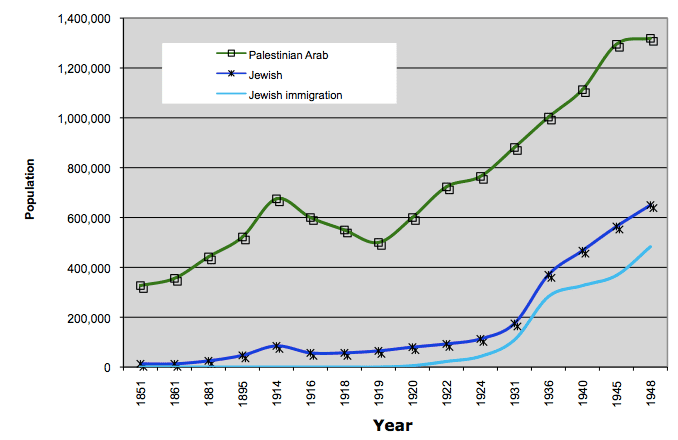
Demographer U.O. Schmelz's analysis of the Ottoman registration data for 1905 populations of Jerusalem and Hebron kazas (Ottoman districts), by place of birth, showed that of those Arab Palestinians born outside their localities of residence, approximately half represented intra-Palestine movement—from areas of low-level economic activity to areas of higher-level activity—while the other half represented Arab immigration into Palestine itself, 43 percent originating in Asia, 39 percent in Africa, and 20 percent in Turkey.[18] Schmelz conjectured:
The above-average population growth of the Arab villages around the city of Jerusalem, with its Jewish majority, continued until the end of the mandatory period. This must have been due—as elsewhere in Palestine under similar conditions—to in-migrants attracted by economic opportunities, and to the beneficial effects of improved health services in reducing mortality—just as happened in other parts of Palestine around cities with a large Jewish population sector.[19]
While Schmelz restricted his research of the 1905 Palestinian census to the official Ottoman registrations and used these registrations with only minor critical comment, he did acknowledge that "stable population models assume the absence of external migrations, a condition which was obviously not met by all the subpopulations" that Schmelz enumerated.[20]
Like U.O. Schmelz, Roberto Bachi expressed some reservation about the virtual non-existence of data and discussion concerning migration into and within Palestine. He writes:
Between 1800 and 1914, the Muslim population had a yearly average increase in the order of magnitude of roughly 6-7 per thousand. This can be compared to the very crude estimate of about 4 per thousand for the "less developed countries" of the world (in Asia, Africa, and Latin America) between 1800 and 1910. It is possible that part of the growth of the Muslim population was due to immigration.[21]
Although Bachi did not pursue the linkage between undocumented immigration into Palestine and the 6 (or 7) to 4 per thousand differential in growth rates between Palestine and the other less developed countries (LDCs), the idea that at least one-third of Palestine's population growth may be attributed to immigration is—using Bachi's own growth rate differentials—not an entirely unreasonable one.
Lacking verifiable evidence did not prevent Bachi from stating the obvious concerning internal migration within Palestine:
The great economic development of the coastal plains—largely due to Jewish immigration—was accompanied both in 1922-1931 and in 1931-1944 by a much stronger increase of the Muslim and Christian populations in this region than that registered in other regions. This was probably due to two reasons: stronger decrease in mortality of the non-Jewish population in the neighborhood of Jewish areas and internal migration toward the more developed zones.[22]<<

>>It is not surprising then that the British census data produce an Arab Palestinian population growth for 1922-31 that turns out to be generated by natural increase and legal migrations alone. Applying a 2.5 per annum growth rate[30] to a population stock of 589,177 for 1922 generates a 1931 population estimate of 735,799 or 97.6 percent of the 753,822 recorded in the 1931 census.<<

>>Applying the 2.5 per annum natural rate of population growth to the 1922 Arab Palestinian population generates an expected population size for 1931 of 398,498 or 64,790 less than the actual population recorded in the British census. By imputation, this unaccounted population increase must have been either illegal immigration not accounted for in the British census and/or registered Arab Palestinians moving from outside the Jewish-identified sub-districts to those sub-districts so identified. This 1922-31 Arab migration into the Jewish sub-districts represented 11.8 percent of the total 1931 Arab population residing in those sub-districts and as much as 36.8 percent of its 1922-31 growth.<<

Schmelz conjectured:
The above-average population growth of the Arab villages around the city of Jerusalem, with its Jewish majority, continued until the end of the mandatory period. This must have been due—as elsewhere in Palestine under similar conditions—to in-migrants attracted by economic opportunities, and to the beneficial effects of improved health services in reducing mortality—just as happened in other parts of Palestine around cities with a large Jewish population sector.​

Migration from rural to urban centers was common throughout the world particularly those areas that were experiencing industrialization. This was happening in Palestine but it had little to do with the Jews.

The Jewish colonists had a society that was kept as separate from the Palestinian society as possible. Very little of the colonial economy trickled into the native population.


Yep best case scenario based on current scientific evidence. What don't you understand about no other part of the third world at that time could increase at the rate the arab muslims where in Palestine. Not even in arab muslim areas that showed an actual decrease in population.


Ever thought that the reason for that is arab muslim arrogance and aloofness. The same traits we are seeing in Europe today with the muslims driving a wedge between them and us.
 
Last edited:
Stick them out in the Sinai and be done with it.

Fact is thats where most of them are from in the first place anyway

No. It isn't.

Of course it is. The early Arabs were largely a nomadic herding people of the Arabian peninsula and what is now the Sinai area. Although the Egyptians were constantly throwing them out.

The Palestinians are not all Arab.


What are they then, using the term as the arab muslims use it ?
 
Stick them out in the Sinai and be done with it.

Fact is thats where most of them are from in the first place anyway

No. It isn't.

Of course it is. The early Arabs were largely a nomadic herding people of the Arabian peninsula and what is now the Sinai area. Although the Egyptians were constantly throwing them out.

The Palestinians are not all Arab.

That's the first time I heard anyone say that. They identify themselves as Arabs. The first paragraph in the PLO Charter says that they're part of the larger Arab Nation.
Are you talking about the fact that the Philistines, of long ago, were originally a sea-faring people from Greece? Then you might want to do some DNA testing.


I think she is trying damage limitation and will come out with them being Christians, Jews, atheists and other religions.
 
As usual we've been over this before. But just for fun lets look at the link Tinmore provided.

Reminds me of Monty in that obviously someone didn't read this before presenting it. Its really not evidence of anything resembling citizenship, at this time there was no such place or people called palestine regardless of the ipso facto use of the term.

From
Genesis of Citizenship in Palestine and Israel

Quote

During this period Palestine was first placed under military rule and then under civil administration. From 9 December 1917 (when the province of Jerusalem was occupied by the British army as part of World War I in which Britain and Turkey were enemies) until the adoption of the Palestine Mandate on 24 July 1922 by the Council of the League of Nations, the international legal status of the country remained undetermined. As a result, the nationality of Palestine inhabitants, like that of the inhabitants of other ex-Ottoman territories at the time, remained similarly undetermined.

End Quote

Its a no brainer, no decisions were made regardless of the ipso facto use of the terms palestinian or citizenship concerning the legal status of this area or its inhabitants, Jewish or Muslim.

We then find that after 1922 the Mandate is adopted in which there is a citizenship order. An order that while forgoing the creation of any state within the mandated area did seek to define people living in the area as citizens of the mandate. This order was bitterly rejected by the Arab League as they felt it discriminated against the national status of Arabs living in the mandate but not wishing to abandon their existing national affiliations.

Any questions concerning citizenship and to what one might be a citizen were dispelled in 1954 with the addendum to Jordan's citizenship laws.

Quote

In 1949, the Jordanian Council of Ministers added an article to their Citizenship Law of 1928 that read

All those who at the time when this Law goes into effect habitually reside in Transjordan or in the Western part [of the Jordan] which is being administered by [the Kingdom], and who were holders of Palestinian citizenship, shall be deemed as Jordanians enjoying all rights of Jordanians and bearing all the attendant obligations.

End Quote

So really the only time frame that matters is in the 1922 to 28 area or a mere 6 years.

And to further complicate matters the British din't even remotely address the citizenship issue within the mandate requirements until 1925

In those few years of the mandate period Britain was constrained by the mandate to offer citizenship to people residing in the mandate area while at the same time not constrained to designate what these people were citizens of.

So again we have legal limbo. OK so now you are a citizen, but a citizen of what ? The British never formed a nation called palestine and so there can be no palestinian nationals. Its pretty basic. You were a citizen of the mandate, until the mandate expired

Also if you look at immigration within this time frame we can see that most Arabs were recently came to the mandate area.

Screen+Shot+2013-07-14+at+1.10.20+PM.png


With the Arab complaint about the citizenship law being that it didn't include these recent immigrants.

See
https://www.google.com/url?sa=t&rct=j&q=&esrc=s&source=web&cd=5&ved=0ahUKEwie06qQ0_vKAhWGtIMKHZvrB4MQFgg1MAQ&url=http://www.opendemocracy.net/lauren-banko/creation-of-palestinian-citizenship-under-international-mandate-1918-1925&usg=AFQjCNH3gM7_5ZFcFyrab8mSbBM3T5xafw&sig2=tlrHeVCzXFcUPefHVFNgEQ

Quote

The extent of protection offered for native Ottomans before a peace treaty was signed remained questionable. The draft laid out very few points that could be used to construct a proper nationality law and indeed did not differentiate between nationality and citizenship or the status of Palestinian nationals vis-à-vis Britain. Colonial officials discussed the issue of citizenship at length in the years before the mandate was officially given to the British in 1923, but a complete order on the topic did not appear in the 1922 Order-in-Council or elsewhere until HMG introduced the citizenship order-in-council in 1925.

End Quote

we've now reduced the time frame to a period of just 3 years, where a defacto citizen of an undefined nation would be eligible for such citizenship by several means.

From the previous link

Quote

Amid the confusion and the competing opinions over sovereignty, the discussions of Palestinian nationality centered on the status of the Palestinians. Were they meant to be treated as British-protected persons, Ottoman subjects, foreigners, or nationals of an 'A' mandate? Furthermore, what did these statuses mean outside of Palestine? What was to be the status of non-Ottoman Jewish immigrants to Palestine? Dependent on their country of origin, these immigrants were subjected to different consequences when they arrived in Palestine and applied for provisional certificates of nationality. British-protected persons, Jews or otherwise, were not considered colonial subjects or naturalized citizens of the power whose protection they were under.

End Quote

Note also

Quote

Despite the ratification of Lausanne in September 1924, internal differences of opinion within the British government continued to have an impact on the status of Palestinians. The Foreign Office wrote to the Home Office that Palestine did ‘not bear the slightest resemblances to an independent state’ and its citizens had no such status as belonging to one in international law.

( snip )

By July, the draft order had ‘nationality’ crossed out and replaced with ‘citizenship’. Only shortly before the order passed, the Colonial Office changed ‘subject’ to ‘citizen’ in all places and made a note that ‘national’ in the Treaty of Lausanne meant both subject and citizen in the Citizenship Order.

End Quote

which should pretty much put an end to any nonsense about citizenship to any non existent state called palestine.

The entire argument is simply a rehash of the legal limbo that existed during the mandated period.
You are confusing your timeline.

From 1917 to the signing of the Treaty of Lausanne, Britain was the occupying power of a large are of land that was still under the sovereignty of the Turks. Two months after that signing Britain began the Mandate for Palestine. Those are two separate sets of rules. What was allowed/required under one set of rules was not necessarily compatible with the other.

By the time Britain took responsibility of its Mandate, Palestine's international borders were defined. Palestinian nationality was already determined by international legal norms and the Treaty of Lausanne. Palestine had already become a successor state.

Britain had to work within those limits and had no authority to change those things.
 
Stick them out in the Sinai and be done with it.

Fact is thats where most of them are from in the first place anyway

No. It isn't.

Of course it is. The early Arabs were largely a nomadic herding people of the Arabian peninsula and what is now the Sinai area. Although the Egyptians were constantly throwing them out.

The Palestinians are not all Arab.

That's the first time I heard anyone say that. They identify themselves as Arabs. The first paragraph in the PLO Charter says that they're part of the larger Arab Nation.
Are you talking about the fact that the Philistines, of long ago, were originally a sea-faring people from Greece? Then you might want to do some DNA testing.


I think she is trying damage limitation and will come out with them being Christians, Jews, atheists and other religions.
Palestinians have been Palestinians since the Treaty of Lausanne. All of this Arab, Muslim, Christian, blah, blah, blah, is completely irrelevant.
 
As usual we've been over this before. But just for fun lets look at the link Tinmore provided.

Reminds me of Monty in that obviously someone didn't read this before presenting it. Its really not evidence of anything resembling citizenship, at this time there was no such place or people called palestine regardless of the ipso facto use of the term.

From
Genesis of Citizenship in Palestine and Israel

Quote

During this period Palestine was first placed under military rule and then under civil administration. From 9 December 1917 (when the province of Jerusalem was occupied by the British army as part of World War I in which Britain and Turkey were enemies) until the adoption of the Palestine Mandate on 24 July 1922 by the Council of the League of Nations, the international legal status of the country remained undetermined. As a result, the nationality of Palestine inhabitants, like that of the inhabitants of other ex-Ottoman territories at the time, remained similarly undetermined.

End Quote

Its a no brainer, no decisions were made regardless of the ipso facto use of the terms palestinian or citizenship concerning the legal status of this area or its inhabitants, Jewish or Muslim.

We then find that after 1922 the Mandate is adopted in which there is a citizenship order. An order that while forgoing the creation of any state within the mandated area did seek to define people living in the area as citizens of the mandate. This order was bitterly rejected by the Arab League as they felt it discriminated against the national status of Arabs living in the mandate but not wishing to abandon their existing national affiliations.

Any questions concerning citizenship and to what one might be a citizen were dispelled in 1954 with the addendum to Jordan's citizenship laws.

Quote

In 1949, the Jordanian Council of Ministers added an article to their Citizenship Law of 1928 that read

All those who at the time when this Law goes into effect habitually reside in Transjordan or in the Western part [of the Jordan] which is being administered by [the Kingdom], and who were holders of Palestinian citizenship, shall be deemed as Jordanians enjoying all rights of Jordanians and bearing all the attendant obligations.

End Quote

So really the only time frame that matters is in the 1922 to 28 area or a mere 6 years.

And to further complicate matters the British din't even remotely address the citizenship issue within the mandate requirements until 1925

In those few years of the mandate period Britain was constrained by the mandate to offer citizenship to people residing in the mandate area while at the same time not constrained to designate what these people were citizens of.

So again we have legal limbo. OK so now you are a citizen, but a citizen of what ? The British never formed a nation called palestine and so there can be no palestinian nationals. Its pretty basic. You were a citizen of the mandate, until the mandate expired

Also if you look at immigration within this time frame we can see that most Arabs were recently came to the mandate area.

Screen+Shot+2013-07-14+at+1.10.20+PM.png


With the Arab complaint about the citizenship law being that it didn't include these recent immigrants.

See
https://www.google.com/url?sa=t&rct=j&q=&esrc=s&source=web&cd=5&ved=0ahUKEwie06qQ0_vKAhWGtIMKHZvrB4MQFgg1MAQ&url=http://www.opendemocracy.net/lauren-banko/creation-of-palestinian-citizenship-under-international-mandate-1918-1925&usg=AFQjCNH3gM7_5ZFcFyrab8mSbBM3T5xafw&sig2=tlrHeVCzXFcUPefHVFNgEQ

Quote

The extent of protection offered for native Ottomans before a peace treaty was signed remained questionable. The draft laid out very few points that could be used to construct a proper nationality law and indeed did not differentiate between nationality and citizenship or the status of Palestinian nationals vis-à-vis Britain. Colonial officials discussed the issue of citizenship at length in the years before the mandate was officially given to the British in 1923, but a complete order on the topic did not appear in the 1922 Order-in-Council or elsewhere until HMG introduced the citizenship order-in-council in 1925.

End Quote

we've now reduced the time frame to a period of just 3 years, where a defacto citizen of an undefined nation would be eligible for such citizenship by several means.

From the previous link

Quote

Amid the confusion and the competing opinions over sovereignty, the discussions of Palestinian nationality centered on the status of the Palestinians. Were they meant to be treated as British-protected persons, Ottoman subjects, foreigners, or nationals of an 'A' mandate? Furthermore, what did these statuses mean outside of Palestine? What was to be the status of non-Ottoman Jewish immigrants to Palestine? Dependent on their country of origin, these immigrants were subjected to different consequences when they arrived in Palestine and applied for provisional certificates of nationality. British-protected persons, Jews or otherwise, were not considered colonial subjects or naturalized citizens of the power whose protection they were under.

End Quote

Note also

Quote

Despite the ratification of Lausanne in September 1924, internal differences of opinion within the British government continued to have an impact on the status of Palestinians. The Foreign Office wrote to the Home Office that Palestine did ‘not bear the slightest resemblances to an independent state’ and its citizens had no such status as belonging to one in international law.

( snip )

By July, the draft order had ‘nationality’ crossed out and replaced with ‘citizenship’. Only shortly before the order passed, the Colonial Office changed ‘subject’ to ‘citizen’ in all places and made a note that ‘national’ in the Treaty of Lausanne meant both subject and citizen in the Citizenship Order.

End Quote

which should pretty much put an end to any nonsense about citizenship to any non existent state called palestine.

The entire argument is simply a rehash of the legal limbo that existed during the mandated period.
You are confusing your timeline.

From 1917 to the signing of the Treaty of Lausanne, Britain was the occupying power of a large are of land that was still under the sovereignty of the Turks. Two months after that signing Britain began the Mandate for Palestine. Those are two separate sets of rules. What was allowed/required under one set of rules was not necessarily compatible with the other.

By the time Britain took responsibility of its Mandate, Palestine's international borders were defined. Palestinian nationality was already determined by international legal norms and the Treaty of Lausanne. Palestine had already become a successor state.

Britain had to work within those limits and had no authority to change those things.


Why do you make up these LIES after being shown that the land was surrendered by the Ottomans, not once but twice. And that the LoN were the occupying power until 1923 when the Mandate of Palestine named Britain as the mandatory power for both sections of Palestine. The only borders delineated where those of the mandate of Palestine, there is no treaty that claims the land to be the nation of Palestine. Just what are these international legal norms you claim declare Palestine not just a nationality but also a nation, what treaty put them in place ?
When did the treaty making Palestine a successor state get signed then, and who signed it for the Palestinian people ?

Yes Briain had to work within limits which is why your many posts claiming Britain did this and Britain did that are nothing more than a pack of lies.


You are trying to use late 20C international laws retrospectively because you don't want the Jews to exist anywhere you hate them that much. You really need to take a remedial course in English as you confuse the term mandate and nation thinking they mean the same thing. Look at your source for the claim of Palestine being given international borders and you will see that it means THE MANDATE OF PALESTINE SPELT OUT FOR ALL BUT YOU TO SEE.
 
No. It isn't.

Of course it is. The early Arabs were largely a nomadic herding people of the Arabian peninsula and what is now the Sinai area. Although the Egyptians were constantly throwing them out.

The Palestinians are not all Arab.

That's the first time I heard anyone say that. They identify themselves as Arabs. The first paragraph in the PLO Charter says that they're part of the larger Arab Nation.
Are you talking about the fact that the Philistines, of long ago, were originally a sea-faring people from Greece? Then you might want to do some DNA testing.


I think she is trying damage limitation and will come out with them being Christians, Jews, atheists and other religions.
Palestinians have been Palestinians since the Treaty of Lausanne. All of this Arab, Muslim, Christian, blah, blah, blah, is completely irrelevant.


Again you are wrong as the Romans named the Jews as the Palestinians before there were any Christians or muslims. The name then passed into common usage to mean Jew until the end of WW1 when the arab muslims found they had no cause to answer to
 
P F Tinmore, et al,

You need to backup and look again.


1 November, 1922: Abolition of Mehmed VI and the Office of the Ottoman Sultan.
29 October, 1923: Independence of the Republic of Turkey.
3 March, 1924: Abdülmecid II and the Office of Ottoman Caliphate did not dissolve until 1924.
6 August 1924: Treaty of Lausanne effective date
SOURCE: CIA Fact Book 2016 Turkey

You are confusing your timeline.

From 1917 to the signing of the Treaty of Lausanne, Britain was the occupying power of a large are of land that was still under the sovereignty of the Turks. Two months after that signing Britain began the Mandate for Palestine. Those are two separate sets of rules. What was allowed/required under one set of rules was not necessarily compatible with the other.

By the time Britain took responsibility of its Mandate, Palestine's international borders were defined. Palestinian nationality was already determined by international legal norms and the Treaty of Lausanne. Palestine had already become a successor state.

Britain had to work within those limits and had no authority to change those things.
(COMMENT)

All of Syria was surrendered to the Allied Powers in 1918.

The last Ottoman Sultan was still Ruler until 1 November 1922 (not 1917). However, under Article 16, Mudros Armistice, all Ottoman forces surrendered.


Armistice of Mudros

"Armistice of Mudros, (Oct. 30, 1918), pact signed at the Port of Mudros, on the Aegean island of Lemnos, between the Ottoman Empire and Great Britain (representing the Allied powers) marking the defeat of the Ottoman Empire in World War I (1914–18).

Under the terms of the armistice, the Ottomans surrendered their remaining garrisons in Hejaz, Yemen, Syria, Mesopotamia, Tripolitania, and Cyrenaica; the Allies were to occupy the Straits of the Dardanellesand the Bosporus, Batum (now in southwest Georgia), and the Taurus tunnel system; and the Allies won the right to occupy “in case of disorder” the six Armenian provinces in Anatolia and to seize “any strategic points” in case of a threat to Allied security. The Ottoman army was demobilized, and Turkish ports, railways, and other strategic points were made available for use by the Allies."

The Republic of Turkey did not declare Independence until the last quarter 1923. So there could be no Turkish Sovereignty over anything until FIRST there was a Turkey.

Whatever your point was, it could not be dependent on your statement: "From 1917 to the signing of the Treaty of Lausanne, Britain was the occupying power of a large are of land that was still under the sovereignty of the Turks."

The Territory of the former Ottoman Vilayets of Beirut and Damacus, and the Mutasarrifyet of Jerusalem came under the control of the Enemy Occupied Territory Administration (EOTA) (establishing effective control) until July 1920 when the Civil Administration assumed charge.

Most Respectfully,
R
 
Last edited:
P F Tinmore, et al,

You need to backup and look again.


1 November, 1922: Abolition of Mehmed VI and the Office of the Ottoman Sultan.
29 October, 1923: Independence of the Republic of Turkey.
3 March, 1924: Abdülmecid II and the Office of Ottoman Caliphate did not dissolve until 1924.
6 August 1924: Treaty of Lausanne effective date
SOURCE: CIA Fact Book 2016 Turkey

You are confusing your timeline.

From 1917 to the signing of the Treaty of Lausanne, Britain was the occupying power of a large are of land that was still under the sovereignty of the Turks. Two months after that signing Britain began the Mandate for Palestine. Those are two separate sets of rules. What was allowed/required under one set of rules was not necessarily compatible with the other.

By the time Britain took responsibility of its Mandate, Palestine's international borders were defined. Palestinian nationality was already determined by international legal norms and the Treaty of Lausanne. Palestine had already become a successor state.

Britain had to work within those limits and had no authority to change those things.
(COMMENT)

All of Syria was surrendered to the Allied Powers in 1918.

The last Ottoman Sultan was still Ruler until 1 November 1922 (not 1917). However, under Article 16, Mudros Armistice, all Ottoman forces surrendered.


Armistice of Mudros

"Armistice of Mudros, (Oct. 30, 1918), pact signed at the Port of Mudros, on the Aegean island of Lemnos, between the Ottoman Empire and Great Britain (representing the Allied powers) marking the defeat of the Ottoman Empire in World War I (1914–18).

Under the terms of the armistice, the Ottomans surrendered their remaining garrisons in Hejaz, Yemen, Syria, Mesopotamia, Tripolitania, and Cyrenaica; the Allies were to occupy the Straits of the Dardanellesand the Bosporus, Batum (now in southwest Georgia), and the Taurus tunnel system; and the Allies won the right to occupy “in case of disorder” the six Armenian provinces in Anatolia and to seize “any strategic points” in case of a threat to Allied security. The Ottoman army was demobilized, and Turkish ports, railways, and other strategic points were made available for use by the Allies."

The Republic of Turkey did not declare Independence until the last quarter 1923. So there could be no Turkish Sovereignty over anything until FIRST there was a Turkey.

Whatever your point was, it could not be dependent on your statement: "From 1917 to the signing of the Treaty of Lausanne, Britain was the occupying power of a large are of land that was still under the sovereignty of the Turks."

The Territory of the former Ottoman Vilayets of Beirut and Damacus, and the Mutasarrifyet of Jerusalem came under the control of the Enemy Occupied Territory Administration (EOTA) (establishing effective control) until July 1920 when the Civil Administration assumed charge.

Most Respectfully,
R
OK, but how does that change the premise of my post?
 
MeekPeskyCockroach.gif


Well that was entertaining. Four excelant explanations and then we get a

Quote

OK, but how does that change the premise of my post?

End Quote

WOW

It negates your post completely is what it does. All of our explanations do. There was never a state of palestine.
 
MeekPeskyCockroach.gif


Well that was entertaining. Four excelant explanations and then we get a

Quote

OK, but how does that change the premise of my post?

End Quote

WOW

It negates your post completely is what it does. All of our explanations do. There was never a state of palestine.
Where does Rocco's post say that?
 
P F Tinmore, et al,

Britain took the responsibility for the EOTA and the Civil Administration well before the Mandate for Palestine was culminated.

P F Tinmore, et al,

You need to backup and look again.


1 November, 1922: Abolition of Mehmed VI and the Office of the Ottoman Sultan.
29 October, 1923: Independence of the Republic of Turkey.
3 March, 1924: Abdülmecid II and the Office of Ottoman Caliphate did not dissolve until 1924.
6 August 1924: Treaty of Lausanne effective date
SOURCE: CIA Fact Book 2016 Turkey

You are confusing your timeline.

From 1917 to the signing of the Treaty of Lausanne, Britain was the occupying power of a large are of land that was still under the sovereignty of the Turks. Two months after that signing Britain began the Mandate for Palestine. Those are two separate sets of rules. What was allowed/required under one set of rules was not necessarily compatible with the other.

By the time Britain took responsibility of its Mandate, Palestine's international borders were defined. Palestinian nationality was already determined by international legal norms and the Treaty of Lausanne. Palestine had already become a successor state.

Britain had to work within those limits and had no authority to change those things.
(COMMENT)

All of Syria was surrendered to the Allied Powers in 1918.

The last Ottoman Sultan was still Ruler until 1 November 1922 (not 1917). However, under Article 16, Mudros Armistice, all Ottoman forces surrendered.


Armistice of Mudros

"Armistice of Mudros, (Oct. 30, 1918), pact signed at the Port of Mudros, on the Aegean island of Lemnos, between the Ottoman Empire and Great Britain (representing the Allied powers) marking the defeat of the Ottoman Empire in World War I (1914–18).

Under the terms of the armistice, the Ottomans surrendered their remaining garrisons in Hejaz, Yemen, Syria, Mesopotamia, Tripolitania, and Cyrenaica; the Allies were to occupy the Straits of the Dardanellesand the Bosporus, Batum (now in southwest Georgia), and the Taurus tunnel system; and the Allies won the right to occupy “in case of disorder” the six Armenian provinces in Anatolia and to seize “any strategic points” in case of a threat to Allied security. The Ottoman army was demobilized, and Turkish ports, railways, and other strategic points were made available for use by the Allies."

The Republic of Turkey did not declare Independence until the last quarter 1923. So there could be no Turkish Sovereignty over anything until FIRST there was a Turkey.

Whatever your point was, it could not be dependent on your statement: "From 1917 to the signing of the Treaty of Lausanne, Britain was the occupying power of a large are of land that was still under the sovereignty of the Turks."

The Territory of the former Ottoman Vilayets of Beirut and Damacus, and the Mutasarrifyet of Jerusalem came under the control of the Enemy Occupied Territory Administration (EOTA) (establishing effective control) until July 1920 when the Civil Administration assumed charge.

Most Respectfully,
R
OK, but how does that change the premise of my post?
(COMMENT)

The Treaty of Lausanne (written by the Allied Powers) does not conflict with the:

• San Remo Agreement (Written by the Allied Powers)
• Palestine Order in Council (Written by the Allied Powers)
• Mandate for Palestine (Written by the Allied Powers)
The Allied Powers did not write conflicting document at cross-purposes to their intent. There is nothing special about the Treaty of Lausanne relative to the Mandatory Power issuing Nationality and Citizenship guidance for the Territory under the administration of the Mandate.

No, the Government of Palestine was to be determined by the Allied Powers. The future of Palestine (the territory to which the Mandate Applied) was to be determined by Allied Powers:


ARTICLE 16.

Turkey hereby renounces all rights and title whatsoever over or respecting the territories situated outside the frontiers laid down in the present Treaty and the islands other than those over which her sovereignty is recognised by the said Treaty, the future of these territories and islands being settled or to be settled by the parties concerned.

It must be remembered that, nowhere in the Treaty of Lausanne, is the Government of Palestine (GoP) mentioned. The succession is blanket by Article 16.

Separately, the Permanent Court of International Justice (PCIJ) made note that:

• On May 20th, 1920, the Mandate for Palestine had been given to Great Britain and on July 1st the British Government replaced its military occupation of Palestine by a civil administration.

Further, the PICJ made the association (at the time of that Judgement) there was an association between the Government of Palestine and consequently also on the part of His Britannic Majesty's Government, in its capacity as Mandatory Power for Palestine.

The Government of the Greek Republic, by an application filed with the Registry of the Court on May 13th, 1924, in accordance with Article 40 of the Statute and Article 35 of the Rules of Court, has submitted to the Permanent Court of International Justice a suit arising out of the alleged refusal on the part of the
Government of Palestine and consequently also on the part of His Britannic Majesty's Government, in its capacity as Mandatory Power for Palestine, since the year 1921, to recognize to their full extent the rights acquired by M. Mavrommatis, a Greek subject,under contracts and agreements concluded by him with the Ottoman authorities, in regard to concessions for certain public works to be constructed in Palestine.
SOURCE: PCIJ Judgement #5 --- 26 March 1925.

In that part of the timeline, His Britannic Majesty's Government, in its capacity as Mandatory Power was the Government of Palestine, not only with the rights --- but also the obligations. The Treaty make no change to that determination; Article 16 applies.

The PCIJ recognizes the Mandatory as the successor to the rights, as well as obligations incurred, acting as the Government for Palestine. This is consistent with the Order in Council and the Mandate itself.

Most Respectfully,
R
 
P F Tinmore, et al,

Britain took the responsibility for the EOTA and the Civil Administration well before the Mandate for Palestine was culminated.

P F Tinmore, et al,

You need to backup and look again.


1 November, 1922: Abolition of Mehmed VI and the Office of the Ottoman Sultan.
29 October, 1923: Independence of the Republic of Turkey.
3 March, 1924: Abdülmecid II and the Office of Ottoman Caliphate did not dissolve until 1924.
6 August 1924: Treaty of Lausanne effective date
SOURCE: CIA Fact Book 2016 Turkey

You are confusing your timeline.

From 1917 to the signing of the Treaty of Lausanne, Britain was the occupying power of a large are of land that was still under the sovereignty of the Turks. Two months after that signing Britain began the Mandate for Palestine. Those are two separate sets of rules. What was allowed/required under one set of rules was not necessarily compatible with the other.

By the time Britain took responsibility of its Mandate, Palestine's international borders were defined. Palestinian nationality was already determined by international legal norms and the Treaty of Lausanne. Palestine had already become a successor state.

Britain had to work within those limits and had no authority to change those things.
(COMMENT)

All of Syria was surrendered to the Allied Powers in 1918.

The last Ottoman Sultan was still Ruler until 1 November 1922 (not 1917). However, under Article 16, Mudros Armistice, all Ottoman forces surrendered.


Armistice of Mudros

"Armistice of Mudros, (Oct. 30, 1918), pact signed at the Port of Mudros, on the Aegean island of Lemnos, between the Ottoman Empire and Great Britain (representing the Allied powers) marking the defeat of the Ottoman Empire in World War I (1914–18).

Under the terms of the armistice, the Ottomans surrendered their remaining garrisons in Hejaz, Yemen, Syria, Mesopotamia, Tripolitania, and Cyrenaica; the Allies were to occupy the Straits of the Dardanellesand the Bosporus, Batum (now in southwest Georgia), and the Taurus tunnel system; and the Allies won the right to occupy “in case of disorder” the six Armenian provinces in Anatolia and to seize “any strategic points” in case of a threat to Allied security. The Ottoman army was demobilized, and Turkish ports, railways, and other strategic points were made available for use by the Allies."

The Republic of Turkey did not declare Independence until the last quarter 1923. So there could be no Turkish Sovereignty over anything until FIRST there was a Turkey.

Whatever your point was, it could not be dependent on your statement: "From 1917 to the signing of the Treaty of Lausanne, Britain was the occupying power of a large are of land that was still under the sovereignty of the Turks."

The Territory of the former Ottoman Vilayets of Beirut and Damacus, and the Mutasarrifyet of Jerusalem came under the control of the Enemy Occupied Territory Administration (EOTA) (establishing effective control) until July 1920 when the Civil Administration assumed charge.

Most Respectfully,
R
OK, but how does that change the premise of my post?
(COMMENT)

The Treaty of Lausanne (written by the Allied Powers) does not conflict with the:

• San Remo Agreement (Written by the Allied Powers)
• Palestine Order in Council (Written by the Allied Powers)
• Mandate for Palestine (Written by the Allied Powers)
The Allied Powers did not write conflicting document at cross-purposes to their intent. There is nothing special about the Treaty of Lausanne relative to the Mandatory Power issuing Nationality and Citizenship guidance for the Territory under the administration of the Mandate.

No, the Government of Palestine was to be determined by the Allied Powers. The future of Palestine (the territory to which the Mandate Applied) was to be determined by Allied Powers:


ARTICLE 16.

Turkey hereby renounces all rights and title whatsoever over or respecting the territories situated outside the frontiers laid down in the present Treaty and the islands other than those over which her sovereignty is recognised by the said Treaty, the future of these territories and islands being settled or to be settled by the parties concerned.

It must be remembered that, nowhere in the Treaty of Lausanne, is the Government of Palestine (GoP) mentioned. The succession is blanket by Article 16.

Separately, the Permanent Court of International Justice (PCIJ) made note that:

• On May 20th, 1920, the Mandate for Palestine had been given to Great Britain and on July 1st the British Government replaced its military occupation of Palestine by a civil administration.

Further, the PICJ made the association (at the time of that Judgement) there was an association between the Government of Palestine and consequently also on the part of His Britannic Majesty's Government, in its capacity as Mandatory Power for Palestine.

The Government of the Greek Republic, by an application filed with the Registry of the Court on May 13th, 1924, in accordance with Article 40 of the Statute and Article 35 of the Rules of Court, has submitted to the Permanent Court of International Justice a suit arising out of the alleged refusal on the part of the
Government of Palestine and consequently also on the part of His Britannic Majesty's Government, in its capacity as Mandatory Power for Palestine, since the year 1921, to recognize to their full extent the rights acquired by M. Mavrommatis, a Greek subject,under contracts and agreements concluded by him with the Ottoman authorities, in regard to concessions for certain public works to be constructed in Palestine.
SOURCE: PCIJ Judgement #5 --- 26 March 1925.

In that part of the timeline, His Britannic Majesty's Government, in its capacity as Mandatory Power was the Government of Palestine, not only with the rights --- but also the obligations. The Treaty make no change to that determination; Article 16 applies.

The PCIJ recognizes the Mandatory as the successor to the rights, as well as obligations incurred, acting as the Government for Palestine. This is consistent with the Order in Council and the Mandate itself.

Most Respectfully,
R
OK, but Palestine was still a successor state. The nationality is Palestinian and they are citizens of Palestine. They have inalienable rights as confirmed by subsequent UN resolutions.
 
MeekPeskyCockroach.gif


Well that was entertaining. Four excelant explanations and then we get a

Quote

OK, but how does that change the premise of my post?

End Quote

WOW

It negates your post completely is what it does. All of our explanations do. There was never a state of palestine.
Where does Rocco's post say that?

Rocco's didn't

YOURS DID

I'm sorry you are having trouble following the conversation
 
15th post
P F Tinmore, et al,

Britain took the responsibility for the EOTA and the Civil Administration well before the Mandate for Palestine was culminated.

P F Tinmore, et al,

You need to backup and look again.


1 November, 1922: Abolition of Mehmed VI and the Office of the Ottoman Sultan.
29 October, 1923: Independence of the Republic of Turkey.
3 March, 1924: Abdülmecid II and the Office of Ottoman Caliphate did not dissolve until 1924.
6 August 1924: Treaty of Lausanne effective date
SOURCE: CIA Fact Book 2016 Turkey

You are confusing your timeline.

From 1917 to the signing of the Treaty of Lausanne, Britain was the occupying power of a large are of land that was still under the sovereignty of the Turks. Two months after that signing Britain began the Mandate for Palestine. Those are two separate sets of rules. What was allowed/required under one set of rules was not necessarily compatible with the other.

By the time Britain took responsibility of its Mandate, Palestine's international borders were defined. Palestinian nationality was already determined by international legal norms and the Treaty of Lausanne. Palestine had already become a successor state.

Britain had to work within those limits and had no authority to change those things.
(COMMENT)

All of Syria was surrendered to the Allied Powers in 1918.

The last Ottoman Sultan was still Ruler until 1 November 1922 (not 1917). However, under Article 16, Mudros Armistice, all Ottoman forces surrendered.


Armistice of Mudros

"Armistice of Mudros, (Oct. 30, 1918), pact signed at the Port of Mudros, on the Aegean island of Lemnos, between the Ottoman Empire and Great Britain (representing the Allied powers) marking the defeat of the Ottoman Empire in World War I (1914–18).

Under the terms of the armistice, the Ottomans surrendered their remaining garrisons in Hejaz, Yemen, Syria, Mesopotamia, Tripolitania, and Cyrenaica; the Allies were to occupy the Straits of the Dardanellesand the Bosporus, Batum (now in southwest Georgia), and the Taurus tunnel system; and the Allies won the right to occupy “in case of disorder” the six Armenian provinces in Anatolia and to seize “any strategic points” in case of a threat to Allied security. The Ottoman army was demobilized, and Turkish ports, railways, and other strategic points were made available for use by the Allies."

The Republic of Turkey did not declare Independence until the last quarter 1923. So there could be no Turkish Sovereignty over anything until FIRST there was a Turkey.

Whatever your point was, it could not be dependent on your statement: "From 1917 to the signing of the Treaty of Lausanne, Britain was the occupying power of a large are of land that was still under the sovereignty of the Turks."

The Territory of the former Ottoman Vilayets of Beirut and Damacus, and the Mutasarrifyet of Jerusalem came under the control of the Enemy Occupied Territory Administration (EOTA) (establishing effective control) until July 1920 when the Civil Administration assumed charge.

Most Respectfully,
R
OK, but how does that change the premise of my post?
(COMMENT)

The Treaty of Lausanne (written by the Allied Powers) does not conflict with the:

• San Remo Agreement (Written by the Allied Powers)
• Palestine Order in Council (Written by the Allied Powers)
• Mandate for Palestine (Written by the Allied Powers)
The Allied Powers did not write conflicting document at cross-purposes to their intent. There is nothing special about the Treaty of Lausanne relative to the Mandatory Power issuing Nationality and Citizenship guidance for the Territory under the administration of the Mandate.

No, the Government of Palestine was to be determined by the Allied Powers. The future of Palestine (the territory to which the Mandate Applied) was to be determined by Allied Powers:


ARTICLE 16.

Turkey hereby renounces all rights and title whatsoever over or respecting the territories situated outside the frontiers laid down in the present Treaty and the islands other than those over which her sovereignty is recognised by the said Treaty, the future of these territories and islands being settled or to be settled by the parties concerned.

It must be remembered that, nowhere in the Treaty of Lausanne, is the Government of Palestine (GoP) mentioned. The succession is blanket by Article 16.

Separately, the Permanent Court of International Justice (PCIJ) made note that:

• On May 20th, 1920, the Mandate for Palestine had been given to Great Britain and on July 1st the British Government replaced its military occupation of Palestine by a civil administration.

Further, the PICJ made the association (at the time of that Judgement) there was an association between the Government of Palestine and consequently also on the part of His Britannic Majesty's Government, in its capacity as Mandatory Power for Palestine.

The Government of the Greek Republic, by an application filed with the Registry of the Court on May 13th, 1924, in accordance with Article 40 of the Statute and Article 35 of the Rules of Court, has submitted to the Permanent Court of International Justice a suit arising out of the alleged refusal on the part of the
Government of Palestine and consequently also on the part of His Britannic Majesty's Government, in its capacity as Mandatory Power for Palestine, since the year 1921, to recognize to their full extent the rights acquired by M. Mavrommatis, a Greek subject,under contracts and agreements concluded by him with the Ottoman authorities, in regard to concessions for certain public works to be constructed in Palestine.
SOURCE: PCIJ Judgement #5 --- 26 March 1925.

In that part of the timeline, His Britannic Majesty's Government, in its capacity as Mandatory Power was the Government of Palestine, not only with the rights --- but also the obligations. The Treaty make no change to that determination; Article 16 applies.

The PCIJ recognizes the Mandatory as the successor to the rights, as well as obligations incurred, acting as the Government for Palestine. This is consistent with the Order in Council and the Mandate itself.

Most Respectfully,
R
The PCIJ recognizes the Mandatory as the successor to the rights, as well as obligations incurred, acting as the Government for Palestine.​

The Mandatory was a temporarily assigned administration of Palestine. Palestine existed separate from the Mandate.
 
P F Tinmore, et al,

That would be 100% wrong.

P F Tinmore, et al,

Britain took the responsibility for the EOTA and the Civil Administration well before the Mandate for Palestine was culminated.

P F Tinmore, et al,

You need to backup and look again.


1 November, 1922: Abolition of Mehmed VI and the Office of the Ottoman Sultan.
29 October, 1923: Independence of the Republic of Turkey.
3 March, 1924: Abdülmecid II and the Office of Ottoman Caliphate did not dissolve until 1924.
6 August 1924: Treaty of Lausanne effective date
SOURCE: CIA Fact Book 2016 Turkey

You are confusing your timeline.

From 1917 to the signing of the Treaty of Lausanne, Britain was the occupying power of a large are of land that was still under the sovereignty of the Turks. Two months after that signing Britain began the Mandate for Palestine. Those are two separate sets of rules. What was allowed/required under one set of rules was not necessarily compatible with the other.

By the time Britain took responsibility of its Mandate, Palestine's international borders were defined. Palestinian nationality was already determined by international legal norms and the Treaty of Lausanne. Palestine had already become a successor state.

Britain had to work within those limits and had no authority to change those things.
(COMMENT)

All of Syria was surrendered to the Allied Powers in 1918.

The last Ottoman Sultan was still Ruler until 1 November 1922 (not 1917). However, under Article 16, Mudros Armistice, all Ottoman forces surrendered.


Armistice of Mudros

"Armistice of Mudros, (Oct. 30, 1918), pact signed at the Port of Mudros, on the Aegean island of Lemnos, between the Ottoman Empire and Great Britain (representing the Allied powers) marking the defeat of the Ottoman Empire in World War I (1914–18).

Under the terms of the armistice, the Ottomans surrendered their remaining garrisons in Hejaz, Yemen, Syria, Mesopotamia, Tripolitania, and Cyrenaica; the Allies were to occupy the Straits of the Dardanellesand the Bosporus, Batum (now in southwest Georgia), and the Taurus tunnel system; and the Allies won the right to occupy “in case of disorder” the six Armenian provinces in Anatolia and to seize “any strategic points” in case of a threat to Allied security. The Ottoman army was demobilized, and Turkish ports, railways, and other strategic points were made available for use by the Allies."

The Republic of Turkey did not declare Independence until the last quarter 1923. So there could be no Turkish Sovereignty over anything until FIRST there was a Turkey.

Whatever your point was, it could not be dependent on your statement: "From 1917 to the signing of the Treaty of Lausanne, Britain was the occupying power of a large are of land that was still under the sovereignty of the Turks."

The Territory of the former Ottoman Vilayets of Beirut and Damacus, and the Mutasarrifyet of Jerusalem came under the control of the Enemy Occupied Territory Administration (EOTA) (establishing effective control) until July 1920 when the Civil Administration assumed charge.

Most Respectfully,
R
OK, but how does that change the premise of my post?
(COMMENT)

The Treaty of Lausanne (written by the Allied Powers) does not conflict with the:

• San Remo Agreement (Written by the Allied Powers)
• Palestine Order in Council (Written by the Allied Powers)
• Mandate for Palestine (Written by the Allied Powers)
The Allied Powers did not write conflicting document at cross-purposes to their intent. There is nothing special about the Treaty of Lausanne relative to the Mandatory Power issuing Nationality and Citizenship guidance for the Territory under the administration of the Mandate.

No, the Government of Palestine was to be determined by the Allied Powers. The future of Palestine (the territory to which the Mandate Applied) was to be determined by Allied Powers:


ARTICLE 16.

Turkey hereby renounces all rights and title whatsoever over or respecting the territories situated outside the frontiers laid down in the present Treaty and the islands other than those over which her sovereignty is recognised by the said Treaty, the future of these territories and islands being settled or to be settled by the parties concerned.

It must be remembered that, nowhere in the Treaty of Lausanne, is the Government of Palestine (GoP) mentioned. The succession is blanket by Article 16.

Separately, the Permanent Court of International Justice (PCIJ) made note that:

• On May 20th, 1920, the Mandate for Palestine had been given to Great Britain and on July 1st the British Government replaced its military occupation of Palestine by a civil administration.

Further, the PICJ made the association (at the time of that Judgement) there was an association between the Government of Palestine and consequently also on the part of His Britannic Majesty's Government, in its capacity as Mandatory Power for Palestine.

The Government of the Greek Republic, by an application filed with the Registry of the Court on May 13th, 1924, in accordance with Article 40 of the Statute and Article 35 of the Rules of Court, has submitted to the Permanent Court of International Justice a suit arising out of the alleged refusal on the part of the
Government of Palestine and consequently also on the part of His Britannic Majesty's Government, in its capacity as Mandatory Power for Palestine, since the year 1921, to recognize to their full extent the rights acquired by M. Mavrommatis, a Greek subject,under contracts and agreements concluded by him with the Ottoman authorities, in regard to concessions for certain public works to be constructed in Palestine.
SOURCE: PCIJ Judgement #5 --- 26 March 1925.

In that part of the timeline, His Britannic Majesty's Government, in its capacity as Mandatory Power was the Government of Palestine, not only with the rights --- but also the obligations. The Treaty make no change to that determination; Article 16 applies.

The PCIJ recognizes the Mandatory as the successor to the rights, as well as obligations incurred, acting as the Government for Palestine. This is consistent with the Order in Council and the Mandate itself.

Most Respectfully,
R
The PCIJ recognizes the Mandatory as the successor to the rights, as well as obligations incurred, acting as the Government for Palestine.​

The Mandatory was a temporarily assigned administration of Palestine. Palestine existed separate from the Mandate.
(COMMENT)

There was no political subdivision (of the Ottoman Empire) called Palestine. Palestine, as a legal entity, was defined by the Order in Counsel, with boundaries as may be determined by the Allied Powers. Palestine is the short title for the "Territory to which the Mandate Applies."

Your suggestion that the character of the Mandate being temporary, had some impact on nationality and citizenship is not really a criteria for anything. The Allied Powers created the Treaty, and the Allied Powers were in a position to amend the Treaty as was necessary to achieve their objective. The treaty (Part I --- Section II --- Nationality) was sufficient for the needs of the Allied Powers and the British Mandatory's needs.

Palestine (the territory) DID NOT exist separate from the Mandate. Without the precession of authority documents drawn-up by the Allied Powers and the surveys establishing the boundaries, Palestine could NOT be a defined geographic region accepted to be in the jurisdiction of a particular governmental entity. That is why the Allied Powers established Palestine as a legal entity.

The sovereign power in 1918 transferred to the Allied Powers first to the EOTA -- then designating Great Britain as the Mandatory. In 1948, the British handed-off the control to the UN Palestine Commission as the Successor Government. There was never a designated successor (state or government) called Palestine.

Most Respectfully,
R
 
Last edited:
All Media
Unlike mathamatics "historical truth" is often controlled by the side that controls the narrative.

One example. The accepted "truth" according to official Israeli history is that the Arabs told the pal's to flee during the war. Yet documents that were finally released relatively recently indicated that some fled at the urging of the arabs, others fled out of fear of war, and many were expelled by Israeli military. So which is truth?


Arabs did not tell Palestinians to flee, they told fellow Arabs to flee. The "Palestinian" identity had not yet been invented. Similarly, Arabs fled voluntarily because of the war started by Arabs and other Arabs who were actively engaged in hostile actions they initiated were expelled. All these things are true.

What is not true is your attempt to create some sort of separate identity retroactively.

Arabs initiated a war and Arabs left for a variety of reasons. Soon thereafter, Arabs expelled a greater Jewish population from Arab lands despite the fact these populations predated the Arabs and despite the fact they were not engaged in hostilities.

Truth is not subject to your particular agenda despite the many times you claim it is malleable. Truth is what actually happened, and since this thread was initiated in order to get to the truth, your notion that the truth is as slippery as you want it to be is antithetical to its stated purpose.


The Palestinians did not all flee voluntarily: Causes of the 1948 Palestinian exodus - Wikipedia, the free encyclopedia

This is one of those truths. Do you deny it? I notice you ignore it while focusing on the Jewish expulsion (also a truth).

Articles: The Expulsion Libel: 1948 Arab
All Media
Arab sources on the 1948 exodus - Israel & Judaism Studies

From pro-Israeli sources...and who has controlled the historical narrative on this exodus? Israel, until the 80's, kept this material secret. Israeli government archives indicated a different story.

In the 1980s Israel and United Kingdom opened up part of their archives for investigation by historians. This favored a more critical and factual analysis of the 1948 events. As a result more detailed and comprehensive description of the Palestinian exodus was published, notably Morris' The Birth of the Palestinian Refugee Problem.[5] Morris distinguishes four waves of refugees, the second, third and fourth of them coinciding with Israeli military offensives, when Arab Palestinians fled the fighting, were frightened away, or were expelled.


A document produced by the Israeli Defence Forces Intelligence Service entitled "The Emigration of the Arabs of Palestine in the Period 1/12/1947 – 1/6/1948" was dated 30 June 1948 and became widely known around 1985.

The document details 11 factors which caused the exodus, and lists them "in order of importance":


  1. Direct, hostile Jewish [ Haganah/IDF ] operations against Arab settlements.
  2. The effect of our [Haganah/IDF] hostile operations against nearby [Arab] settlements... (... especially the fall of large neighbouring centers).
  3. Operation of [Jewish] dissidents [ Irgun Tzvai Leumi and Lohamei Herut Yisrael]
  4. Orders and decrees by Arab institutions and gangs [irregulars].
  5. Jewish whispering operations [psychological warfare], aimed at frightening away Arab inhabitants.
  6. Ultimate expulsion orders [by Jewish forces]
  7. Fear of Jewish [retaliatory] response [following] major Arab attack on Jews.
  8. The appearance of gangs [irregular Arab forces] and non-local fighters in the vicinity of a village.
  9. Fear of Arab invasion and its consequences [mainly near the borders].
  10. Isolated Arab villages in purely [predominantly] Jewish areas.
  11. Various local factors and general fear of the future.[6]


From an islamonazi source you mean, as the author is a supporter of Palestine and a detractor of Israel


I included direct arab quote, and not the first.
I try to draw from all sources.

The minimally 2/1 arab immigration for better standard of living, jobs, higher wages and more educational opportunities because of jews is significant. The arabs who ran because of the arab nations attacking Israel where half the arabs left, was not totally to escape Israelis but to move outof the way so arab armies could massacre the jews. The percentage "forced"out was minimal. The arab who stayed have the highest quality and benefits of the working class in the area and earn twice what they would doing the same work in neighboring countries.

Problem so many forget is that without the jews most of those job and conditions would no longer exist. We have seen what happened to the jobs and standard of living when jews left gaza.

As businesses pull out of the west bank, incomes and tax losses amount to almost 1.4 billion for the palestinians.

If they had such strong ties, they probably stayed. If they were migrants that came for jobs, they probably left for the promises of the the arab states to wipe them out and share the riches.

Israel has already allowed over a 100,000 refugees to reenter Israel through several programs like family reunification. Israel has also give some 30,000 more work permits for palestinians to enter Israel.

Israel has tried and been ready to sign peace and cooperation agreements. It was the palestinian that left the table and opted for violence. Now they can't even come to terms with their own people or hold new elections.


~~~~~~
We don't legally let canadians and mexicans vote in our election, so why should palestinians vote in Israeli elections? They are supposed to hold their own.
Israel elects arab to the Knesset and other offices. Arabs in Israel have representation, a voice. Though not required, many arab to serve in the military, they serve their country and their Israeli people.
~~~~~~~

Palestinians attend university in Israel, they are treated in Israeli hospitals, they train to be doctors and take those skills back to their people.

~~~~~~~

Facts are that Israel does more to help palestinians have the skills necessary to build their own nation that can live in peace with Israel.

There are serious problems to work out, but if the palestinans won't talk, how can they come to terms?


~~~~~~~~~~~~~
 
All Media
Arabs did not tell Palestinians to flee, they told fellow Arabs to flee. The "Palestinian" identity had not yet been invented. Similarly, Arabs fled voluntarily because of the war started by Arabs and other Arabs who were actively engaged in hostile actions they initiated were expelled. All these things are true.

What is not true is your attempt to create some sort of separate identity retroactively.

Arabs initiated a war and Arabs left for a variety of reasons. Soon thereafter, Arabs expelled a greater Jewish population from Arab lands despite the fact these populations predated the Arabs and despite the fact they were not engaged in hostilities.

Truth is not subject to your particular agenda despite the many times you claim it is malleable. Truth is what actually happened, and since this thread was initiated in order to get to the truth, your notion that the truth is as slippery as you want it to be is antithetical to its stated purpose.


The Palestinians did not all flee voluntarily: Causes of the 1948 Palestinian exodus - Wikipedia, the free encyclopedia

This is one of those truths. Do you deny it? I notice you ignore it while focusing on the Jewish expulsion (also a truth).

Articles: The Expulsion Libel: 1948 Arab
All Media
Arab sources on the 1948 exodus - Israel & Judaism Studies

From pro-Israeli sources...and who has controlled the historical narrative on this exodus? Israel, until the 80's, kept this material secret. Israeli government archives indicated a different story.

In the 1980s Israel and United Kingdom opened up part of their archives for investigation by historians. This favored a more critical and factual analysis of the 1948 events. As a result more detailed and comprehensive description of the Palestinian exodus was published, notably Morris' The Birth of the Palestinian Refugee Problem.[5] Morris distinguishes four waves of refugees, the second, third and fourth of them coinciding with Israeli military offensives, when Arab Palestinians fled the fighting, were frightened away, or were expelled.


A document produced by the Israeli Defence Forces Intelligence Service entitled "The Emigration of the Arabs of Palestine in the Period 1/12/1947 – 1/6/1948" was dated 30 June 1948 and became widely known around 1985.

The document details 11 factors which caused the exodus, and lists them "in order of importance":


  1. Direct, hostile Jewish [ Haganah/IDF ] operations against Arab settlements.
  2. The effect of our [Haganah/IDF] hostile operations against nearby [Arab] settlements... (... especially the fall of large neighbouring centers).
  3. Operation of [Jewish] dissidents [ Irgun Tzvai Leumi and Lohamei Herut Yisrael]
  4. Orders and decrees by Arab institutions and gangs [irregulars].
  5. Jewish whispering operations [psychological warfare], aimed at frightening away Arab inhabitants.
  6. Ultimate expulsion orders [by Jewish forces]
  7. Fear of Jewish [retaliatory] response [following] major Arab attack on Jews.
  8. The appearance of gangs [irregular Arab forces] and non-local fighters in the vicinity of a village.
  9. Fear of Arab invasion and its consequences [mainly near the borders].
  10. Isolated Arab villages in purely [predominantly] Jewish areas.
  11. Various local factors and general fear of the future.[6]


From an islamonazi source you mean, as the author is a supporter of Palestine and a detractor of Israel


I included direct arab quote, and not the first.
I try to draw from all sources.

The minimally 2/1 arab immigration for better standard of living, jobs, higher wages and more educational opportunities because of jews is significant. The arabs who ran because of the arab nations attacking Israel where half the arabs left, was not totally to escape Israelis but to move outof the way so arab armies could massacre the jews. The percentage "forced"out was minimal. The arab who stayed have the highest quality and benefits of the working class in the area and earn twice what they would doing the same work in neighboring countries.

Problem so many forget is that without the jews most of those job and conditions would no longer exist. We have seen what happened to the jobs and standard of living when jews left gaza.

As businesses pull out of the west bank, incomes and tax losses amount to almost 1.4 billion for the palestinians.

If they had such strong ties, they probably stayed. If they were migrants that came for jobs, they probably left for the promises of the the arab states to wipe them out and share the riches.

Israel has already allowed over a 100,000 refugees to reenter Israel through several programs like family reunification. Israel has also give some 30,000 more work permits for palestinians to enter Israel.

Israel has tried and been ready to sign peace and cooperation agreements. It was the palestinian that left the table and opted for violence. Now they can't even come to terms with their own people or hold new elections.


~~~~~~
We don't legally let canadians and mexicans vote in our election, so why should palestinians vote in Israeli elections? They are supposed to hold their own.
Israel elects arab to the Knesset and other offices. Arabs in Israel have representation, a voice. Though not required, many arab to serve in the military, they serve their country and their Israeli people.
~~~~~~~

Palestinians attend university in Israel, they are treated in Israeli hospitals, they train to be doctors and take those skills back to their people.

~~~~~~~

Facts are that Israel does more to help palestinians have the skills necessary to build their own nation that can live in peace with Israel.

There are serious problems to work out, but if the palestinans won't talk, how can they come to terms?


~~~~~~~~~~~~~
Good points. Bottom line is the Palestinians need Israel to better their lives. Let us hope someday, someway the Pali's will understand that.
 
Status
Not open for further replies.
Back
Top Bottom