Let's have a little fun. Let's compare the best of Luftwaffe with the long ranged fighters of the Allies. They have to have been introduced in enough numbers to have an impact so no P-51H types.
Allied
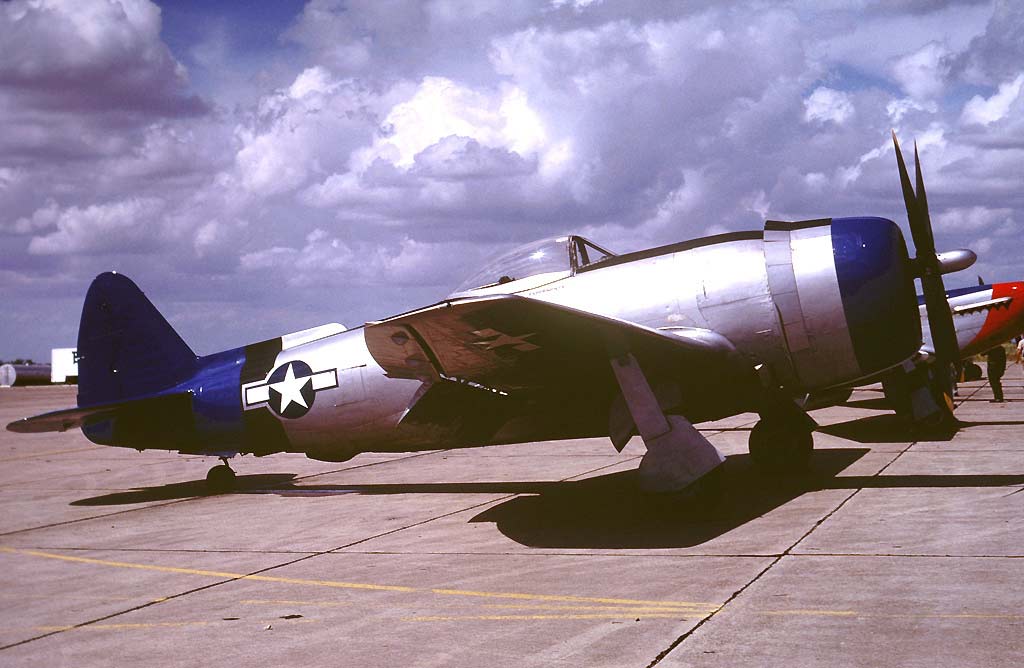
P-47N
- A special model which went into service in Europe early in 1945 as the M for the ETO while the N had 18inchs longer wing span and was used in the Pacific.
- Fitted with a P-47D wing.
- P-47N fuselage and a 2,100 hp Pratt & Whitney R-2800-57 engine with larger supercharger and improved water-injection system.
- Was claimed to be the fastest airscrew-driven airplane in service at that time and to be successful in combating German jet propelled fighters.
- Maximum speed (P-47N): 467 mph at 32,500 ft with the M being able to fly at over 473mph.
- The M had a combat radius of 530 miles while the N had a range of over 800 miles.
- For the P-47M and N, think of a TA-152 on steroids. At a high altitude, nothing could out turn either of these including the other Allied and Axis Fighters.
P-51D/K
General characteristics
- Crew: 1
- Length: 32 ft 3 in (9.83 m)
- Wingspan: 37 ft 0 in (11.28 m)
- Height: 13 ft 4.5 in (4.077 m) tail wheel on ground, vertical propeller blade
- Wing area: 235 sq ft (21.8 m2)
- Aspect ratio: 5.83
- Airfoil: NAA/NACA 45–100
- Empty weight: 7,635 lb (3,463 kg)
- Gross weight: 9,200 lb (4,173 kg)
- Max takeoff weight: 12,100 lb (5,490 kg)
- Fuel capacity: 269 US gal (224 imp gal; 1,020 L)
- Zero-lift drag coefficient: 0.0163
- Drag area: 3.80 sqft (0.35 m²)
- Powerplant: 1 × Packard (Rolls-Royce) V-1650-7 Merlin 12-cylinder liquid cooled engine, 1,490 hp (1,110 kW) at 3,000 rpm;<a href="North American P-51 Mustang - Wikipedia"><span2<span>]</span></a> 1,720 hp (1,280 kW) at WEP
- Propellers: 4-bladed Hamilton Standard constant-speed, variable-pitch, 11 ft 2 in (3.40 m) diameter
Performance
- Maximum speed: 440 mph (710 km/h, 383 kn)
- Cruise speed: 362 mph (583 km/h, 315 kn)
- Stall speed: 100 mph (160 km/h, 87 kn)
- Range: 1,650 mi (2,660 km, 1,434 nmi) with external tanks
- Service ceiling: 41,900 ft (12,800 m)
- Rate of climb: 3,200 ft/min (16 m/s)
- Lift-to-drag: 14.6
- Wing loading: 39 lb/sq ft (190 kg/m2)
- Power/mass: 0.162 / 0.187 hp/lb (0.266 / 0.307 kW/kg) (without / with WEP)
- Recommended Mach limit 0.8
Armament
Notable appearances in media
Main article:
Aircraft in fiction § P-51 Mustang
 General characteristics
- Crew: 1
- Length: 32 ft 3 in (9.83 m)
- Wingspan: 37 ft 0 in (11.28 m)
- Height: 13 ft 4.5 in (4.077 m) tail wheel on ground, vertical propeller blade
- Wing area: 235 sq ft (21.8 m2)
- Aspect ratio: 5.83
- Airfoil: NAA/NACA 45–100
- Empty weight: 7,635 lb (3,463 kg)
- Gross weight: 9,200 lb (4,173 kg)
- Max takeoff weight: 12,100 lb (5,490 kg)
- Fuel capacity: 269 US gal (224 imp gal; 1,020 L)
- Zero-lift drag coefficient: 0.0163
- Drag area: 3.80 sqft (0.35 m²)
- Powerplant: 1 × Packard (Rolls-Royce) V-1650-7 Merlin 12-cylinder liquid cooled engine, 1,490 hp (1,110 kW) at 3,000 rpm;<a href="North American P-51 Mustang - Wikipedia"><span2<span>]</span></a> 1,720 hp (1,280 kW) at WEP
- Propellers: 4-bladed Hamilton Standard constant-speed, variable-pitch, 11 ft 2 in (3.40 m) diameter
Performance
- Maximum speed: 440 mph (710 km/h, 383 kn)
- Cruise speed: 362 mph (583 km/h, 315 kn)
- Stall speed: 100 mph (160 km/h, 87 kn)
- Range: 1,650 mi (2,660 km, 1,434 nmi) with external tanks
- Service ceiling: 41,900 ft (12,800 m)
- Rate of climb: 3,200 ft/min (16 m/s)
- Lift-to-drag: 14.6
- Wing loading: 39 lb/sq ft (190 kg/m2)
- Power/mass: 0.162 / 0.187 hp/lb (0.266 / 0.307 kW/kg) (without / with WEP)
- Recommended Mach limit 0.8
Armament
The p-51D had an advantage over all other prop fighters from 18,000 to about 21,000 feet. Right where the bombers were flying. Higher than that and others performed better. Below that and others performed better. Funny how the P-38J/L owned the skies below 18,000 feet over all single engine fighters.
P-38J/L
General characteristics
- Crew: 1
- Length: 37 ft 10 in (11.53 m)
- Wingspan: 52 ft 0 in (15.85 m)
- Height: 12 ft 10 in (3.91 m)
- Wing area: 327.5 sq ft (30.43 m2)
- Aspect ratio: 8.26<a href="Lockheed P-38 Lightning - Wikipedia"><span8<span>]</span></a>
- Airfoil: root: NACA 23016; tip: NACA 4412<a href="Lockheed P-38 Lightning - Wikipedia"><span9<span>]</span></a>
- Empty weight: 12,800 lb (5,806 kg) <a href="Lockheed P-38 Lightning - Wikipedia"><span8<span>]</span></a>
- Gross weight: 17,500 lb (7,938 kg) <a href="Lockheed P-38 Lightning - Wikipedia"><span8<span>]</span></a>
- Max takeoff weight: 21,600 lb (9,798 kg)
- Powerplant: 2 × Allison V-1710 (-111 left hand rotation and -113 right hand rotation) V-12 liquid-cooled turbo-supercharged piston engine, 1,600 hp (1,200 kW) each WEP at 60 inHg (2.032 bar) and 3,000 rpm
- Propellers: 3-bladed Curtiss electric constant-speed propellers (LH and RH rotation)
Performance
- Maximum speed: 414 mph (666 km/h, 360 kn) on Military Power: 1,425 hp (1,063 kW) at 54 inHg (1.829 bar), 3,000 rpm and 25,000 ft (7,620 m)<a href="Lockheed P-38 Lightning - Wikipedia"><span0<span>]</span></a>
- Cruise speed: 275 mph (443 km/h, 239 kn)
- Stall speed: 105 mph (169 km/h, 91 kn)
- Combat range: 1,300 mi (2,100 km, 1,100 nmi)
- Ferry range: 3,300 mi (5,300 km, 2,900 nmi)
- Service ceiling: 44,000 ft (13,000 m)
- Rate of climb: 4,750 ft/min (24.1 m/s)
- Lift-to-drag: 13.5
- Wing loading: 53.4 lb/sq ft (261 kg/m2) <a href="Lockheed P-38 Lightning - Wikipedia"><span8<span>]</span></a>
- Power/mass: 0.16 hp/lb (0.26 kW/kg)
- Drag area: 8.78 sq ft (0.82 m2)<a href="Lockheed P-38 Lightning - Wikipedia"><span8<span>]</span></a>
- Zero-lift drag coefficient: 0.0268<a href="Lockheed P-38 Lightning - Wikipedia"><span8<span>]</span></a>
Armament
- Guns:
- Rockets: 4× M10 three-tube 4.5 in (112 mm) M8 rocket launchers; or:
- Inner hardpoints:
- 2× 2,000 lb (907 kg) bombs or drop tanks; or
- 4× 500 lb (227 kg) bombs or
- 4× 250 lb (113 kg) bombs; or
- 6× 500 lb (227 kg) bombs; or
- 6× 250 lb (113 kg) bombs
- 10× 5 in (127 mm) HVARs (High Velocity Aircraft Rockets); or
- 2× 500 lb (227 kg) bombs; or
- 2× 250 lb (113 kg) bombs
Out of the top 3 long ranged Allied Fighters, this one had the longest legs and was used as both a bomber escort and a bomber. The Bomber Mafia hated this strange bird since it carried as heavy a payload as a B-17 set up for a long ranged bomb run. When the US flew the F and G models, the Luftwaffe could dive to disengage and the P-38 would not follow. But with the introduction of the Dive Flaps, that trick didn't work anymore and after diving thousands of feet down, they would see the P-38L had only lost a bit of distance and would make up for it fast. Plus, since they would be below 18,000 feet, the P-38L could not only out turn them but out climb them. the P-38J was the first fighter to get the Fowler Flaps which aided their turning at lower speeds.
Sorry, the British never really offered a long ranged fighter. And there were only 3 KI-100 Japanese fighters that would have been a real handful for the 3 long range Allied Fighters. While the KI-100 was introduced, it just didn't have enough numbers to make much of a difference.
Yes I know, Germany didn't have any real long ranged fighters to speak of but we will use their top 3 (excluding the Jets).
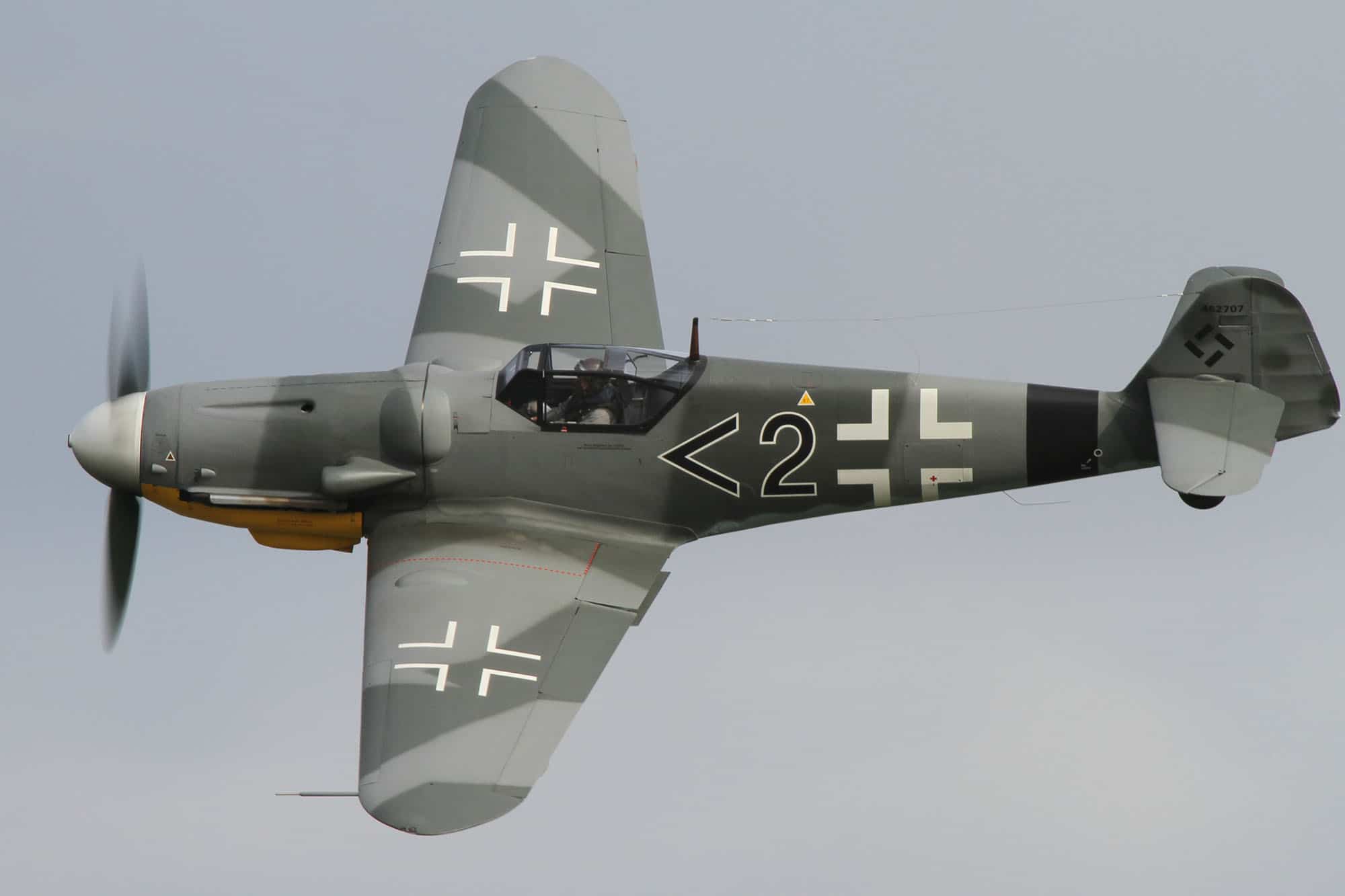
BF-109 and the ME-109K-4
BF-109G6
Wingspan: 9,92 m- Length: 8,85 m
- Height: 3,40 m
- Top speed: 685 km/h
- Service ceiling: 12,500 m
- Max. weight: 2,900 kg
- Drive: Daimler Benz DB 605
- Power: 1350 hp
- Crew/passengers: 1
- Display: Flying
This was a boom and zoom fighter that started out as being able to turn and burn with everything thrown at it. This is the most numerous Luftwaffe Fighter. The problem is, it just got too long on the tooth so a replacement had to be found.
ME-109K-4
They upped the power of the engine and added a bit more fire power but the weight went up. At high altitude, (above 20,000 feet) this was more than a formidable fighter. Below that and the P-38L and the P-51D would be able to more than handle it. But at over 20,000 feet, it would take a P-47M to compete with it which at that point would depend on the pilot more than the Aircraft. It often flew high escorting the FW-190s who would strafe the bombers while the 109K-4 would dive down on the accompanying fighters in a Boom and Zoom attack.
FW-190A, FW-190D Dora.
When the 190A was first introduced in 1941, There was nothing in the skies that could handle it until late 1943 when the P-38J/L and the P-51B/C first hit the skies. The early models would eat a Spitfire alive. But due to a bit of luck, the Brits ended up with a fully functional FW-190A so they could figure out why and come up with tactics to combat it. The Spitfire design was updated to meet it's performance but never to exceed it. This was the most produced of all the 190s and it wasn't until the later 1943 that the P-51B/C and the P-38J/L was introduced to exceed it's performance. The 190 did most of the shooting down of the allied Bombers since it had the guns, speed and could take a lot of punishment.
The Dora was introduce a little late in the war and was used as the platform to make the TA-152. This thing was a beast at medium altitude where the bombers operated at. And could sustain a whole bunch of damage and keep fighting. I think a close comparison would be that of the P-47D.
Which one was better? It all depended on the year, model and altitude. No single one is the winner in this one.