hollie - from your link to Sciam:

www.scientificamerican.com
"Because of the complexity of the Earth's magnetic field and the constant changes it is impossible to predict what the field will be like anytime in the distant future.....
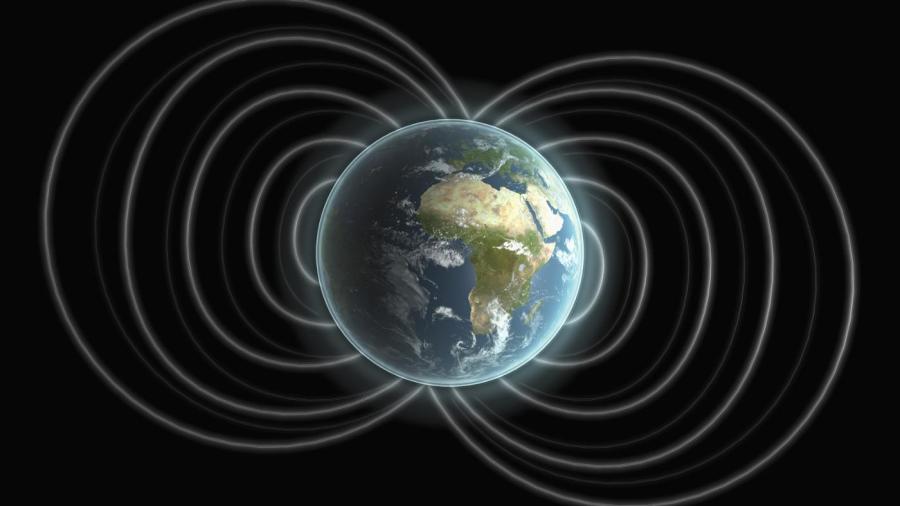
Although magnetic reversals have occurred many times in the geologic past, itAs the molten iron spins around the solid, crystalized iron inside the inner core, it generates a relatively weak magnetic field. This magnetic field helps to protect the Earth from dangerous types of radiation, and it helps make life possible on the planet. is not yet possible to predict when the next reversal will occur. The most recent reversal was about 700,000 years ago. In the past 200 million years reversals have taken place every half million years or so, but with no discernible regularity or pattern."
I should add that it would be very hard to stop the motion of molten iron in earth's core. The article does not go into that. Earth's rotation is involved - that is also fine tuned. The sun and moon's gravity is also involved - our moon is another example of fine tuning. But until you respond on point 1, I will not go into the many other examples of fine tuning in depth on this thread.
I will post this link though:
The leading hypothesis is that the earth’s spinning core causes the Earth's magnetic field, but scientists are unsure about the exact mechanism by which it is created. Iron is the primary constituent of the Earth’s core, and it is able to spin because of its layered construction.

www.reference.com
"As the molten iron spins around the solid, crystalized iron inside the inner core, it generates a relatively weak magnetic field. This magnetic field helps to protect the Earth from dangerous types of radiation, and it helps make life possible on the planet."
Theories involving weakening and reversals fail to address this cause, which involves both the rotational spin of the earth and the convection currents from the inner heat. Neither will change anytime soon!
Still waiting for you to address point #1.