
berg80
Diamond Member
- Oct 28, 2017
- 33,564
- 27,352
- 2,820
Examining Whether Trump Had the Constitutional Authority to Attack Iran
In the aftermath of President Donald Trump’s decision to bomb three of Iran’s nuclear facilities, numerous Democrats claimed the president’s actions were unconstitutional and a violation of the War Powers Resolution.It is a contentious and hotly debated issue not only in Congress but also in academia. Constitutional experts told us those who are claiming the president’s decision was unconstitutional may be correct according to an originalist interpretation of the U.S. Constitution. But Congresses over the last several decades have allowed presidents some latitude to engage militarily without prior consent from lawmakers.
“A lot of people over the next few days are going to argue with confidence that President Trump violated, or didn’t violate, the Constitution when he bombed Iran over the weekend without congressional authorization,” Jack Landman Goldsmith, a professor at Harvard Law School and nonresident senior fellow at the conservative American Enterprise Institute, wrote in a June 23 op-ed headlined, “Was the Iran Strike Constitutional?”
“You might think that the Constitution would provide a clear answer to such a momentous question. But it doesn’t,” Goldsmith wrote.
Although the military hostilities involving Iran, Israel and the U.S. have ended, numerous Democrats have continued to press the issue, and have proposed legislation to try to rein in the president’s military reach.
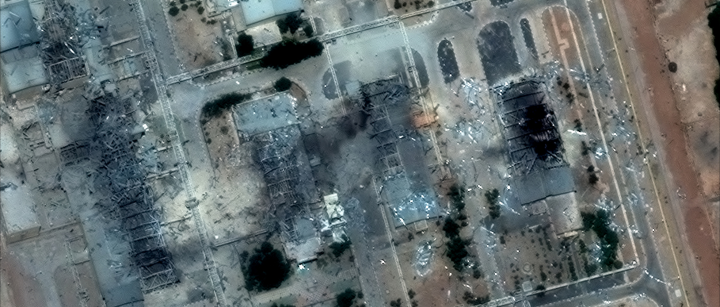
Examining Whether Trump Had the Constitutional Authority to Attack Iran - FactCheck.org
In the aftermath of President Donald Trump's decision to bomb three of Iran's nuclear facilities, numerous Democrats claimed the president's actions were unconstitutional and a violation of the War Powers Resolution. It is a contentious and hotly debated issue not only in Congress but also in...
 www.factcheck.org
IMO, ambiguity over such a momentous question needs to be resolved.
Article I, Section 8 of the Constitution states that Congress holds the power “To declare War.” Article II, Section 2 of the Constitution establishes the president as the commander in chief of the armed forces. So, at what point and under what circumstances would the president need congressional approval before launching military activity?
“I think this is a tough question because practice has strayed so far from the text and original understanding of the Constitution,” Kermit Roosevelt, a professor and constitutional expert at the University of Pennsylvania Carey Law School, told us via email.
Repub Reps Khanna and Massie have introduced a resolution on the specific matter of attacks on Iran. Should it be expanded to give Congress sign off authority on any strike? How much would that hamper a prez's ability to respond quickly if military action were called for?


