You give your own to little credit. Your lower-level people do your dirty work. The lower-level shrew of superiority who died the other day is an example and it has not even started yet. Pelosi, AOC, and all the other Prog leaders will never put themselves into harm's way. You have destroyed many white males. You destroyed potential greatness with it. Greatness with your agendas would be here after the last 60 years and trillions of dollars sent to get it.Like many, Paul is not fond of being in a Mafia family.
Navigation
Install the app
How to install the app on iOS
Follow along with the video below to see how to install our site as a web app on your home screen.
Note: This feature may not be available in some browsers.
More options
Style variation
You are using an out of date browser. It may not display this or other websites correctly.
You should upgrade or use an alternative browser.
You should upgrade or use an alternative browser.
An Act of War
- Thread starter TruthSeeker112125
- Start date

Independent thinker
Diamond Member
- Oct 15, 2015
- 40,527
- 37,146
- 3,488
Don't need others. We acted ourself. It's about time our country had a real leader. What was Biden going to do with Maduro if someone delivered him to the White House doorstep wanting the 25 million dollar reward?I think you answered your own question there....a bounty is a device to encourage actions of others when you can’t act yourself.

berg80
Diamond Member
- Oct 28, 2017
- 35,882
- 29,175
- 2,820
Is Mexico next?
“We’ve knocked out 97% of the drugs coming in by water. And we are going to start now hitting land, with regard to the cartels,” Trump told Fox News host Sean Hannity.
“The cartels are running Mexico, it’s very sad to watch and see what’s happened to that country,” Trump said.
The White House did not immediately respond to a request for comment from CNBC on the president’s remarks.
https://www.cnbc.com/2026/01/09/trump-us-military-cartels-mexico-land.html
trumples seemed to have given us D's a rhetorical blank stare when we referred to the constant chaos of trump 1.0. It's much worse now.
Trump suggests U.S. military will hit cartels on ‘land’ in Mexico
President Donald Trump suggested in a new interview that aired Thursday that the U.S. military could begin land strikes on drug cartels in Mexico.“We’ve knocked out 97% of the drugs coming in by water. And we are going to start now hitting land, with regard to the cartels,” Trump told Fox News host Sean Hannity.
“The cartels are running Mexico, it’s very sad to watch and see what’s happened to that country,” Trump said.
The White House did not immediately respond to a request for comment from CNBC on the president’s remarks.
https://www.cnbc.com/2026/01/09/trump-us-military-cartels-mexico-land.html
trumples seemed to have given us D's a rhetorical blank stare when we referred to the constant chaos of trump 1.0. It's much worse now.

candycorn
Diamond Member
And committed an act of war.Don't need others. We acted ourself.
We don’t have a real leader. We have a circus clownIt's about time our country had a real leader.
Just what the DOJ is doing now, prosecuting him except without tarnishing America’s reputation.What was Biden going to do with Maduro if someone delivered him to the White House doorstep wanting the 25 million dollar reward?
We have zero standing to complain about any nation invading another from this point forward. Clearly, we did it to sieze the assets that belong to the Venezuelan people.
Independent thinker
Diamond Member
- Oct 15, 2015
- 40,527
- 37,146
- 3,488
And committed an act of war.
We don’t have a real leader. We have a circus clown
Just what the DOJ is doing now, prosecuting him except without tarnishing America’s reputation.
We have zero standing to complain about any nation invading another from this point forward. Clearly, we did it to sieze the assets that belong to the Venezuelan people.
berg80
Diamond Member
- Oct 28, 2017
- 35,882
- 29,175
- 2,820
AI Overview
Recent polls indicate that most Americans do not perceive Venezuela as a
major threat to U.S. security. Public opinion is generally opposed to U.S. military action in the country, though opinions on specific actions are somewhat divided.
Key Poll Findings (November 2025 - January 2026)
- Perceived Threat: A CBS News/YouGov poll from November 2025 found that only 13% of Americans view Venezuela as a major threat to U.S. security. Another 48% see it as a minor threat, and 39% see no threat at all.

RetiredGySgt
Diamond Member
LOL you retards dont even know the constitution.Not even remotely true. Congress has the power to declare war.
Independent thinker
Diamond Member
- Oct 15, 2015
- 40,527
- 37,146
- 3,488
AI Overview
Recent polls indicate that most Americans do not perceive Venezuela as a
major threat to U.S. security. Public opinion is generally opposed to U.S. military action in the country, though opinions on specific actions are somewhat divided.
Key Poll Findings (November 2025 - January 2026)
I have no problem with Maduro being prosecuted. I have a problem with the way he was captured, the regime claiming the right to control the country, and the proposed theft of VZ's natural resource.
- Perceived Threat: A CBS News/YouGov poll from November 2025 found that only 13% of Americans view Venezuela as a major threat to U.S. security. Another 48% see it as a minor threat, and 39% see no threat at all.

Doc7505
Diamond Member
- Feb 16, 2016
- 24,279
- 43,172
- 2,430
<~~~~~~~~~~>"Current congressional leaders squirm and would like to shift the burden of initiating war to the President. Less than courageous members of Congress fall all over themselves to avoid taking responsibility, to avoid the momentous vote of declaring war.
But make no mistake, bombing another nation’s capital and removing their leader is an act of war plain and simple. No provision in the Constitution provides such power to the presidency.
No Supreme Court has allowed Congress to abdicate its role in the decisions of war and peace and no congressman of any self-respect will argue otherwise.
Our founders debated fully whether or not to grant the power to declare war to Congress or the president. To a man, from Jefferson to Hamilton, they all agreed with the words Madison wrote that the Executive is the branch of government most inclined to war, therefore, the Constitution with studied care, vested that power in the legislature.
Founding-era arguments in support of ratifying the Constitution demonstrate that our government does not entrust the decision to go to war to just one person.
At the Constitutional Convention, Charles Pinckney argued that uniting the war powers under a single executive would grant to the president monarchical powers.
James Wilson assured Americans at the Pennsylvania ratifying convention that the proposed Constitution would not allow one man, or even one body of men, to initiate hostilities.
In Federalist 69, Alexander Hamilton stated the Constitution gave the presidency fewer war powers than those of the British monarch and the American president would be restricted to conducting the operations of the armies and navies. The founding generation was largely united in the opinion that the American president would not be endowed with the monarchical power to initiate war unilaterally.
These founders were not just engaged in a sales pitch; they were accurately representing the Constitutional Convention’s decision on how to divide the war powers. An early draft of the Constitution gave the Congress the power to “make war” rather than the power to “declare war.”
During the debate over war powers at the Constitutional Convention, South Carolina’s Pierce Butler rose to defend the proposition that the new American government should vest the war-making power with the president.
Elbridge Gerry, a delegate from Massachusetts, was so aghast by Butler’s suggestion that he rose to say that he “never expected to hear in a republic a motion to empower the Executive alone to declare war.” In response to Butler’s proposal to vest all war powers with the President, Gerry joined with James Madison to successful propose amending the draft Constitution to give Congress the power to “declare war” to ensure the President would be able to defend the country against foreign attack without waiting for congressional action.
In other words, while the Constitution empowers the president to defend the country against sudden attacks initiated by a foreign power, the initiation of hostilities by the United States requires deliberation and authorization by the people’s representatives in Congress.
Our founder's intent is not a close call open to equivocation. Pundits argue that presidents have been ignoring this restriction for many decades. That is not an argument but more of an excuse.
The Constitution is clear — only Congress can declare war. The power to declare war was too important to be left in the confidence of one man. As Jefferson wrote, “in questions of power, then, let no more be heard of confidence in man but bind him down from mischief by the chains of the Constitution.”
Our founding fathers were explicit and yet they still worried that a branch of government might resist the chains of the Constitution.
In pondering how the Constitution would be enforced, our founders took to heart Montesquieu’s maxim that if the powers of the Executive and Legislature are combined, there can be no liberty.
Madison wrote that by dividing the powers, by separating the powers the Constitution would pit “ambition against ambition.”
The ambitions of a President would be checked by the ambitions of the legislature. The natural allure of power would be checked by each branch jealously guarding their prerogative of power.
Who among our framers would have ever guessed or conceived of a time when Congress would lack any ambition at all? Who would have predicted a time when Congress would be so feckless as to simply and obediently abandon all pretense of responsibility and any semblance of duty so as to cede the war power so completely to the President?
It’s as if a magical dust of soma has descended through the ventilation ducts of the Congressional office buildings.
Vague faces, permanent smiles and obedient applause indicate the degree that the majority party has lost its grip and become eunuchs in the thrall of presidential domination.
A president is never truly checked by the minority party other than through elections. Meaningful checks and balances require the president’s party to stand up to and resist unconstitutional usurpations of power.
Until that happens, the dangerous precedent of unlimited, war-making power will continue to be abused by Presidents of both parties.
This article was adapted with permission from Senator Rand Paul's floor speech on January 7, 2026. See here:
From Your Site Articles
Related Articles Around the Web
- Senate vote to exert war powers over Trump fails ›
- Rand Paul to Trump: Don't 'abandon' MAGA over Maduro regime change ›
- Rand Paul blames rival Republican senator for Trump Venezuela ... ›
- Rand Paul predicts GOP will 'fracture' over Venezuelan strikes ... ›
Dear RS readers: It has been an extraordinary year and our editing team has been working overtime to make sure that we are covering the current conflicts with quality, fresh analysis that doesn’t cleave to the mainstream orthodoxy or take official Washington and the commentariat at face value. Our staff reporters, experts, and outside writers offer top-notch, independent work, daily. Please consider making a tax-exempt, year-end contribution to Responsible Statecraftso that we can continue this quality coverage — which you will find nowhere else — into 2026. Happy Holidays!
Senator Rand Paul
Sen. Rand Paul is the junior Senator from Kentucky, and a Republican. He is a member of the Senate Foreign Relations Committee.
Top photo credit: U.S. President Donald Trump holds a copy of an executive order in address to Congress 04 Mar 2025 Credit: POOL via CNP/INSTARimages.com "
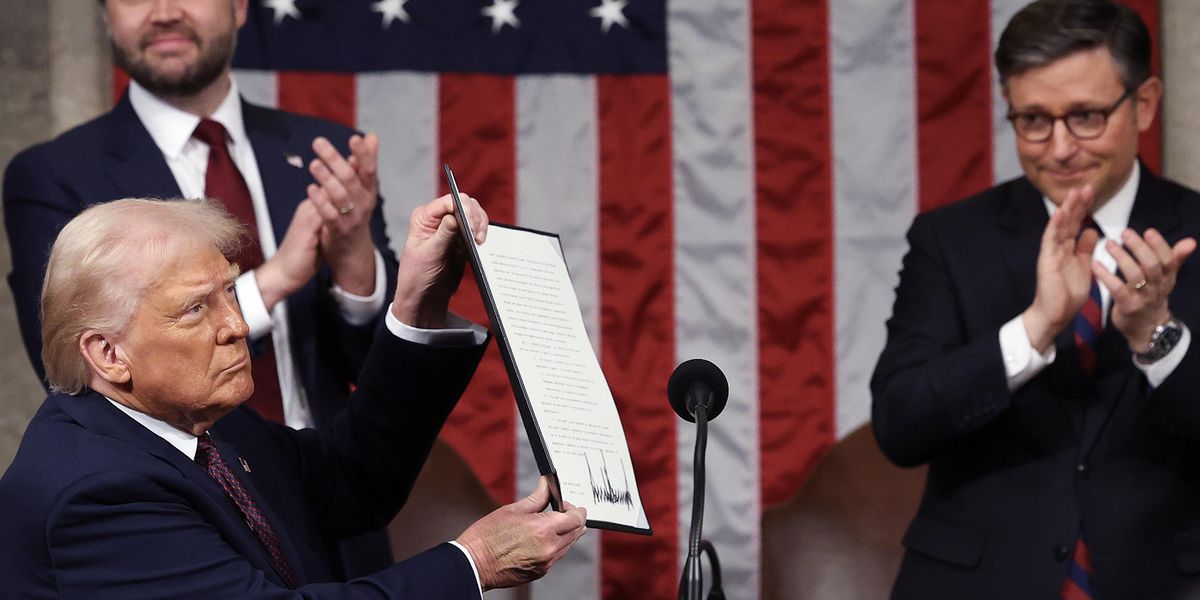
Has my party become 'eunuchs in the thrall' of the president?
No provision in the Constitution allows the president to unilaterally bomb another nation's capital and remove its leaderresponsiblestatecraft.org
From the halls of Montezuma to the shore's of Tripoli. I guess that has no meaning in this case..
The Monroe Doctrine has no meaning to those that would allow others to bring down the U.S.
Historically, Trump is following Federal doctrine more than 200 years in force.
Democrats did not moan or groan when JFK rebuffed Russia in Cuba in the 1960's.
This is no different today.

Mac-7
Diamond Member
- Oct 9, 2019
- 91,274
- 68,801
- 3,565
And its a lieYeah opposing your genocide is evil.
You are terribly confused.
MIGA!!!!

kyzr
Diamond Member
How'd they do that?The US government destroyed the Venezuelan economy. Look again.


gipper
Diamond Member
- Jan 8, 2011
- 81,478
- 45,382
- 2,605
Ever heard of economic sanctions?How'd they do that?
TruthSeeker112125
Platinum Member
- Nov 21, 2025
- 2,127
- 1,418
- 918
- Thread starter
- #74
Badbob,..... I'm not a "Liberal".Does he have the power to arrest a drug runner whose drugs have killed thousands of Americans? You liberal pukes really piss me off. If it has to do with enemies of America you chose the enemies side every time. Every single time. Why don't you move to the place's you champion and stop showing your stupid anti-American bull shit?!
 Read My Profile.
 The Problem here is that because I refuse to Blindly Uphold Trump & The Republican Party, when He & They are Wrong,....... You get Your panties all up in a knot, cuz' I refuse to honor "Your Political Gods".
I'm far more Conservative than most "Conservatives", & the difference is,.... I'm not the Metaphorical "Obedient, Crap Fed Mushroom, that is content to remain in the dark".
And Thanks for that Mindless, Fact less Rant, which proves that alot of You "Shrooms", are just like the Scarecrow in the Wizard of Oz, humming that song endlessly,..... "If I only had a Brain."
TruthSeeker112125
Platinum Member
- Nov 21, 2025
- 2,127
- 1,418
- 918
- Thread starter
- #75
I'm wondering if it's possible to get a "Bullshit Emojii" for posts like this.The OP is total bullshit.
Maduro was not the rightful president of VZ, he was a brutal narco-terrorist dictator who needed to be removed.
Anyone who objects to removing Maduro is a narco-terrorist.

Edgetho
Diamond Member
- Mar 27, 2012
- 22,858
- 16,075
- 2,405
Too bad. What the **** are ya gonna do about it besides whine like a little *****?I Absolutely Agree with Senator Rand Paul!
=======================
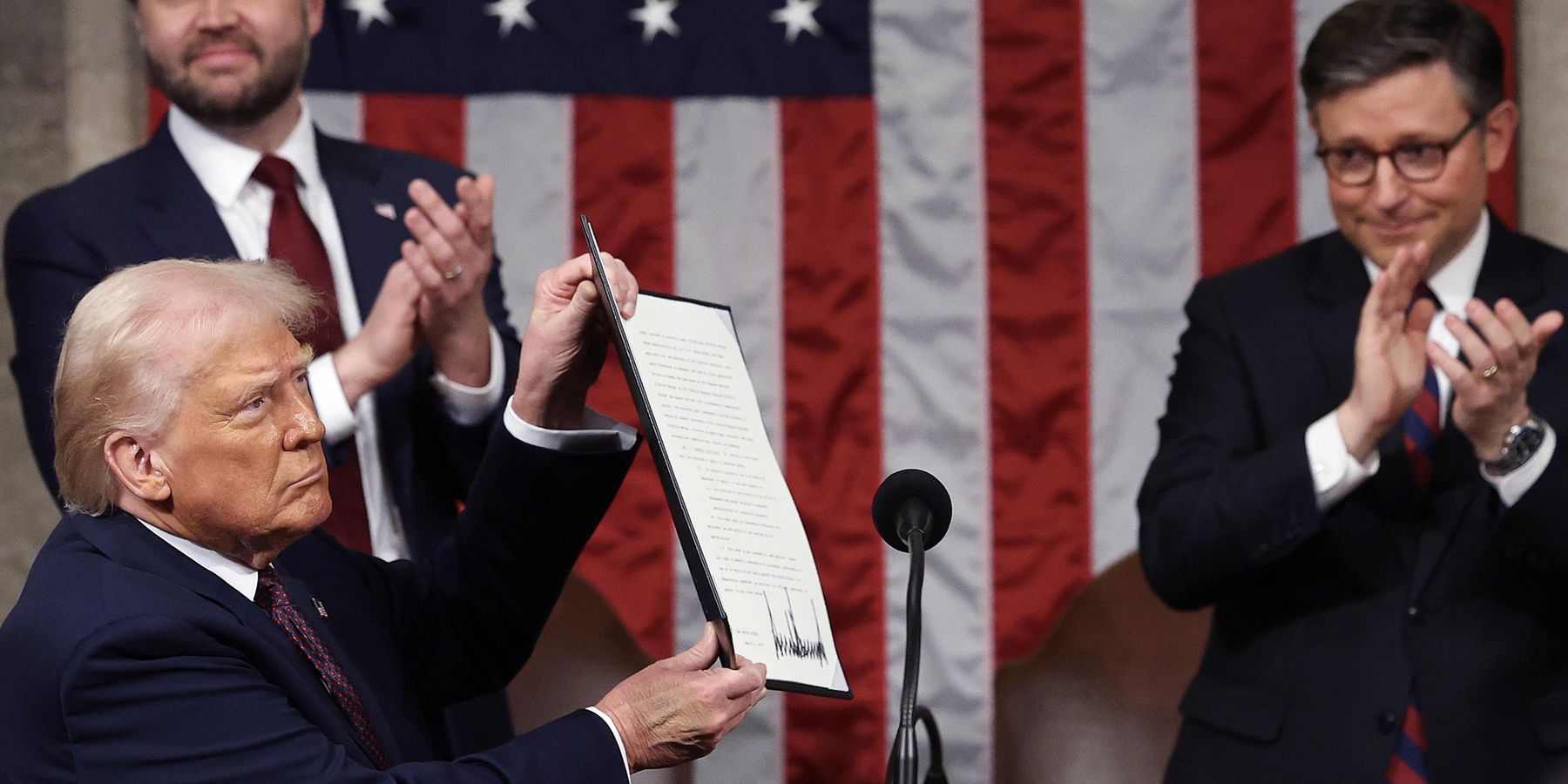
Has my party become 'eunuchs in the thrall' of the president?
No provision in the Constitution allows the president to unilaterally bomb another nation's capital and remove its leader
Analysis | Washington Politics
Senator Rand Paul
Jan 07, 2026
"
I take a back seat to no one in my disdain and loathing of state-sponsored socialism.
In fact, I wrote a book, The Case Against Socialism, describing the historic link between socialism, communism and state-sponsored violence.
I wish the people of Venezuela well and sincerely hope they will not repeat the mistake of electing the type of socialist regime that has plagued that nation since the 1970s.
Whether or not socialism is evil, however, is not the debate today. The debate to about one question and one question only. Does the Constitution allow one man or one woman to take the nation to war without the approval of Congress? Full stop.
That question is bigger than regime change in Venezuela, bigger than any claims of the ends justifying the means, bigger even than the depredations and evils that multiple socialist autocrats have perpetrated upon the once great country of Venezuela.
Even those who celebrate the demise of the socialist, authoritarian regime in Venezuela, as I do, should give pause to granting the power to initiate war to one man. The power to initiate war is so vast a power that it must be confined by checks and balances.
The debate today would not be happening if our leaders read and understood the Federalist Papers. The constitutional power to initiate war is placed squarely on the shoulders of Congress."
Has my party become 'eunuchs in the thrall' of the president?
No provision in the Constitution allows the president to unilaterally bomb another nation's capital and remove its leader

M14 Shooter
The Light of Truth
"Current congressional leaders squirm and would like to shift the burden of initiating war to the President. Less than courageous members of Congress fall all over themselves to avoid taking responsibility, to avoid the momentous vote of declaring war.
But make no mistake, bombing another nation’s capital and removing their leader is an act of war plain and simple. No provision in the Constitution provides such power to the presidency.
Here's the thing.
- An act of war is not inherently a declaration of war.
- The President does not need authorization outside his Article II powers as CinC to order an act of war.
Does a state of war exist between the US and Venezuela?
No?
The President did not declare war.

LordBrownTrout
Diamond Member
The OP is total bullshit.
Maduro was not the rightful president of VZ, he was a brutal narco-terrorist dictator who needed to be removed.
Anyone who objects to removing Maduro is a narco-terrorist.
That will never sink into their thick radical leftist skulls.
The same pollsters who told us Harris would be President. Thanks for the laugh. You're such a rube.AI Overview
Recent polls indicate that most Americans do not perceive Venezuela as a
major threat to U.S. security. Public opinion is generally opposed to U.S. military action in the country, though opinions on specific actions are somewhat divided.
Key Poll Findings (November 2025 - January 2026)
I have no problem with Maduro being prosecuted. I have a problem with the way he was captured, the regime claiming the right to control the country, and the proposed theft of VZ's natural resource.
- Perceived Threat: A CBS News/YouGov poll from November 2025 found that only 13% of Americans view Venezuela as a major threat to U.S. security. Another 48% see it as a minor threat, and 39% see no threat at all.
TruthSeeker112125
Platinum Member
- Nov 21, 2025
- 2,127
- 1,418
- 918
- Thread starter
- #80
So You Approve of The American Military, being used to Assist Federal Law enforcement?The answer is in two parts, the "War Powers Act" gives the president up to 60 days to conduct military operations, and more importantly in the case of VZ, the nation is NOT at war, we arrested a criminal who was not the legitimate president of VZ.
View attachment 1203335
In the Near Future are You "Good" with Federal Troops "Assisting " State & Federal Police, here in America, in the "Act of Law Enforcement"?
Would it be Acceptable for Air Strikes to be carried out on American Protesters?
Similar threads

- Replies
- 7
- Views
- 154


New Topics
-
 Boulder chapter of SJP supports setting elderly Jew on fore
- Started by EvilCat Breath
- Replies: 0
-

-

-


