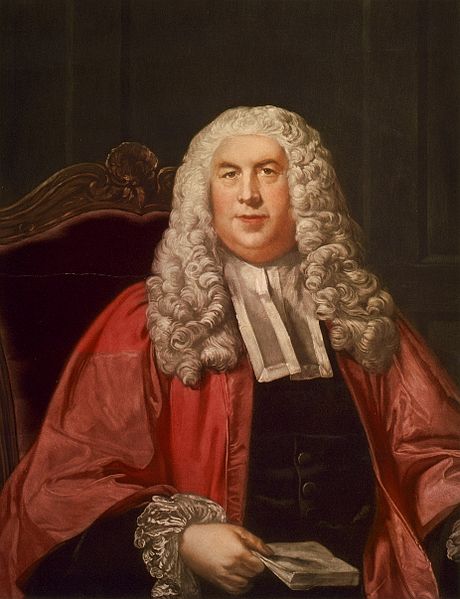
"Christianity was and is a part of the common law and is interwoven into the texture of the society. Similarly, common law is based on Christian principles."
*Christianity – Common Law
*"If we examine the constitutions of the various states, we find in them a constant recognition of religious obligations. Every constitution of every one of the 44 states contains language which, either directly or by clear implication, recognizes a profound reverence for religion, and an assumption that its influence in all human affairs is essential to the well-being of the community. This recognition may be in the preamble, such as is found in the constitution of Illinois, 1870: "We, the people of the state of Illinois, grateful to Almighty God for the civil, political, and religious liberty which He hath so long permitted us to enjoy, and looking to Him for a blessing upon our endeavors to secure and transmit the same unimpaired to succeeding generations," etc..."
Holy Trinity Church v U.S. 143 U.S. 457, 12 S.Ct. 511, 36 L.Ed. 226 (1892)
Holy Trinity Church v. U.S. (1892)
More proof:
*
Parallel Concepts between the U.S. Constitution & the Bible
* The earliest state constitutions made it clear as well that America was founded as a Christian nation. For example, the
Constitution of Connecticut of 1776:
Art. 22. Every person who shall be chosen a member of either house, or appointed to any office or place of trust, before taking his seat, or entering upon the execution of his office, shall take the following oath, or affirmation, if conscientiously scrupulous of taking an oath, to wit:
” I, A B. will bear true allegiance to the Delaware State, submit to its constitution and laws, and do no act wittingly whereby the freedom thereof may be prejudiced.”
And also make and subscribe the following declaration, to wit:
” I, A B. do profess faith in God the Father, and in Jesus Christ His only Son, and in the Holy Ghost, one God, blessed for evermore; and I do acknowledge the holy scriptures of the Old and New Testament to be given by divine inspiration.”
Similar language will be found in the state constitutions of Delaware (1776), Georgia (1777), Maryland (1776), Constitution or Form of Government for the Commonwealth of Massachusetts (1780), New Hampshire (1784), New Jersey (1776) New York (1777), North Carolina (1776) Pennsylvania (1776), South Carolina (1778) Vermont (1777), and Virginia (1777.) If you want the exact language of any of those state constitutions, let me know which one and I will post the applicable section(s.)
By the time we get to the United States Constitution, the atheists and unbelievers cannot find any Christian influence therein. I mentioned all the aforementioned state constitutions for a reason. ALL of them have sections requiring a person to take an oath in order to hold elective office. Now, let me quote from the Constitution of the United States:
“
The Senators and Representatives before mentioned, and the Members of the several State Legislatures, and all executive and judicial Officers, both of the United States and of the several States, shall be bound by Oath or Affirmation, to support this Constitution; but no religious Test shall ever be required as a Qualification to any Office or public Trust under the United States.” Article VI Paragraph III of the U.S. Constitution
There is a difference between an oath and a test. A religious test is prohibited. An oath is NOT prohibited and most state constitutions required one to be a Christian in order to hold public office. Feel free to Google any of the above earliest state constitutions to verify that. I will do more posts a little later showing you Christian principles in the Constitution and debunking the critics most oft used ruses.
* When you have a lawsuit in court, the common law will come into play. The common law is a derivative of Anglo Saxon Law which is rooted in the Bible.
https://scholarship.law.upenn.edu/cgi/viewcontent.cgi?article=4290&context=penn_law_review
* I conceive we cannot better express ourselves than by humbly supplicating the Supreme Ruler of the world . . . that the confusions that are and have been among the nations may be overruled by the promoting and speedily bringing in the holy and happy period when the kingdoms of our Lord and Savior Jesus Christ may be everywhere established, and the people willingly bow to the scepter of Him who is the Prince of Peace." From a Fast Day Proclamation issued by Governor Samuel Adams, Massachusetts, March 20, 1797, in our possession; see also Samuel Adams,
The Writings of Samuel Adams, Harry Alonzo Cushing, editor (New York: G. P. Putnam’s Sons, 1908), Vol. IV, p. 407, from his proclamation of March 20, 1797
* "[P]
ublic utility pleads most forcibly for the general distribution of the Holy Scriptures. Without the Bible, in vain do we increase penal laws and draw entrenchments around our institutions." James Mc Henry,
REVOLUTIONARY OFFICER; SIGNER OF THE CONSTITUTION; RATIFIER OF THE U. S. CONSTITUTION;
SECRETARY OF WAR UNDER PRESIDENTS GEORGE WASHINGTON AND JOHN ADAMS Bernard C. Steiner,
One Hundred and Ten Years of Bible Society Work in Maryland, 1810-1920 (Maryland Bible Society, 1921), p. 14.
* "I am a real Christian – that is to say, a disciple of the doctrines of Jesus Christ." Thomas Jefferson
* The Writings of Thomas Jefferson, Albert Ellery Bergh, editor (Washington, D.C.: The Thomas Jefferson Memorial Association, 1904), Vol. XIV, p. 385, to Charles Thomson on January 9, 1816.
* “Is it not that in the chain of human events, the birthday of the nation is indissolubly linked with the birthday of the Savior? – that it forms a leading event in the progress of the Gospel dispensation? Is it not that the Declaration of Independence first organized the social compact on the foundation of the Redeemer’s mission upon earth? – that it laid the cornerstone of human government upon the first precepts of Christianity?” –John Quincy Adams
* "
Let us enter on this important business under the idea that we are Christians on whom the eyes of the world are now turned… [L]et us earnestly call and beseech Him, for Christ’s sake, to preside in our councils. . . . We can only depend on the all powerful influence of the Spirit of God, Whose Divine aid and assistance it becomes us as a Christian people most devoutly to implore. Therefore I move that some minister of the Gospel be requested to attend this Congress every morning . . . in order to open the meeting with prayer." Elias Boudinot, President of Congress; signed the peace treaty to end the Revolution, first attorney to be admitted to the U.S. Supreme Court bar; helped frame the Bill of Rights; Director of the U.S. Mint
*
Several unanimous Supreme Court decisions, and virtually every jurist and scholar in the world agrees that the Common Law is based on Christian principles and has a long Christian history. Jefferson, in an anti-Christian fit of irrationalism, claimed otherwise. He was wrong."
The Common Law and Christianity -- KEVIN CRAIG - "Liberty Under God" Beginning in Missouri's 7th Congressional District
Kevin Craig is a Christian Anarchist campaigning for *Liberty Under God* in the race for U.S. Congress in Missouri's 7th District.
kevincraig.us
* "
In many of the cases that have occupied the courts, involving religious questions, the proposition has been advanced and reasoned from, that Christianity is a part of the common law..." The American Law Register
https://scholarship.law.upenn.edu/cgi/viewcontent.cgi?article=4290&context=penn_law_review
"
The English legal system and common law have long been widely admired worldwide. They are associated with justice, efficiency, fairness, and indeed with a common-sense outlook produced by a focus on real-life problems. Less well-known and appreciated is the cardinal role played by Christian beliefs and believers in their development."
Christian influence over the common law, remembered at last
Christianity planted the seed that germinated into Western thought for two millennia. Yet the contributions of the faith, and its practitioners, remain unsung, underappreciated, and unheralded in a…
blog.acton.org
Jefferson said he was a Christian; then some here say he denied it. Jefferson wrote of
unalienable Rights yet he owned some 600 slaves over the course of his life. What my critics lose is the time in which Jefferson made a statement and the context.
* In 1776, every European American, with the exception of about 2,500 Jews, identified himself or herself as a Christian. Moreover, approximately 98 percent of the colonists were Protestants, with the remaining 1.9 percent being Roman Catholics
Barry A. Kosmin and Seymour P. Lachman,
One Nation Under God: Religion in Contemporary American Society (New York: Harmony Books, 1993), pp. 28–29.
Is there any point wherein the history of America testifying against the trolls will be accepted as having erased the few quotes they come up with to supposedly prove we are anything less than what this thread has proven? Since they cannot find something nobody is arguing for in the Constitution, when do they accept the facts of history?