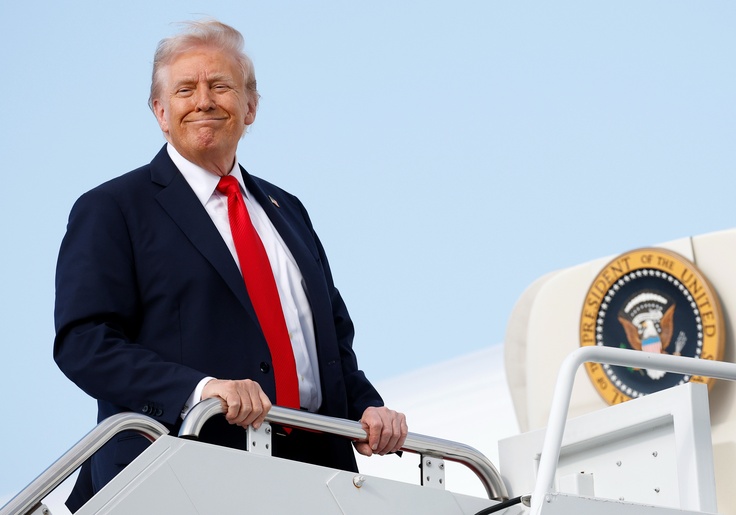
The president dosent need a declaration of war
The term "War Powers Act" refers to the War Powers Resolution of 1973, a federal law designed to limit the U.S. president's ability to commit the nation to an armed conflict without congressional consent. The resolution was enacted to curb the expanded presidential military power that became prominent during the Vietnam War.
Key provisions
Consultation: The president must consult with Congress "in every possible instance" before introducing U.S. armed forces into hostilities or situations of imminent hostilities.
Reporting: The president must report to Congress within 48 hours of introducing armed forces into hostilities abroad. This report must include the circumstances, constitutional and legal authority, scope, and estimated duration of the action.
Time limit: The president must end military action within 60 days unless Congress provides authorization through a declaration of war or a specific Authorization for Use of Military Force (AUMF). A 30-day extension is permitted for the safe withdrawal of troops.
Withdrawal: Congress can pass a concurrent resolution to direct the president to remove forces engaged in hostilities, an action that does not require the president's signature.
Constitutional ambiguity and challenges
The War Powers Resolution emerged from a constitutional tension, as the U.S. Constitution divides war powers between Congress, which has the power to declare war, and the president, who serves as Commander-in-Chief. Since its passage, the act has been a source of debate between the legislative and executive branches.
Executive resistance: No president has formally acknowledged the constitutionality of the act, with many viewing it as an infringement on their executive authority as Commander-in-Chief. Instead of acting "pursuant to" the resolution, presidents often frame their actions as being "consistent with" its requirements.
Judicial abstention: The U.S. Supreme Court has never directly ruled on the act's constitutionality, with courts historically declining to hear challenges brought by members of Congress.
Inconsistent enforcement: Congress has not consistently enforced the act, and presidents have at times continued military actions past the 60-day deadline without explicit congressional authorization.
Expanded use of AUMFs: Congress has also occasionally passed specific AUMFs that authorize military action, as it did in 2001 and 2002 for the War on Terror and Iraq War, respectively. These authorizations have been criticized for providing presidents with broad, open-ended authority that bypasses the resolution's constraints.
Notable examples
Libya (2011): The Obama administration's military intervention was criticized for exceeding the 60-day limit without congressional authorization. The administration argued that U.S. involvement was limited and that authorization was not needed.
Syria (2017): In 2017, President Trump ordered missile strikes on a Syrian airbase. Constitutional scholars noted the potential for violating the resolution, as no congressional authorization was sought.
Yemen (2019): Congress passed resolutions to end U.S. support for the Saudi-led intervention in Yemen, citing the War Powers Resolution. President Trump vetoed the measure, and the Senate failed to override the veto.
Iran (2020): Following the assassination of Iranian General Qassem Soleimani, congressional efforts to invoke the resolution and limit military action against Iran were vetoed by President Trump.
War Powers Resolution - Wikipedia
Table_title: War Powers Resolution Table_content: row: | Long title | Joint resolution concerning the war powers of Congress and t...
Wikipedia
War Powers Resolution of 1973 - Nixon Library
Jul 26, 2021 — Joint Resolution of November 7, 1973, Public Law 93-148, 87 STAT 555, Concerning the War Powers of Congress and the...
Richard Nixon Presidential Library and Museum (.gov)
14.2 War Powers Resolution and Its Implications - Fiveable
Sep 14, 2025 — 14.2 War Powers Resolution and Its Implications. ... The War Powers Resolution of 1973 aimed to curb presidential p...
Instead of wasting hundreds and hundreds of billions more on bombs and bullets, we need to invest in prevention and treatment.
Imagine how many residential treatment centers could have been built with the hundreds and hundreds of billions we have completely wasted on interdiction.
We don't know because most addicts don't get into rehab. For one thing treatment centers cost tens of thousands of dollars & insurance companies fight tooth & nail to deny in- house treatment.
Outpatient treatment for drug addiction in the majority of cases, fails.
We don't know because most addicts don't get into rehab. For one thing treatment centers cost tens of thousands of dollars & insurance companies fight tooth & nail to deny in- house treatment.
Outpatient treatment for drug addiction in the majority of cases, fails.
More get into rehabilitation than you realize. The success/failure rate depends on the substance. The reason outpatient treatment is so popular is the in house programs have a long waiting line in many cases.
Over 70 Percent of Americans Back Trump's Strikes on Drug-Smuggling Boats: Poll
Seventy-one percent of Americans—including a majority of Democrats—say they support the U.S. military destroying boats that smuggle drugs from South America, according to a new poll.
Support for destroying drug-smuggling boats appears strong across party lines, with 89 percent of Republicans, 67 percent of Independents, and 56 percent of Democrats expressing approval, according to the Harvard CAPS/Harris poll released Tuesday
Seventy-one percent of Americans—including a majority of Democrats—say they support the U.S. military destroying boats that smuggle drugs from South America, according to a new poll.