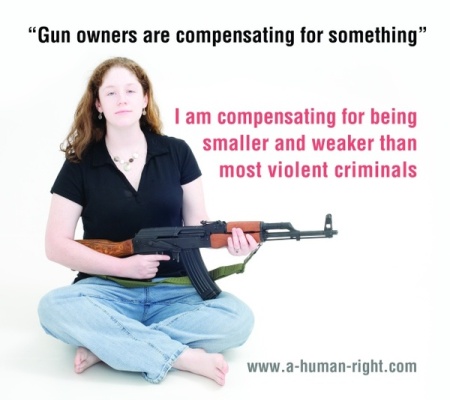
One study found that in Florida CCW holders were 300 times less likely than the general population to commit a crime. The firearm crime rate among license holders, annually averaging only several crimes per 100,000 licensees, is a fraction of the rate for the state as a whole. Between the beginning of Floridas permitting program and the end of 2005, the state issued 1,104,468 concealed weapons permits. During that time period 3,643 permits were revoked - a rate of about 0.3 percent. Of those revocations 2,941 involved a crime after licensure,and only 157 of those crimes involved the use of a firearm.
A Texas study found that CCW holders in that state were "5.7 times less likely to commit a violent crime, and 14 times less likely to commit a non-violent offense."
North Carolina reports only 0.2% of their 263,102 holders had their license revoked in the 10 years since they have adopted the law.
In Georgia, studies by numerous independent researchers and state agencies have found that concealed handgun license holders are five times less likely than non-license holders to commit violent crimes.
In 2004, the state of Utah had a permit revocation rate of about 0.4 percent. The rate for revocations due to firearm offenses was 0.02 percent.
Between 1986 and 2003, only 0.8 percent of Kentucky's 71,770 licenses were revoked for any reason.
In 2001, Indiana revoked about 0.2 percent of its outstanding concealed weapon permits.
Since the inception of its concealed weapons program in 1995, Virginia has seen a revocation rate of just 0.2 percent.
Between October of 1994 and February of 1996, the state of Wyoming issued 2,273 permits and revoked four, a revocation rate of just under 0.2 percent.
Between 1996, when its shall-issue law passed, and September of 1999, the state of Oklahoma issued 30,406 permits and revoked only 62a rate of 0.2 percent.
The truth shouldn't come as a surprise either. This is what you typically know about a person who has a CCW in many states (specifically Tennessee in the example):
- He/she has never been convicted of "any felony offense punishable for a term exceeding one (1) year".
- He/she has never been convicted of a misdemeanor crime of domestic violence.
- He/she has never been convicted of the offense of stalking.
- He/she was not under indictment at the time they applied for a CCW.
- He/she was not the subject of an order of protection at the time they applied for a CCW.
- He/she has not had a DUI in the past five years nor two or more DUIs in the past 10 years
- He/she has not been under treatment for nor hospitalized for addiction to drugs or alcohol in the past 10 years.
- He/she has never been adjudicated as mentally defective.
- He/she has never been discharged from the military under dishonorable conditions ("dishonorable discharge, bad conduct discharge or other than honorable discharge Chapter 1340-2-5-.02 (5)").
- He/she has never renounced their U.S. citizenship.
- He/she has never received social security disability benefits "by reason of alcohol dependence, drug dependence or mental disability."
references for above comments
link for florida statistics
link for texas statistics
You are far more likely to be killed by a criminal with a gun than by a law-abiding citizen.