
Welcome to Sott.net
Wed, 19 Oct 2016
The World for People who Think
Puppet Masters
The U.S. government's cyber-war on Wikileaks
Srećko Horvat
CounterPunch
Tue, 18 Oct 2016 19:35 UTC
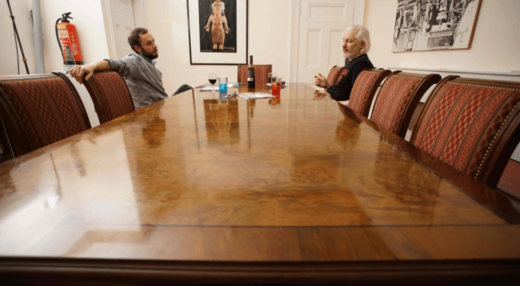
© Sunshine Press Publications
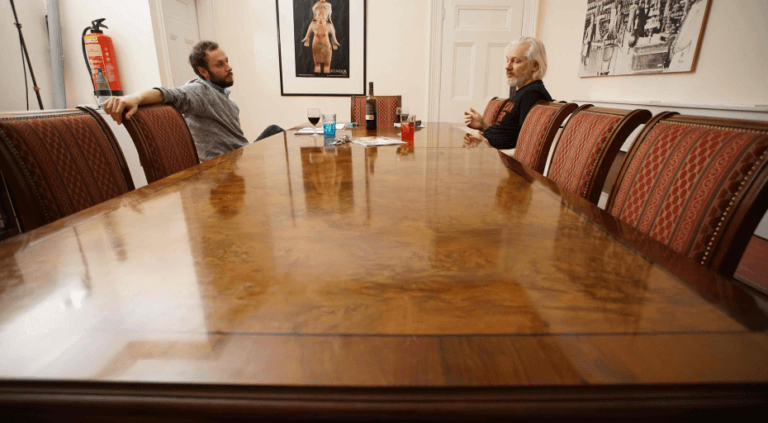
Srećko Horvat & Julian Assange at the Ecuadorian Embassy in London.
When the ruling class is in panic, their first reaction is to hide the panic.
They react out of cynicism: when their masks are revealed, instead of running around naked, they usually point the finger at the mask they wear. These days the whole world could witness a postmodern version of the infamous quote "Let them eat cake", attributed to Marie-Antoinette, queen of France during the French Revolution.
As a reaction to WikiLeaks publishing his emails, John Podesta, the man behind Hillary Clinton's campaign, posted a photo of
a dinner preparation, saying "I bet the lobster risotto is better than the food at the Ecuadorian Embassy".
A similar version of vulgar cynicism emerged earlier this month when Hillary Clinton reacted to the claim that she reportedly wanted to "drone" WikiLeaks founder Julian Assange ("Can't we just drone this guy?") when she was the US Secretary of State. Instead of denying her comments, Clinton said that she doesn't recall any such joke, "It would have been a joke if it had been said, but I don't recall that".
One doesn't have to read between the lines to understand that if Hillary Clinton had said that, she would have considered it a joke.
But when emperors joke, it usually has dire consequences for those who are the objects of their "humor."
Cyber-war Not with Russia...but WikiLeaks
During the last few months I have visited
Julian Assange in the Ecuadorian Embassy in London several times and each time I came out of the Embassy, where he
is spending his fifth year in political asylum under legitimate fear he might be extradited to the US, my thought was the following one: although
he lives, without his family, in a postmodern version of solitary confinement (even prisoners are allowed to walk for up to one hour a day), although
he has no access to fresh air or sunlight for more than 2000 days, although
the UK government recently denied him safe passage to a hospital for an MRI scan,
if his access to the internet would be cut off this would be the most severe attack on his physical and mental freedom.
The last time I saw him, which was only two weeks ago,
he expressed the fear that, because he had already published leaks concerning US elections and with more to come,
the US might find various ways to silence him, including pressuring Ecuador or even shutting down the internet.
What seemed a distant possibility only two weeks ago, soon became a self-fulfilling prophecy.
When the Obama administration recently announced that it is, as Biden said, planing an "unprecedented cyber covert action against Russia",
the first victim was not Putin, but precisely Julian Assange whose internet was cut off just a day after Biden's self-contradictory proclamation.
No wonder Edward Snowden
reacted immediately by saying that "nobody told Joe Biden what 'covert operation' means.
According to the U.S. Department of Defense's
Dictionary of Military and Associated Terms, a covert operation is "an operation that is so planned and executed as to conceal the identity of or permit plausible denial by the sponsor."
It is no secret anymore that
the Ecuadorian government has come under extreme pressure since Assange leaked the
Democratic National Committee email database. We don't know yet whether the US pressured Ecuador to shut down the internet, but i
t is clear that the present US government and the government to come is fighting a war with WikiLeaks which is all but "covert". Is it really a coincidence that Julian Assange's internet access was cut off shortly after publication of Clinton's Goldman Sachs speeches?
If at the beginning we still had a "soft" version of postmodern McCarthyism, with Hillary calling everyone opposed to her campaign a Russian spy (not only Assange, but also Donald Trump and Jill Stein), then with Obama's recent intervention it became more serious.
With Obama's threat of a cyber-war, the "soft" McCarthyism didn't only acquire geopolitical significance, but at the same time a new mask was revealed:
Obama is obviously trying to cement the public debate and make the Russian threat "real", or at least to use it as a weapon in order to help Clinton to get elected. Moreover, this new twist in something that has already become much more than only US elections (US elections are never only US elections!), shows not only how Obama is ready to strengthen Hillary's campaign, but it also reveals that a cyber war is already in the making.
It is not a cyber war with Russia, but with WikiLeaks.
And it is not the first time.

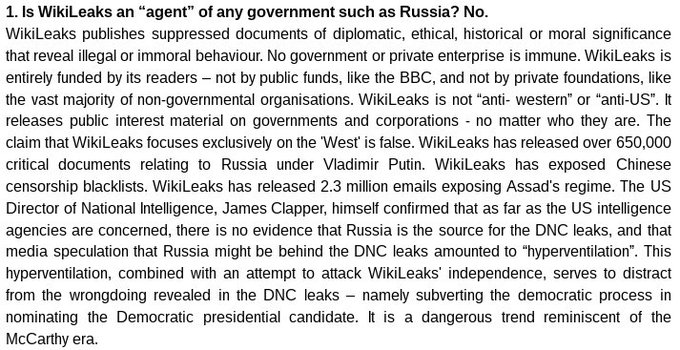
 WikiLeaks Task Force @WLTaskForce
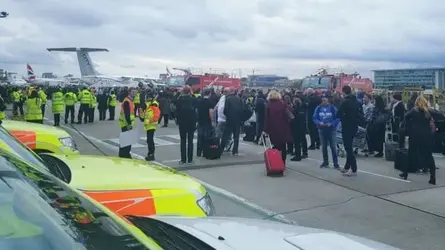
 26
26 


