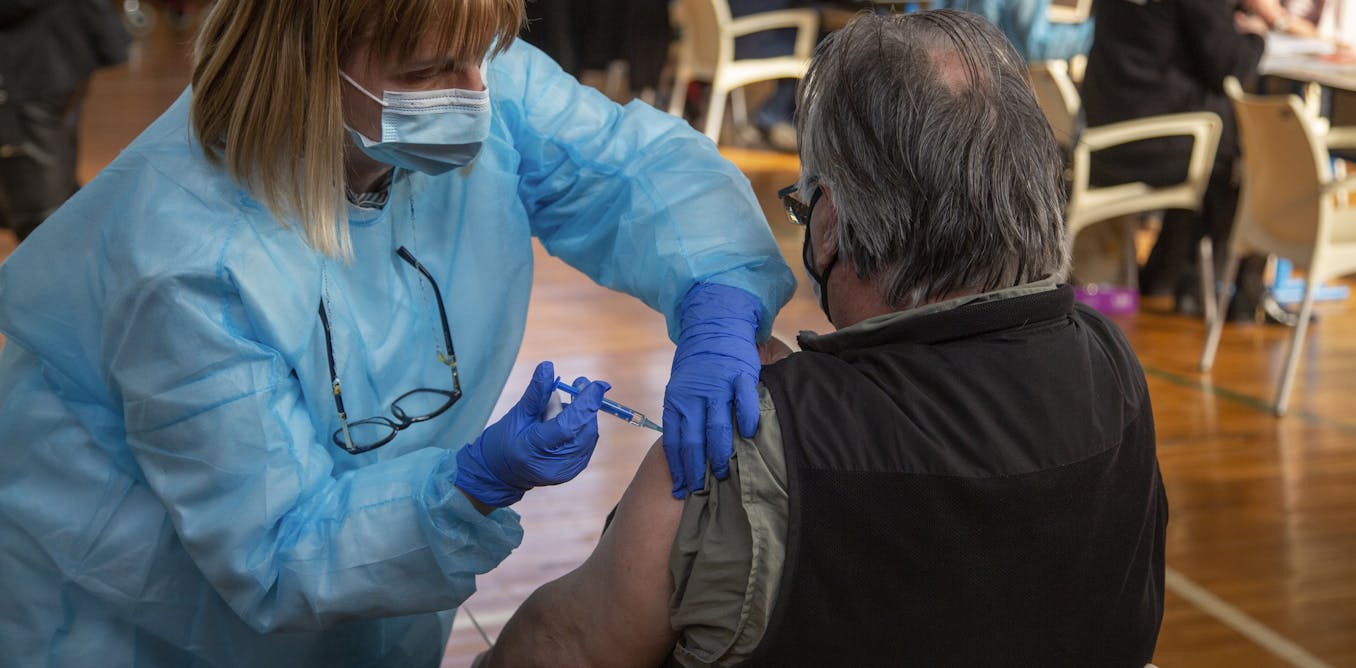
Why NOT? We need to offer incentives for young people in the 16-28 range if we're going to reach the 65-70% range for herd immunity.
As it won't harm them if they get it? They could just catch it and go on with their lives.
It won't harm MOST young people - All? Nope. And they can asymptomatic and spread it. Getting young people vaxed is essential to reach herd immunity.
If you are vaxxed, you can still get it and spread it.
And if you have no commodities? No, your effective rate at being hospitalized for this is zero.
Chances of a fully vaxed individual getting and spreading the COVIDS is minuscule.
Time for vaccine passports. If one is too much of a sceerdy cat to get poked, they don't deserve to attend sporting events and concerts ...
OR get on a plane!
There has not been enough double blind testing to compare those who have been vaxed to those who have contracted the virus naturally and developed T-cell background immunity to make that statement.
You have no data to back up that statement. This is a position based on shareholder interests. . . and, quite frankly, an agenda.
Learn something
You’ve been vaccinated; can you now safely see your friends and family? New research hints that vaccinated people may be less likely to transmit the coronavirus, but they are not 100% in the clear.

theconversation.com
So. . . your link says that they can still spread it. . . and?
AND the possibility of this is slim. DERP
2. Does infection always mean transmission?
Transmission happens when enough viral particles from an infected person get into the body of an uninfected person. In theory, anyone infected with the coronavirus could potentially transmit it. But a vaccine will reduce the chance of this happening.
In general, if vaccination doesn’t completely prevent infection, it will significantly reduce the amount of virus coming out of your nose and mouth – a process called shedding – and shorten the time that you shed the virus. This is a big deal. A person who sheds less virus is
less likely to transmit it to someone else.
This seems to be the case with coronavirus vaccines. In a
recent preprint studywhich has yet to be peer reviewed, Israeli researchers tested 2,897 vaccinated people for signs of coronavirus infection. Most had no detectable virus, but people who were infected had one-quarter the amount of virus in their bodies as unvaccinated people tested at similar times post-infection.
Less coronavirus virus means less chance of spreading it, and if the amount of virus in your body is low enough, the probability of transmitting it may reach almost zero.