Why Evolution is a Fairytale for Grown-Ups

So let's look quickly at the "prebiotic" synthesis of phospholipids.

In a cell, this is done in the endoplasmic reticulum using an enzymatic process. But we'd like to know how it could be done without a cell, using just the simple chemicals found in a very hot primitive atmosphere.

You'll recall, that a phospholipid has a glycerol backbone with some long chain hydrocarbons. So first, we need long chain hydrocarbons.

This part is pretty easy. We need hydrogen, carbon monoxide, and methane, and it helps if we have a catalyst like iron - all of which were present in large quantities in the "magma oceans" phase of early earth.

In chemistry this is called the Fischer-Tropsch process.


Next we need fatty acids, also know as glycerides. (In the body these usually occur in groups of three, called triglycerides).

There's a traditional way of doing this. For this we depend on the minerals present during the "chondrite" phase of the hydrothermal systems in early earth.


But there are also other methods, for example using a nickel catalyst.
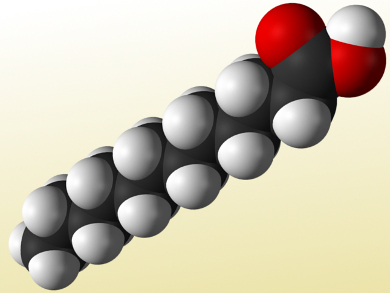

So at this stage we already have multiple parallel pathways to get the needed fatty acids. The idea is that "all" of these reactions will occur, in proportion to the availability of precursors and catalysts.

Finally we have "phospholipid synthesis", which is a tad more complicated but again multiple abiotic pathways are known. Turns out your buddy Oro was among the first to study this, in the 1995 time frame. Here is a very thorough if somewhat complex review of what is known about abiotic phospholipid synthesis from hydrocarbons and free fatty acids.


So these processes will give you all the essential components of stable cell membranes (lipid bilayers with phospholipids to stabilize them and protect them from cations).

The Fischer-Tropsch process is an excellent example of combinatorial explosion. It works just like Pascal's triangle. You start with two 1-chain hydrocarbons, which then combine to form a 2-chain. Then the 2-chain combines with another 1-chain to build a 3-chain. And so on. The longer you let it run, the longer the resulting chains.

At the end of the process, you have a mixture of varying length chains, with smaller chains being more common. The proportion of each type of chain can be calculated from the chemical kinetics. You end up with a "soup" of hydrocarbons, but since they're all oily and hydrophobic they're going to try to separate from the water and aggregate with themselves. Therefore this process "drives" micelle formation, you end up with round globules with the hydrocarbon tails pointing in and the glycerol end pointing out (because glycerol has CO and OH moieties which are perfectly happy in water).

So now you have one of the essential components of cellular life, which are stable cell membranes. These will just float around in the water, and any time they encounter a calcium ion they will "invaginate" to form a small vesicle inside the larger membrane, taking with them any chemicals that happen to be in the vicinity. This is how you get "compartments" with varying (bio)chemical abilities. Since amino acid synthesis is occurring at the same time in parallel with fatty acid synthesis, some of your compartments will contain amino acids. And since those compartments are now isolated from the larger ocean, there is plenty of time for the amino acids to react with each other and form polypeptides.
 
Let's supplement and continue the previous discussion by looking at two common abiotic mechanisms of membrane invagination.

The first is simply physical stress. You have a globular micelle floating around in hot water, so you have all manner of shearing and torque ("osmotic stress"), and sometimes the membrane ruptures but sometimes the geometry is such that it folds back in on itself and essentially "heals" itself, resulting in the bud being expelled either inward or outward.

The more common mechanism is proton (pH) induced invagination. Basically this means elevated proton concentrations at the membrane's outer surface (assuming the inside is more stable than the outside, since your micelle is floating around in a volatile ocean). More protons means more positive charge. This is a great discussion of proton driven invagination, you can scroll down about halfway to get to the "strictly abiotic" part.


Here are some pictures of what a micelle looks like following proton driven invagination, and the equivalent process in live cells. The blue parts are molecules that just happen to be present near the site of the invagination.


1748298282893.webp


This is how the membrane looks when a bunch of protons get near it.

1748298574000.webp


Here is a detailed biophysical study of a model system called "giant unilammelar vesicles" (GUV's). The model system makes it much easier to calculate the physics.


In the ocean there are lots of free and loosely attached protons floating around, so these processes are going to be very common and frequent. You can calculate the chances of this happening based on micelle concentration and pH. These graph show the effect of pH and temperature. (The middle graph show stability without changes in either).

1748299305765.webp
 
So let's look quickly at the "prebiotic" synthesis of phospholipids.

In a cell, this is done in the endoplasmic reticulum using an enzymatic process. But we'd like to know how it could be done without a cell, using just the simple chemicals found in a very hot primitive atmosphere.

You'll recall, that a phospholipid has a glycerol backbone with some long chain hydrocarbons. So first, we need long chain hydrocarbons.

This part is pretty easy. We need hydrogen, carbon monoxide, and methane, and it helps if we have a catalyst like iron - all of which were present in large quantities in the "magma oceans" phase of early earth.

In chemistry this is called the Fischer-Tropsch process.


Next we need fatty acids, also know as glycerides. (In the body these usually occur in groups of three, called triglycerides).

There's a traditional way of doing this. For this we depend on the minerals present during the "chondrite" phase of the hydrothermal systems in early earth.


But there are also other methods, for example using a nickel catalyst.


So at this stage we already have multiple parallel pathways to get the needed fatty acids. The idea is that "all" of these reactions will occur, in proportion to the availability of precursors and catalysts.

Finally we have "phospholipid synthesis", which is a tad more complicated but again multiple abiotic pathways are known. Turns out your buddy Oro was among the first to study this, in the 1995 time frame. Here is a very thorough if somewhat complex review of what is known about abiotic phospholipid synthesis from hydrocarbons and free fatty acids.


So these processes will give you all the essential components of stable cell membranes (lipid bilayers with phospholipids to stabilize them and protect them from cations).

The Fischer-Tropsch process is an excellent example of combinatorial explosion. It works just like Pascal's triangle. You start with two 1-chain hydrocarbons, which then combine to form a 2-chain. Then the 2-chain combines with another 1-chain to build a 3-chain. And so on. The longer you let it run, the longer the resulting chains.

At the end of the process, you have a mixture of varying length chains, with smaller chains being more common. The proportion of each type of chain can be calculated from the chemical kinetics. You end up with a "soup" of hydrocarbons, but since they're all oily and hydrophobic they're going to try to separate from the water and aggregate with themselves. Therefore this process "drives" micelle formation, you end up with round globules with the hydrocarbon tails pointing in and the glycerol end pointing out (because glycerol has CO and OH moieties which are perfectly happy in water).

So now you have one of the essential components of cellular life, which are stable cell membranes. These will just float around in the water, and any time they encounter a calcium ion they will "invaginate" to form a small vesicle inside the larger membrane, taking with them any chemicals that happen to be in the vicinity. This is how you get "compartments" with varying (bio)chemical abilities. Since amino acid synthesis is occurring at the same time in parallel with fatty acid synthesis, some of your compartments will contain amino acids. And since those compartments are now isolated from the larger ocean, there is plenty of time for the amino acids to react with each other and form polypeptides.
:D I must confess you talking that way to me sounds like Russian mixed with Chinese. I have had one year of College Chemistry way back around 1958. Nothing at all in biology.
 
:D I must confess you talking that way to me sounds like Russian mixed with Chinese. I have had one year of College Chemistry way back around 1958. Nothing at all in biology.

Evolution is metículously documented.

Earlier in the thread you persisted in mentioning "abiotic" processes. And I countered by saying there's no such thing, because no one can't define where the boundary is.

I proposed an alternative viewpoint, which defines life in terms of its underlying processes instead of its results. So now we're looking at very primitive evolution, the kind that starts with a few chemicals. It's both abiotic (your word) and combinatorial (my word).

This is the same life that gives rise to bags of water that are born and die. Same thing. The common element is the "process", which is universal. Many physicists now believe that information is an indivisible part of energy, that the two are joined at the hip. What gives rise to this relationship is the quantization of energy, which means you count - which leads directly to the combinatorics.

In math we use the terms "continuous" and "discrete". Most of traditional physics (gravity, electromagnetism, planetary motion, "forces" in general) is based on the continuous viewpoint, whereas quantum mechanics leads to a "discrete" result, which is one of the reasons they're hard to reconcile.

But we have many examples in Mathematics, for how they DO reconcile. For example there are the modes of a vibrating string, which exist because of boundary conditions. And there is geometry in the complex plane - where we begin by counting how many times we can go around a circle - and in topology, where we divide infinite sets into countable subsets.

Furthermore there is the counterintuitive math of recursion, which proves that the number of points in a dust is the same as the number of points in the interval that created it. Recursion is what creates fractals, which are "shapes" (like trees, whether wooden or dendritic) - and life is full of the recursive processes that create these shapes. These processes evolve too, just like the data - the DNA sequence changes and so does the way it's replicated.
 
Evolution is metículously documented.

Earlier in the thread you persisted in mentioning "abiotic" processes. And I countered by saying there's no such thing, because no one can't define where the boundary is.

I proposed an alternative viewpoint, which defines life in terms of its underlying processes instead of its results. So now we're looking at very primitive evolution, the kind that starts with a few chemicals. It's both abiotic (your word) and combinatorial (my word).

This is the same life that gives rise to bags of water that are born and die. Same thing. The common element is the "process", which is universal. Many physicists now believe that information is an indivisible part of energy, that the two are joined at the hip. What gives rise to this relationship is the quantization of energy, which means you count - which leads directly to the combinatorics.

In math we use the terms "continuous" and "discrete". Most of traditional physics (gravity, electromagnetism, planetary motion, "forces" in general) is based on the continuous viewpoint, whereas quantum mechanics leads to a "discrete" result, which is one of the reasons they're hard to reconcile.

But we have many examples in Mathematics, for how they DO reconcile. For example there are the modes of a vibrating string, which exist because of boundary conditions. And there is geometry in the complex plane - where we begin by counting how many times we can go around a circle - and in topology, where we divide infinite sets into countable subsets.

Furthermore there is the counterintuitive math of recursion, which proves that the number of points in a dust is the same as the number of points in the interval that created it. Recursion is what creates fractals, which are "shapes" (like trees, whether wooden or dendritic) - and life is full of the recursive processes that create these shapes. These processes evolve too, just like the data - the DNA sequence changes and so does the way it's replicated.
Is life movement?
 
Evolution is metículously documented.

Earlier in the thread you persisted in mentioning "abiotic" processes. And I countered by saying there's no such thing, because no one can't define where the boundary is.

I proposed an alternative viewpoint, which defines life in terms of its underlying processes instead of its results. So now we're looking at very primitive evolution, the kind that starts with a few chemicals. It's both abiotic (your word) and combinatorial (my word).

This is the same life that gives rise to bags of water that are born and die. Same thing. The common element is the "process", which is universal. Many physicists now believe that information is an indivisible part of energy, that the two are joined at the hip. What gives rise to this relationship is the quantization of energy, which means you count - which leads directly to the combinatorics.

In math we use the terms "continuous" and "discrete". Most of traditional physics (gravity, electromagnetism, planetary motion, "forces" in general) is based on the continuous viewpoint, whereas quantum mechanics leads to a "discrete" result, which is one of the reasons they're hard to reconcile.

But we have many examples in Mathematics, for how they DO reconcile. For example there are the modes of a vibrating string, which exist because of boundary conditions. And there is geometry in the complex plane - where we begin by counting how many times we can go around a circle - and in topology, where we divide infinite sets into countable subsets.

Furthermore there is the counterintuitive math of recursion, which proves that the number of points in a dust is the same as the number of points in the interval that created it. Recursion is what creates fractals, which are "shapes" (like trees, whether wooden or dendritic) - and life is full of the recursive processes that create these shapes. These processes evolve too, just like the data - the DNA sequence changes and so does the way it's replicated.
Thank you.
 
Back
Top Bottom