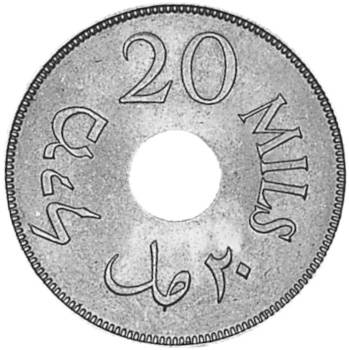
"Palestine" is just a name of the mandate region. When the mandate ended the government of Eretz Israel choose to name their state Israel. There was no state of palestine so why should they have kept the name. They wanted their jewish state to reflect their history and ties to the land.
They had the right to call it what they wanted.
It was a distinction from the state offered and refused by the UN partition plan. At the time most palestinian arabs/muslims identified themselves as southern syrians, jordanian or just as arab. They were a mix of tribes and people and at the time the mandate ended close to half were immigrants that came seeking well paying work what had no real ties to the land or country.
If Israel had kept the name of palestine, what should the rest of the other land have called itself? Palestine II?
With the creation of Israel, the "land" was no longer palestine but now Israel.
Sovereignty and rights come from statehood which the palestinians never had or left because they did not want to accept either Israel or partition.
Israel could have called itself Mecca or Rome or Jewland or XYZland but it choose Israel. Palestinian refugees, gaza, WB , wherever don't have the right to tell Israel what it should be called. They don't want to be Israeli? They leave. Most stayed and are content as Israelis. They don't want to leave or change names.
Israel was identified by the mandate as a jewish homeland and Israel identifies as a jewish state. Israel was a logical choice for a name and the land is Israeli land and the people are Israeli.
Time you accept that.
You start with this statement.
"Palestine" is just a name of the mandate region.
That is not true. Palestine was a country (Palestine was called a country ten times in the mandate charter) that was defined by international borders. It had citizens as per international law, the Treaty of Lausanna, and the Palestine citizenship order of 1925.
The rest of your post follows false premise.
Nope as the treaties state the mandate of Palestine and never the nation of Palestine, take another close look tinny ?
And the treaty of Lausanne does not even mention Palestine, while the Palestine citizenship order endows palestinians with British palestinian citizenship
Where does it say that?
On the passports issued and in the order itself
A second important clause of the draft, later to be intensely debated, stated that the foreign relations of the Palestine government were to be undertaken by Great Britain, and the citizens of Palestine were entitled to British protection when outside of Palestine
The creation of Palestinian citizenship under an international mandate 1918-1925 openDemocracy
And the arab muslims rejected the Palestine citizenship order out of hand.
The Palestinian Arab Executive leadership unanimously rejected the citizenship legislation on the basis that it denied citizenship to native-born Palestinians while privileging Jewish immigrants, and that it neglected provisions for natural civil and political rights.
As the trustee for Palestine Britain had the obligation to facilitate travel and protection for the Palestinians. Palestine, however, never became a part of Britain and the Palestinians never became British.
--------------------
With regard to nationality of the inhabitants of mandated territories, in general, the Council of the League of Nations adopted the following resolution on 23 April 1923
.
“(1) The status of the native inhabitants of a Mandated territory is distinct from that of the nationals of the Mandatory Power....
(2) The native inhabitants of a Mandated territory are not invested with the nationality of the Mandatory Power by means of the protection extended to them…”
92
-----------------
It is true that the Treaty of Lausanna did not mention Palestine. It did not mention any of the new states.
-------------------
Drawing up the framework of nationality, Article 30 of the Treaty of Lausanne stated:
“Turkish subjects habitually resident in territory which in accordance with the provisions of the present Treaty is detached from Turkey will become ipso facto, in the conditions laid down by the local law, nationals of the State to which such territory is transferred.”
----------------
This was reiterated in the citizenship order.
-----------------
The automatic,
ipso facto, change from Ottoman to Palestinian nationality was dealt with in Article 1, paragraph 1, of the Citizenship Order, which declared:
“Turkish subjects habitually resident in the territory of Palestine upon the 1st day of August, 1925, shall become Palestinian citizens.”
----------------
The Palestinians did reject the order because there was some junk that was placed in there without their consent.