When Patton first face Rommel

CrusaderFrank

Diamond Member
Joined
May 20, 2009
Messages
160,046
Reaction score
86,474
Points
2,645
February 1943

After inflicting an embarrassing defeat upon American troops at Kasserine Pass, Patton took over command of II Corp. In a very short span of time Patton not only transformed his Army into a fighting force, he inspired his men and surprised the hell out of Rommel and Afrika Corp.

In their first head to head confrontation, using deception, guile and sheer audacity, Patton decisively defeated Rommel. In his after action report, Rommel asked who was in charges of the Americans? When the reply came, "Patton" Rommel said, "Ah now this makes sense." Rommel had been following Patton since 1941 and wasn't too impressed but thought they they would face off at some point.

The scene in the movie "Patton" hardly does this justice

Rommel felt that the US forces would be completely different and a force to be reckoned with under Patton.

 
February 1943

After inflicting an embarrassing defeat upon American troops at Kasserine Pass, Patton took over command of II Corp. In a very short span of time Patton not only transformed his Army into a fighting force, he inspired his men and surprised the hell out of Rommel and Afrika Corp.

In their first head to head confrontation, using deception, guile and sheer audacity, Patton decisively defeated Rommel. In his after action report, Rommel asked who was in charges of the Americans? When the reply came, "Patton" Rommel said, "Ah now this makes sense." Rommel had been following Patton since 1941 and wasn't too impressed but thought they they would face off at some point.

The scene in the movie "Patton" hardly does this justice

Rommel felt that the US forces would be completely different and a force to be reckoned with under Patton.


Patton knew Rommel far better than Rommel knew Patton. Patton read the military books which Rommel wrote and he studied him extensively, getting into his head, predicting his moves. In many ways replicating Napoleons approach when he was a formally trainined military officer before he was expelled or whatever so he knew what his opponents were going to do since he took the same training, it was all standard at that time.

As it were, Rommel was surprised by Pattons aggressiveness and respected his ability to motivate his troops. However, let's not forget that he cost many soldiers lives in his race with Montgomery in Sicily. The British respected the lives of their soldiers (but not Canadian lives as they'd rather us die than them due to pressures at home in England if they cost so many lives) more to the point that Churchill was not eager to risk so many lives in the suicide mission that was D-Day.

Also, Patton used deception more than he was given credit for (with assistance from other creative thinker), it wasn't always forward aggression except for in Italy. He was also the benefactor of code breakers so he had a distinct advantage against Rommel

As an aside, most people dont know this, but when Canadian troops were massacred at Dieppe thanks to horrific British leadership who considered them expendable (something many Canadian veterans and their kids were enraged at decades later), when they were landing at Juno beach in Normandy, the Canadians did not follow the usual three minutes in between waves which was customary when trying to attack fortified locales like a beach. Instead they cut the time to 30 seconds in between waves realizing that slower men just created a higher risk of death when they didnt overwhelm German fortifications.

The Americans and after the British (who were far less convinced of this tactic) followed suit on D-Day.

Let me know if this is correct or not, it's been awhile.
 
Patton knew Rommel far better than Rommel knew Patton. Patton read the military books which Rommel wrote and he studied him extensively, getting into his head, predicting his moves. In many ways replicating Napoleons approach when he was a formally trainined military officer before he was expelled or whatever so he knew what his opponents were going to do since he took the same training, it was all standard at that time.

As it were, Rommel was surprised by Pattons aggressiveness and respected his ability to motivate his troops. However, let's not forget that he cost many soldiers lives in his race with Montgomery in Sicily. The British respected the lives of their soldiers (but not Canadian lives as they'd rather us die than them due to pressures at home in England if they cost so many lives) more to the point that Churchill was not eager to risk so many lives in the suicide mission that was D-Day.

Also, Patton used deception more than he was given credit for (with assistance from other creative thinker), it wasn't always forward aggression except for in Italy. He was also the benefactor of code breakers so he had a distinct advantage against Rommel

As an aside, most people dont know this, but when Canadian troops were massacred at Dieppe thanks to horrific British leadership who considered them expendable (something many Canadian veterans and their kids were enraged at decades later), when they were landing at Juno beach in Normandy, the Canadians did not follow the usual three minutes in between waves which was customary when trying to attack fortified locales like a beach. Instead they cut the time to 30 seconds in between waves realizing that slower men just created a higher risk of death when they didnt overwhelm German fortifications.

The Americans and after the British (who were far less convinced of this tactic) followed suit on D-Day.

Let me know if this is correct or not, it's been awhile.

Has Patton not been in the penalty box after the soldier slap, had he not traded places with Bradley, the US would have been in Berlin 6 months ahead of the USSR. He knew the Germans were trapped in Falaise and wanted to close the trap and effectively end the war in the west
 
Has Patton not been in the penalty box after the soldier slap, had he not traded places with Bradley, the US would have been in Berlin 6 months ahead of the USSR. He knew the Germans were trapped in Falaise and wanted to close the trap and effectively end the war in the west
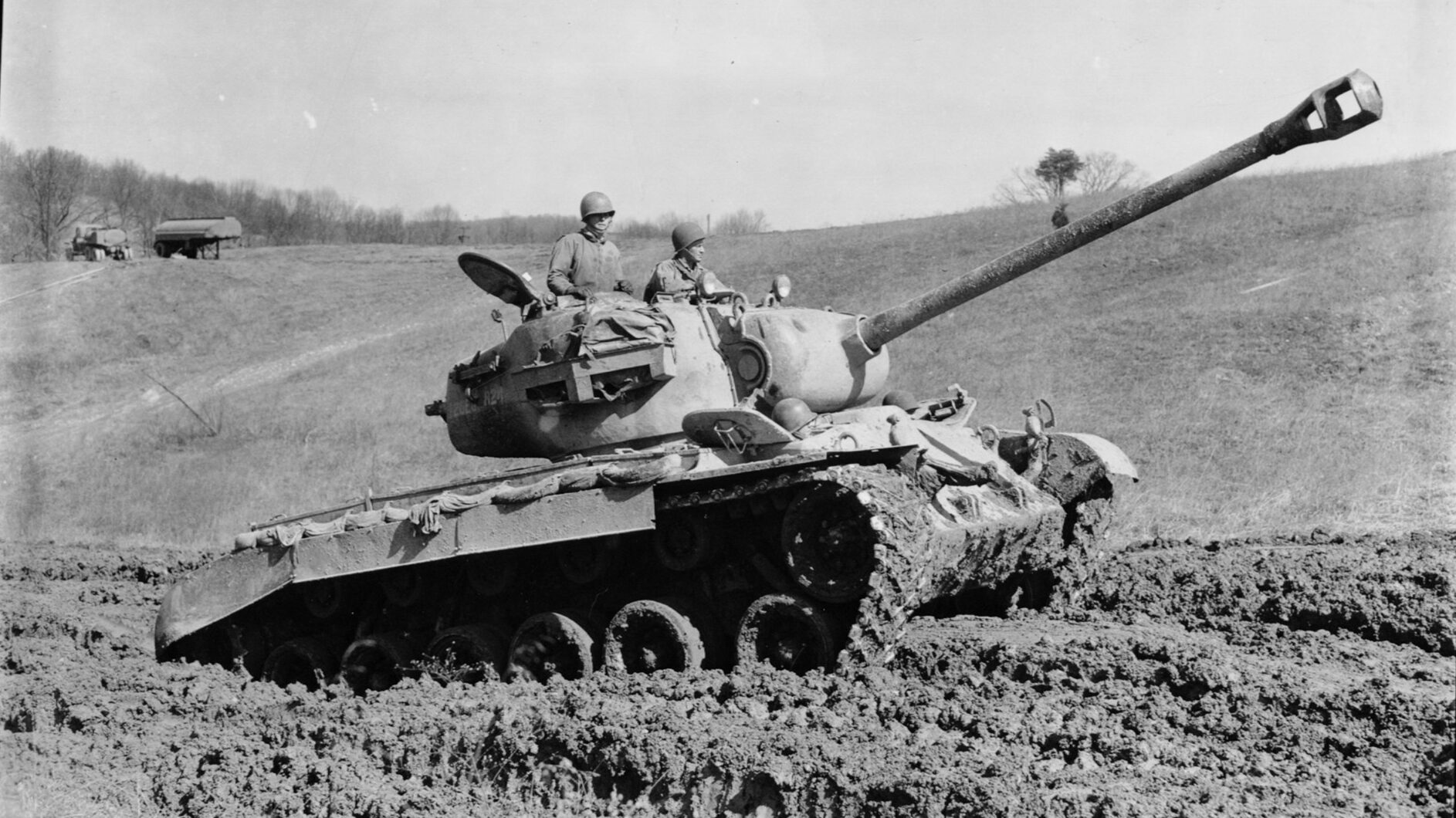
Meh. Patton was at a disadvantage in that his Sherman tanks were very inferior to the German tanks.
The Pershing tanks arrived too late to support that hypothesis.
 
Has Patton not been in the penalty box after the soldier slap, had he not traded places with Bradley, the US would have been in Berlin 6 months ahead of the USSR. He knew the Germans were trapped in Falaise and wanted to close the trap and effectively end the war in the west
I doubt the Americans wanted to take 80k plus dead taking Berlin.


Here's Major Koch who warned Patton about a German build up in the Ardennes. Everyone else dismissed Koch's warning as noise, Patton listened and ordered his Army to prepare.

Koch is a forgotten hero of WWII
 
Meh. Patton was at a disadvantage in that his Sherman tanks were very inferior to the German tanks.
The Pershing tanks arrived too late to support that hypothesis.

The tank v tanks battles was a tiny part the advance. Army AirForce negated German armor superiority

map_08-31-21_300dpi_11.63x29.19_inv3013c-scaled.jpg
 
I suspect many Germans would have rather surrendered to the US than to the Russians
With good reason after what they did to the Soviet Union, and yet what did the Red army do when they took Berlin? they fed the population and started clearing the City up, i woudn't have blamed them if they had gone on a total rampage.
 
The tank v tanks battles was a tiny part the advance. Army AirForce negated German armor superiority

map_08-31-21_300dpi_11.63x29.19_inv3013c-scaled.jpg
The battle that really broke the Africa Korps was the second battle of El Alamein in 1942 under General Montgomery and the 8th Army, Patton never came up directly against Rommel it was a different German General Jurgen Von Arnim.
 
Meh. Patton was at a disadvantage in that his Sherman tanks were very inferior to the German tanks.
The Pershing tanks arrived too late to support that hypothesis.
Shermans were NOT inferior to German tanks. They outperformed the two German mediums; the Panzer III and IV in every metric. The Panther was a heavy tank by 1943 standards at 45 tons and Shermans could kill it at any angle except the front. Shermans kept running when Panthers and Tigers broke down. A broken-down Sherman could be repaired by the crew and company level mechanics when a broken-down Panther or Tiger had to be sent back for depot level repairs. Shermans had aux engines to charge batteries and keep systems running without the main engine taking wear, NONE of the German tanks had anything similar. Sherman crewmen had a far better chance of surviving a penetrating hit than ANY other tank of WW2. In winter Shermans could keep running when the overlapping roadwheels of the cats would freeze solid with trapped mud. The cats had more powerful guns, but they would have been ineffective for the kind of blitzkrieg warfare the Sherman excelled at.
 
With good reason after what they did to the Soviet Union, and yet what did the Red army do when they took Berlin? they fed the population and started clearing the City up, i woudn't have blamed them if they had gone on a total rampage.
Bullcrap. The Red Army raped every female from eight to eighty and did nothing to repair the battle damage to Berlin.
Photos of East berlin in 1950:
1768604492764.webp


1768604601278.webp

1768604629721.webp

1768604712335.webp
 
A few hundred; and the rapists were prosecuted and punished when apprehended. The Red Army encouraged the mass rapes.
Not to say whose army I'd rather be run-over by, but the Nazi's killed the civilians on their way east thru Russia, the Russians didn't kill the Germans as they took Germany. Not saying who got raped more, probably a toss-up.
 
15th post
Not to say whose army I'd rather be run-over by, but the Nazi's killed the civilians on their way east thru Russia, the Russians didn't kill the Germans as they took Germany. Not saying who got raped more, probably a toss-up.
The Red Army killed far more civilians than the Wehrmacht and not only GERMANS. it raped, looted and murdered its way across Eastern Europe long before it reached the German border. From Wikki:
"
War crimes by Soviet armed forces against civilians and prisoners of war in the territories occupied by the USSR between 1939 and 1941 in regions including Eastern Poland, the Baltic states, Finland and Bessarabia, along with other war crimes in 1944–1945, have been ongoing issues within these countries. Since the dissolution of the Soviet Union, a more systematic, locally controlled discussion of these events has taken place.<a href="Soviet war crimes - Wikipedia"><span>[</span>38<span>]</span></a>

Targets of Soviet atrocities included not only Axis collaborators (after 1941), but also members of anti-communist resistance movements in Eastern Europe, such as the Ukrainian Insurgent Army (UPA) in Ukraine, the Forest Brothers in the Baltic States, the Armia Krajowa in Poland and the Goryani in Bulgaria (as well as several Romanian and Chechen partisan groups). The NKVD also conducted the Katyn massacre, summarily executing over 20,000 Polish prisoners (which included both military, gendarme and police officers, but also many civilians, such as government officials, landowners and intelligentsia) between April and May 1940."
 
The Red Army killed far more civilians than the Wehrmacht and not only GERMANS. it raped, looted and murdered its way across Eastern Europe long before it reached the German border. From Wikki:
"
War crimes by Soviet armed forces against civilians and prisoners of war in the territories occupied by the USSR between 1939 and 1941 in regions including Eastern Poland, the Baltic states, Finland and Bessarabia, along with other war crimes in 1944–1945, have been ongoing issues within these countries. Since the dissolution of the Soviet Union, a more systematic, locally controlled discussion of these events has taken place.<a href="Soviet war crimes - Wikipedia"><span>[</span>38<span>]</span></a>

Targets of Soviet atrocities included not only Axis collaborators (after 1941), but also members of anti-communist resistance movements in Eastern Europe, such as the Ukrainian Insurgent Army (UPA) in Ukraine, the Forest Brothers in the Baltic States, the Armia Krajowa in Poland and the Goryani in Bulgaria (as well as several Romanian and Chechen partisan groups). The NKVD also conducted the Katyn massacre, summarily executing over 20,000 Polish prisoners (which included both military, gendarme and police officers, but also many civilians, such as government officials, landowners and intelligentsia) between April and May 1940."
Those so called resistance groups had all been collaborators with the Nazis, and the west is supporting the same people now in Ukraine, those scumbags took part in the Holocaust FFS.
 
Patton knew Rommel far better than Rommel knew Patton. Patton read the military books which Rommel wrote and he studied him extensively, getting into his head, predicting his moves. In many ways replicating Napoleons approach when he was a formally trainined military officer before he was expelled or whatever so he knew what his opponents were going to do since he took the same training, it was all standard at that time.

As it were, Rommel was surprised by Pattons aggressiveness and respected his ability to motivate his troops. However, let's not forget that he cost many soldiers lives in his race with Montgomery in Sicily. The British respected the lives of their soldiers (but not Canadian lives as they'd rather us die than them due to pressures at home in England if they cost so many lives) more to the point that Churchill was not eager to risk so many lives in the suicide mission that was D-Day.

Also, Patton used deception more than he was given credit for (with assistance from other creative thinker), it wasn't always forward aggression except for in Italy. He was also the benefactor of code breakers so he had a distinct advantage against Rommel

As an aside, most people dont know this, but when Canadian troops were massacred at Dieppe thanks to horrific British leadership who considered them expendable (something many Canadian veterans and their kids were enraged at decades later), when they were landing at Juno beach in Normandy, the Canadians did not follow the usual three minutes in between waves which was customary when trying to attack fortified locales like a beach. Instead they cut the time to 30 seconds in between waves realizing that slower men just created a higher risk of death when they didnt overwhelm German fortifications.

The Americans and after the British (who were far less convinced of this tactic) followed suit on D-Day.

Let me know if this is correct or not, it's been awhile.
Patton's troops captured and killed more enemies, gained more ground, and suffered fewer casualties, than any allied commander.
 
Back
Top Bottom