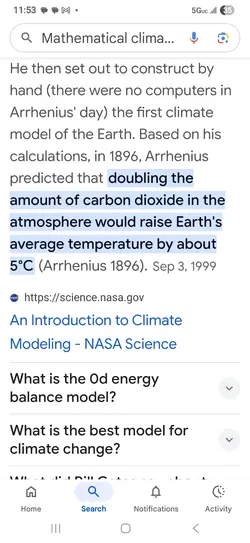
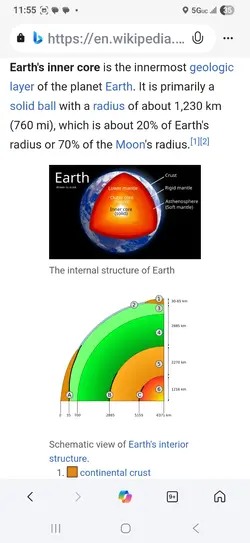
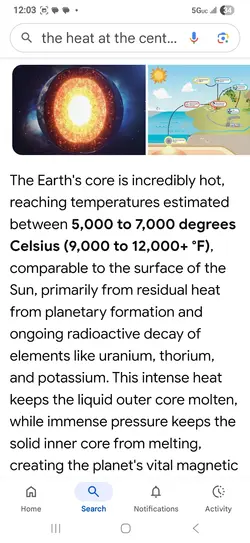
What ever happened to that ridiculous climate change hoax.

Surface air pressure on Mars behaves differently due to its thin, mostly CO2 atmosphere, weaker gravity, and seasonal polar cap sublimation, leading to lower overall pressure, greater temperature swings, and significant annual pressure drops (25-30%) as CO2 freezes out, unlike Earth's dense, N2 / O2 atmosphere with more stable pressure.


That certainly explains why Mars' SAP more than doubles during its year, and Earth's SAP just goes up 1-2% when closest to Sun, but the effect is the same..


closer to Sun = Warming = increasing SAP


THREE PLANETS VALIDATE THAT. YOU HAVE NONE THAT REFUTE IT.
 
Actually it does.

Earth's orbit is much more circular than Mars, but Earth's SAP goes up in January when Earth is closest to Sun, exactly like both Mars and Pluto. You do not have a planet that does not do that. Sorry....


And then there is the silly argument that the "warming" has nothing to do with it, Mars SAP is all about amount of gas in atmosphere. Let's just play pretend that is true. WARMING causes ice to melt on Earth, dry ice to sublime on Mars, and that increases atmospheric mass and hence SAP, so while dung claims it is just about melting/subliming, it is actually THE WARMING THAT CAUSES the ice to sublime/melt.

There is more gas trapped in Antarctic ice than there is in the atmosphere now. Melt that and Earth SAP goes up multiple times... but to melt that requires AA to move off South Pole, so we have at least another 20 million years before we have to worry about that...

Earth's orbit is much more circular than Mars, but Earth's SAP goes up in January when Earth is closest to Sun,


Does every place on Earth see an increase in SAP in January?
Every place in the Northern Hemisphere has higher SAP in January than in June?
Because the Earth receives more energy from the Sun in January?
If that's the case, the Southern Hemisphere must have much, much higher SAP in January than in June.
Because in January, the Southern Hemisphere receives much more energy from the Sun than the Northern Hemisphere.

Can you show that to be the case?
Or do we have to ignore the SAP in each location on Earth and look at "the Earth's SAP"?

There is more gas trapped in Antarctic ice than there is in the atmosphere now.

I'd love to see the stupid math behind this moronic claim but prove your SAP claim first.

*****.
 
Does every place on Earth see an increase in SAP in January?


Indeed yes it does.... and if you could refute that, you would, but you can't, not without FUDGE.... which doesn't refute, it just proves you are a big Mossad liar....


Or do we have to ignore the SAP in each location on Earth and look at "the Earth's SAP"?


That's the big problem for CO2 FRAUD, that SAP is indeed a PLANETARY reading....
 
Indeed yes it does.... and if you could refute that, you would, but you can't, not without FUDGE.... which doesn't refute, it just proves you are a big Mossad liar....


That's the big problem for CO2 FRAUD, that SAP is indeed a PLANETARY reading....

Does every place on Earth see an increase in SAP in January?

Indeed yes it does.... and if you could refute that, you would, but you can't, not without FUDGE.... which doesn't refute, it just proves you are a big Mossad liar....

In that case you can provide the data to prove it.

That's the big problem for CO2 FRAUD, that SAP is indeed a PLANETARY reading....


What device measures planetary SAP? What is planetary SAP at this moment?
 
Actually it does.

Earth's orbit is much more circular than Mars, but Earth's SAP goes up in January when Earth is closest to Sun, exactly like both Mars and Pluto. You do not have a planet that does not do that. Sorry....


And then there is the silly argument that the "warming" has nothing to do with it, Mars SAP is all about amount of gas in atmosphere. Let's just play pretend that is true. WARMING causes ice to melt on Earth, dry ice to sublime on Mars, and that increases atmospheric mass and hence SAP, so while dung claims it is just about melting/subliming, it is actually THE WARMING THAT CAUSES the ice to sublime/melt.

There is more gas trapped in Antarctic ice than there is in the atmosphere now. Melt that and Earth SAP goes up multiple times... but to melt that requires AA to move off South Pole, so we have at least another 20 million years before we have to worry about that...
No, it doesn't.

When Mars warms seasonally, its surface air pressure rises significantly because frozen carbon dioxide at the poles sublimates (turns to gas) and enters the atmosphere, increasing its total mass, causing pressure swings of 25-30% annually. Warmer temperatures release CO2 from the south polar cap, adding to the atmospheric pressure, while colder temperatures freeze it out, dropping the pressure.

When Earth warms, surface air pressure drops because warm air is less dense and rises, creating lower pressure at the surface, although the relationship is complex and can see short-term increases due to gas laws before expansion causes a drop. This rising warm air is fundamental to weather, forming low-pressure systems, while cooler, denser air sinking creates high-pressure zones.
 
That certainly explains why Mars' SAP more than doubles during its year, and Earth's SAP just goes up 1-2% when closest to Sun, but the effect is the same..


closer to Sun = Warming = increasing SAP


THREE PLANETS VALIDATE THAT. YOU HAVE NONE THAT REFUTE IT.
No. It isn't. The composition of Mars' atmosphere changes. The composition of earth's atmosphere does not; two different mechanisms are at work.
 
What happens on Mars isn't happening on earth, dumb dumb.

When Mars warms seasonally, its surface air pressure rises significantly because frozen carbon dioxide at the poles sublimates (turns to gas) and enters the atmosphere, increasing its total mass, causing pressure swings of 25-30% annually. Warmer temperatures release CO2 from the south polar cap, adding to the atmospheric pressure, while colder temperatures freeze it out, dropping the pressure.

When Earth warms, surface air pressure drops because warm air is less dense and rises, creating lower pressure at the surface, although the relationship is complex and can see short-term increases due to gas laws before expansion causes a drop. This rising warm air is fundamental to weather, forming low-pressure systems, while cooler, denser air sinking creates high-pressure zones.
Sublimation.
Does the inner earth
enter into the weather equation.
By what mechinism does the earth core generate heat.
 
Sublimation.
Does the inner earth
enter into the weather equation.
By what mechinism does the earth core generate heat.
I don't believe it does.

1768925319827.webp


Earth's core is hot from a combination of leftover heat from its formation (collisions and compression), gravitational energy converted to heat as dense iron sank, and ongoing heat from the radioactive decay of elements like uranium, thorium, and potassium deep within. These immense temperatures, reaching thousands of degrees, are retained because heat escapes very slowly from the planet's interior


The heat radiating from Earth's core has a negligible direct effect on surface climate and weather because the solid crust acts as an excellent insulator, slowing heat transfer and providing very little energy compared to the Sun; however, internal heat drives geological processes like volcanism, which release greenhouse gases that do influence climate over long timescales, while the inner core's slight rotation variations can minutely affect day length, not major weather patterns.

Why Core Heat Doesn't Affect Surface Weather/Climate Directly
  • Insulating Crust & Mantle: The thick layers of rock (crust and mantle) between the core and the surface have low thermal conductivity, acting like a thick blanket that severely slows the escape of internal heat.
  • Tiny Energy Contribution: The heat flow from the Earth's interior is steady but provides only a tiny fraction (less than 1%) of the energy that drives Earth's surface climate, which is overwhelmingly dominated by solar radiation.
  • Slow, Steady Flow: The rate of heat flow from the core is very constant over short to medium timeframes, so it's not a variable that causes significant climate shifts.
Indirect Influences
  • Geological Processes: Internal heat powers plate tectonics, volcanism, and mantle plumes, which release greenhouse gases.
    Magnetic Field: Heat in the liquid outer core generates Earth's magnetic field, which shields the atmosphere from being stripped away by solar wind, thus indirectly stabilizing climate over eons.
    and aerosols, influencing climate over millions of years.
Inner Core Rotation (Misconceptions)
  • Claims that the inner core's rotation directly causes climate change are false; its tiny variations mainly affect the length of a day by fractions of a second, which is imperceptible and not linked to weather patterns.
 
I don't believe it does.

View attachment 1208742

Earth's core is hot from a combination of leftover heat from its formation (collisions and compression), gravitational energy converted to heat as dense iron sank, and ongoing heat from the radioactive decay of elements like uranium, thorium, and potassium deep within. These immense temperatures, reaching thousands of degrees, are retained because heat escapes very slowly from the planet's interior


The heat radiating from Earth's core has a negligible direct effect on surface climate and weather because the solid crust acts as an excellent insulator, slowing heat transfer and providing very little energy compared to the Sun; however, internal heat drives geological processes like volcanism, which release greenhouse gases that do influence climate over long timescales, while the inner core's slight rotation variations can minutely affect day length, not major weather patterns.

Why Core Heat Doesn't Affect Surface Weather/Climate Directly
  • Insulating Crust & Mantle: The thick layers of rock (crust and mantle) between the core and the surface have low thermal conductivity, acting like a thick blanket that severely slows the escape of internal heat.
  • Tiny Energy Contribution: The heat flow from the Earth's interior is steady but provides only a tiny fraction (less than 1%) of the energy that drives Earth's surface climate, which is overwhelmingly dominated by solar radiation.
  • Slow, Steady Flow: The rate of heat flow from the core is very constant over short to medium timeframes, so it's not a variable that causes significant climate shifts.
Indirect Influences
  • Geological Processes: Internal heat powers plate tectonics, volcanism, and mantle plumes, which release greenhouse gases.
    Magnetic Field: Heat in the liquid outer core generates Earth's magnetic field, which shields the atmosphere from being stripped away by solar wind, thus indirectly stabilizing climate over eons.
    and aerosols, influencing climate over millions of years.
Inner Core Rotation (Misconceptions)
  • Claims that the inner core's rotation directly causes climate change are false; its tiny variations mainly affect the length of a day by fractions of a second, which is imperceptible and not linked to weather patterns.
Ultimately this is all wrong.
 
U c where im heading with this.
The heater under our feet isn't forever, we should consider that.
Also, the more brightly colored graphics are
the more likely they are to be true.
Same as politics...
 

Attachments

  • Screenshot_20260120_115330_Google.webp
    Screenshot_20260120_115330_Google.webp
    87.8 KB · Views: 12
  • Screenshot_20260120_115545_Bing.webp
    Screenshot_20260120_115545_Bing.webp
    66.8 KB · Views: 13
U c where im heading with this.
The heater under our feet isn't forever, we should consider that.
Also, the more brightly colored graphics are
the more likely they are to be true.
Same as politics...
The heat you feel radiating from the surface of the planet is from the sun warming the surface of the planet.
 
The heat you feel radiating from the surface of the planet is from the sun warming the surface of the planet.
Oh boy...
Let's keep going.
You just closed a circle of tangible energy from the sun back to space.
Is that reflection (entropy)
different if say...
that sunlight hit the moon ?

Is the earth core energy finite ?

If so
to whom does it belong ?
 

Attachments

  • Screenshot_20260120_120342_Google.webp
    Screenshot_20260120_120342_Google.webp
    111.3 KB · Views: 15
Last edited:
Oh boy...
Let's keep going.
You just closed a circle of tangible energy from the sun back to space.
Is that reflection (entropy)
be different if say...
that sunlight hit the moon ?

Is the earth core energy finite ?
I don't have anything else to add beyond what I have already provided.

The heat radiating from Earth's core has a negligible direct effect on surface climate and weather because the solid crust acts as an excellent insulator, slowing heat transfer and providing very little energy compared to the Sun; however, internal heat drives geological processes like volcanism, which release greenhouse gases that do influence climate over long timescales, while the inner core's slight rotation variations can minutely affect day length, not major weather patterns.

Why Core Heat Doesn't Affect Surface Weather/Climate Directly
  • Insulating Crust & Mantle: The thick layers of rock (crust and mantle) between the core and the surface have low thermal conductivity, acting like a thick blanket that severely slows the escape of internal heat.
  • Tiny Energy Contribution: The heat flow from the Earth's interior is steady but provides only a tiny fraction (less than 1%) of the energy that drives Earth's surface climate, which is overwhelmingly dominated by solar radiation.
  • Slow, Steady Flow: The rate of heat flow from the core is very constant over short to medium timeframes, so it's not a variable that causes significant climate shifts.
Indirect Influences
  • Geological Processes: Internal heat powers plate tectonics, volcanism, and mantle plumes, which release greenhouse gases.
    Magnetic Field: Heat in the liquid outer core generates Earth's magnetic field, which shields the atmosphere from being stripped away by solar wind, thus indirectly stabilizing climate over eons.
    and aerosols, influencing climate over millions of years.
Inner Core Rotation (Misconceptions)
  • Claims that the inner core's rotation directly causes climate change are false; its tiny variations mainly affect the length of a day by fractions of a second, which is imperceptible and not linked to weather patterns.
 
I don't have anything else to add beyond what I have already provided.

The heat radiating from Earth's core has a negligible direct effect on surface climate and weather because the solid crust acts as an excellent insulator, slowing heat transfer and providing very little energy compared to the Sun; however, internal heat drives geological processes like volcanism, which release greenhouse gases that do influence climate over long timescales, while the inner core's slight rotation variations can minutely affect day length, not major weather patterns.

Why Core Heat Doesn't Affect Surface Weather/Climate Directly
  • Insulating Crust & Mantle: The thick layers of rock (crust and mantle) between the core and the surface have low thermal conductivity, acting like a thick blanket that severely slows the escape of internal heat.
  • Tiny Energy Contribution: The heat flow from the Earth's interior is steady but provides only a tiny fraction (less than 1%) of the energy that drives Earth's surface climate, which is overwhelmingly dominated by solar radiation.
  • Slow, Steady Flow: The rate of heat flow from the core is very constant over short to medium timeframes, so it's not a variable that causes significant climate shifts.
Indirect Influences
  • Geological Processes: Internal heat powers plate tectonics, volcanism, and mantle plumes, which release greenhouse gases.
    Magnetic Field: Heat in the liquid outer core generates Earth's magnetic field, which shields the atmosphere from being stripped away by solar wind, thus indirectly stabilizing climate over eons.
    and aerosols, influencing climate over millions of years.
Inner Core Rotation (Misconceptions)
  • Claims that the inner core's rotation directly causes climate change are false; its tiny variations mainly affect the length of a day by fractions of a second, which is imperceptible and not linked to weather patterns.
I think we have
grown comfortable with the idea all heat comes from the center earth & the sun at the same time.
(there are exceptions)
This is the false brilliance of "climate change"
even the Neanderthals called weather.
Spend your paychecks on climategate money, just leave my paycheck out of it.


Not al gore's snot trails of dogoogle sloth & greed.

They are the Democrat role models.
 
Last edited:
15th post
What device measures planetary SAP?


Any barometer on Earth at sea level. Just need one, that's the great part.


What is planetary SAP at this moment?


We've passed perihelion but Earth is still on the "closer to Sun" side, so it would be


1013.25 millibars plus a minor adjustment for being closer to Sun, likely 1% or so.


The standard atmosphere (symbol: atm) is a unit of pressure defined as 101,325 Pa (1,013.25 hPa), which is equivalent to 1,013.25 millibars
 
Any barometer on Earth at sea level. Just need one, that's the great part.


We've passed perihelion but Earth is still on the "closer to Sun" side, so it would be


1013.25 millibars plus a minor adjustment for being closer to Sun, likely 1% or so.


The standard atmosphere (symbol: atm) is a unit of pressure defined as 101,325 Pa (1,013.25 hPa), which is equivalent to 1,013.25 millibars

Any barometer on Earth at sea level. Just need one, that's the great part.


Any barometer on Earth measures the SAP for the entire planet?
 
Back
Top Bottom